
Brooks Stevens
AT A GLANCE
- Born
- 1911-06-07
- Birthplace
- Milwaukee
- Died
- 1995-01-04
- Nationality
- American
- Occupation
- Industrial designer
- Active from
- 1934
- Studio
- Brooks Stevens Design Associates
- Based in
- Milwaukee, USA
THE STORY
Overview
Clifford Brooks Stevens (7 June 1911 – 4 January 1995) was an American industrial designer whose practice encompassed automobiles, motorcycles, trains, boats, household equipment and commercial graphics. Based in Milwaukee, Wisconsin, he directed an independent design consultancy and worked for American manufacturers including Willys, Studebaker, Harley-Davidson and Outboard Marine. His connection with Italian coachbuilding is documented by the Studebaker prototypes designed in his office and manufactured in Turin by Carrozzeria Sibona & Basano in 1963.
Early life and professional formation
Stevens was born in Milwaukee and became interested in drawing and model-making during childhood. At the age of eight he contracted poliomyelitis, and his father encouraged him to continue designing small aircraft and boats during his recovery. Stevens studied architecture at Cornell University from 1929 to 1933 but left without a degree. He returned to Wisconsin and worked in business before beginning his professional design career. The Milwaukee Art Museum records the opening of his first independent office on 1 July 1935, following preliminary commercial-design commissions in 1934.
His consultancy developed an approach in which product styling was coordinated with manufacturing costs, marketing and mechanical requirements. The firm expanded through commissions from producers of appliances, mechanical equipment and vehicles. Stevens was also involved in the organisation of the American industrial-design profession. The activities of his studio should be understood as collaborative work rather than the output of a single draftsman.
Automotive, transport and product design
Stevens worked on the transformation of the civilian Jeep after the Second World War, including the Willys station wagon and Jeepster. His later automotive work encompassed the Jeep Wagoneer, introduced for the 1963 model year, and the Studebaker Gran Turismo Hawk of 1962. At Studebaker he was asked to extend the commercial life of existing platforms while developing proposals for a possible new generation of vehicles. The firm’s work included the sliding-roof Wagonaire station wagon, the revised Lark family and a series of unproduced future-model concepts.
Outside the conventional automobile industry, Stevens contributed to the styling of Harley-Davidson motorcycles, the streamlined observation cars of the Milwaukee Road’s Olympian Hiawatha passenger train, marine products sold under the Evinrude and Johnson names and numerous household goods. He also developed designs for the Oscar Mayer Wienermobile and worked on the early Excalibur sports car, a modern vehicle drawing on pre-war Mercedes-Benz roadster styling. His professional activities included Brazilian-market Willys vehicles, where locally manufactured models were updated for the regional market.
Studebaker and the Italian prototype programme
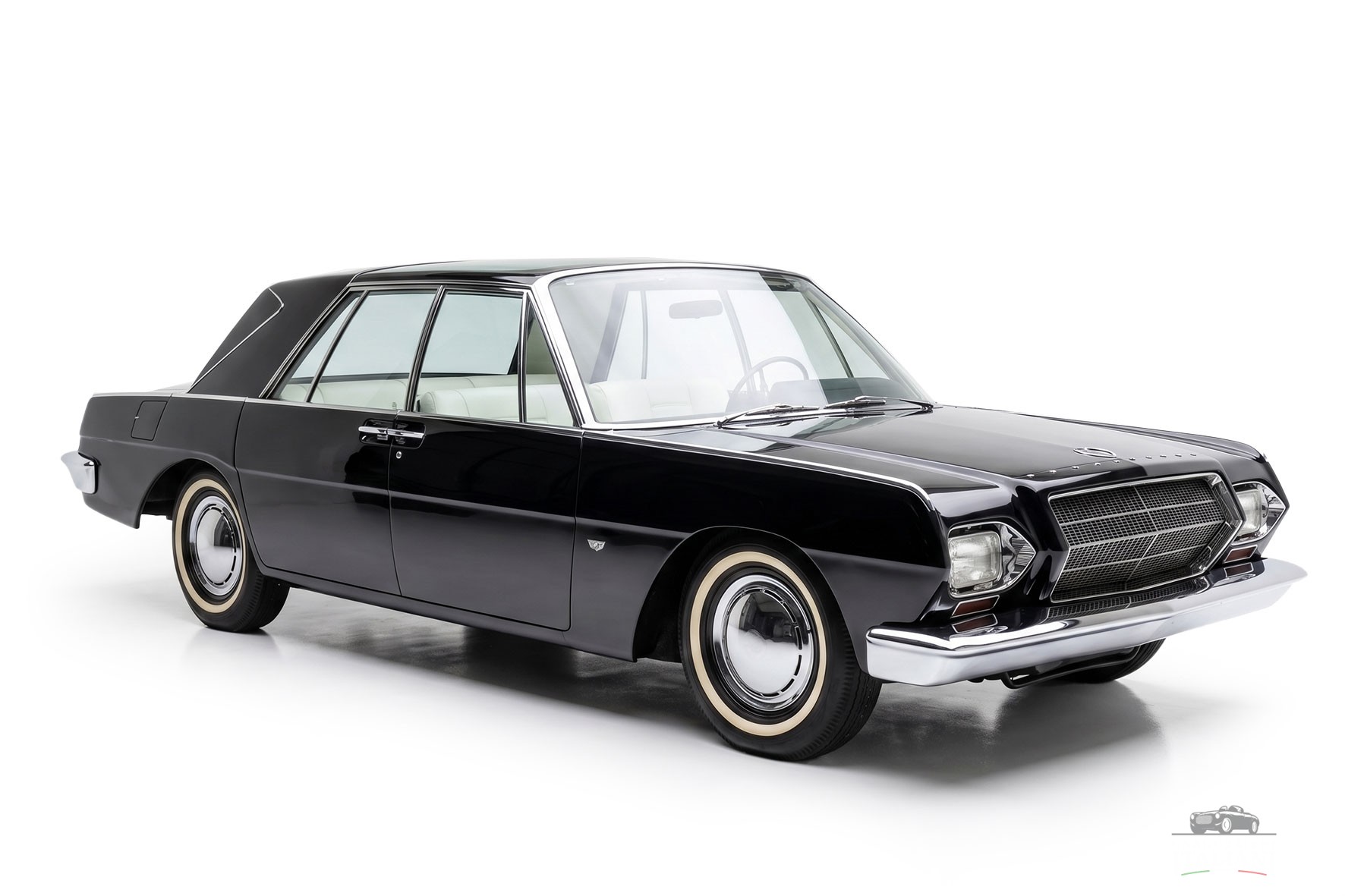
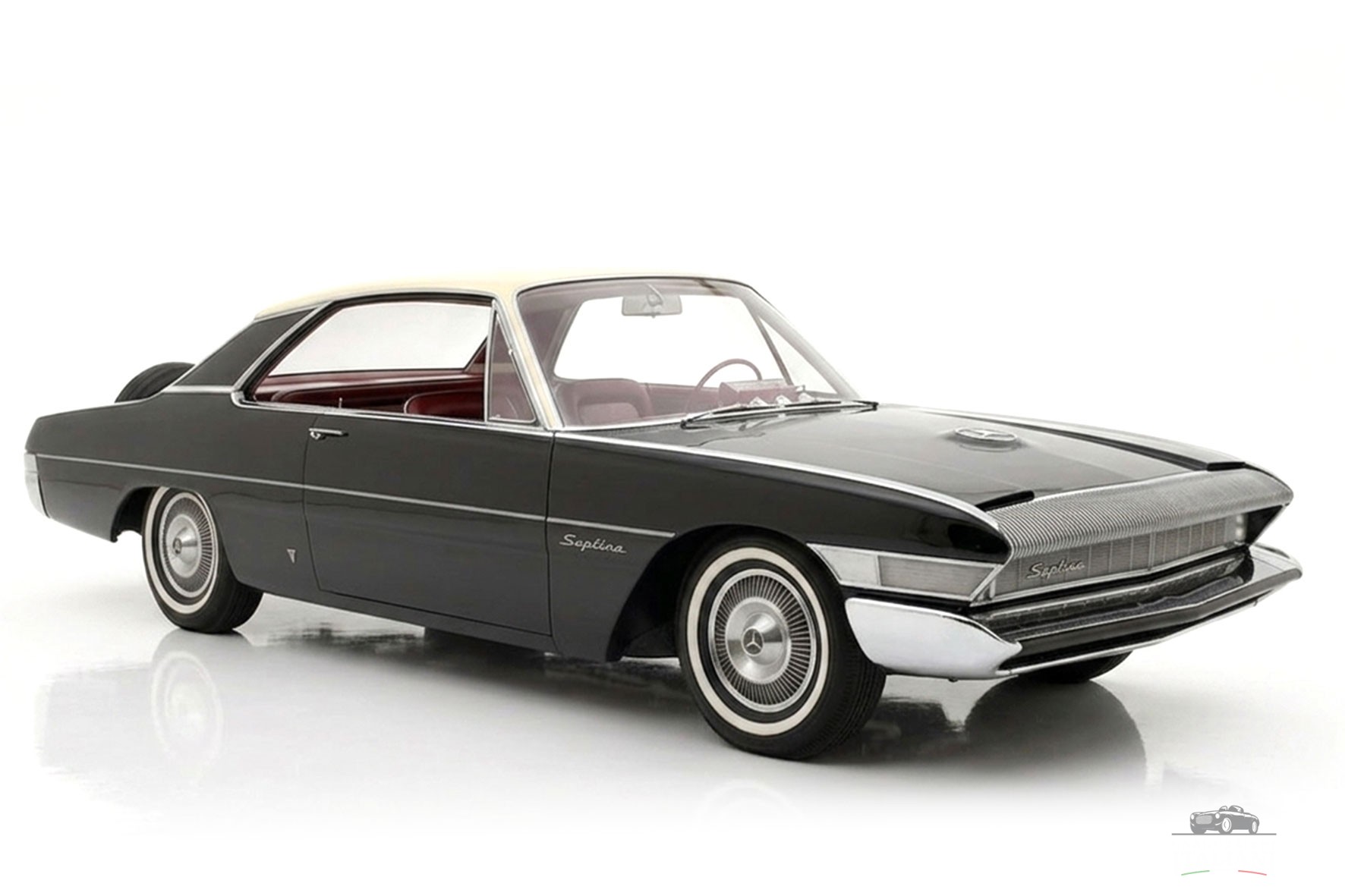
During Studebaker’s financial difficulties in the early 1960s, Stevens and his staff produced several experimental designs intended to replace or extend the existing range. Three distinct proposals are documented in the Carrozzieri Italiani Knowledge register: the Studebaker Sceptre, the Studebaker Lark Cruiser and the Studebaker Lark Wagonaire experimental estate car. These projects were related parts of a proposed product programme, but they were not interchangeable model names or successive bodies fitted to a single identified chassis.
Stevens commissioned Carrozzeria Sibona & Basano in Turin to build the physical prototypes from his design work. The Sceptre was a two-door grand touring coupé proposed as a successor to the Hawk, with a distinctive full-width frontal lighting treatment, a comparatively open glazed cabin and an unusually developed instrument panel. Its metal body was completed in Turin and presented to Studebaker management by April 1963. The surviving car subsequently entered the Studebaker National Museum collection. The museum identifies it as a projected 1966 Hawk replacement, not a production car of that model year.
The Lark Cruiser was a separate four-door hardtop concept. Its proposed construction included interchangeable doors intended to reduce production tooling requirements, together with altered mechanical packaging. The design was also executed by Sibona & Basano. Sources discussing the prototype give its presentation or construction in 1963, whereas the legacy Carrozzieri Italiani record associates it with 1964. This difference concerns the prototype chronology and remains to be resolved in the vehicle record, rather than being treated as two separate cars.
The experimental Lark Wagonaire or Skyview station-wagon concept applied Stevens’s sliding-roof thinking to a more elaborate body, distinct from the production Studebaker Wagonaire. Its appearance and coachbuilding responsibility belong to the same Turin programme. The three vehicles must be linked through their common designer, commissioning manufacturer and builder, while retaining their separate body types and identities.
Design authorship and coachbuilding
Stevens and his design team were responsible for the American styling proposals and the commercial programme. Sibona & Basano, an independent Turin coachbuilding workshop, was responsible for constructing the Italian prototype bodies. This allocation of roles is supported by contemporary and subsequent accounts of the programme, including the Milwaukee Art Museum’s archives and specialist design histories. It does not imply that Stevens owned the workshop, that the Italian builder originated all the designs or that the concepts entered serial production.
The Sceptre and Cruiser survived the end of the Studebaker project and were displayed for years in Stevens’s own automotive museum in Wisconsin. Their later museum history is documented, but individual restoration and ownership changes require vehicle-level evidence. No chassis serial, auction result or concours award is attributed to Stevens’s biography without exact-vehicle verification.
Later work and legacy
Stevens continued industrial-design work throughout the subsequent decades, while the Excalibur project was developed into an independent marque with participation from his family. He remained associated with Milwaukee and died there on 4 January 1995. The Brooks Stevens Archives, acquired from his family by the Milwaukee Art Museum in 1997, preserves nearly 20,000 visual materials covering his work. This archive provides substantial evidence for his practice, from drawings and presentation materials to photographs of manufactured products.
His place in Italian coachbuilding history rests specifically on the collaboration with Sibona & Basano on the Studebaker prototypes. The Italian workshop’s construction of these vehicles and Stevens’s original styling direction are complementary but distinct historical roles. Other contributions, including Studebaker production-car styling and American industrial products, belong to his broader design career.
THE NETWORK
Shared vehicle credits

KEY MOMENTS
Timeline
-
Birth of Brooks Stevens
Milwaukee, United States
-
Career begins
-
Death of Brooks Stevens
Milwaukee, United States
CONTINUE EXPLORING

THE CONVERSATION
Comments 0