
Blue in Turin, Red-Brown in Germany: The Long Life of Bertone’s Ferrari 166 Inter
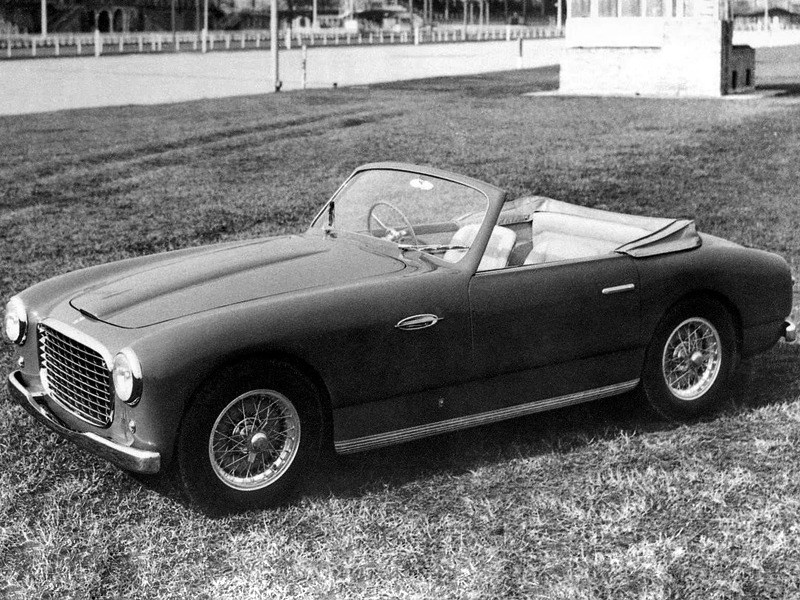
One Ferrari chassis, one Bertone cabriolet, and a history divided between the show stands of postwar Italy, German classified advertisements and rival design attributions.
A blue Ferrari among the saloon cars
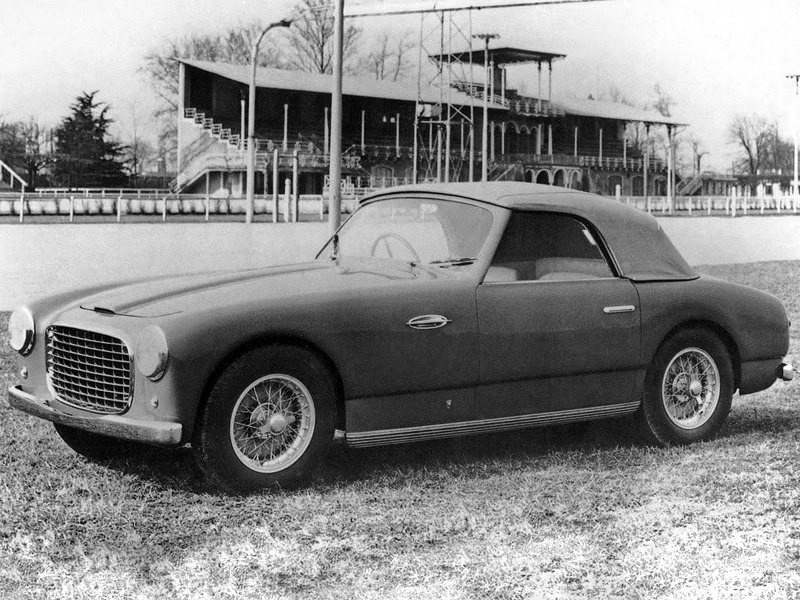
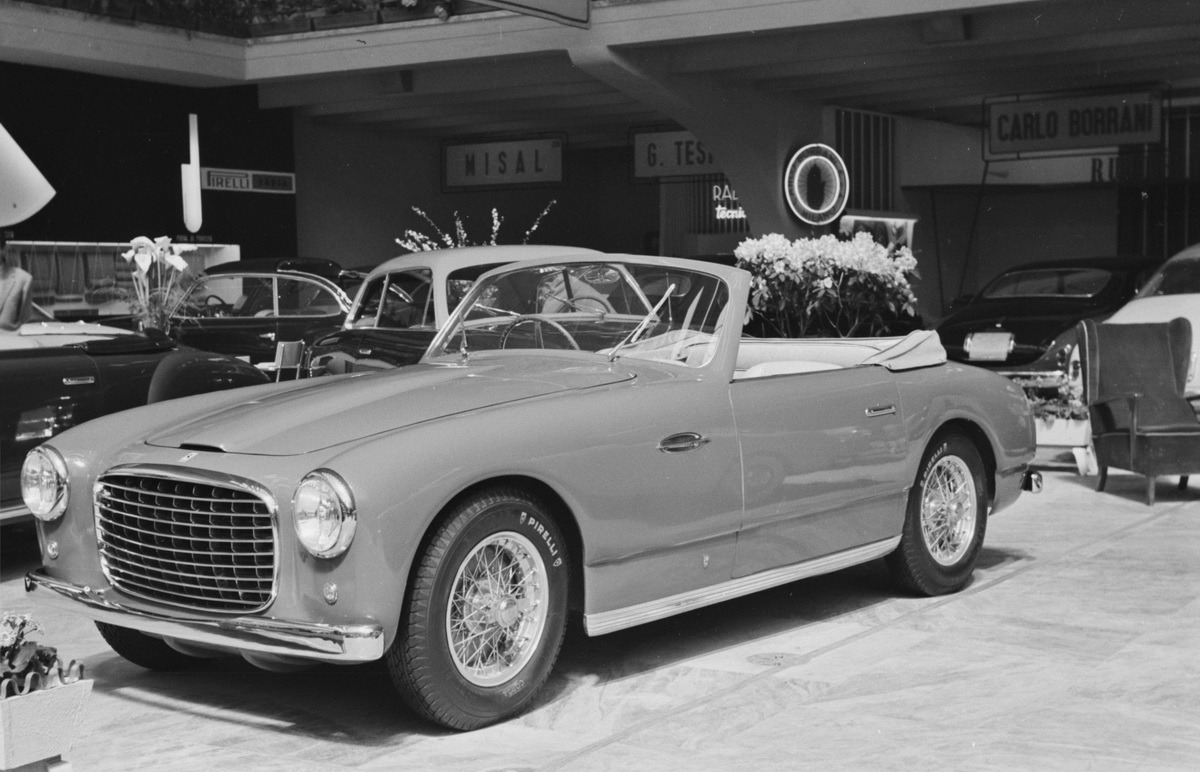
The photograph has the stillness of a motor-show morning. A small Ferrari cabriolet stands on the Bertone display, its body pale enough in the old print to conceal the blue recorded in later chassis histories. The grille is low and rounded, the bonnet longer than the passenger compartment, and the screen rises without the heavy roofline of a conventional grand tourer. There is nothing of the bare-armed competition barchetta about it. In the spring of 1951, Ferrari was still finding out what a customer might want from a road car, and Turin’s coachbuilders were supplying several different answers. This was Bertone’s: a single, carefully proportioned open automobile carried by chassis 0057/S.
The Ferrari 166 Inter Cabriolet Bertone is sometimes treated as a straightforward entry in a catalogue of early Ferraris. It resists such treatment. Its year is variously given as 1950 and 1951. A Geneva appearance has been proposed without a period catalogue being securely attached to the individual chassis. The name of the stylist is disputed. Two different numbers appear in accounts of an engine replacement, and a documented asking price in German marks has occasionally been allowed to sound like a completed sale. These questions are not peripheral details added long after the fact. They shape the way this particular Ferrari can be described, because its working life passed through several countries, changing owners, changing colours and at least one extended attempt to restore it.
The car can nevertheless be placed with confidence in one of the most revealing periods of Ferrari’s development. In 1948 the marque was scarcely older than the war’s immediate aftermath. Its identity was being written simultaneously on race circuits and at coachbuilders’ premises. A Ferrari arriving in Turin as a chassis was not yet the finished object that a customer would encounter in a showroom; its body could be a product of several independent decisions and several different hands. The Bertone cabriolet makes that division unusually visible.
Maranello before the uniform silhouette
The roadgoing 166 Inter developed from the same compact V12 tradition as Ferrari’s early sports and competition machinery. Gioacchino Colombo’s twelve-cylinder engine gave the company a mechanical identity before any single body shape had become recognisably Ferrari. The nominal two-litre 166 family, with a displacement a little under 2,000 cc, belonged to the phase in which Enzo Ferrari was turning the sale of complete automobiles into a viable counterpart to racing. The Inter badge was associated with the marque’s new grand-touring ambitions; it was not a declaration that every Inter was built to the specification of a 166 MM competition car.
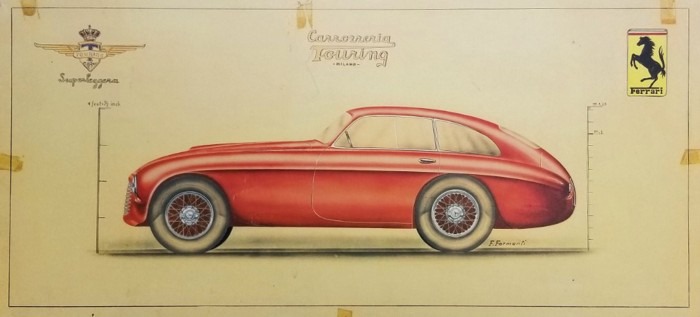
For the customer, a significant part of that ambition unfolded away from Maranello. Touring’s Ferrari 166 Inter coupés made one case for the Italian grand tourer: comparatively restrained volumes, a saloon-car degree of weather protection and a body that could be used on journeys rather than merely admired in the paddock. Stabilimenti Farina’s cabriolets supplied another, more formal interpretation. Their careful brightwork and tailored interiors belonged to a market in which a Ferrari might share a concours lawn with an Alfa Romeo or an Isotta Fraschini rather than park beside a pit box. A customer’s relationship with the coachbuilder could be as decisive as the technical choice of engine.
The early chassis register is not a neat sequence of one model followed by the next. Some automobiles were modified, some had later engines installed, others changed their bodies entirely. What looks like a stable production total depends in part on whether a record follows a chassis, an engine, an original body or a later configuration. Specialist registers commonly give approximately thirty-eight 166 Inters, while individual coachbuilder distributions vary with the treatment of altered cars. The significance of 0057/S does not rest on choosing one grand total. It rests on the much narrower observation that Bertone’s cabriolet was a singular exercise in this family: one body, carried by one identifiable Ferrari chassis.
There was no reason for that arrangement to seem eccentric at the time. Italian coachbuilding had long made room for clients whose preferred car did not come with the preferred shape. The Ferrari–Vignale relationship would soon provide some of the most familiar examples, while Farina, Touring and Ghia were already refining separate visual languages on the same basic mechanical proposition. The Bertone Ferrari arrived at the moment when those languages were still open to negotiation.
Bertone before the familiar legends
Nuccio Bertone was not yet the patriarch associated with generations of wedge-shaped concepts and modern grand tourers. He had inherited a body-building business from his father Giovanni and was negotiating the changed economics of postwar Turin. Custom work remained important, but the customer base was moving. Racing attracted attention, and the first Italian sports-car manufacturers offered smaller coachbuilders a chance to establish themselves before an international audience. The roadgoing Ferrari was a useful canvas: rare, mechanically distinctive and sufficiently new not to carry the stylistic expectations attached to a mature luxury marque.
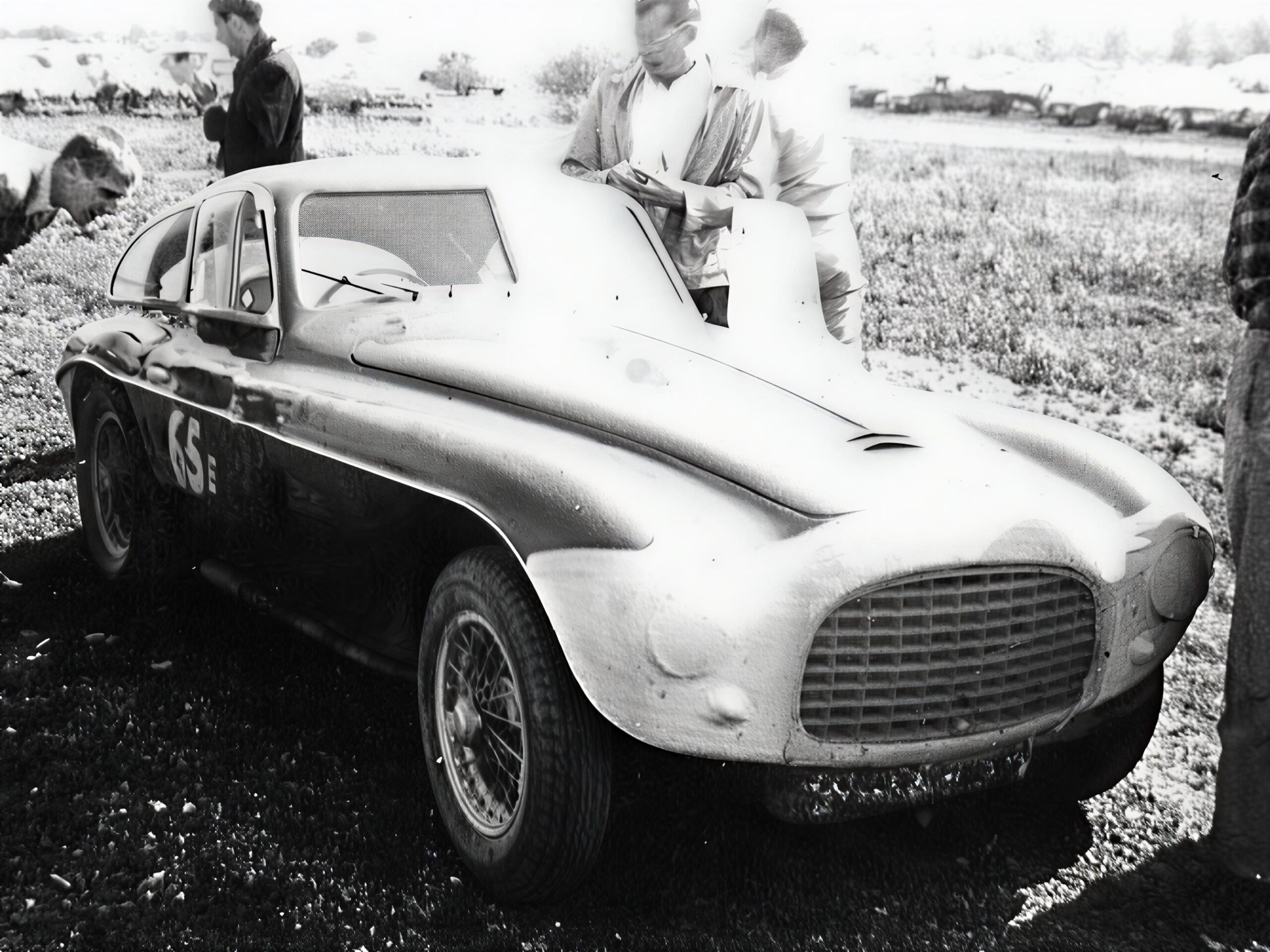
A separate Ferrari helps explain the connection without confusing the histories. Nuccio competed in a Touring-bodied 166 MM, chassis 0046M, a car subsequently transformed into the Ferrari 166 MM Zagato. Its racing career belonged to Nuccio Bertone’s personal involvement with the automobile, and the change to Zagato coachwork belonged to a later ownership and rebuilding episode. It was not chassis 0057/S, and its competition record cannot be transferred to the cabriolet simply because Nuccio’s name appears in both stories. Yet the overlap in time shows how actively Bertone pursued visibility around Ferrari when the marque itself was still establishing a road-car clientele.
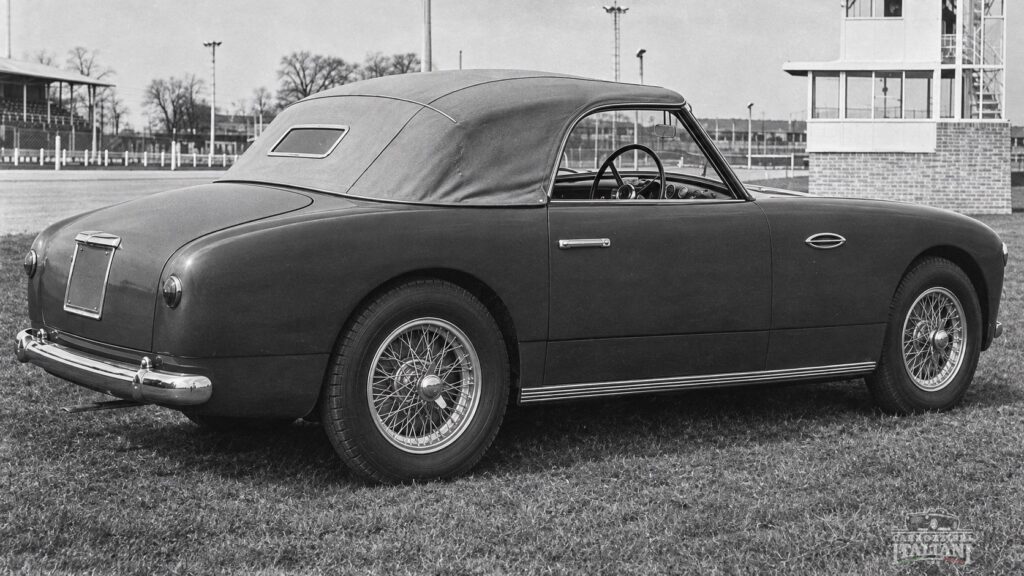
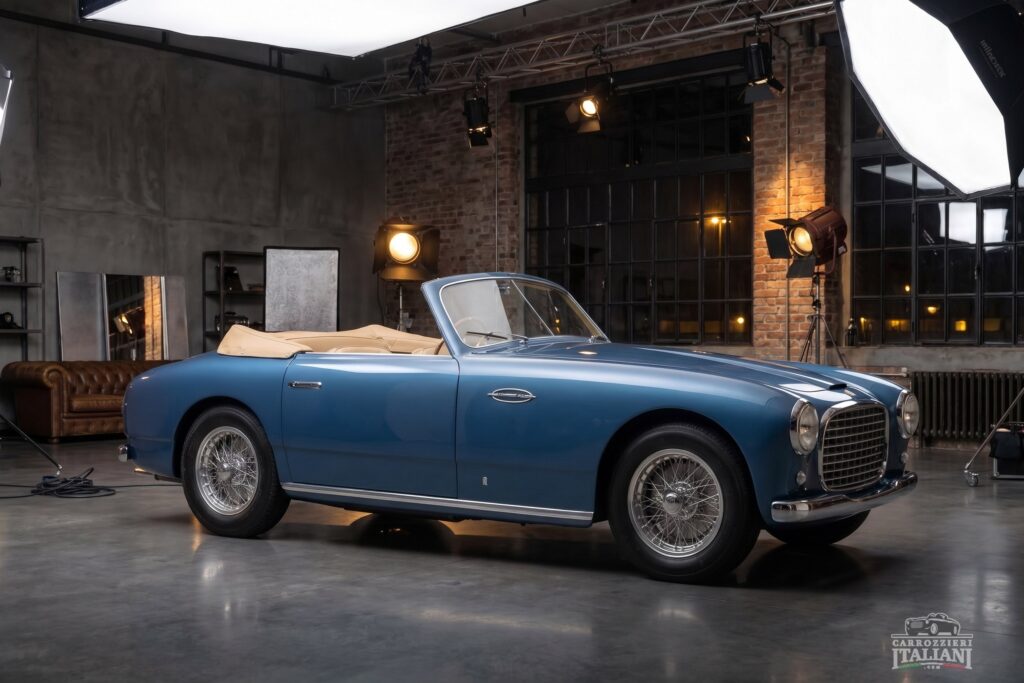
The cabriolet was an altogether different proposition. A competition 166 had to accommodate a driver’s urgency; this body had to look convincing when the engine was silent and the roof was folded away. Its proportions gave visual weight to the bonnet, then allowed the cockpit to sit relatively far back, visually balancing Ferrari’s front-mounted V12. What can be seen in photographs is an individual design solution rather than a standard Bertone production shell. Whether the initial shape was established by an outside stylist, an internal hand or a continuing conversation between both remains an authorship question. The workshop that fabricated the coachwork and the individual who first drew its lines were not necessarily the same thing.
Three names in one drawing
The strongest reason to avoid a tidy design credit is that the surviving secondary literature does not agree. Ferrari historian Alan C. Boe has associated the Bertone cabriolet with Mario Revelli di Beaumont. Other specialist material has assigned the authorship to Nuccio Bertone. Giovanni Michelotti also appears in older descriptions of the car, although a broad record of Michelotti’s work for Bertone does not, by itself, identify his hand in the design of this exact chassis. The evidence supports the Bertone body attribution far more securely than it supports any one person as its undisputed stylist.
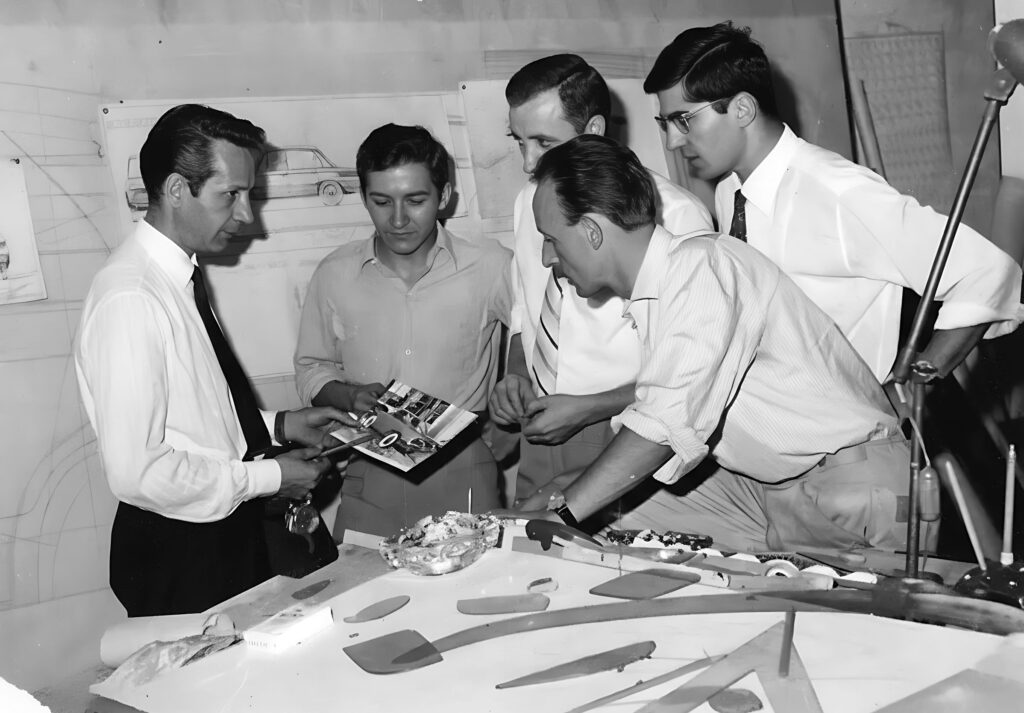
These are not interchangeable kinds of credit. Nuccio directed a coachbuilding company, commissioned and promoted projects, and could have taken an active role in deciding the character of the car without personally being the draftsman. Revelli was a designer whose career moved through several Turin coachbuilding businesses, in a period when freelance arrangements were common and often weakly documented in the finished vehicle. Giovanni Michelotti likewise worked across marques and ateliers, making an attribution plausible in a general historical sense but not specific without a drawing, correspondence or a sufficiently precise period account. A workshop invoice would establish fabrication; a signed sketch could establish something different; neither should be quietly substituted for the other.
The temptation is understandable. The car is singular, and a neat designer name makes for a neat caption. But a model name and a chassis number remain stronger identifiers than an attractive stylistic theory. Bertone’s designers were accustomed to interpreting briefs, reworking proportions as engineering requirements became clear, and sharing the final object with the sheet-metal craftsmen who made it possible. The final form could emerge through several revisions. For 0057/S, the available account does not yet allow these roles to be distributed among individuals with the certainty that a modern project credit would imply.
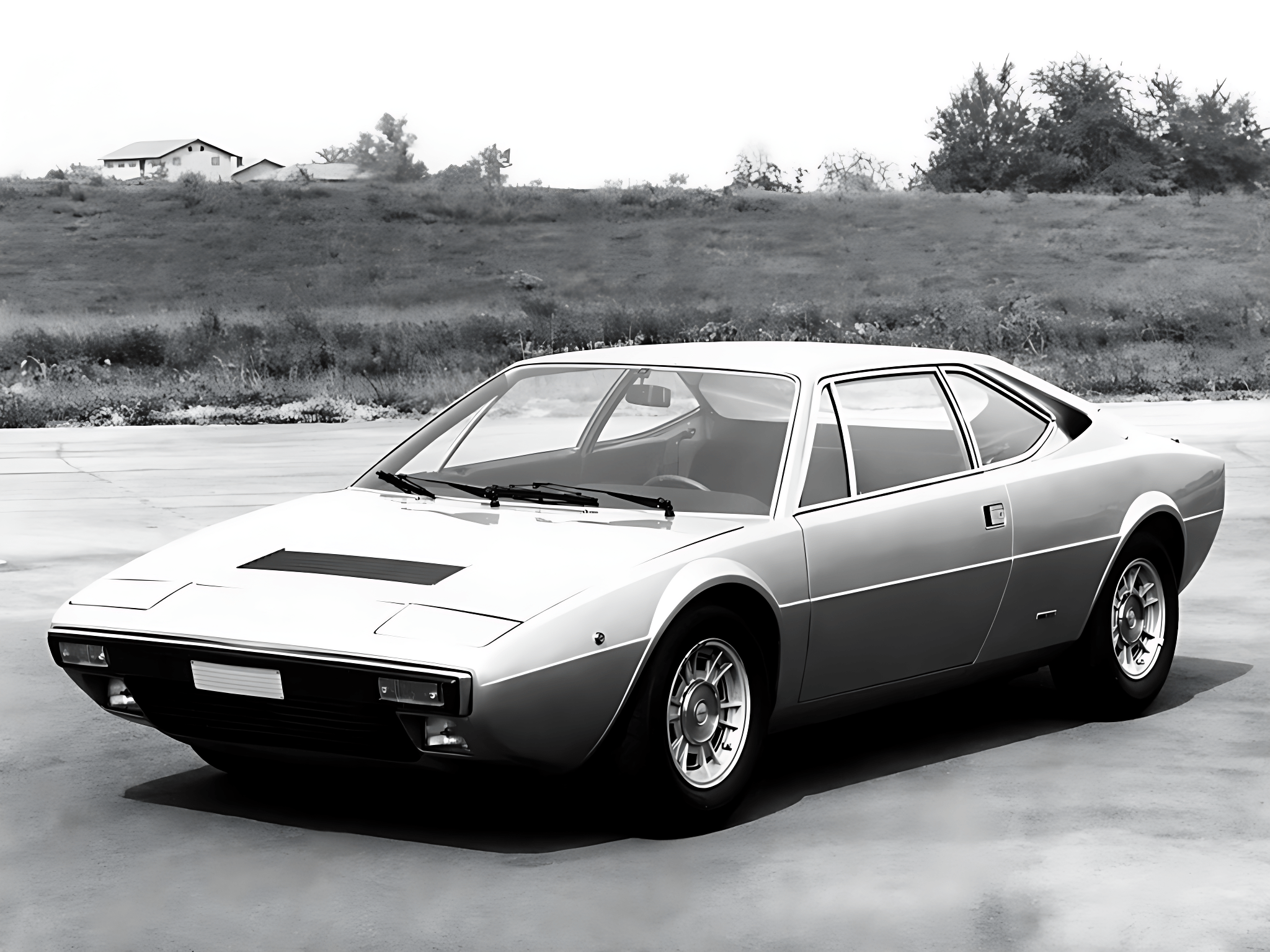
There is also a reason not to use the next decade as retrospective proof. Bertone would later commission important Ferrari and Dino projects, including cars that came to be identified strongly with specific stylists; the Dino 308 GT4 belongs to a much later phase. Those better documented designs cannot settle the authorship of a little cabriolet built in the first years of the Ferrari road-car programme. Until a chassis-specific period document emerges, 0057/S remains a Bertone-bodied Ferrari with a contested personal design attribution.
A date that refuses to settle
The year 1950 appears frequently beside the cabriolet. A specialist Ferrari register identifies 0057/S as a Bertone-bodied car built in that year, with right-hand-drive steering, a blue exterior and an engine number corresponding to the chassis. Another coachbuilding history gives 1951 as the building period. Both can be repeated accurately as attributions to their respective sources, but neither should be converted without qualification into a factory-certified day of completion. A chassis could be constructed in one year, acquire its body in another, and receive public attention only after further finishing work. Without the relevant build sheets, even an apparently simple year column may hide several separate events.
One register also associates the cabriolet with the Geneva Motor Show in March 1950. That is a tantalising entry, because it would place the car before the better-known Turin display. Yet the original Geneva catalogue, a contemporary stand list or an unequivocally identified period photograph has not been brought to bear on the claim. It is better treated as a proposed early appearance rather than included as an established stop on a motor-show itinerary. The difference between recording a possibility and creating a confirmed exhibition history is particularly important for a one-off; a mistaken show date can easily become the foundation of an invented production chronology.
The Turin appearance is on firmer ground. The 1951 Turin Motor Show has long been associated with Bertone’s blue Ferrari, and an archived photograph is captioned with the chassis number and the dates 4–15 April. Specialist Ferrari accounts likewise place 0057/S on the stand in April 1951. The photograph is an historical witness to a visible automobile, but the caption’s later wording is not identical to a contemporary factory certificate. Taken together, the accounts establish a persuasive exhibition identity while leaving the earlier Geneva question open. For the article’s chronology, the two dates therefore need different weights, not an artificial reconciliation.
The engineering Ferrari supplied
It was Ferrari, rather than Bertone, that supplied the essential mechanical proposition. The early 166 Inter was built around the Colombo V12, a front-engine layout and the running gear of a sporting grand tourer. Contemporary roadgoing examples generally used the roughly two-litre engine and a chassis designed to accept individually constructed bodywork. Different coachbuilders could transform the passenger compartment, openings and luggage accommodation while retaining the mechanical architecture that made the result recognisably Ferrari. This separation between chassis engineering and body design was part of the commercial arrangement, not an argument that the finished coachwork was only decoration.
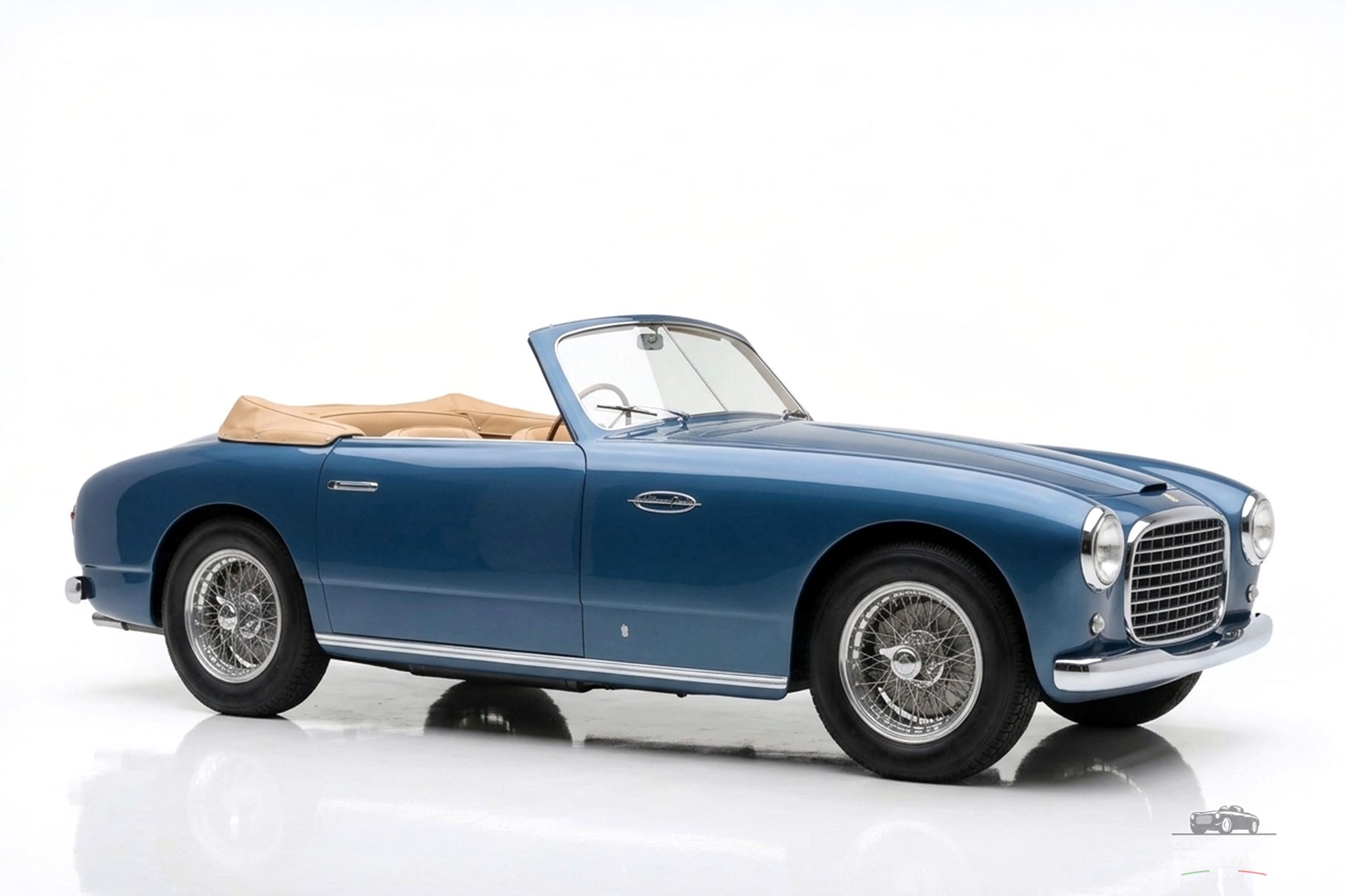
The Bertone cabriolet’s right-hand drive, repeatedly recorded for 0057/S, is a useful reminder that early Ferrari specifications did not follow later consumer assumptions. Right-hand steering was familiar in Italian competition and sporting circles, where drivers were used to that arrangement. It does not establish a British destination, and it is not a substitute for an original order form identifying the client. The car’s blue finish is similarly well supported by specialist descriptions, but neither the original paint manufacturer nor a definitive paint code has been established. Repainting later in its life makes the distinction between documented early colour and presently surviving original material even more consequential.
It would be easy to fill the remaining gaps from a standard 166 Inter data table: wheelbase, weight, gearing and the precise body construction could all be copied from a related car. That would create apparent precision without having measured this one. The surviving material for 0057/S does not yet resolve its individual coachwork dimensions, body number or the details of its initial final assembly. The Stabilimenti Farina coupés provide an instructive comparison, not a source from which the Bertone body’s measurements may simply be inherited. An individual chassis record asks for individual evidence.
A show car, not a racing result
After Turin, the cabriolet seems to have remained visible within the northern Italian automobile world. Accounts of the chassis describe an appearance at an A.I.C.A.R. gathering in Milan in 1951, although a precise programme and dated photograph have not been independently matched to the car. Another repeated detail is a role as a safety car at Monza during the 1951 GP Vetturette. Such an assignment would have suited a fast, open Ferrari; it would also explain why a show car might be photographed in a motorsport setting without appearing among the competing entries.
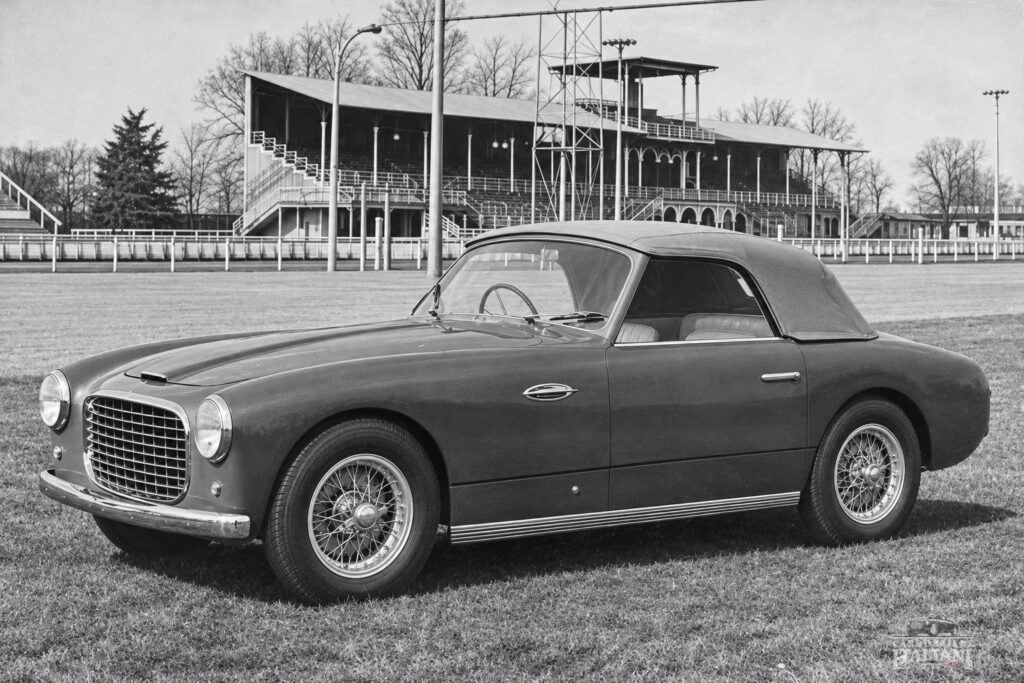
These statements require care with vocabulary. A safety car did not win a class or complete a race in the sense of a competitor. A special-bodied Ferrari displayed near a circuit was not necessarily entered, timed or driven by the owner in an official event. There is no sound basis for assigning 0057/S a race number or a sporting result from the Monza account alone. The same discipline applies to Milan: a reported display or club appearance should not become a concours award because a modern database happens to contain a prize field.
For comparison, Nuccio Bertone’s 0046M has a genuine competition record, including period appearances in Italian road racing before its Zagato transformation. That contrast is more revealing than an invented sporting achievement for 0057/S. Bertone could make a name both by putting a car into competition and by displaying a one-off body before potential clients. The blue cabriolet appears to have belonged primarily to the second category. Its visibility depended on the Turin stand, on the reputation of its bodybuilder and on the appeal of Ferrari’s still unfamiliar roadgoing V12, rather than on victories traceable in an official classification.
From Turin to Düsseldorf
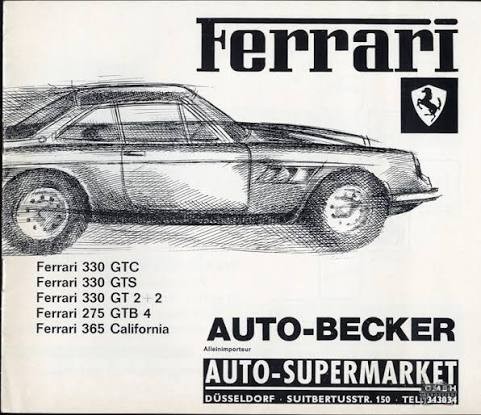
The next stretch of the story is defined less by Italian motor shows than by an address in Germany. The historical account places the Bertone cabriolet in the stock of Auto Becker, Düsseldorf, by 1957. Auto Becker was one of the names through which imported and unusual automobiles reached German enthusiasts, but a dealer inventory entry is not the same thing as a completed transfer of ownership. Without a bill of sale, the fact of the car’s presence there should remain distinct from any imagined transaction involving a particular buyer or price.
In the years after the war, cars like the 166 Inter could become awkward possessions. They required specialist attention, their bodies were handmade, and the series was small enough that an ordinary garage could not rely on a comprehensive parts supply. Even a mechanically conventional maintenance task could be more complicated when a chassis had passed through a coachbuilder and then across national borders. This context helps explain the later advertisements without pretending to know what happened to the Ferrari on each day between Turin and Düsseldorf.
At some stage, the body lost the blue of its show period. By the middle of the 1960s, the car was being described as red-brown in German classified advertising. Colour alone does not reveal the number of repaints or whether any original finish remained underneath. The distinction between a recorded colour in an advert and a modern restoration’s interpretation is a familiar trap in historical descriptions. A car could change shades because a proprietor wanted something different, because a repair required repainting, or because a faded period photograph was later interpreted incorrectly. No such explanation can be assigned to 0057/S without documentation; the colour change itself is sufficient to mark the passage of time.
Three thousand three hundred marks
In March 1965, the Bertone Ferrari was advertised in the German magazine auto motor und sport. A later chassis-by-chassis Ferrari history reports an asking price of DM 3,300, a red-brown exterior and a defective engine. The advertiser is named Wolfgang Kaspar in that account; other summaries spell the surname Kasper. Both forms circulate, and a scan of the original advertisement would be preferable before treating either as final. The low numerical figure catches the eye of anyone accustomed to modern Ferrari auction prices, but it belongs to its own circumstances: a worn, specialised car in need of mechanical attention, offered in West Germany in 1965.
An advertisement is a statement by a seller. It may describe the car’s condition as the seller understood it, and it may record the sum he hoped to receive. It does not prove that a purchaser appeared, that the car changed hands at that amount or that the advertised defects were the only defects. For 0057/S, preserving the distinction between an asking price and a realised sale is essential. The reported DM 3,300 is a period market signal; it is not a hammer price and should not be displayed among modern auction transactions without that qualification.
There is a second classified notice. In October 1965, Erich Doerflinger is reported to have offered the same Ferrari for DM 4,900. The later source speculates that the engine may have been repaired, pointing to the higher price. That is a plausible suggestion, not proof of completed work, and the increase itself cannot establish what was fixed. It would be equally mistaken to conclude that the earlier DM 3,300 represented Doerflinger’s purchase price. Between March and October, the car’s appearance in two named advertisements is the secure narrative thread. What changed mechanically, how much money passed between owners and whether both asking prices were negotiated remain unanswered.
In an era when so many collectors’ histories leap from motor-show fame directly to twenty-first-century auction estimates, the two classified figures have a different appeal. They place a rare Ferrari into the ordinary commercial language of repairs, advertisements, owners trying to sell and buyers considering whether a tired imported sports car was worth taking on. They also fix a rare point of chronology in a life otherwise remembered through fragments and names.
The engine that became two numbers
The mechanical story becomes less certain when a later engine is considered. One account says the cabriolet received engine 0201EL, while another identifies the replacement as 0210EL. The difference is not a typographical detail that can responsibly be smoothed away. Ferrari engine numbers are part of the identity of these early cars, and the insertion of a later or larger-capacity unit could mean a substantial alteration to their mechanical configuration. Until a period workshop record, engine photograph or clear contemporary registry entry reconciles the figures, neither number should be presented as the established replacement fitted to 0057/S.
The older car’s original engine is said in some accounts to have been retained with it, although this too requires a dated inventory or an equivalent primary record. A separate register identifies the engine associated with the original car as 0057S. If an original unit remained beside a modified chassis during subsequent restoration, it would be valuable evidence; if the statement arose from a later recollection, it must be treated with more caution. The fact that two incompatible replacement serials appear in print suggests that the history has already passed through several rounds of copying or interpretation.
Engine changes were not unusual among the early Ferraris. Owners seeking improved performance, repairability or simply a return to the road could use whatever suitable components were available, particularly once the cars ceased to be current models. The life of the Ferrari 166 MM Vignale family illustrates the broader world of bodies built, rebuilt and modified in response to changing owners and purposes. The specific mechanical story of the Bertone cabriolet, however, can only be settled on its own documents and surviving components. Its value as an historical object lies partly in those tangible traces, not in an idealised specification copied from a catalogue.
The restoration that did not reach the finish
Later histories name Peter Wellenstein among the German custodians of 0057/S, followed by Kurt Gaensdorfer in Karlsruhe. Exact dates and the legal character of every transfer have not been established in the available published material. Some summaries shorten the chain, moving directly from Erich Doerflinger to Gaensdorfer; others include additional intermediaries. The differences are manageable when each name is presented as part of a reported chain, but they should not be disguised by an apparently seamless sequence of ownership dates.
Gaensdorfer is said to have begun a restoration of the Ferrari. By then the appeal of the old cabriolet was no longer merely the possibility of putting a neglected sports car back on the road. The rebirth of the collector market had changed the way such automobiles were valued, and the survival of an individual Bertone body had become a significant part of the car’s identity. A restoration of a one-off requires decisions that a standard model scarcely encounters: which colour to reproduce, which engine should be installed, how much later material can remain and whether a disputed attribution belongs in a restoration file at all.
Gaensdorfer died in 1999. Accounts of the car describe a legal or inheritance dispute that complicated the unfinished work. There is no reason to embellish that information into a modern account of named claimants or a final judicial decision when no court document has been independently examined. A later specialist history uses qualified language about the inheritance, not a verifiable statement of the present legal position. Accordingly, the story should stop where the available sources stop. It does not establish that the Ferrari remains dismantled today, that litigation is still active in 2026 or that a particular collection now possesses it.
What remains is a remarkably uneven documentary trail. The Turin image is vivid, the German advertisements have exact months and prices, and the restoration episode has a recognisable name and a year that altered its course. Between those islands are gaps large enough to admit several competing narratives. Filling them by supposition would create a smoother story and a poorer historical record.
What the Bertone badge can still tell us
Chassis 0057/S belongs to a moment just before Ferrari road-car identity settled into shapes now treated as natural. The company could supply a compact twelve-cylinder chassis; an Italian coachbuilder could give it a formal open body; a German owner could later regard it as a troublesome, repairable second-hand automobile. Each of those descriptions was true to a different time in the same car’s life. None required its later rarity to be understood in advance.
The photographs of the blue cabriolet can be read beside the Touring Aerlux experiments and the more conventional early Farina-bodied Inter coupés. In that company it is evident that Bertone was not working from a universal Ferrari styling vocabulary. Its craftsmen were answering a practical brief on a mechanical base still offered to different specialists. The firm subsequently became associated with some of the most forceful departures in Italian design; this small, relatively restrained Ferrari shows an earlier stage of that evolution.
The surviving disagreements remain specific. A period Geneva document might clarify the possible March 1950 appearance. An original design sketch could distinguish Revelli, Nuccio and Michelotti. The 1965 issues of auto motor und sport could establish the precise wording and spelling of the two advertisements. A gearbox or engine ledger might distinguish 0201EL from 0210EL. An original German registration document could refine the ownership sequence, while restoration invoices or court records might establish what became of Gaensdorfer’s unfinished work. None of those materials needs to be invented in order for the story to hold together.
For now, the most eloquent contrast is between two public moments. In April 1951, Bertone’s blue Ferrari had the polished confidence of a show car. Fourteen years later, its red-brown successor was advertised in Germany with a defective engine and a price of DM 3,300. The distance between those descriptions is the distance covered by an actual automobile, not a fixed museum label: a body designed for admiration, a V12 built to be driven, and a chassis whose documentary life continued long after the lights of the Turin stand went out.

ABOUT THE AUTHOR
Andreas Scheidl
Italian classic car enthusiast with German roots. Renowned as a respected figure in the classic car community, he serves as a jury member at various international concours d'elegance, including the Classic Gala Schwetzingen and Mantova. As a content creator, Andreas passionately shares his profound knowledge and appreciation for vintage automobiles. His heart beats for cars designed by Giovanni Michelotti, showcasing his discerning taste and dedication to preserving the timeless elegance of automotive history.
More stories by Andreas Scheidl ↗CONTINUE READING
Posts You Might Like
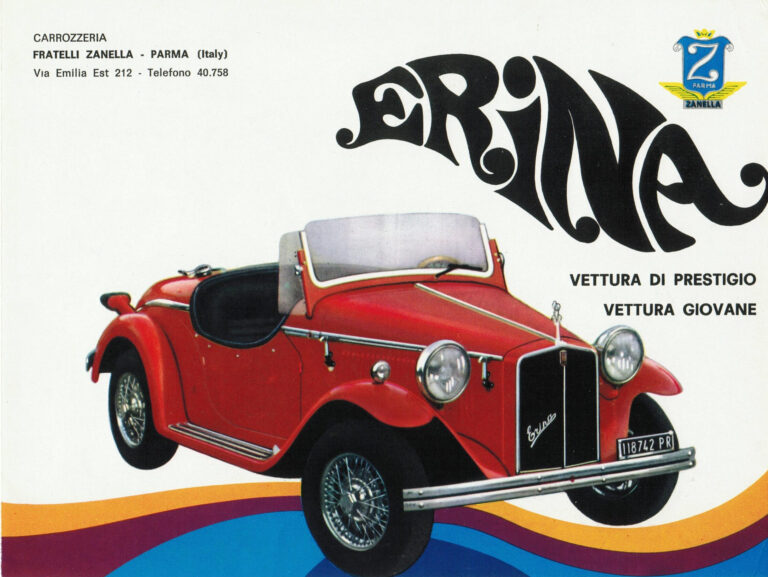
The Fiat 500 Erina and the Zanella Brothers Who Built It
The Zanella brothers turned the Fiat 500 F into a two-seat roadster in Parma. Trace the Erina’s Turin show debut and the mystery of how many were built.
Read story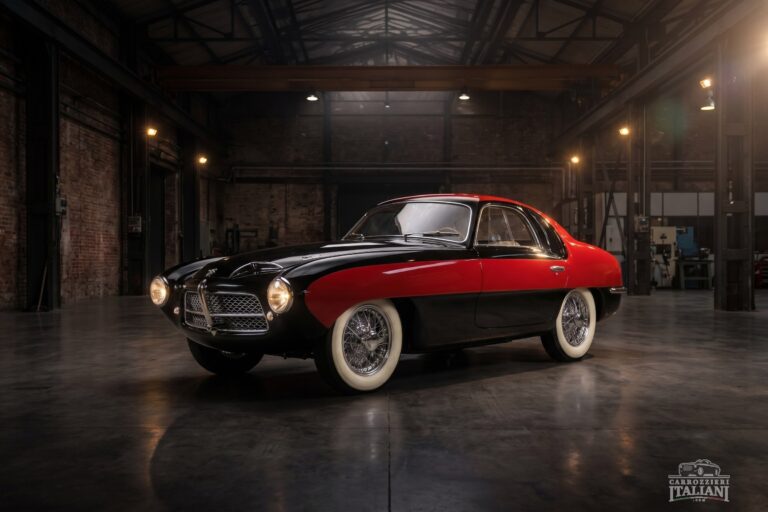
The Pegaso That Missed New York: The Z-102 Thrill
The 1953 Pegaso Z-102 Thrill missed New York, dazzled Turin and survived a remarkable journey. Explore Touring’s design team and chassis 0133.
Read story
Abarth 1500 Biposto: Why Packard Gave It Away
A Letter from Detroit On 10 July 1953, James J. Nance, president of the Packard Motor Car Company, wrote to Richard Austin…
Read story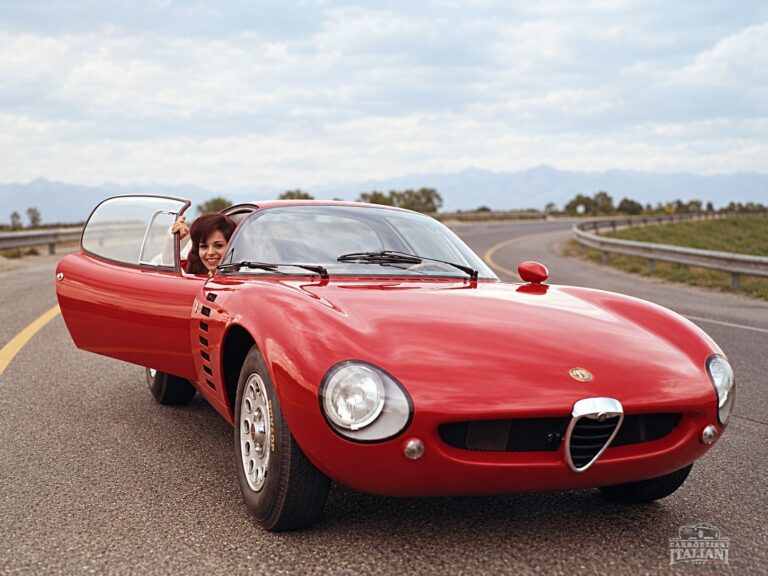
Alfa Romeo Canguro: Giugiaro’s Lost Bertone Coupé and the Long Road Back
Built on a Giulia TZ racing chassis, Bertone’s extraordinary 1964 one-off was wrecked at Monza, left to deteriorate and finally restored four decades later. Its story is as remarkable as its shape.…
Read story
THE CONVERSATION
Comments 0
Share a memory, a period photograph or a documented detail about this story.