
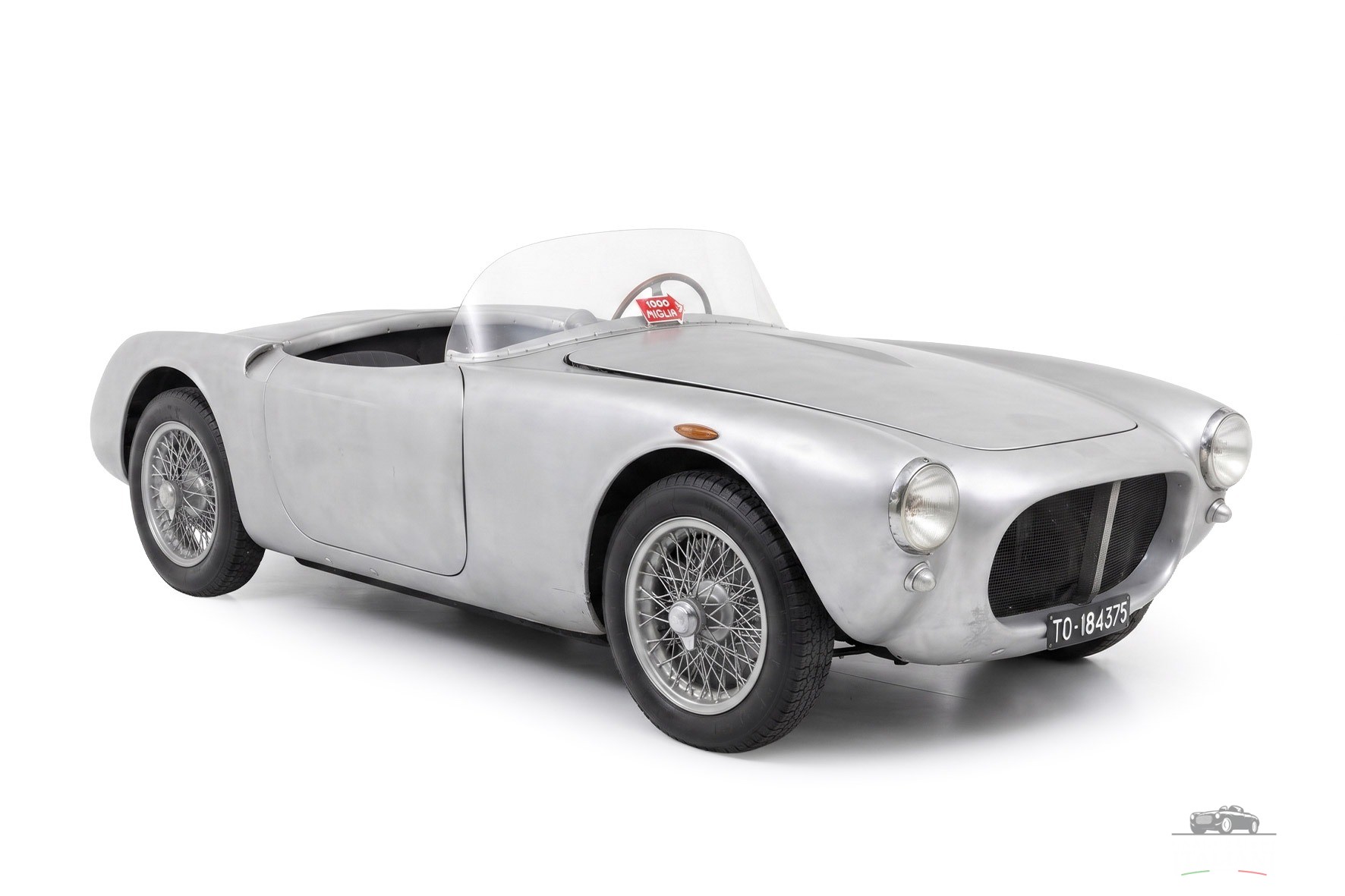
Feature: Gilco Chassis
In the late 1930s, engineering student Gilberto Colombo began studying special steel tubes, developing the technical expertise that would define his work in lightweight structural design. From 1946 he collaborated with Enzo Ferrari, creating extremely light and rigid tubular chassis for racing cars. For Ferrari’s first single-seaters, Colombo designed an oval-section tube chassis that combined low weight with high stiffness. This solution was used on the Ferrari 125, powered by a 1.5-liter V12, giving the car a total weight of just 650 kg, well below its competitors. In 1947 Gilco published its first catalog, showing chassis weights from 32 kg (Gilco 750 Sport) to 88 kg for the “Isorigid” system, a chassis combined with load-bearing bodywork. The same year, Ferrari won its first race in Rome with a Gilco chassis. Throughout the 1950s, Ferrari continuously commissioned Gilco Autotelai, while many other manufacturers—including Maserati, Stanguellini, and Nardi—also adopted Gilco chassis.
