

Riva
Carrozzeria Riva evolved from nineteenth-century carriage construction to commercial vehicles, advertising bodies and sporting automobiles during the twentieth century.
Explore record ↗
1949Coachwork by Riva
THE VEHICLE AT A GLANCE
THE PEOPLE BEHIND THE CAR
Carrozzeria Riva evolved from nineteenth-century carriage construction to commercial vehicles, advertising bodies and sporting automobiles during the twentieth century.
Explore record ↗01 / THE STORY
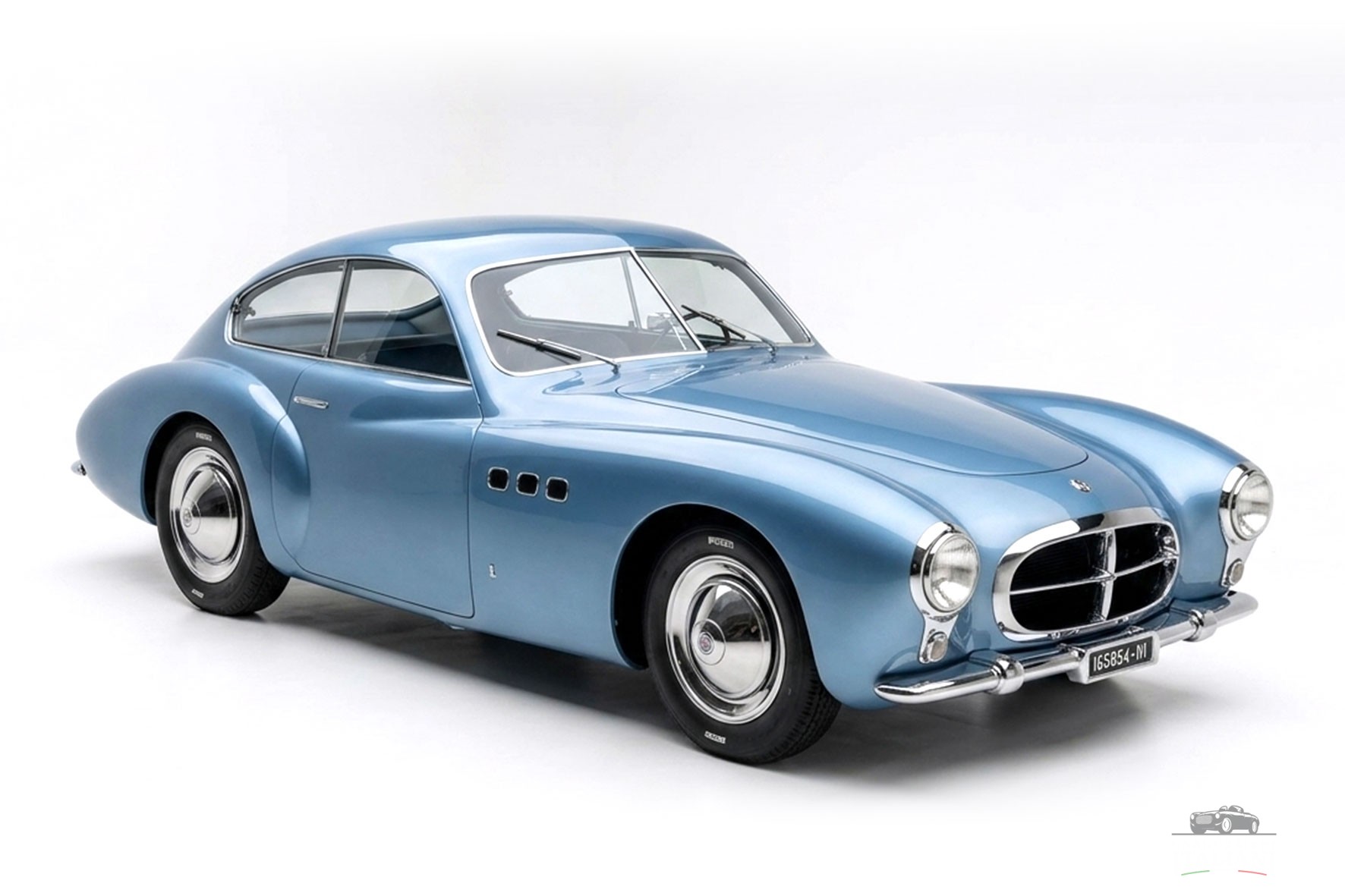
The 1949 Veritas 328 Riva is a one-off coupé bodied by Carrozzeria Riva of Merate for Count Giovanni “Johnny” Lurani Cernuschi. The car originated in a commission to rebody a BMW 328 and is also described in historical accounts as a BMW-Veritas. The name identifies its connection with the post-war Veritas tradition, rather than establishing a separately documented series-production model. The exact chassis number and engine number of Lurani’s individual car have not been verified.
In 1949 Lurani turned to the Riva workshop near his residence to give a BMW 328 a new closed body. Lurani was an Italian racing driver, engineer and motoring writer whose association with the coachbuilder predated this commission. Riva had already worked with him on racing-related projects, including the Nibbio record car. For the 328 coupé, Lurani supplied the design direction and specifications while the Riva workshop carried out the coachwork. This distinction matters: the commission documents his involvement in the appearance and requirements of the car, but it does not independently establish the authorship of every stylistic detail or the identity of each craftsman who worked on it.
The resulting berlinetta had a long bonnet, a low cabin relative to its wings, and an integrated form shaped around the mechanical package. Although sometimes discussed alongside Veritas sports racers, it was a privately commissioned Italian-bodied car, not a standard example of an early Veritas competition body. Period identification and later accounts do not provide enough information to determine whether the underlying BMW chassis retained its original specification after the rebody.
The Lurani car preceded a small family of Riva bodies often referred to as the Tipo Monza. Its proportions and surface treatment became reference points for subsequent specials on Fiat chassis. Lurani’s wife Ivonne reportedly requested a comparable body on a Fiat 1100B after seeing the BMW-Veritas. Riva subsequently applied related forms to other cars, including the Fiat 1100 Monza and later Fiat 1400 Monza. The expression “Tipo Monza” should be understood as a description of this related styling family, not proof that every derivative had an identical body or a common mechanical specification.
An especially close relation is the later Alfa Romeo 6C 2500 SS La Serenissima, built with a separate Cattaneo tubular chassis and Alfa Romeo mechanical components. Its bonnet line was lower than that of the BMW-based Riva car, reflecting the different position of the six-cylinder engine. The two cars must not be conflated: the BMW-Veritas commission dates to 1949, whereas the Alfa-based Serenissima belongs to the subsequent Cattaneo project.
The pre-war BMW 328 provided the mechanical starting point for the commission. The broader post-war Veritas enterprise developed sports and racing cars using BMW 328-derived components, but figures published for other Veritas vehicles cannot automatically be applied to Lurani’s coupé. In particular, an engine displacement or output, gearbox configuration, chassis serial and period registration for this specific body have not been substantiated by an individual factory or registration record.
The Riva coupé is treated as a single commissioned vehicle. Its significance in the coachbuilder’s history lies in the documented progression from Lurani’s BMW-based design to the related Fiat bodies and the later Cattaneo/Alfa project. Subsequent ownership, surviving configuration, restorations, concours participation and auction transactions remain unconfirmed for this exact car; records concerning other BMW 328s and Veritas racers do not establish its provenance.
02 / TECHNICAL IDENTITY
03 / DESIGN, BODY & SUPPLIERS
Coachbuilder / Design studio
Carrozzeria Riva evolved from nineteenth-century carriage construction to commercial vehicles, advertising bodies and sporting automobiles during the twentieth century.
Explore record ↗05 / PEOPLE, COLLECTIONS & MUSEUMS
08 / GALLERY
CONTINUE EXPLORING
CONTINUE READING
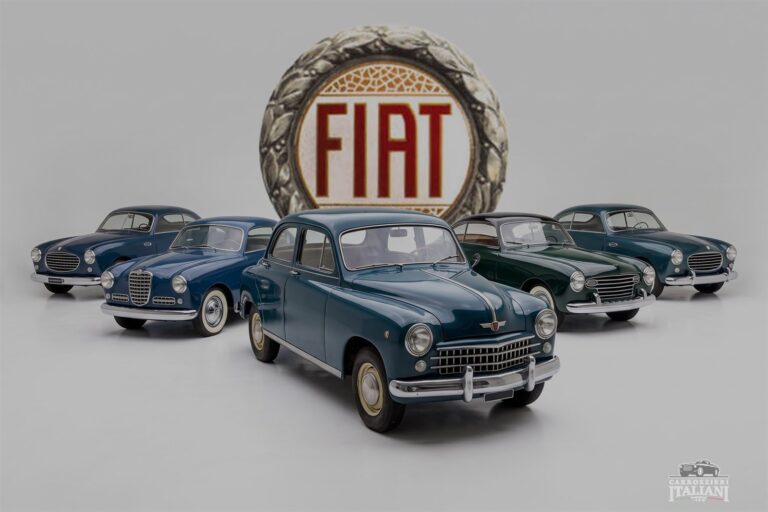
From Touring and Abarth to Farina, Ghia, Vignale, Boneschi, Bertone, Viotti and the smaller carrozzerie, the new Fiat quickly became one of the richest bases for Italian special bodies in the early…
Read story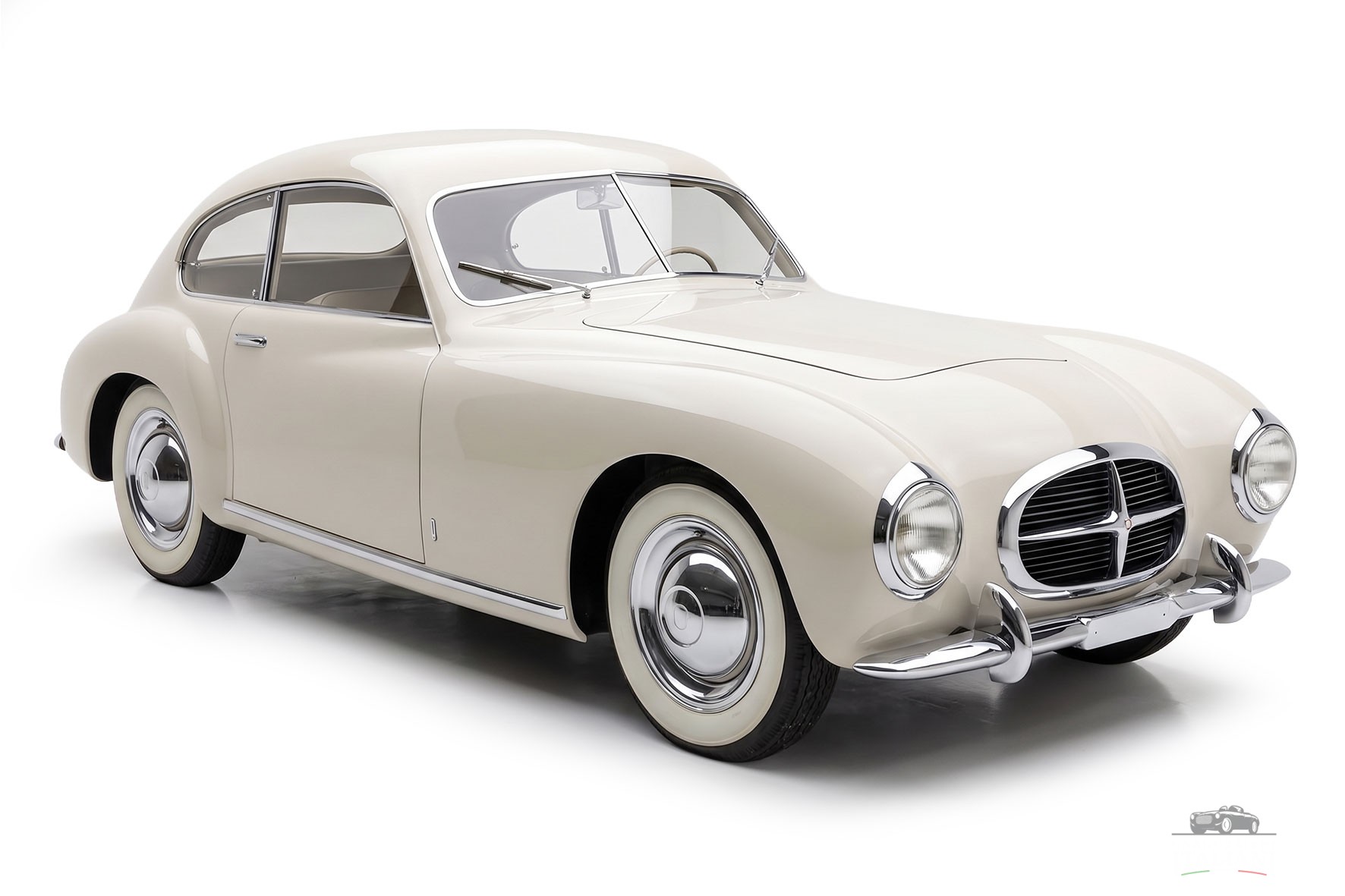

THE CONVERSATION
Comments 0