
Salon de l’Automobile – Paris 1937
AT A GLANCE
- Date
- 1937
- Venue
- Grand Palais
- Location
- Paris · France
THE EVENT
Event overview
The XXXI Paris Auto Salon opened in 1937 at the Grand Palais, held in a context marked by rising production costs and limited French industrial innovation. Most French manufacturers continued previously established technical and stylistic formulas, presenting refined versions of existing models rather than fully new designs. The dominant themes of the 1937 Salon were mechanical economy, reduced fuel consumption, advances in carburetion, and a general increase in engine speeds and maximum velocities across all displacement classes. Independent front suspension, improved braking systems, and developments in silent, semi-automatic, and automatic gearboxes were widely adopted.
Despite the strong French presence, foreign exhibitors outnumbered domestic ones, representing twenty-seven out of forty-nine stands. Italian industry maintained a focused yet visible participation through Fiat, Lancia, Bianchi, Alfa Romeo, and, indirectly, Simca, which produced Fiat-derived models in France.
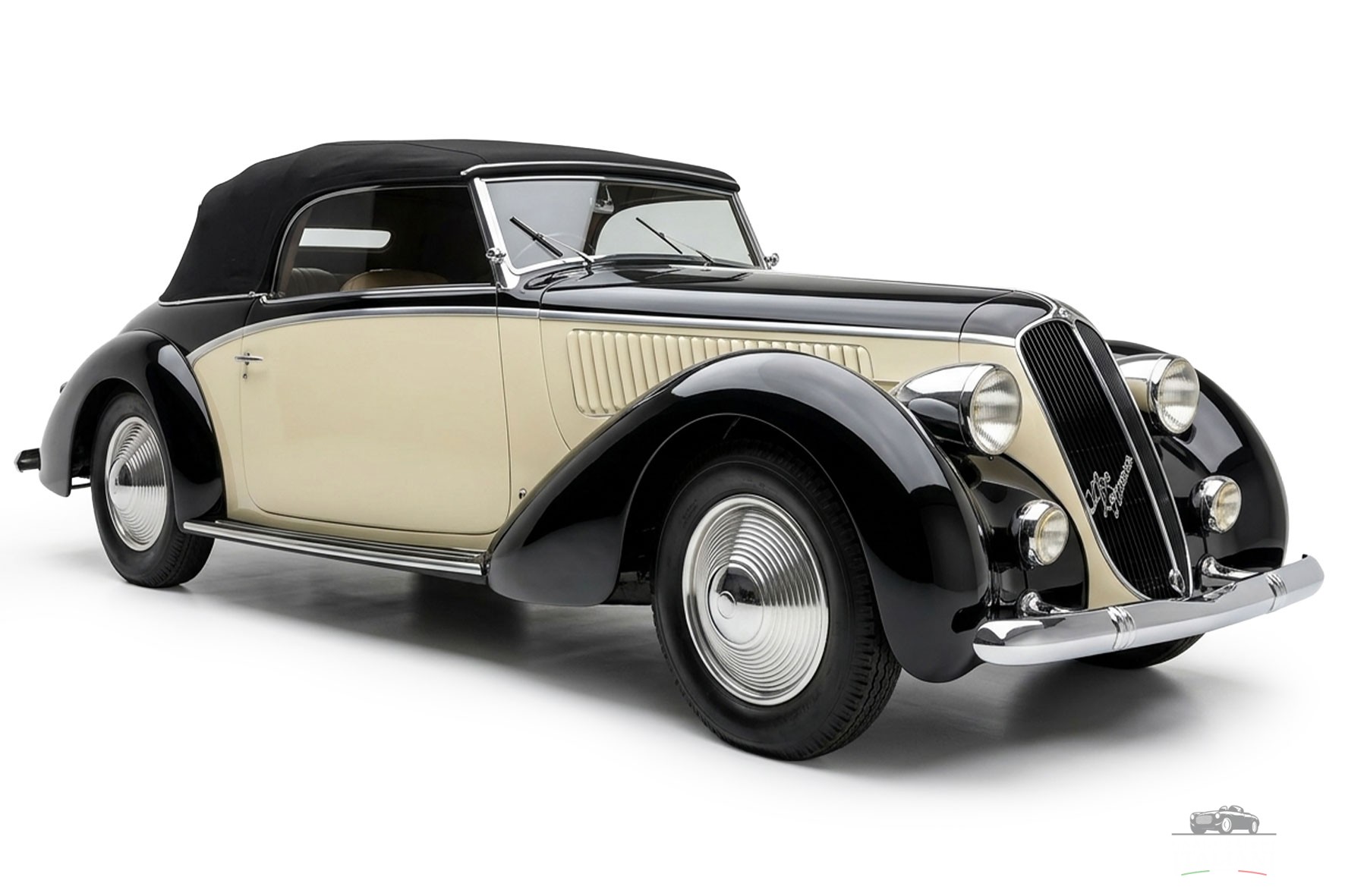
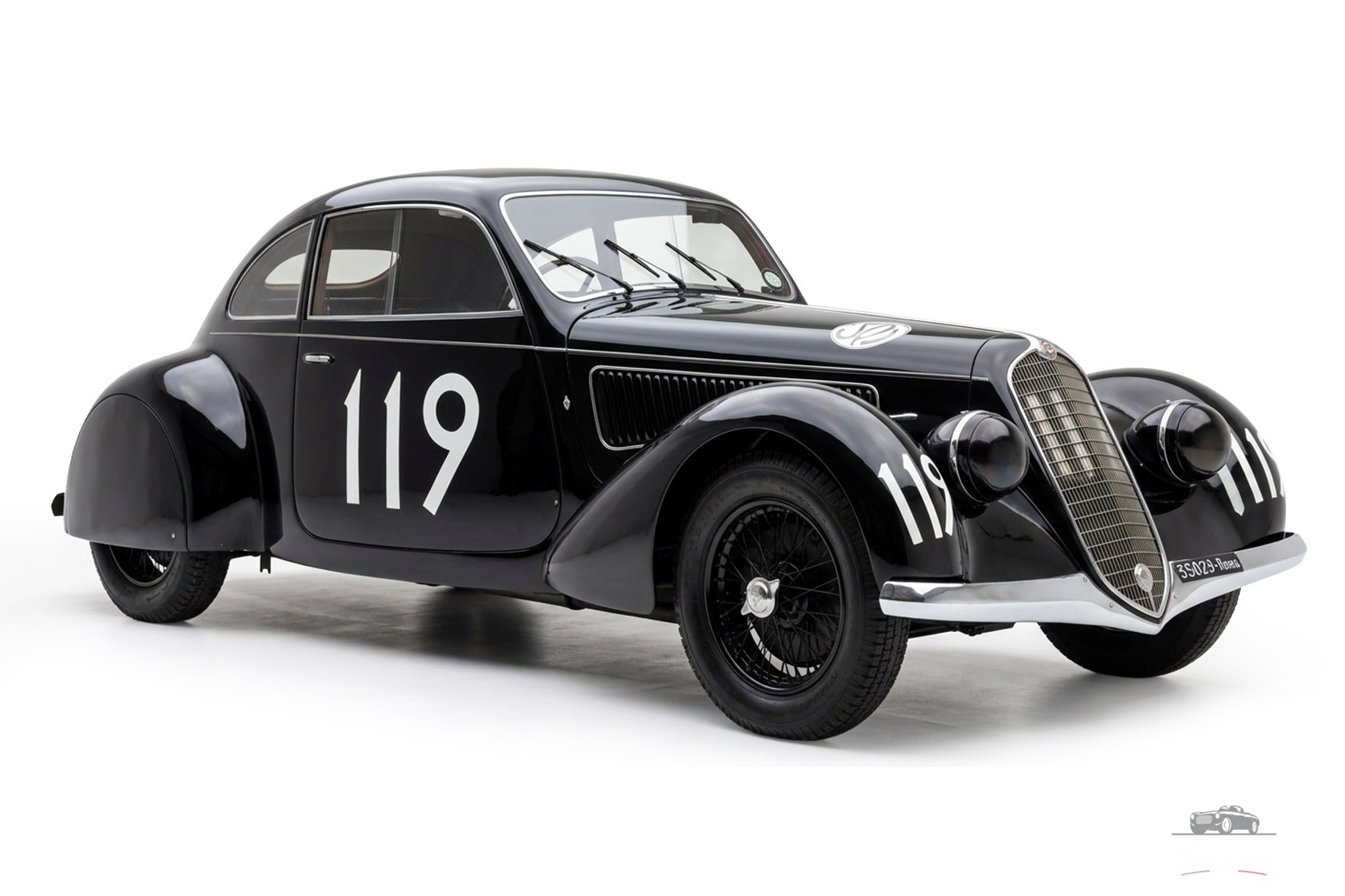
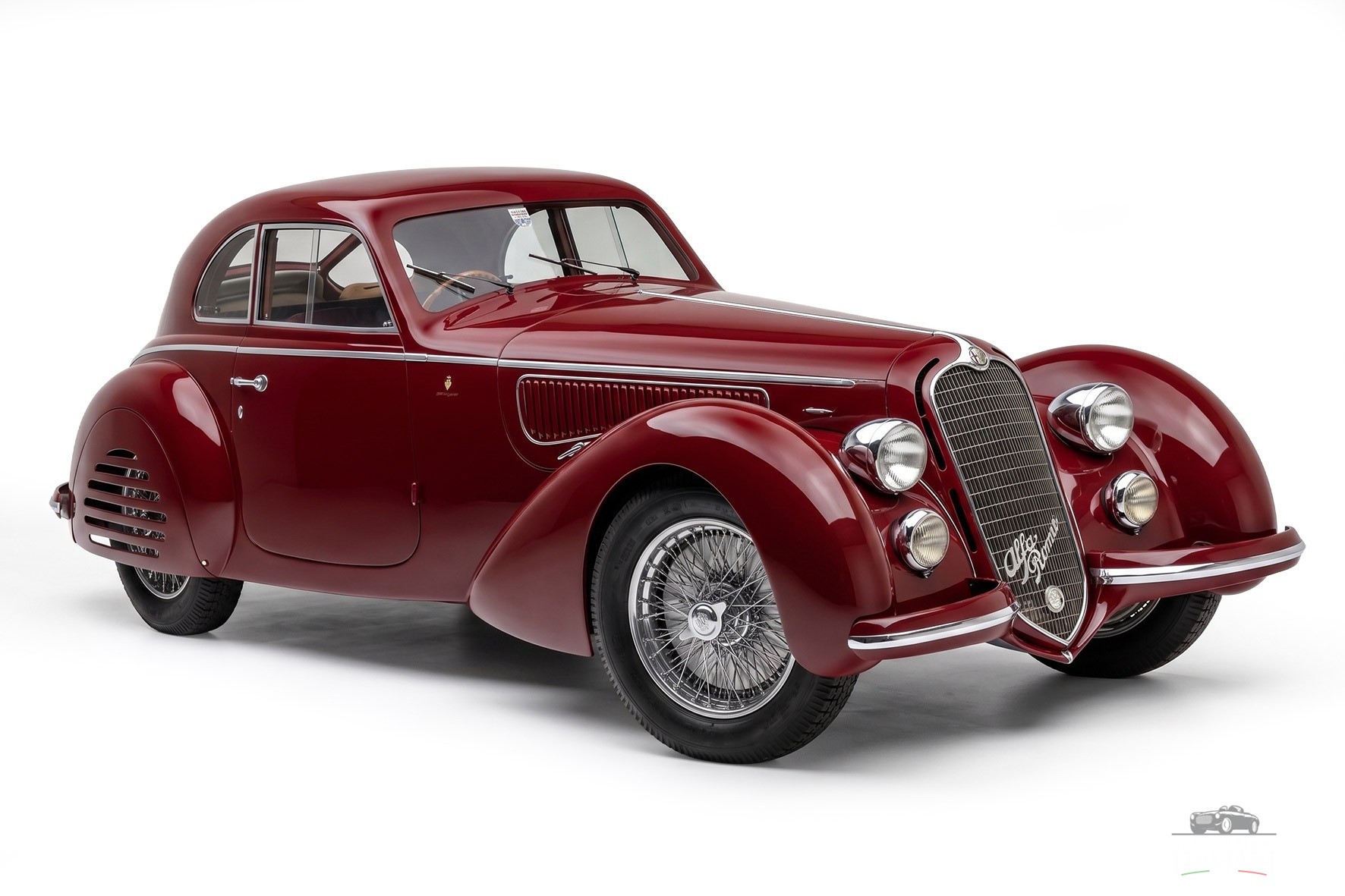
Alfa Romeo displayed two versions of the 6C 2300, including a Pinin Farina cabriolet and a Touring-bodied Mille Miglia variant. A Touring 8C 2900 coupé was also exhibited, its aerodynamic volume and high-performance chassis attracting significant attention within the sports-car segment. These models represented contemporary Italian practice in lightweight construction and advanced mechanical layouts.
Bianchi presented three models in the S.9 series for 1938: the Dolomiti cabriolet, the Viareggio, and a six- or seven-seat closed body designated Imperia. These vehicles indicated Bianchi’s efforts to maintain a position in the upper-middle and luxury segments through updated coachwork and incremental mechanical refinement.
Fiat exhibited three units of the 1500, two standard closed versions with differing interior treatments and a berlina apribile featuring an opening roof. The Fiat 1500, with its streamlined body and advanced chassis for its category, aligned with the Salon’s emphasis on aerodynamic development.
Lancia displayed its Aprilia, marketed in France as the Ardenne, in several body styles: a chauffeur-driven closed version and two berlinette configurations. These models illustrated Lancia’s continued use of unitary construction and independent suspension.
Simca, producing licensed Fiat designs in France, exhibited multiple examples of the Simca 5 (Fiat 500) and two units of the Simca 8 (Fiat 1100), both already achieving notable commercial success on the French market.
FROM THE EVENT ARCHIVE
Photo gallery

CONTINUE EXPLORING
Participating Cars


THE EVENT ARCHIVE
THE CONVERSATION
Comments 0