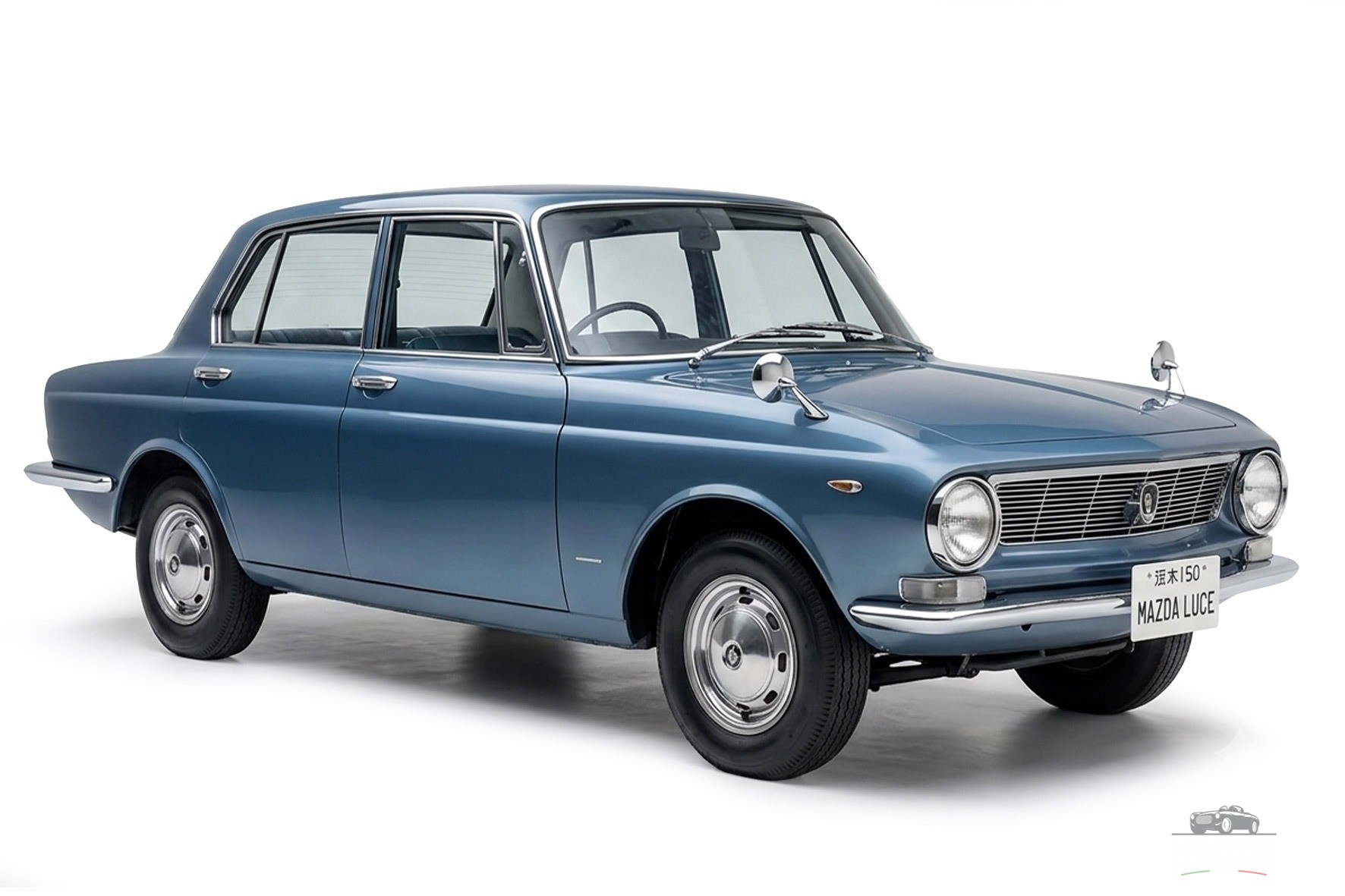
The Mazda Luce 1000/1500 prototype was presented at the Tokyo Motor Show in 1963. It was one of the first visible results of the collaboration between Toyo Kogyo, later Mazda, and Bertone of Turin. The project was developed at a time when Japanese manufacturers were beginning to look at Italian design as a way to create a more international image. Mazda had built much of its early reputation on small and practical cars, but the Luce prototype indicated a move toward a more refined sedan segment. The prototype was designed under Bertone, with the involvement of Giorgetto Giugiaro. It introduced the name Luce, the Italian word for “light”. The choice of name reflected the Italian connection and the more elegant character Mazda wanted for the model. The car had a four-door sedan body with European proportions, a relatively clean side profile and restrained detailing. Compared with Mazda’s earlier production cars, it had a more formal and sophisticated appearance. The prototype was not yet fully resolved in its proportions, and some areas still showed the difficulty of combining Japanese production requirements with Italian styling ideas. The 1963 Luce 1000/1500 was not the final production car. It served as a design and development step toward the later Mazda Luce 1500, introduced in 1965. The production model refined the concept with cleaner surfaces, a lighter roofline, better balance and a more mature sedan body. The Luce 1000/1500 prototype is important in Mazda history because it marked the beginning of a more international design direction for the company. It connected Mazda’s domestic engineering base with Italian coachbuilding and design culture, creating the foundation for one of the most elegant Japanese sedans of the 1960s.



THE CONVERSATION
Comments 0