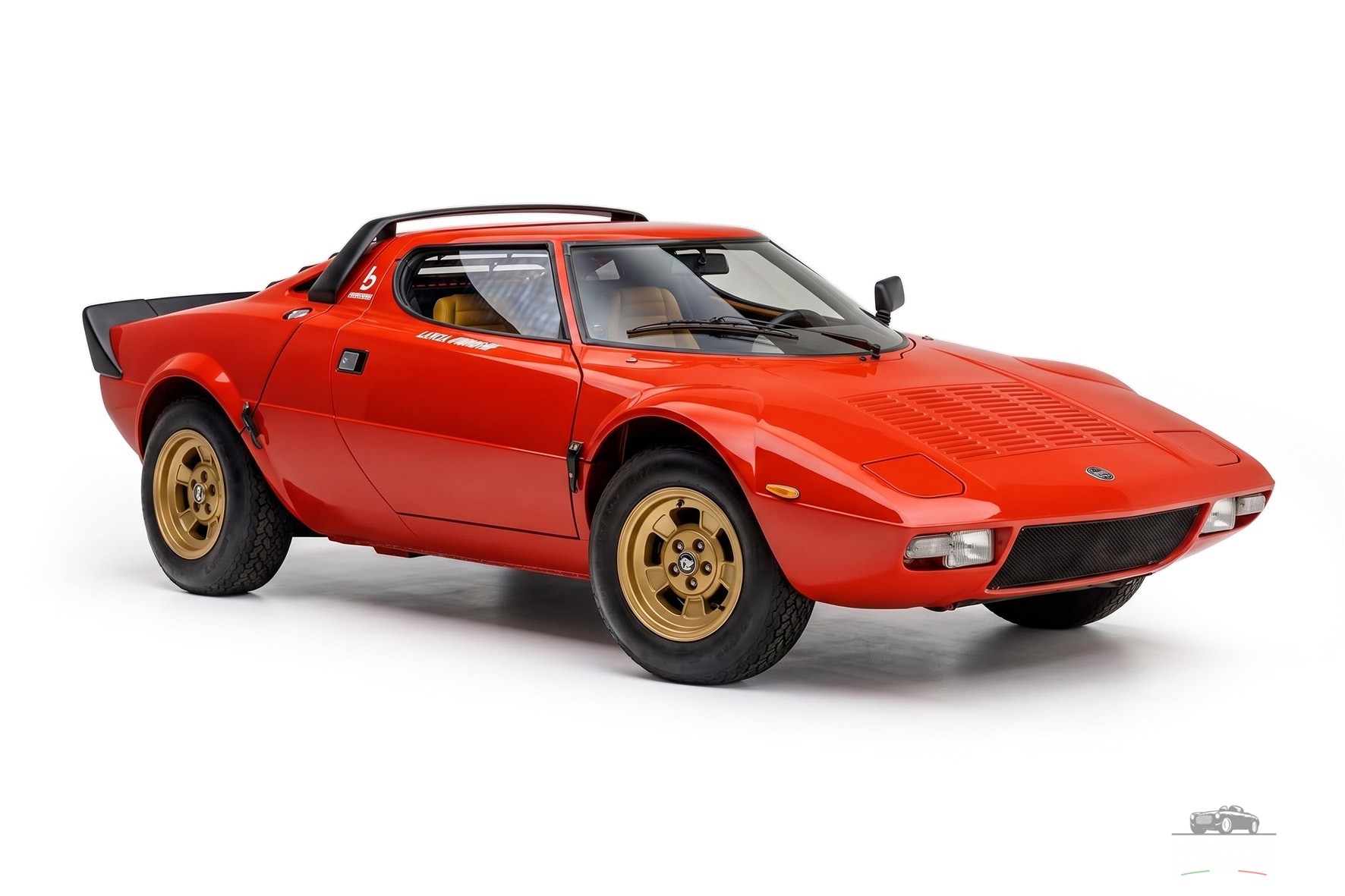
The Lancia Stratos HF was produced from 1973 to 1975 as a homologation model for Group 4 rally competition. It was designed by Marcello Gandini at Bertone and powered by a Ferrari Dino V6 engine. The definitive version, unveiled by Bertone at the 1971 Turin Motor Show, replaced the earlier 1970 prototype. The joint Lancia–Bertone team selected the 2.4-litre (2418 cc) V6 unit with four overhead camshafts, producing 190 hp at 7,000 rpm. Power was transmitted to the rear wheels through a five-speed manual gearbox. The chassis used a steel space frame with fully independent suspension featuring double wishbones and coil springs. Braking was provided by four ventilated discs. The mid-engine layout gave balanced weight distribution and stability at high speed. The body was constructed from steel and fiberglass panels designed for easy replacement during rally service. Dimensions included a 2,160 mm wheelbase, 3,710 mm overall length, 1,700 mm width, and 1,080 mm height. Kerb weight was approximately 980 kg. The two-seat cockpit was enclosed by a single-radius wraparound windshield that provided panoramic forward visibility. Access was through wide, front-hinged doors that integrated sections of the roof. The body design followed a wedge profile with short overhangs and a large rear clamshell section for mechanical access. The fuel tanks were positioned low within the chassis to improve weight distribution. The instrument layout was minimal, focused on essential rally functions. Bertone produced approximately 495 body shells. Lancia’s competition department completed mechanical assembly and testing for homologation. Rally versions of the Stratos developed over 280 hp using modified Dino engines and competition exhaust systems. The Stratos entered international competition in 1973 and achieved rapid success in the World Rally Championship. Production of road-going Stradale versions satisfied FIA requirements for series homologation.



THE CONVERSATION
Comments 0