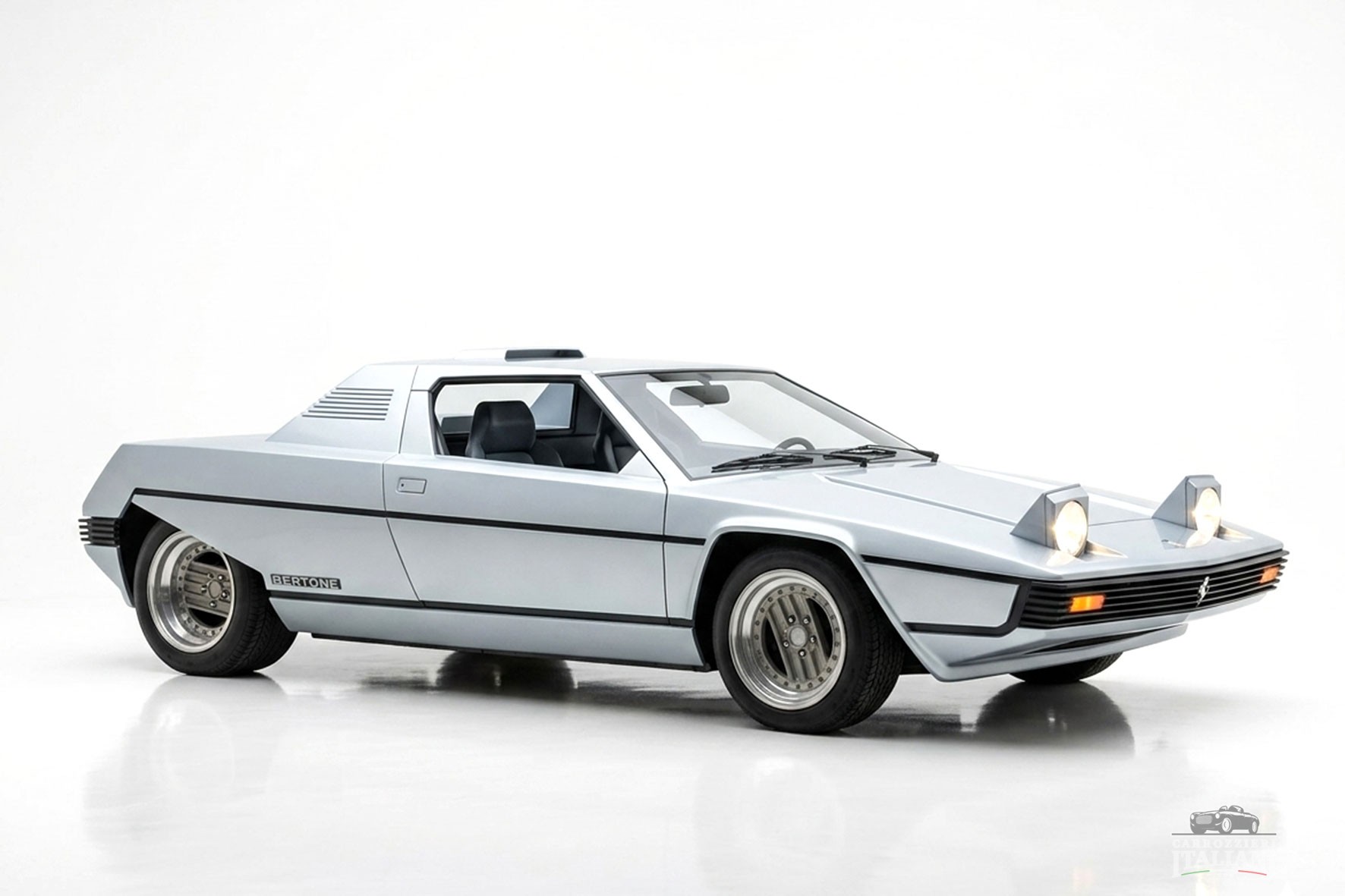
The Ferrari Rainbow emerged as a striking departure from the understated design of the Dino 308 GT4, embodying an experimental foray into unconventional styling. Unlike its predecessor, the Rainbow wasn’t intended for production, allowing Bertone to explore the design theme without the constraints of practicality. Utilizing the same chassis as the 308 GT4 but with a 10 cm reduction, the Rainbow exuded a compact and aggressive aura, complemented by a robust 250 Hp engine. Unveiled at the 1976 Turin Motor Show, the prototype immediately captivated attention with its distinctive design features. Foremost among these was the innovative mechanical hood mechanism, uniquely stowing the hood behind the seats. This feature facilitated a seamless transformation from spider to coupé and back again, embodying the allure of a two-in-one car—an idea that had long captured the imagination of designers worldwide. Marcello Gandini, the visionary behind the Ferrari Rainbow’s design, showcased a commitment to pushing boundaries in the automotive industry. During an era in Italian history marked by a preference for stylistic conformity, the Rainbow stood as a symbol of faith in experimentation and new design concepts. The bold departure from tradition reflected a willingness to challenge norms and explore uncharted territories, demonstrating a belief in the potential for innovation within the automobile industry. While the Ferrari Rainbow remained a prototype and never entered production, its legacy endures as a testament to the creative spirit that drove its conception. The vehicle represents a pivotal moment in automotive design, where the pursuit of unconventional ideas and pushing the boundaries of tradition took center stage, leaving an indelible mark on the history of Ferrari’s innovative endeavors.



THE CONVERSATION
Comments 0