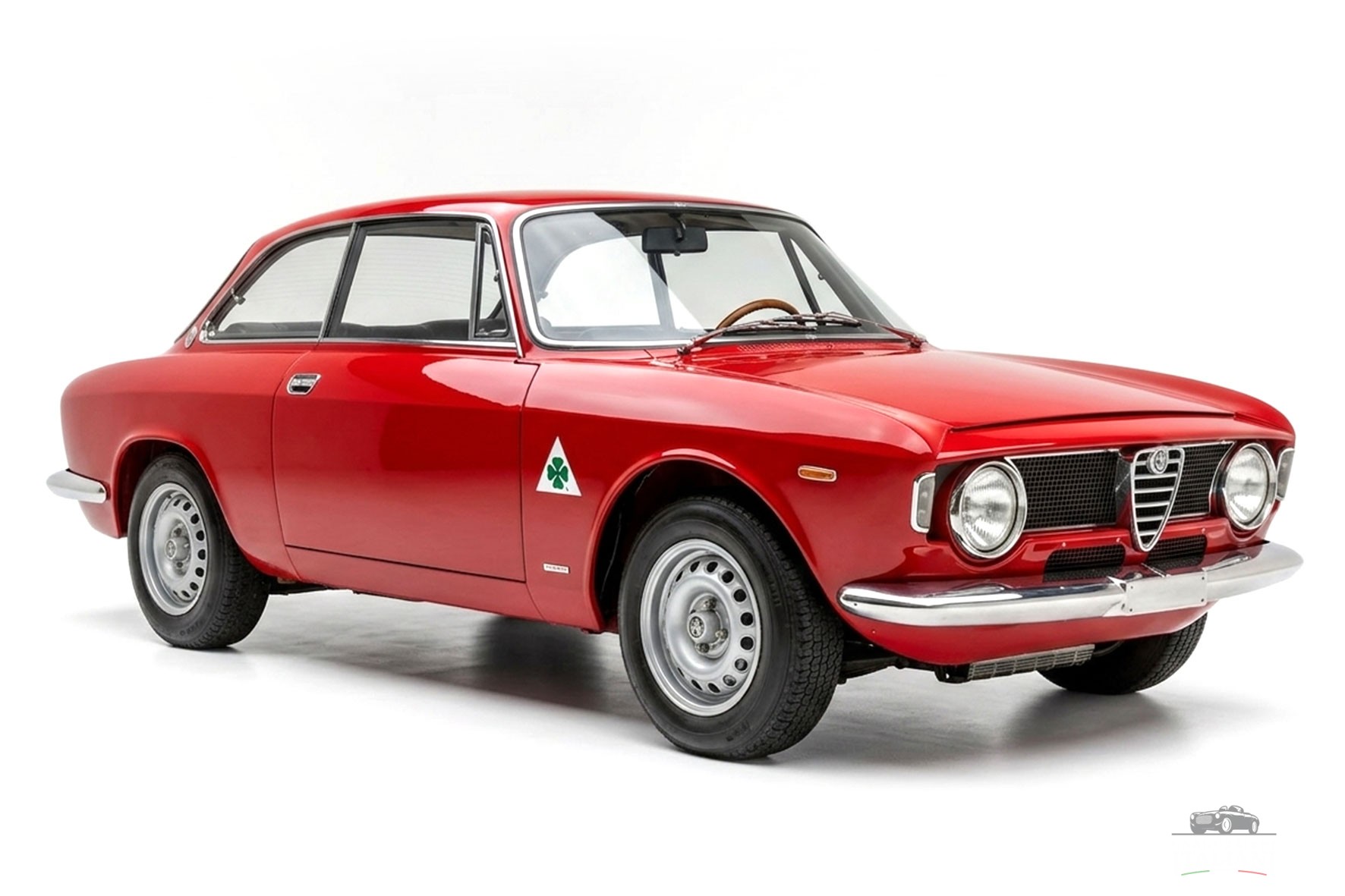
The Alfa Romeo Giulia Sprint GT is a four-seat, two-door coupé introduced in 1963 as the first production member of the 105-series Giulia GT line. The body was designed by Giorgetto Giugiaro while he worked at Bertone, for the Alfa Romeo mechanical platform. The car succeeded the earlier Giulietta-derived Giulia Sprint 1600 and established the basic proportions used by subsequent Giulia GT and GTV derivatives. The model was previewed to the press on 9 September 1963 and presented publicly at the Frankfurt Motor Show three days later.
Development and design
Giugiaro developed a compact, low-waisted coupé with a broad passenger compartment, restrained side surfaces and a large rear quarter window. The rounded roofline and balanced body volumes evolved ideas he had used for the Alfa Romeo 2000 Sprint. The front retained a wide grille incorporating paired headlamps, while a raised leading edge of the bonnet created the characteristic scalino, or step-front, profile. Giugiaro’s account connects this detail with an air-intake proposal that was abandoned before series production; the remaining panel junction became a recognizable feature of the early cars.
The new coupé was based on the Giulia saloon’s mechanical architecture, with its wheelbase shortened to 2,350 mm. The body was made in unitary steel construction rather than as a separate coachbuilt shell on a conventional frame. Although Bertone was responsible for the original styling and is associated with the body design, production of the Sprint GT took place at Alfa Romeo’s Arese facilities. The distinction between design authorship and industrial manufacture is important when describing this series-built vehicle.
Mechanical specification
The original Giulia Sprint GT used a front-mounted 1,570 cc four-cylinder engine with an aluminium block and cylinder head, twin overhead camshafts driven by a double chain and two twin-choke carburettors. The Museo Storico Alfa Romeo lists an output of 103 CV at 6,000 rpm and torque of 14.2 kgm at 3,000 rpm. A five-speed manual gearbox transmitted power to the rear wheels. Suspension combined independent front wishbones and coil springs with a live rear axle located by longitudinal links and an upper triangular member. The braking system used hydraulically operated, servo-assisted discs.
Factory museum specifications give a length of 4,080 mm, width of 1,580 mm, height of 1,290 mm and weight of approximately 950 kg, with a stated maximum speed of 180 km/h. These figures describe the original 1.6-litre production model, not every later GT variant or an individual car with unknown chassis identity.
Production and derivatives
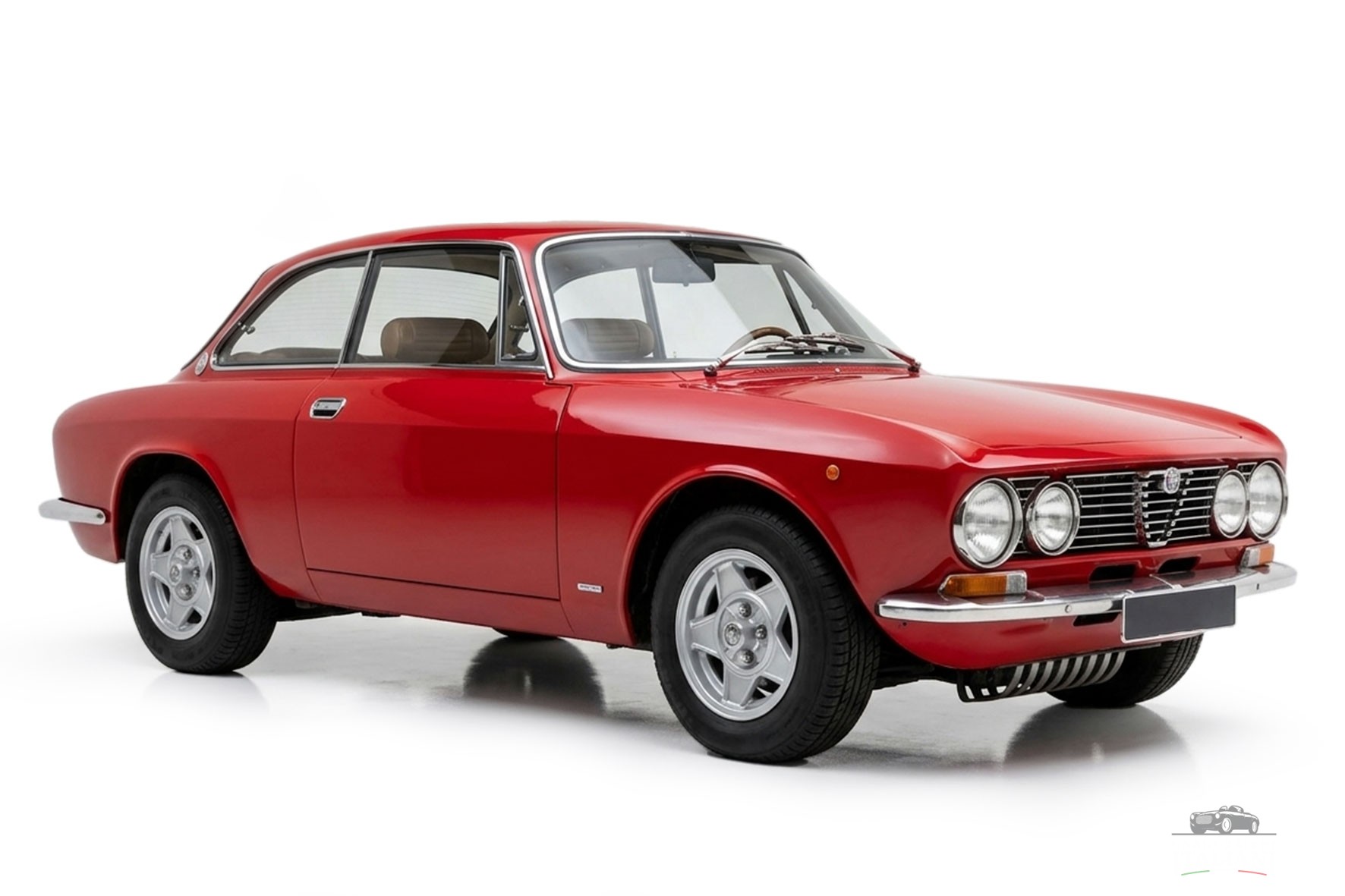
The Sprint GT was a series-production automobile, not a limited-run prototype. Alfa Romeo’s museum lists 22,671 cars produced under the Giulia Sprint GT designation, although historical publications sometimes use different totals and model boundaries. The original version was followed by revised models including the Sprint GT Veloce, GT 1300 Junior and later 1750 and 2000 GTV versions; their specifications and production quantities should be treated separately.
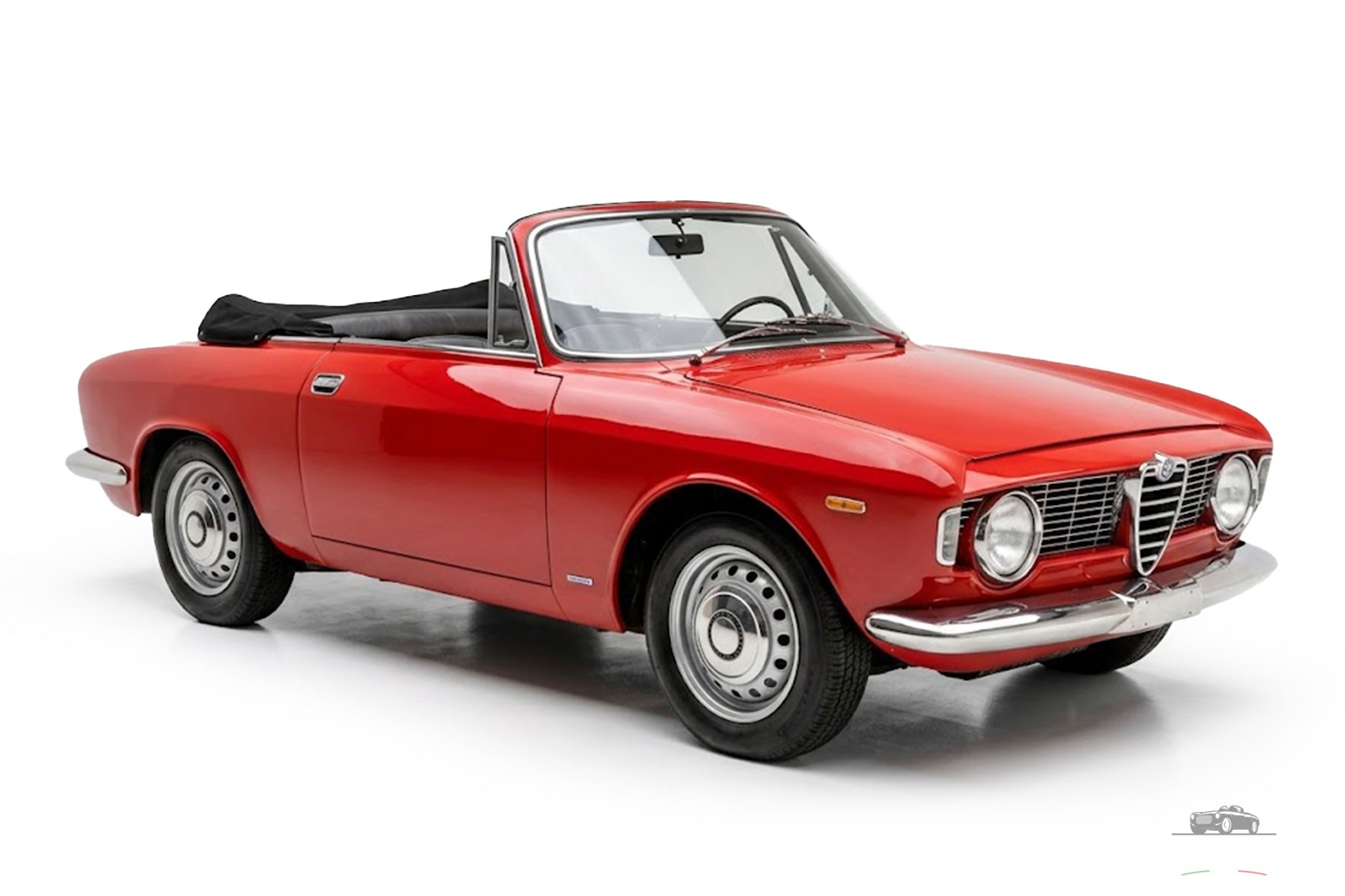
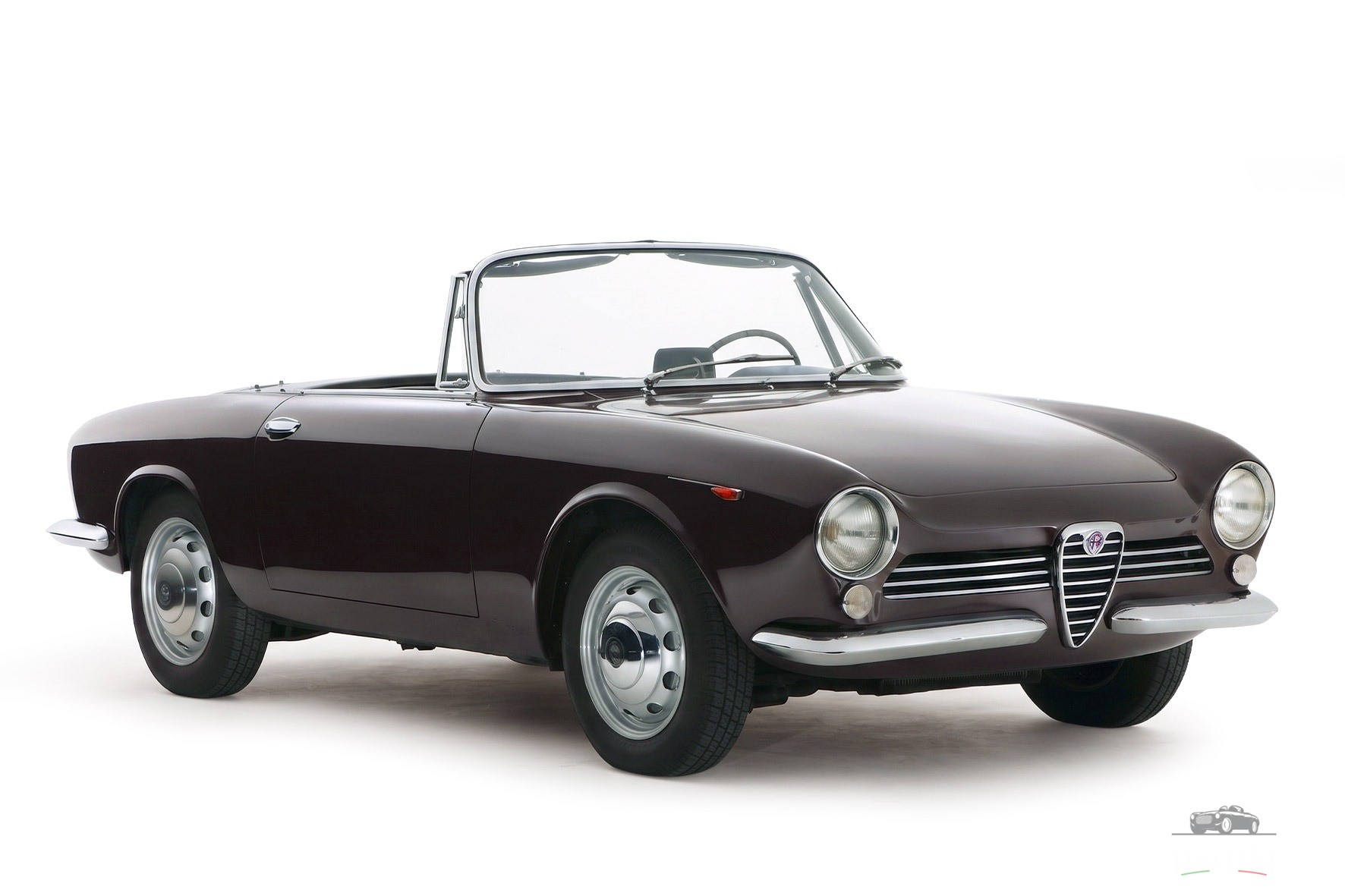
Closely connected derivatives included the Giulia GTC, whose open body was developed and built by Carrozzeria Touring, and the distinct experimental Giulia GT Spider prototype. The lightweight Giulia Sprint GTA drew on the production coupé’s body design but involved a separate competition programme. These vehicles are not alternative names for the original Sprint GT.
Later development
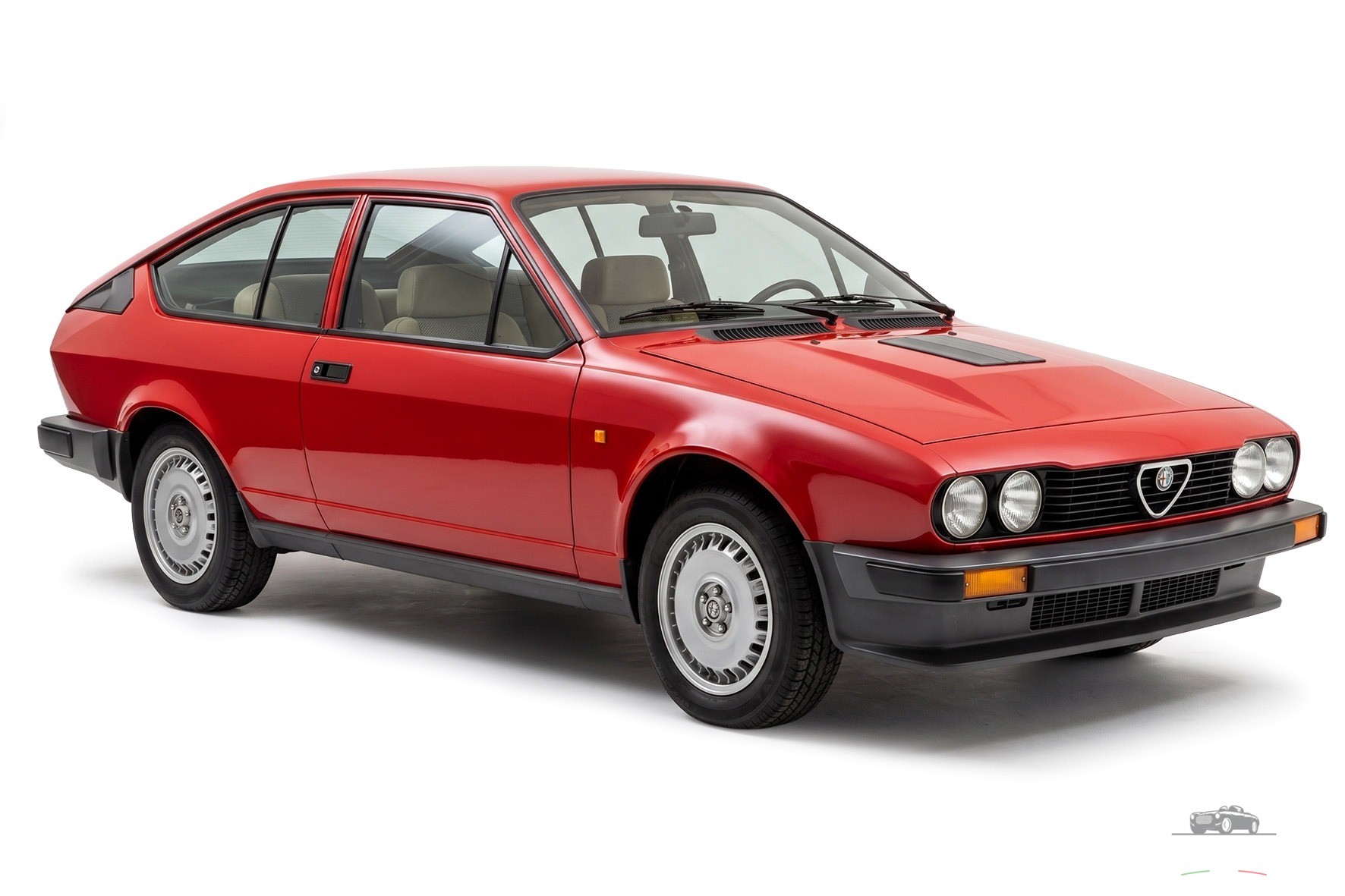
The angular but proportionally restrained Giulia GT design remained associated with Alfa Romeo’s sporting coupés throughout the 1960s and into the following decade. Its eventual successor, the Alfetta GT, was presented in 1974 with a different mechanical layout incorporating a rear transaxle and De Dion rear suspension. The later Alfa Romeo GT of the 2000s belongs to another generation and should not be treated as a continuation of the 1963 production designation.






THE CONVERSATION
Comments 0