
Chris Bangle
AT A GLANCE
- Born
- 1956-10-14
- Birthplace
- Ravenna, Ohio
- Nationality
- American
- Occupation
- Automotive designer
- Active from
- 1981
- Based in
- Europe / Italy
THE STORY
Overview
Chris Bangle (Christopher Edward Bangle, born 14 October 1956 in Ravenna, Ohio) is an American automotive and industrial designer. He worked for Opel and Fiat before becoming head of BMW Group design in 1992, a position he held until February 2009. His career includes the exterior design of the Fiat Coupé, the direction of design programmes for BMW, MINI and Rolls-Royce, and the establishment of Chris Bangle Associates in Clavesana, Italy.
Education and Opel
Bangle grew up in Wausau, Wisconsin, and attended the University of Wisconsin before completing industrial-design studies at ArtCenter College of Design in Pasadena, California. He joined Adam Opel AG in Rüsselsheim in 1981. His early work included the interior of the Opel Junior concept car, part of the manufacturer’s experimental research into compact vehicles and flexible passenger accommodation. Work on this concept belongs to his early professional career and should not be confused with later production Opel models.
Centro Stile Fiat
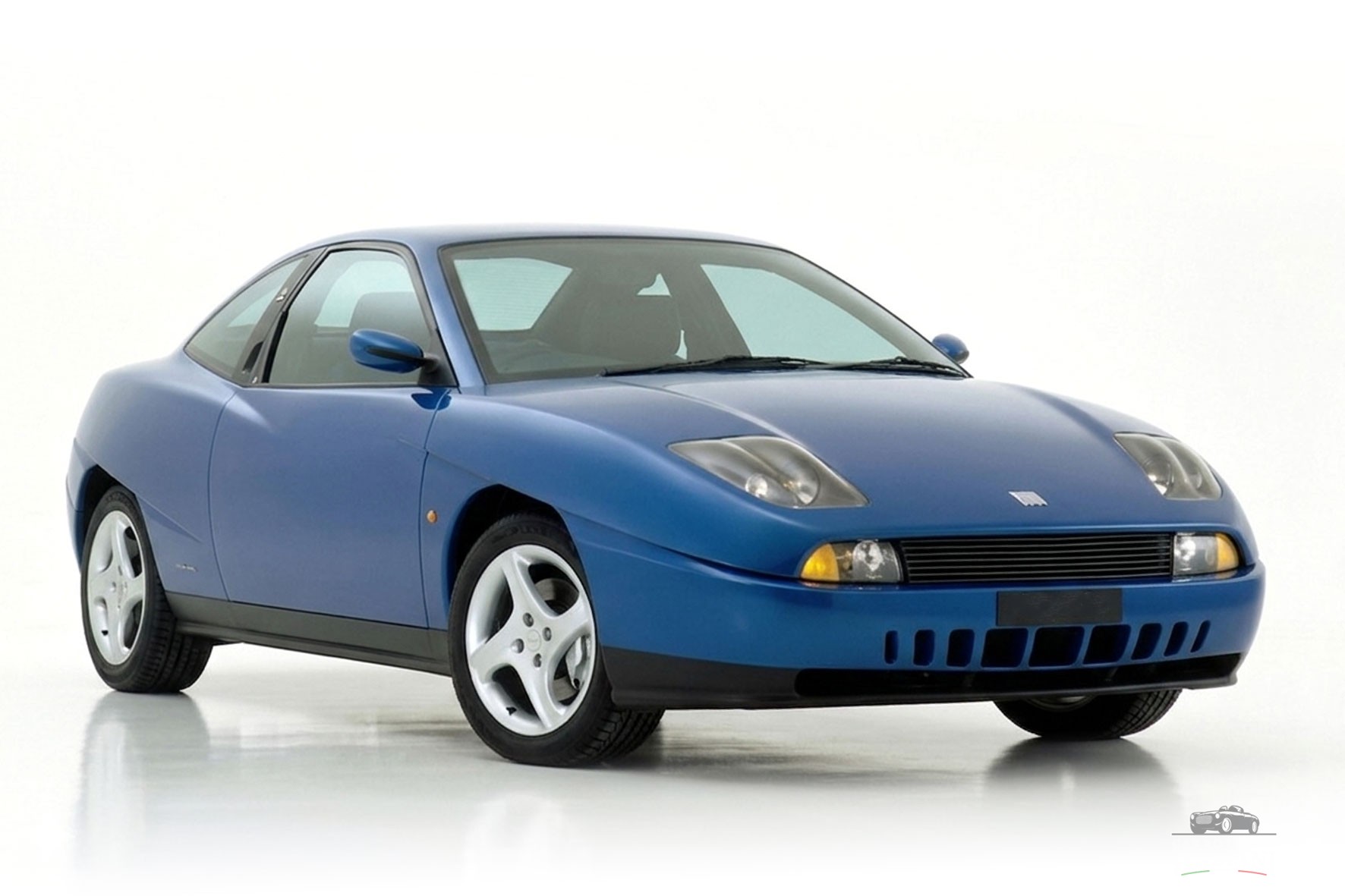
In 1985 Bangle moved to Italy to work for Fiat. He was appointed director of Fiat’s Centro Stile in 1992, shortly before leaving for BMW. One of his principal Fiat projects was the exterior design of the Fiat Coupé, developed in the early 1990s and introduced as a production model in 1993. The Centro Stile proposal, developed under Bangle, was selected over a competing exterior proposal by Pininfarina. The distinctive exterior combined cut lines through the wheel arches, separate circular rear lamps and a prominent metal fuel-filler cap.
The Fiat Coupé illustrates the importance of distinguishing design authorship from coachwork execution. Bangle and the Fiat design team developed the selected exterior; Pininfarina was responsible for the production car’s interior design and assembly. These different contributions cannot be reduced to a single overall designer or coachbuilder credit. Other Fiat Group projects have been linked to Bangle’s period at Centro Stile, but the precise responsibilities of individual designers and teams require separate evidence for each model.
BMW Group design leadership
Bangle joined BMW in October 1992 and directed the group’s design development through February 2009. His appointment brought a designer with experience in both Germany and Italy to a senior role coordinating the visual development of multiple automobile brands. Under his management, BMW’s design teams revised the brand’s established proportions, surface modelling and treatment of exterior features. The approach became widely associated with the expression ‘flame surfacing’, although it encompassed several distinct projects and was not a fixed styling formula applied uniformly to every model.
BMW projects developed under Bangle’s leadership included generations of the 3, 5 and 7 Series, the 1 and 6 Series, the Z3 and Z4, and the X3, X5 and X6. The group’s design activities also extended to MINI, Rolls-Royce, motorcycles and the DesignworksUSA consultancy. This was a managerial and creative leadership role involving numerous in-house designers. It does not establish that Bangle personally drew the final exterior of each vehicle released during his tenure.
Adrian van Hooydonk was a significant collaborator on BMW’s design programmes, with documented influence on the Z9 concept, the 6 Series and 7 Series. The BMW 5 Series E60 is likewise associated with the work of designer Davide Arcangeli within the broader design organisation. The division between individual authorship, team development and overall design direction is necessary when interpreting the stylistic changes of this period.
Design methods and experimental projects
The BMW designs of the 2000s provoked substantial contemporary debate, particularly the 7 Series E65. The debate concerned the relationship between established brand identity and the adoption of new surface forms and proportions. Bangle defended design as an activity concerned with changes in how people perceive objects, rather than merely the preservation of familiar features. Experimental work developed within the organisation, including the BMW GINA concept, investigated different relationships between the vehicle structure, exterior skin and user interaction.
Bangle’s responsibilities also included the management and development of design teams. BMW’s announcement of 3 February 2009 identified van Hooydonk as his successor and distinguished the design chief’s strategic role from the individual projects of his colleagues. His departure ended nearly seventeen years of leadership at the group, rather than the existence of the design language that had developed during that period.
Chris Bangle Associates
After leaving BMW in February 2009, Bangle established Chris Bangle Associates (CBA) in Clavesana, Piedmont, with his family. The studio occupies a group of historic rural buildings at Borgata Gorrea and operates as a design and design-management consultancy. Its work extends beyond road vehicles to product design, mobility concepts, luxury goods, marine design, strategic consultancy and animation. The firm is distinct from BMW Group and its automotive design departments.
Among the studio’s automotive projects is REDS, a compact electric-vehicle concept developed for China Hi-Tech Group Corporation and presented at the Los Angeles Auto Show in November 2017. The design placed particular emphasis on the passenger compartment as a space for work and social interaction. Its appearance in the studio’s portfolio documents a concept and design commission; it does not in itself establish series production or the engineering specification of a manufactured vehicle.
Design attribution
Bangle’s historical contribution comprises directly credited styling work, notably the Fiat Coupé, and the direction of large design organisations, especially at BMW. These categories should remain distinct in vehicle records. Assignments carried out by the Fiat or BMW teams, Pininfarina’s manufacturing and interior responsibilities, and the individual work of other designers must retain their documented roles. Later projects of Chris Bangle Associates likewise require identification of the client, design studio and execution company rather than attribution based solely on the studio founder’s name.
THE NETWORK
Shared vehicle credits

KEY MOMENTS
Timeline
-
Birth of Chris Bangle
Ravenna, Ohio, United States
-
Career begins
CONTINUE EXPLORING

THE CONVERSATION
Comments 0