
I.DE.A Institute
Italian automotive design, engineering and prototype-development institute founded near Turin in 1978, active on experimental and series-vehicle programmes until 2019.
Explore record ↗
2002
THE VEHICLE AT A GLANCE
THE PEOPLE BEHIND THE CAR
Italian automotive design, engineering and prototype-development institute founded near Turin in 1978, active on experimental and series-vehicle programmes until 2019.
Explore record ↗01 / THE STORY
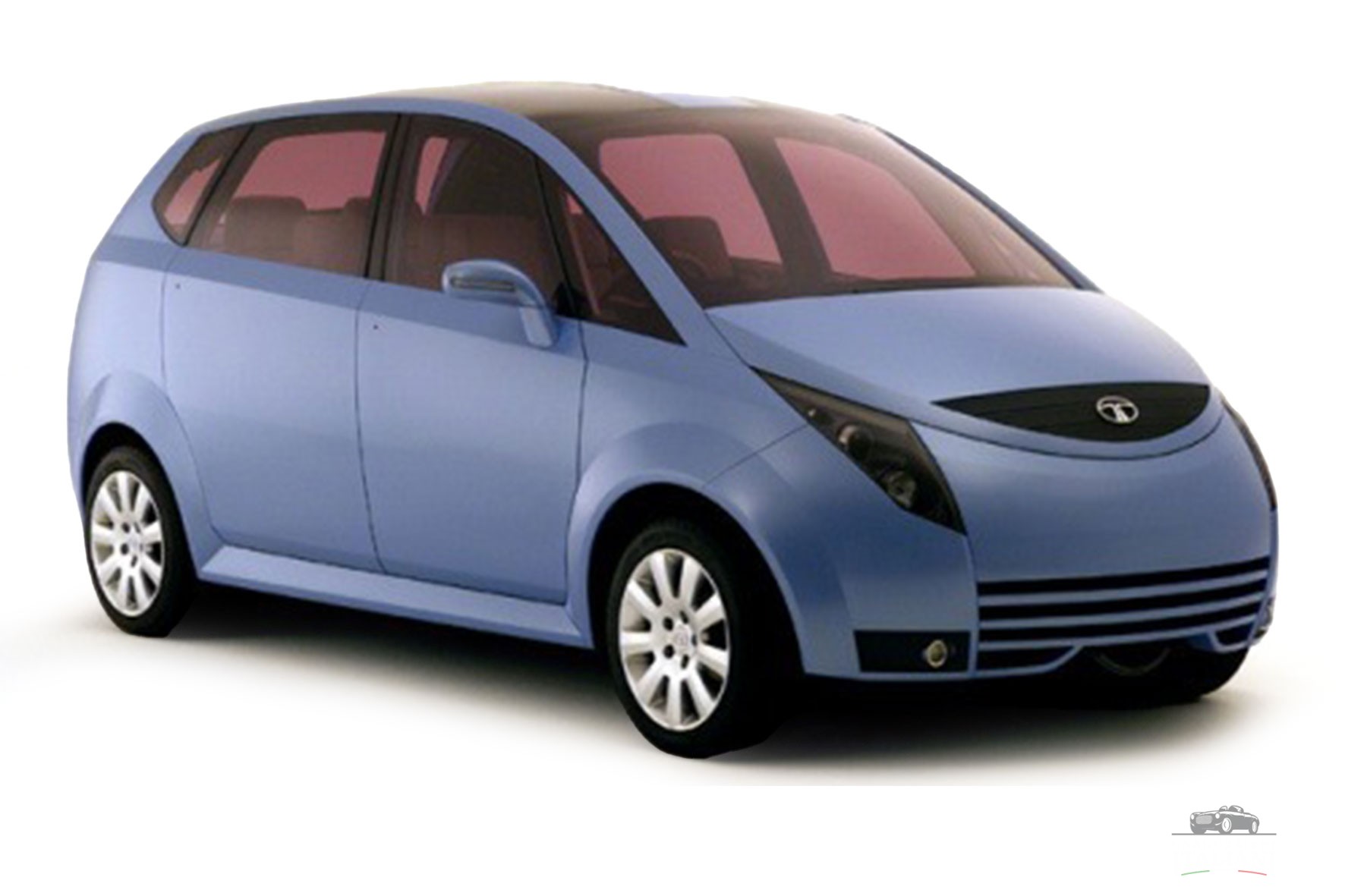
The Tata Indiva was a concept car developed through a collaboration between Tata Motors and the Italian design and engineering firm I.DE.A Institute. Unveiled at the 2002 Geneva Motor Show, the Indiva was conceived as a compact multi-purpose vehicle (MPV) that combined Indian engineering with Italian design sensibilities. Positioned as a futuristic urban people-mover, the Indiva aimed to maximize interior space within a compact exterior footprint. Built on the Tata Indica platform, the Indiva was less than 4.3 meters in length but was designed to accommodate up to seven passengers. This was made possible through a cab-forward architecture and a flexible, modular seating layout. The third-row seats were removable, allowing for a transition between full passenger use and expanded cargo space. The design approach was centered around practicality, urban maneuverability, and versatility, in keeping with the needs of both family and fleet users in developing markets. The exterior styling was clean and modern, with a distinct monovolume silhouette. The most striking feature was the large glasshouse, including a windscreen that extended well into the roof to create a panoramic effect. This design element enhanced natural light in the cabin and gave passengers a sense of openness. The rear was defined by vertical LED tail lamps placed at the vehicle’s extremities, emphasizing width and visibility. Inside, the Indiva offered a user-friendly and adaptable environment. The dashboard featured digital instrumentation and ergonomic controls, while the interior design prioritized comfort and flexibility. The vehicle also included several forward-thinking design details, such as consideration for pedestrian safety and future production feasibility. Although the Tata Indiva never entered production, it was a significant design study for Tata Motors during a period when the company was expanding its design horizons and product strategies. The concept demonstrated Tata’s ambition to enter new segments and adopt a more global design language. The collaboration with I.DE.A Institute played a key role in achieving a vehicle that, though conceptual, hinted at future possibilities in Tata’s MPV development and left a lasting impression in the brand’s design history.
02 / TECHNICAL IDENTITY
03 / DESIGN, BODY & SUPPLIERS
Coachbuilder / Design studio
Italian automotive design, engineering and prototype-development institute founded near Turin in 1978, active on experimental and series-vehicle programmes until 2019.
Explore record ↗Attributed designer
04 / CHRONOLOGY
07 / GALLERY
THE CONVERSATION
Comments 0