
I.DE.A Institute
Italian automotive design, engineering and prototype-development institute founded near Turin in 1978, active on experimental and series-vehicle programmes until 2019.
Explore record ↗
1993
THE VEHICLE AT A GLANCE
THE PEOPLE BEHIND THE CAR
Italian automotive design, engineering and prototype-development institute founded near Turin in 1978, active on experimental and series-vehicle programmes until 2019.
Explore record ↗Ercole Spada (1937–2025) was an Italian automotive designer associated with Zagato, BMW and I.DE.A Institute and co-founder of Spadaconcept.
Explore record ↗01 / THE STORY
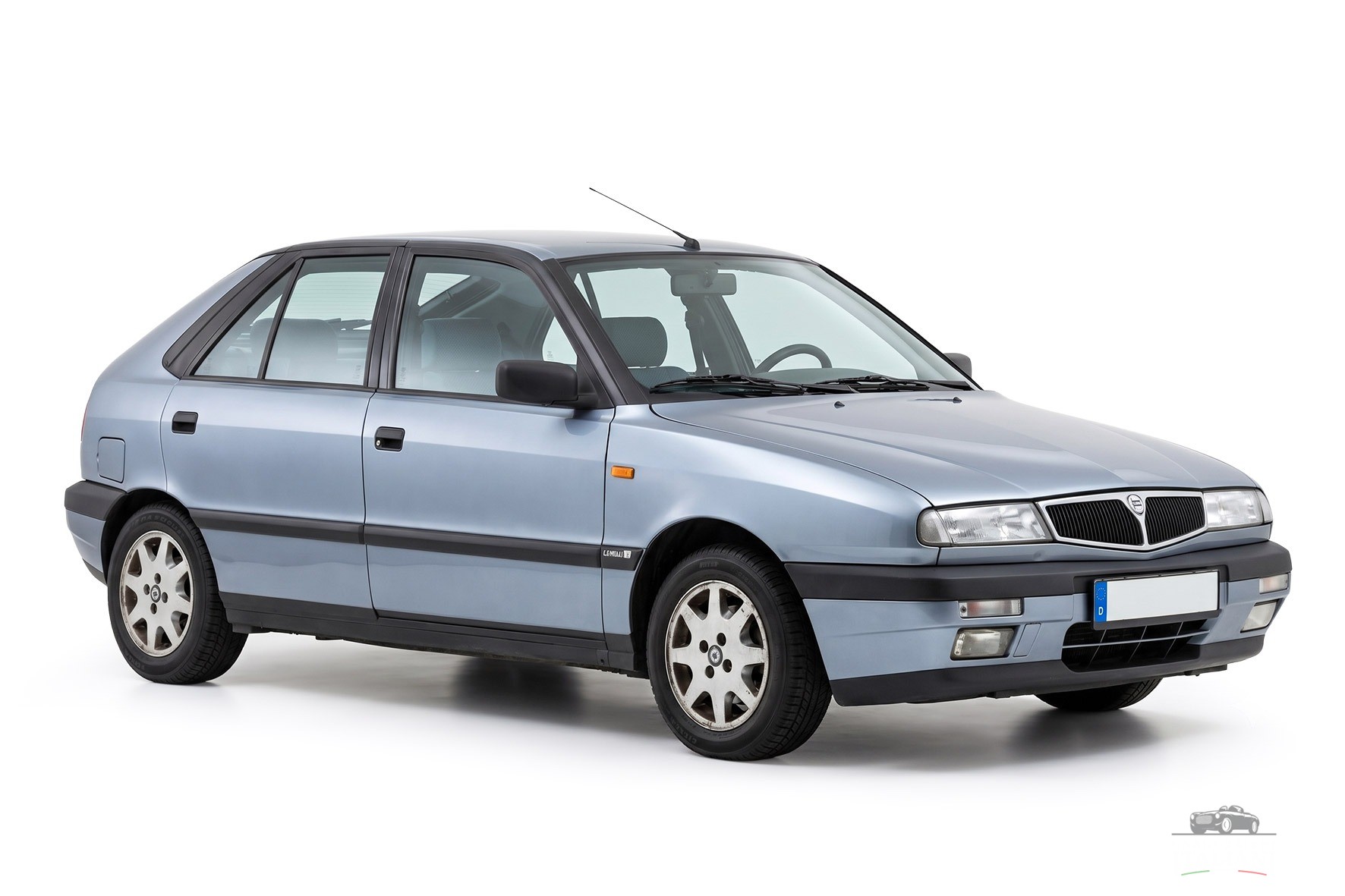
The second-generation Lancia Delta, officially known as the Lancia ? (using the Greek lowercase delta), was introduced in 1993 as the successor to the iconic first-generation Delta. Internally designated as Tipo 836, the new model marked a significant departure from the rally-bred image of its predecessor. It was developed on Fiat’s “Type Two” (Tipo Due) platform, which it shared with the Fiat Tipo and Lancia Dedra. The primary focus of the new Delta was comfort, refinement, and practicalitytargeting customers seeking a premium compact hatchback rather than a motorsport-inspired vehicle. The exterior design was penned by Ercole Spada at the Turin-based design and engineering firm I.DE.A Institute, in collaboration with Lancia’s in-house styling department. The result was a smooth, aerodynamic shape with rounded edges and a more understated, contemporary appearance compared to the angular design of the original Delta. Initially launched as a five-door hatchback, a three-door version called HPE (High Performance Executive) followed in 1995, featuring a sportier stance and slightly wider body panels. While the original Delta was celebrated for its rally victories and all-wheel-drive HF Integrale variants, the second-generation model did not feature four-wheel drive. Even the performance-oriented HF versions were front-wheel drive only. These included models with turbocharged engines, with the most powerful variant producing up to 193 PS (142 kW; 190 hp). Although competent and well-equipped, these front-wheel-drive HF models lacked the dynamic edge of their predecessors. The Nuova Delta received incremental updates throughout its production, including engine refinements, new trim levels, and interior enhancements. Despite these efforts, the car struggled to gain traction in a competitive segment dominated by German and Japanese rivals. Its more conservative positioning and the absence of a four-wheel-drive performance halo model limited its appeal among enthusiasts. Production of the second-generation Lancia Delta ended in 1999, and it was not immediately succeeded by a new model. Though it did not achieve the fame of the first-generation Delta, the Tipo 836 remains notable for its Italian design, technical refinement, and as one of the last collaborations between Lancia and the I.DE.A Institute.
02 / TECHNICAL IDENTITY
03 / DESIGN, BODY & SUPPLIERS
Coachbuilder / Design studio
Italian automotive design, engineering and prototype-development institute founded near Turin in 1978, active on experimental and series-vehicle programmes until 2019.
Explore record ↗Designer
Ercole Spada (1937–2025) was an Italian automotive designer associated with Zagato, BMW and I.DE.A Institute and co-founder of Spadaconcept.
Explore record ↗04 / CHRONOLOGY
07 / GALLERY
THE CONVERSATION
Comments 0