
I.DE.A Institute
Italian automotive design, engineering and prototype-development institute founded near Turin in 1978, active on experimental and series-vehicle programmes until 2019.
Explore record ↗
2002
THE VEHICLE AT A GLANCE
THE PEOPLE BEHIND THE CAR
Italian automotive design, engineering and prototype-development institute founded near Turin in 1978, active on experimental and series-vehicle programmes until 2019.
Explore record ↗01 / THE STORY
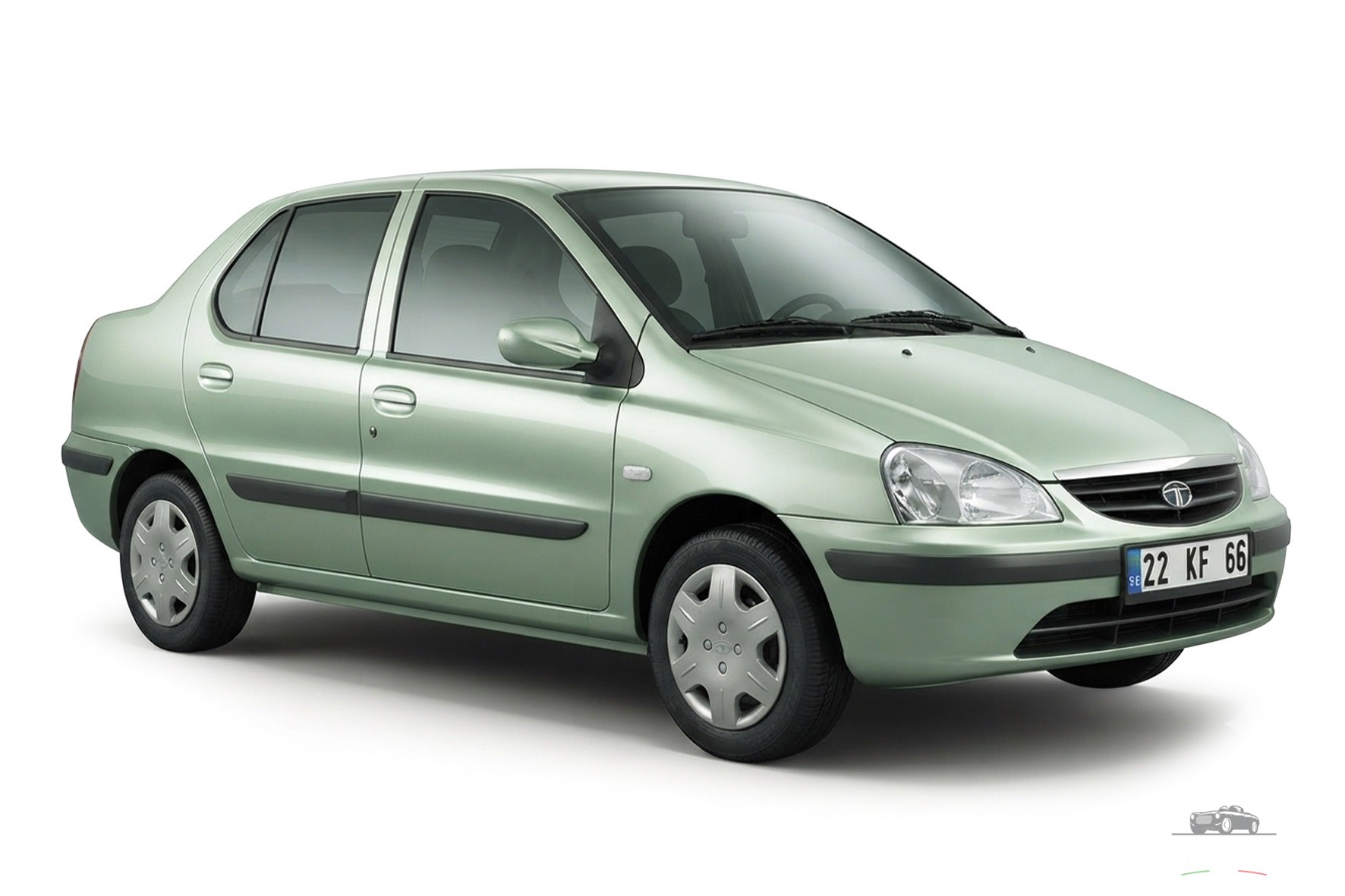
The Tata Indigo is a compact sedan produced by the Indian manufacturer Tata Motors from 2002 through 2016 designed by I.DE.A Institute. It is the four-door saloon version of the Tata Indica, a supermini especially designed for developing countries. The first generation of the Indigo, launched in 2002, was based on the Tata Indica, a subcompact hatchback. The two cars shared a similar design, while the Indigo had a longer wheelbase, a 450-litre trunk, and turbo-diesel and petrol engine options. The car received its first design refresh in 2006, giving it distinguishing features from the Indica, such as more upmarket double-barreled headlamps, front fog-lamps, more upmarket interiors with fabric upholstery, etc. In 2009, Tata released the second generation of the Indigo, called Tata Indigo Manza to distinguish it from the first generation which remained in production. The Indigo Manza was based on the Tata X1 platform and featured a modern feature-set, including front SRS airbags, ABS with EBD, an audio system integrated into the dashboard, automatic climate control, leather upholstery, diamond-cut alloy wheels, and a 500-litre trunk. The car was powered by Bharat Stage-IV compliant engines sourced from Fiat, including the 1.4L Fiat FIRE petrol engine (re-branded as Safire) and the 1.3L MultiJet common-rail diesel engine (re-branded as Quadrajet 90), both with a power output rating of 90 HP. The Indigo eCS (compact-sedan) was launched in 2008 as a crossover between a hatchback and a sedan. It was originally designed to appeal to buyers who sought an inexpensive “3-box” car at the price of a hatchback. At launch, the Indigo CS was the shortest sedan in the world, with a length of 3,998mm. The car’s length allowed Tata Motors to avail excise-duty incentives targeted at cars with under 4 meters of length. The Indigo CS retained most of the feature-set of the 2007 Indigo. The car was launched with the 1.4L TDI turbocharged diesel engine and the 1.2L 8-valve, 4-cylinder petrol engine carried over from the Indica Xeta. Both these engines complied with Bharat Stage-III emission norms. In 2010, Tata Motors introduced the first design update to the Indigo CS, in the form of the company’s new 1.4L CR4 turbocharged common-rail diesel engine, rechristening the car as Indigo eCS. The 1.4L CR4 engine complies with the Bharat Stage-IV norms. Variants of the car, with the Bharat Stage-III compliant TDI engine, continued to be sold till 2012. The 1.2L SOHC petrol engine was carried over, with an upgraded Bharat Stage-IV compliant catalytic converter. In 2012, Tata Motors introduced a high-end version of the car, the Indigo eCS VX, featuring anti-lock braking system (ABS) with electric brake-force distribution (EBD), electrically-adjustable outside rear-view mirrors (E-ORVMs), side repeaters mounted on the ORVMs, and 14-inch alloy wheels. In 2013, the company introduced a more pronounced design refresh of the car, featuring redesigned body panels, chrome-inserts on the front grille, trunk lid, and front fog-lamp accents; smoked double-barreled headlamp housing, “Sahara Beige” fabric upholstery, dual-tone interiors with jet-black and beige tones, a newer 4-spoke steering wheel, and a 2-DIN audio system head unit, with Bluetooth pairing for smartphones, for hands-free voice calls. The company also introduced variants with factory-fitted CNG kits, called the Indigo eCS e-Max. The car was discontinued in April 2016.
02 / TECHNICAL IDENTITY
03 / DESIGN, BODY & SUPPLIERS
Coachbuilder / Design studio
Italian automotive design, engineering and prototype-development institute founded near Turin in 1978, active on experimental and series-vehicle programmes until 2019.
Explore record ↗07 / GALLERY
THE CONVERSATION
Comments 0