
I.DE.A Institute
Italian automotive design, engineering and prototype-development institute founded near Turin in 1978, active on experimental and series-vehicle programmes until 2019.
Explore record ↗
2004
THE VEHICLE AT A GLANCE
THE PEOPLE BEHIND THE CAR
Italian automotive design, engineering and prototype-development institute founded near Turin in 1978, active on experimental and series-vehicle programmes until 2019.
Explore record ↗01 / THE STORY
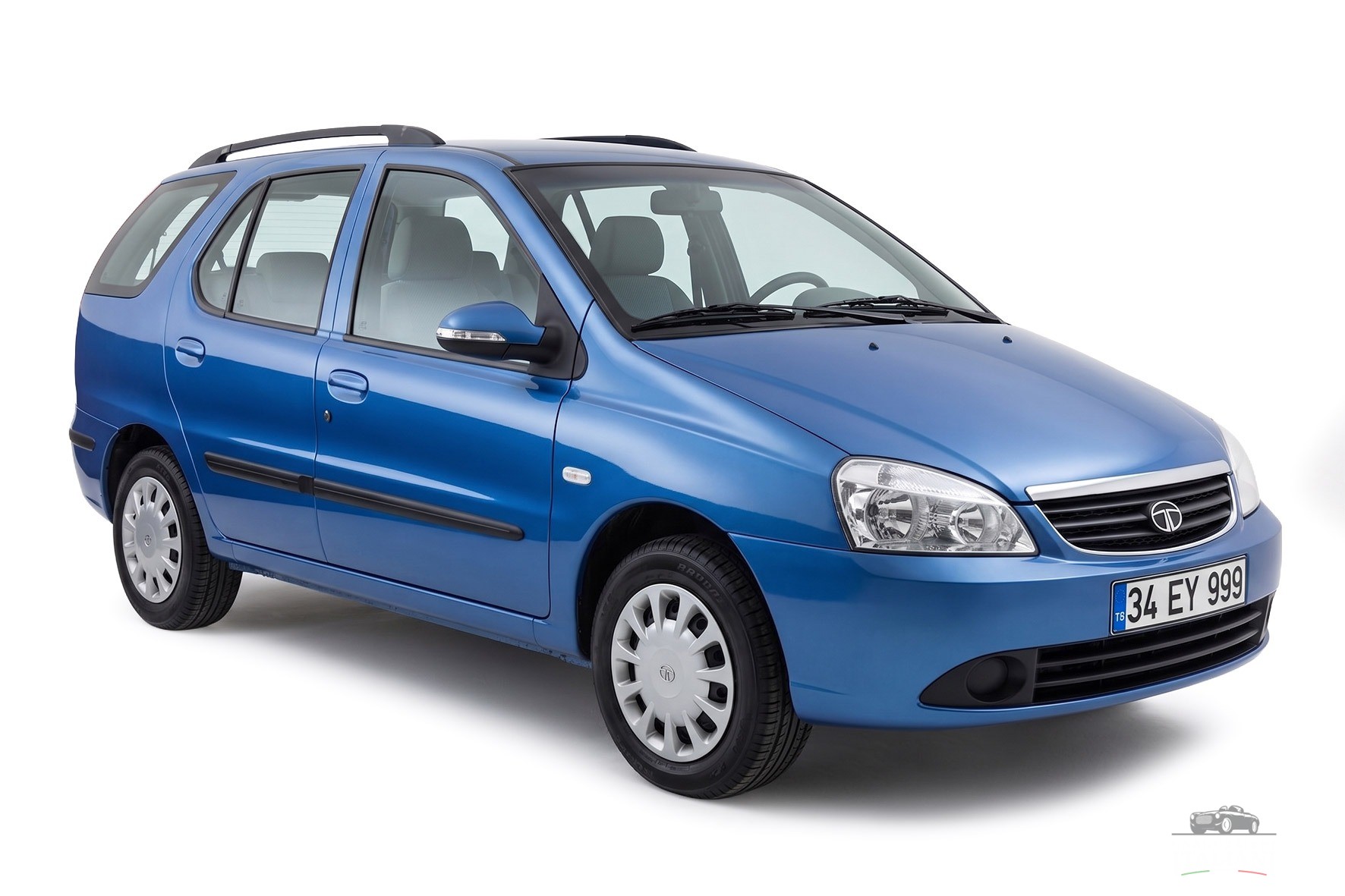
The Tata Indigo Marina, introduced in 2004, was the station wagon derivative of the Tata Indigo sedan, developed by Tata Motors in collaboration with the Italian design house I.DE.A Institute. As part of Tata’s broader strategy to expand its passenger vehicle lineup and increase its international appeal, the Indigo Marina was designed to offer greater versatility and practicality while retaining the compact footprint and affordability of its sedan counterpart. Built on the same platform as the Tata Indica and Indigo, the Indigo Marina featured an extended rear section to accommodate a spacious cargo area. I.DE.A Institute, already involved in the design of the Indica and Indigo, was tasked with evolving the sedan into a cohesive and balanced estate model. The resulting design preserved the front-end identity of the Indigo while smoothly integrating a long roofline and revised rear profile. This transformation resulted in a car that provided generous luggage capacity without appearing overly utilitarian. Mechanically, the Indigo Marina was equipped with several powertrain options depending on the market. In India, it was commonly offered with a 1.4-liter naturally aspirated petrol engine producing 85 hp, or a 1.4-liter turbocharged diesel engine delivering around 71 hp. Both engines were mated to a five-speed manual transmission and utilized a front-wheel-drive layout. The car’s suspension setup, featuring independent systems at both the front and rear, contributed to respectable ride comfort over varied road conditions. The interior layout emphasized space and utility, with folding rear seats to expand the cargo bay. While the materials and features were modest by global standards, the Indigo Marina delivered good value for money, especially for families and commercial users seeking an affordable, spacious vehicle. Despite its practicality, the Indigo Marina faced limited demand in India, where the station wagon body style struggled to gain widespread popularity. However, it did find modest success in export markets such as South Africa and parts of Europe, where it was also marketed as the Indigo SW. Though production ended in 2009, the Tata Indigo Marina remains a notable example of Tata Motors’ early efforts to diversify its product range and collaborate with European design studios to create globally adaptable vehicles.
02 / TECHNICAL IDENTITY
03 / DESIGN, BODY & SUPPLIERS
Coachbuilder / Design studio
Italian automotive design, engineering and prototype-development institute founded near Turin in 1978, active on experimental and series-vehicle programmes until 2019.
Explore record ↗07 / GALLERY
THE CONVERSATION
Comments 0