
I.DE.A Institute
Italian automotive design, engineering and prototype-development institute founded near Turin in 1978, active on experimental and series-vehicle programmes until 2019.
Explore record ↗
2008
THE VEHICLE AT A GLANCE
THE PEOPLE BEHIND THE CAR
Italian automotive design, engineering and prototype-development institute founded near Turin in 1978, active on experimental and series-vehicle programmes until 2019.
Explore record ↗01 / THE STORY
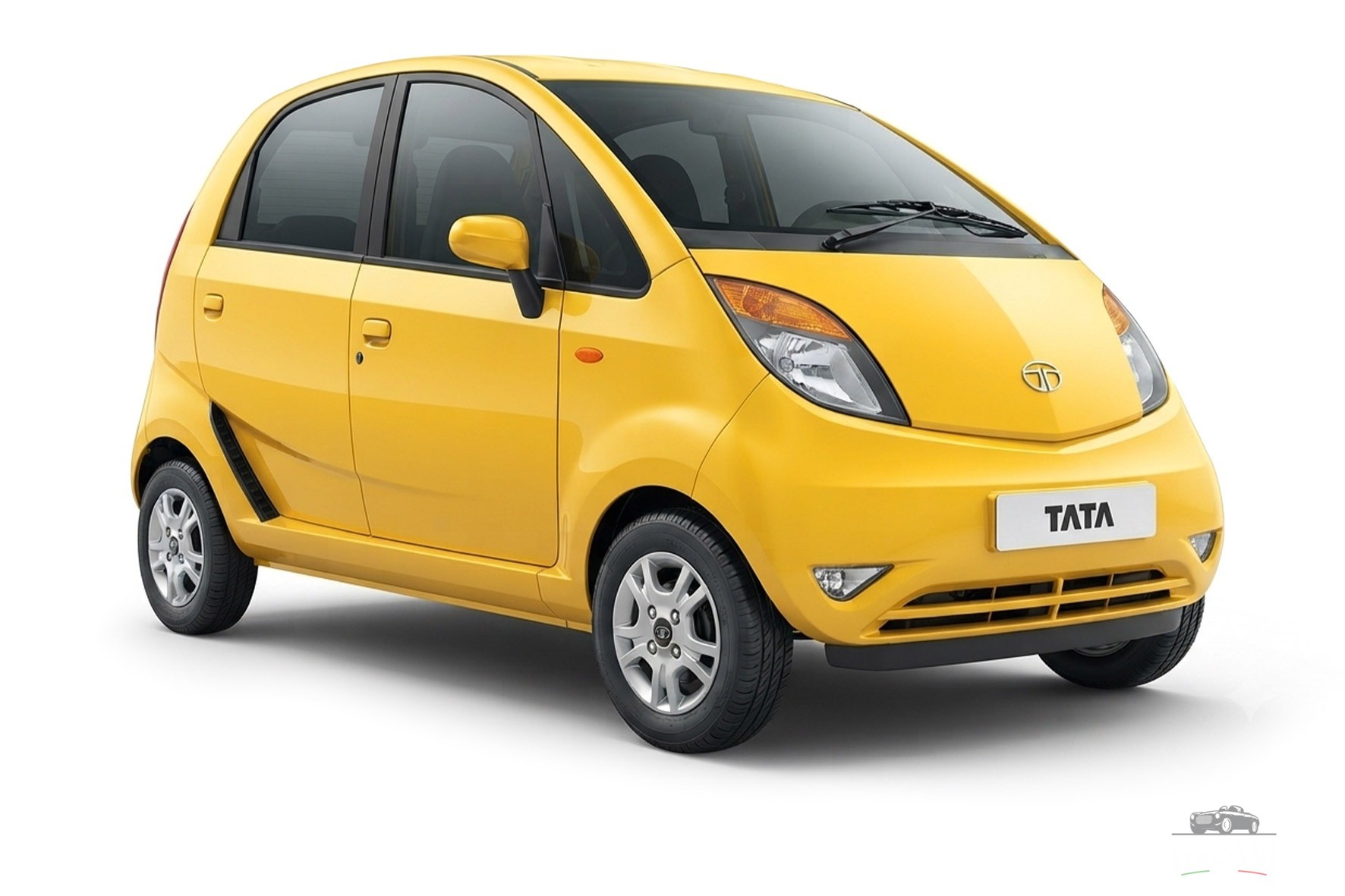
The Tata Nano, launched in 2008, represented an audacious attempt by Tata Motors to redefine personal mobility in India by creating the world’s most affordable car. Conceptualized as a safer and more practical substitute for two-wheelers, the Nano aimed to make car ownership accessible to millions of Indian families. Tata Motors developed the compact car with styling and interior contributions from I.DE.A Institute and Trilix, alongside its own team. With an overall length of just over three meters and a width under 1.5 meters, the Nano was ideal for urban driving and parking in crowded cityscapes. The vehicle featured a rear-mounted, 624 cc two-cylinder petrol engine that produced 38 horsepower, paired with a four-speed manual transmission. Despite its minimal displacement, the engine offered decent performance for city use, reaching a top speed of 105 km/h while delivering impressive fuel efficiency of approximately 25 km/l. Its layout, with the engine and drive wheels both at the rear, was unconventional for its segment but helped maximize interior space. To achieve its ultra-low price point, Tata adopted a minimalist approach. The base model lacked amenities such as power steering, airbags, and even a rear hatch—the luggage area could only be accessed by folding down the rear seats. However, the design still offered a surprising amount of room for four passengers and decent ride comfort. Initially greeted with global media attention and large pre-orders, the Nano eventually struggled to maintain momentum. Factors such as its positioning as the “cheapest car,” quality perception, and safety controversies hampered its appeal. Over time, sales declined, and production ended in 2018. Still, the Tata Nano remains a symbol of engineering ingenuity and ambition, remembered for its bold vision of democratizing automobile ownership in a cost-conscious and populous market.
02 / TECHNICAL IDENTITY
03 / DESIGN, BODY & SUPPLIERS
Attributed coachbuilder / design studio
Italian automotive design, engineering and prototype-development institute founded near Turin in 1978, active on experimental and series-vehicle programmes until 2019.
Explore record ↗04 / CHRONOLOGY
07 / GALLERY
THE CONVERSATION
Comments 0