
Sports Cars
Founded in Modena by former racing driver Piero Drogo, Carrozzeria Sports Cars built specialist bodies for Ferrari and other Italian competition-car manufacturers during the 1960s.
Explore record ↗
1961Coachwork by Sports Cars
THE VEHICLE AT A GLANCE
THE PEOPLE BEHIND THE CAR
01 / THE STORY
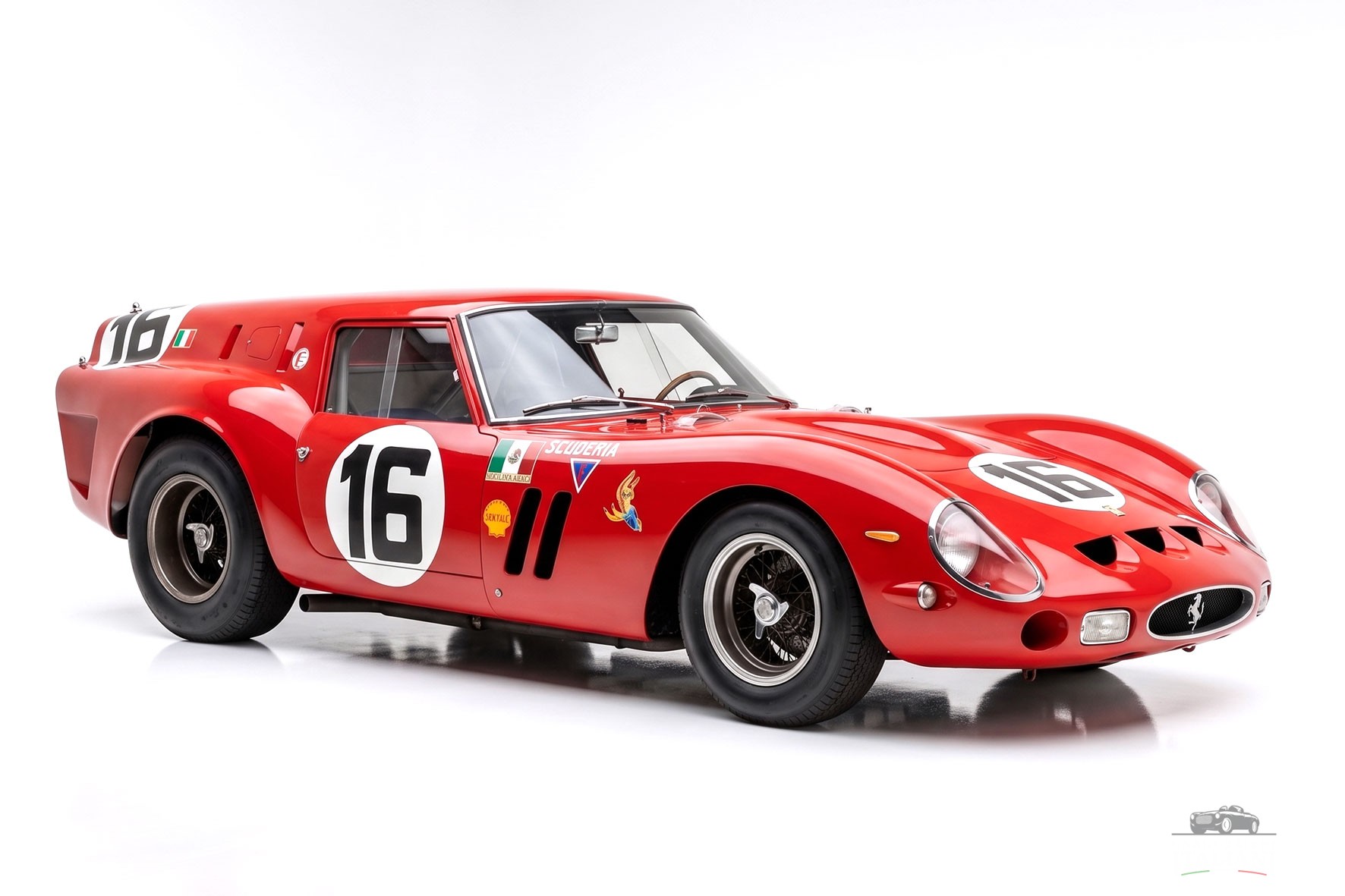
The Ferrari Breadvan was created in 1962 by engineer Giotto Bizzarrini who was hired by Count Giovanni Volpi, owner of the Scuderia Serenissima racing team, to upgrade a Ferrari 250 GT SWB so it would be competitive with the then-new Ferrari 250 GTO. Enzo Ferrari had refused to sell any GTOs to Count Volpi, due to Volpi’s hiring of former Ferrari employees at ATS. The Breadvan‘s donor car was a Ferrari 250 GT SWB Competition, chassis number 2819GT. This car had previously competed in the 1961 Tour de France, where it took 2nd place overall driven by Olivier Gendebien and Lucien Bianchi. The car was sold by Gendebien to Volpi shortly afterward for use with Scuderia Serenissima. As with other competition-spec SWBs, this car had a lightweight body and chassis, minimal trim, and a more powerful 286 bhp Tipo 168 engine with Testarossa-type heads. Bizzarrini applied all the ideas he had developed working on the GTO and together with the car body specialist Piero Drogo developed an aerodynamically advanced body, even lower than the GTO’s, with the roof line dramatically extended to the rear end following Kamm aerodynamic theory. The resulting shooting-brake appearance led to the French press nicknaming it “La Camionnette” (little truck), while the English-speaking journalists called it the “Breadvan.” Bizzarrini moved the engine and radiator further back to the center of the chassis than the GTO, and lowered it by fitting a dry sump system. The original three 46 DCN Weber carburetors were replaced with six twin choke 38 DCN Webers. The original 4-speed gearbox was retained. Giorgio Neri and Luciano Bonacini of Modena were contracted to perform all the mechanical modifications and race preparation. The resulting car was significantly lighter than the GTO, at 935 kg (2,061.3 lb) compared to the typical GTO weight of 1,000 kg (2,204.6 lb). Read our special here.
02 / TECHNICAL IDENTITY
03 / DESIGN, BODY & SUPPLIERS
Coachbuilder / Design studio
Founded in Modena by former racing driver Piero Drogo, Carrozzeria Sports Cars built specialist bodies for Ferrari and other Italian competition-car manufacturers during the 1960s.
Explore record ↗05 / PEOPLE, COLLECTIONS & MUSEUMS
06 / MARKET & PRICE HISTORY
Become a Pro member to explore the full price and sale history.
Membership is not available yet.
View membership optionsMarket observations describe documented transactions, estimates or offers. They are not themselves a current valuation of the vehicle.
07 / CHASSIS REGISTER
08 / GALLERY
THE CONVERSATION
Comments 0