
Moretti
Founded by Giovanni Moretti in 1925, Moretti evolved from motorcycles and small vehicles into a manufacturer and specialist coachbuilder producing Fiat-based coupes and cabriolets.
Explore record ↗
1958
THE VEHICLE AT A GLANCE
THE PEOPLE BEHIND THE CAR
Founded by Giovanni Moretti in 1925, Moretti evolved from motorcycles and small vehicles into a manufacturer and specialist coachbuilder producing Fiat-based coupes and cabriolets.
Explore record ↗01 / THE STORY
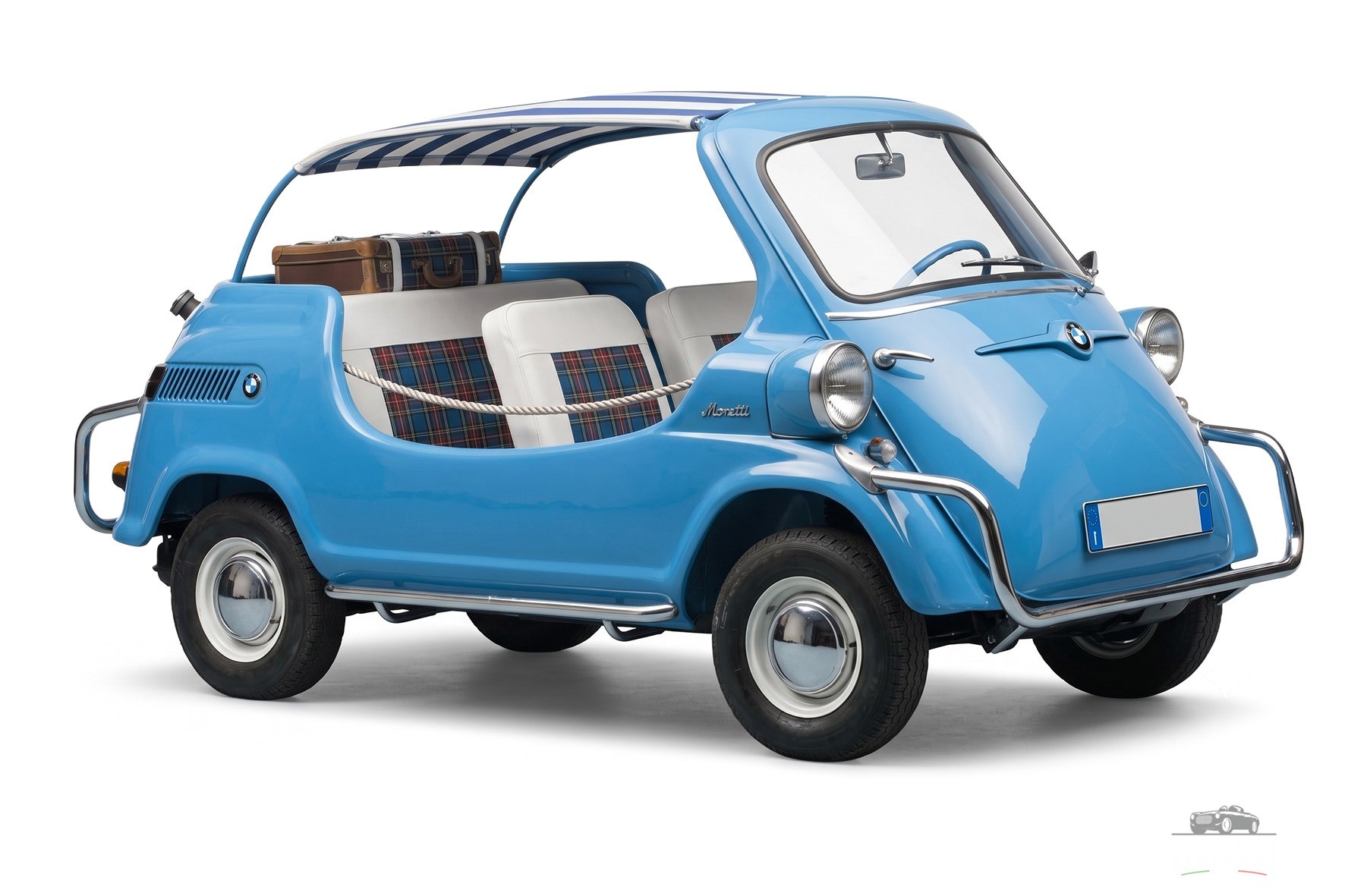
The BMW Isetta Spiaggina Moretti was a limited-production beach car variant of the BMW Isetta 600, constructed by the Italian coachbuilder Moretti during the late 1950s. Emerging from a broader tradition of spiaggina-type vehicles—light, open-air automobiles adapted for coastal environments—the model exemplifies a niche intersection of postwar German engineering and Italian custom design. The underlying platform of the vehicle was the BMW Isetta 600, a microcar introduced in 1957 and produced until 1959. Unlike the earlier single-seat Isetta models, the 600 featured a lengthened wheelbase, rear seating, and a more conventional rear axle layout. It was powered by a 582 cc flat-twin engine positioned at the rear, coupled to a four-speed manual gearbox driving the rear wheels. The vehicle retained the iconic front-hinged door, though the Spiaggina variant reinterpreted its structural components for leisure use. Moretti’s intervention was primarily stylistic. The original steel roof and much of the bodywork were removed, replaced with a lightweight, open design suited to recreational driving along the Mediterranean coast. The sides of the car were substituted with ornamental rope or chain barriers, and seating was reconfigured using wicker or other light materials. The utilitarian form of the Isetta was thus transformed into a whimsical, nautical-themed vehicle, in keeping with the spiaggina aesthetic shared by contemporaries such as the Fiat 500 Jolly and Fiat 600 Marinella. Production numbers were minimal, and documentation regarding individual units is limited. The model was not marketed through conventional commercial channels but was likely commissioned on a bespoke basis for private clientele seeking novelty and distinction. As such, it stands as an artifact of mid-twentieth-century European leisure culture, when automobiles were increasingly integrated into seasonal lifestyles and symbolic consumption. The BMW Isetta Spiaggina Moretti occupies a marginal position within both BMW’s production history and Moretti’s portfolio. Nonetheless, its existence reflects a broader practice of postwar coachbuilding, in which industrial platforms were reimagined to satisfy emerging desires for personalized and environment-specific mobility. Its significance lies in its embodiment of ephemeral design values, serving more as an emblem of taste and context than as an instrument of practical transportation.
02 / TECHNICAL IDENTITY
03 / DESIGN, BODY & SUPPLIERS
Coachbuilder / Design studio
Founded by Giovanni Moretti in 1925, Moretti evolved from motorcycles and small vehicles into a manufacturer and specialist coachbuilder producing Fiat-based coupes and cabriolets.
Explore record ↗06 / CHASSIS REGISTER
07 / GALLERY
THE CONVERSATION
Comments 0