
Alessio
AT A GLANCE
- Founded
- 1899
- Closed
- 1929
- Historical city
- Turin
- Country
- Italy
AWARDS & RECOGNITION
Palmarès
Vehicle awards
- Special prizes
- 1
1 vehicle award record
THE STORY
Overview
From Turin carriage workshops to motorcar coachbuilding
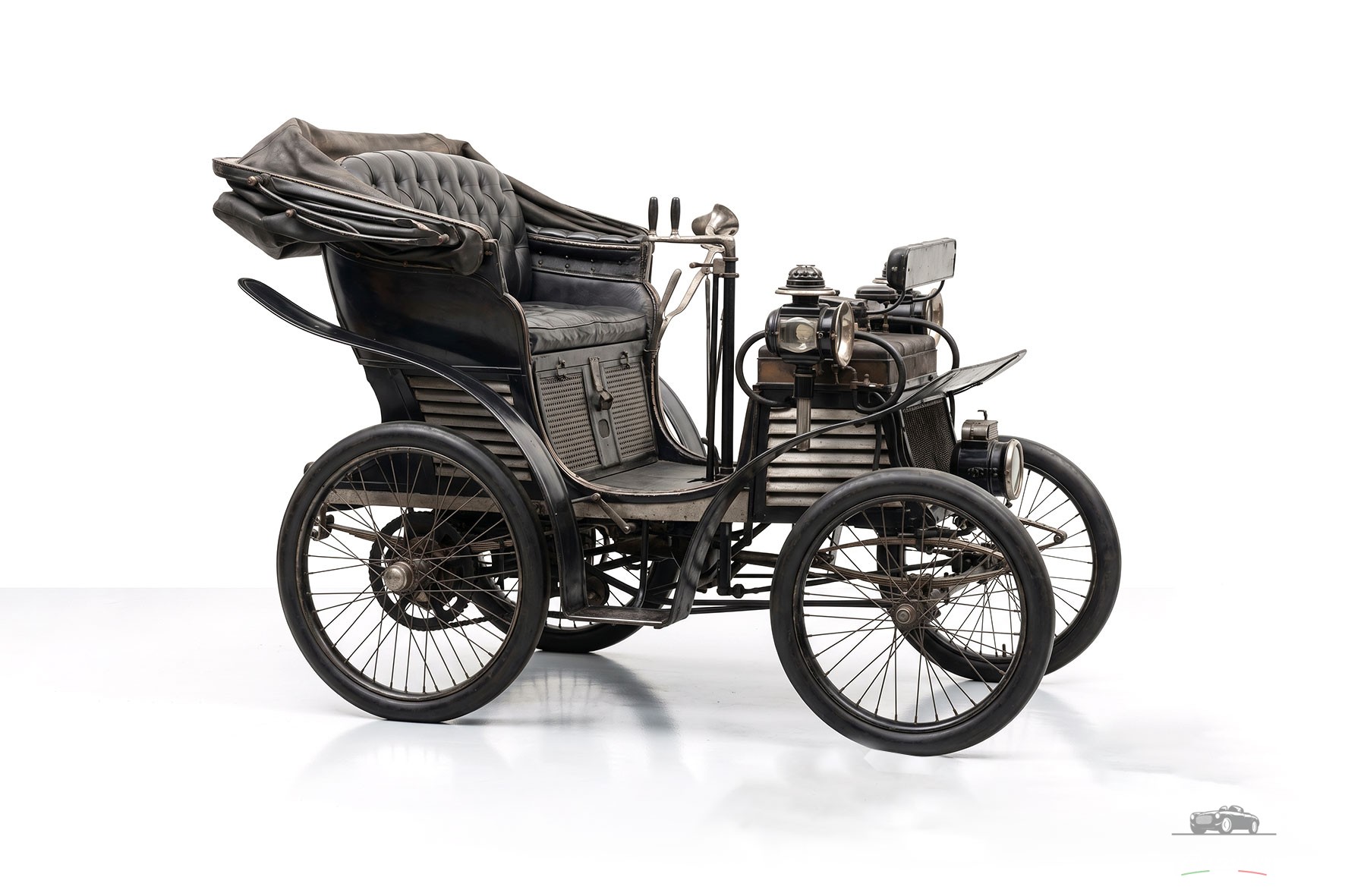
Carrozzeria Alessio was among the Turin workshops that helped turn traditional carriage construction into a specialised automobile-body industry. Its founder, Marcello Alessio, learned his trade at Locati e Torretta before establishing an independent carriage-building business. Alessio’s origins are commonly placed in the 1890s, although the exact founding year requires qualification: the legacy archive gives 1895, an existing chronology uses 1899, and a biographical account already records a Turin coachbuilding prize in 1898. These are not interchangeable dates for a workshop’s beginnings and a later company’s legal formation.
The firm’s early premises were in Via Orto Botanico, close to Fiat’s emerging manufacturing centre. An account preserved by the Museo Nazionale dell’Automobile identifies Alessio’s workshop as one of the three premises involved in Fiat’s earliest production arrangements. Fiat board records from 10 October 1899 mention Marcello Alessio among the Turin body suppliers approached: his offer covered bodywork and wheels, with the possibility of his workers undertaking painting and finishing at Fiat’s plant. This illustrates the practical division of labour between chassis manufacturer and coachbuilder at the beginning of the automobile industry.
Clients, coachwork and the commercial network
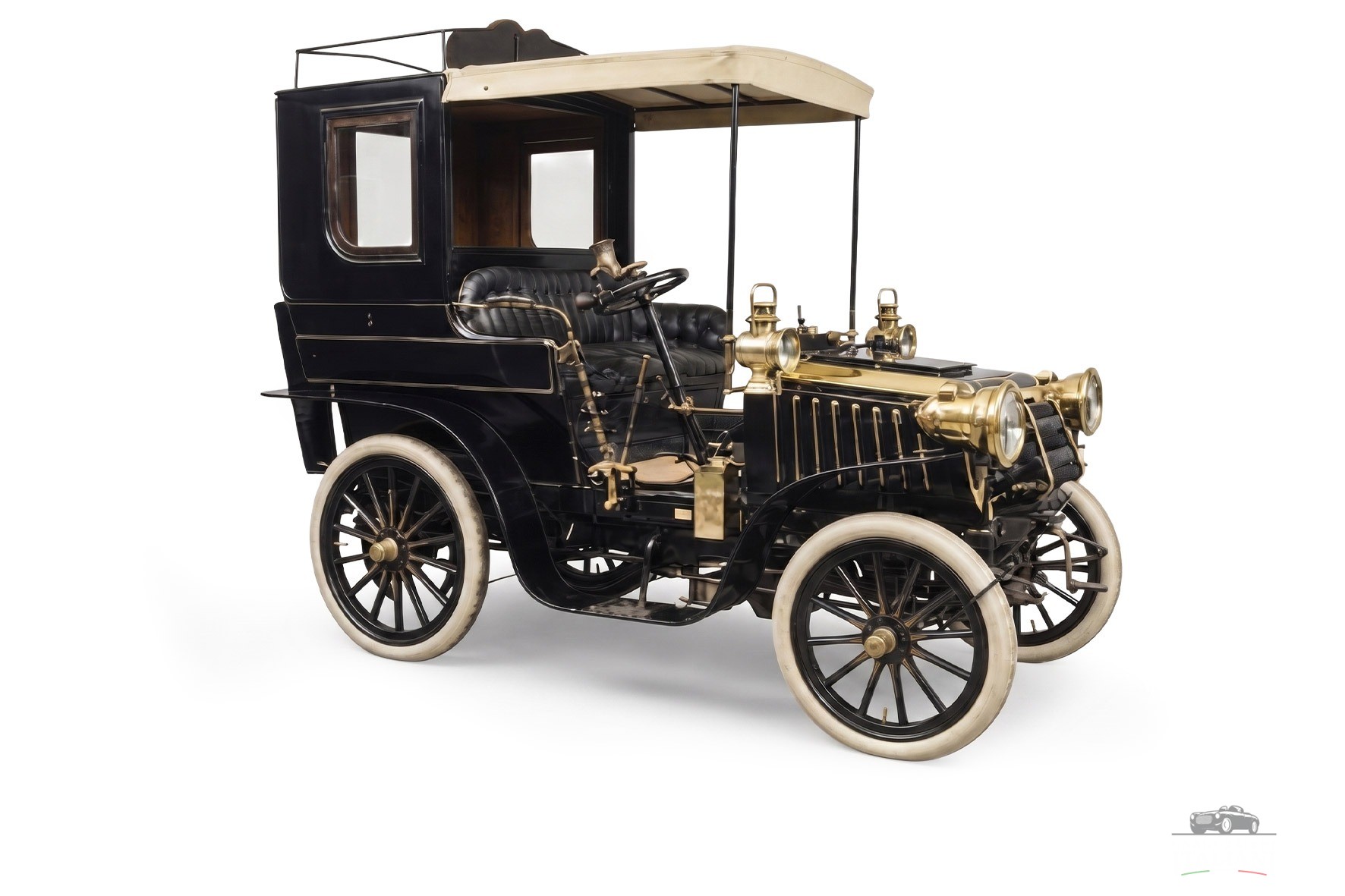
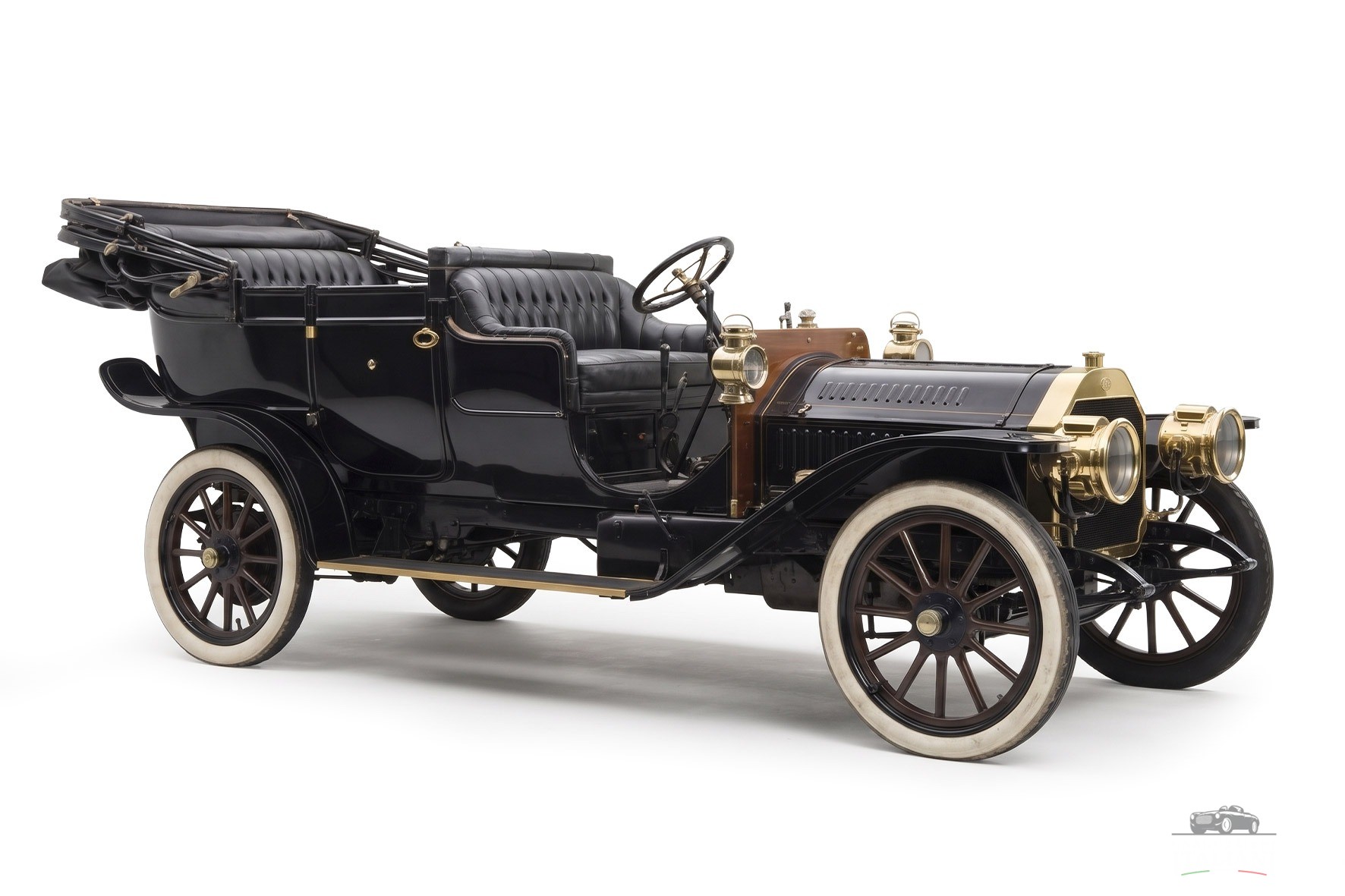
Alessio’s bodies attracted attention at the first Turin motor exhibition in 1900. During the opening years of the century the firm was an important supplier to Fiat; by 1906 its business also extended to other Italian manufacturers, including Bianchi. At the same time it was more than a body shop. Its catalogues, showroom and services placed finished automobiles and optional equipment before buyers, while its sales organisation handled both domestic and imported makes.
A contemporary 1903 advertisement presented Auto-Garage Alessio as a supplier of coachwork, automobiles, used vehicles, spares, tyres, lamps and motoring accessories. It advertised cars from several manufacturers and tyres from international brands. Such advertisements establish the company’s retail and supplier relationships, but do not demonstrate that Alessio built the bodies of every model or make it sold. The firm’s expanding commercial role also complicated its relationship with Fiat, which developed alternative body-supply arrangements, including the industrial organisation associated with Giovanni Lanza.
Expansion, management and historical premises
Alessio’s industrial and corporate history continued well beyond the first decade of the century. A period commercial directory records the legal date 27 April 1905 for Garage Carrozzeria Automobili Alessio, while the historical biography describes a joint-stock reorganisation and branches in Rome and Naples by 1906. These milestones should be distinguished from the older carriage workshop. Carlo Biscaretti di Ruffia directed the Rome branch between late 1906 and mid-1908. In 1912 Marcello withdrew from business and his son Giovanni took charge.
The Turin addresses also changed over time: advertisements identify Via Orto Botanico 13 in 1902 and number 17 by 1904; subsequent material gives Via Orto Botanico 19 and Via Ormea 27. These are dated business-address observations, not evidence that all premises were occupied simultaneously. The firm was represented at motor exhibitions including Turin in 1906, 1907 and 1909, although a documented exhibitor entry should not automatically be converted into a claim about a particular chassis.
Recovery after the war and the last years
Under Giovanni Alessio, wartime supply contracts helped the company withstand the disruption of 1915–1918. A substantial commission from Itala and the representation of SPA contributed to renewed activity in 1922. The later archive contains bodies associated with Fiat, Itala and Lancia, including a Fiat 519 Coupé Dorsay, an Itala 61 and a Lancia Lambda with Weymann-type coachwork. These links identify separately catalogued vehicles and body types; individual production numbers, coachwork techniques and chassis histories still require record-specific evidence.
Alessio continued to receive recognition for its coachwork in the late 1920s. Its historical biography mentions elegance awards in 1929 followed shortly afterwards by liquidation. Accordingly, 1929 is a reliable marker of its final documented period, but it should not be treated without reservation as the precise date of legal extinction. Alessio’s history demonstrates how a workshop rooted in nineteenth-century carriage-making evolved into a coachbuilder, retailer and industrial supplier during the formative decades of Italian motoring.
KEY MOMENTS
Timeline
-
Birth of Marcello Alessio
Stura / Montiglio Monferrato, Italy
-
Marcello Alessio establishes his Turin coachbuilding business
Turin, Italy
-
Alessio forms a joint-stock company and expands to Rome and Naples
Turin, Italy
-
Giovanni Alessio takes over the family coachbuilding business
Turin, Italy
-
Alessio revives its business with an Itala order and SPA representation
Turin, Italy
-
Fontana obtains a regional Weymann body license
Bassano del Grappa, Italy
-
Carrozzeria Alessio ends activity
Turin, Italy
-
Death of Marcello Alessio
Alassio, Italy
Vehicles at a glance
- Related vehicles
- 17
- Limited series
- 6
- Fuoriserie
- 11
CONTINUE EXPLORING



THE CONVERSATION
Comments 0