
Barbi
AT A GLANCE
- Founded
- 1905
- Closed
- 2018
- Historical city
- Fossa / Concordia sulla Secchia
- Country
- Italy
THE STORY
Overview
Origins: carriage building in the Modena area
Carrozzeria Barbi was founded in 1905 by Galileo Barbi, who had trained with carriage makers in the Mantua area before opening a small workshop in Fossa di Concordia, near Modena. The business initially made horse-drawn carriages and moved to Concordia sulla Secchia in 1910. A first prize at a Paris exhibition is reported for 1911, although the precise exhibition and prize category have not yet been established from an original catalogue. After an interruption during the First World War, production resumed in 1918 with an emphasis on the traditional Baracchina carriage.
From motorcar bodies to industrial coachwork
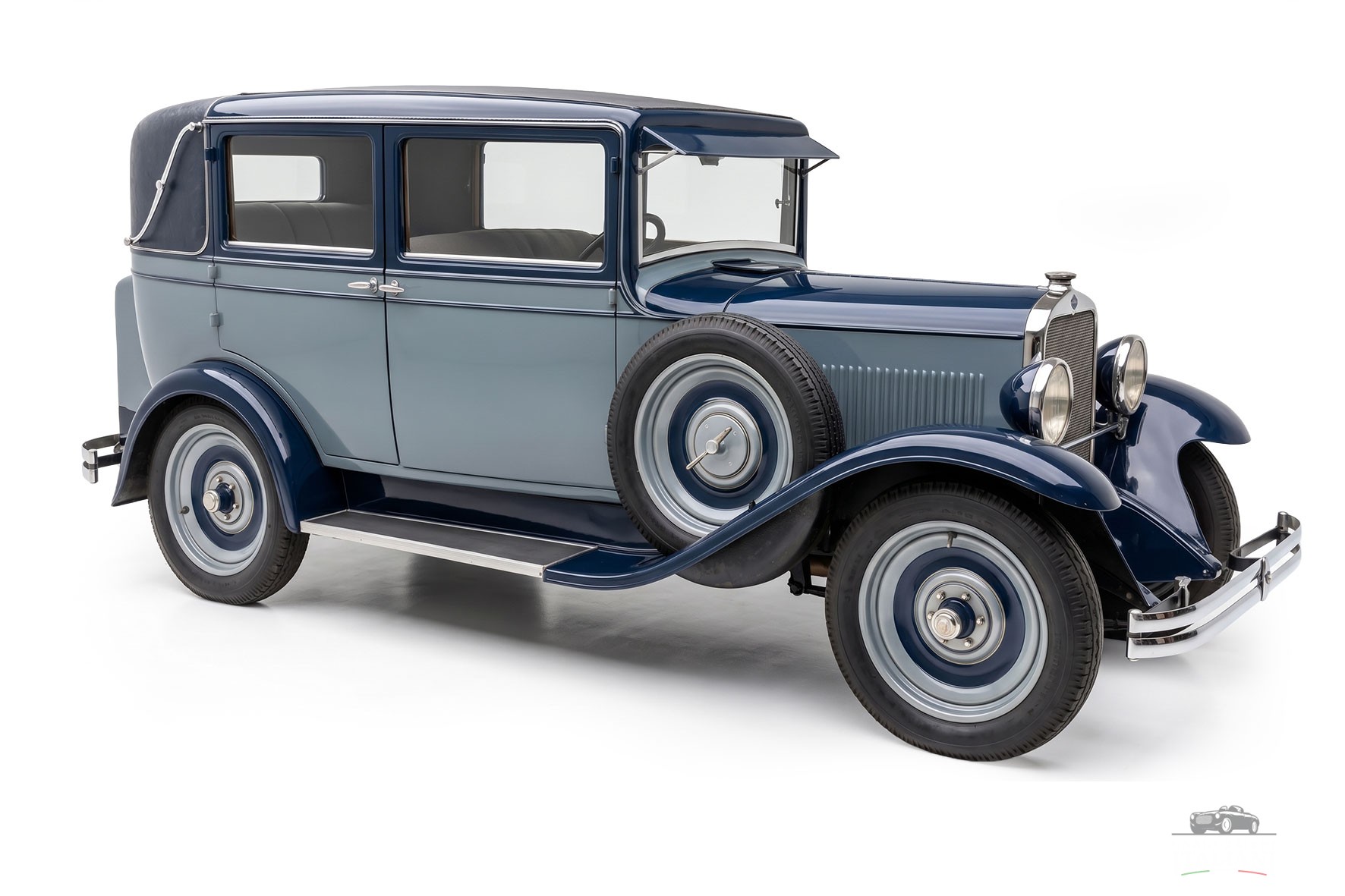
In 1927 Barbi moved its operations to Mirandola as demand shifted towards motor vehicles. After repairs and early custom-body work, it produced coachwork for passenger cars on Fiat, Alfa Romeo, Ansaldo, Officine Meccaniche, Lancia and Bianchi chassis. A Fiat 514 Barbi dated 1930 appears in the Carrozzieri Italiani legacy register, but its precise chassis number and surviving body history remain to be established. The shortage of specialized craftsmen and demand for commercial work increasingly directed Barbi towards truck cabs, vans and ambulances. The workshop used wood, shaped sheet metal and eventually more extensive metal frameworks, reflecting the changing materials and production methods of Italian coachbuilders.
Barbi expanded its Mirandola premises in 1932, with a workforce reported at approximately seventy people, and began to concentrate on bus and coach bodies. Early bus production drew on chassis and mechanical systems supplied by manufacturers such as Fiat, while SIAMIC is documented as an important commercial customer. These should be understood as industrial relationships, not ownership or design attributions for the individual historic cars.
Wartime interruption and the post-war bus industry
During the Second World War the factory was redirected to military vehicle work. A local industrial history describes German occupation after September 1943 and work on military lorries; accounts of the exact military contracting arrangements should not be conflated. Barbi resumed work after the conflict and developed an important position in Italian bus construction. The firm’s output is reported at thirty-five vehicles in 1952, fifty in 1955 and forty-eight in 1959, while its workshops still carried out much of the metalwork, woodworking, finishing and upholstery in-house.
Among its better-documented bus projects were bodies for the Fiat 682 and Fiat 306, alongside an OM Leoncino coach and other touring vehicles. Successive versions of the Fiat 306 body were made from 1956 into the early 1980s. Galileo Barbi died in 1962, after which his son Sirner took over the business, with Maria involved in administration and commercial relations. Some manufacturing stages, including turned parts and seating, were later entrusted to specialist workshops formed by former employees.
Industrial expansion and the Volvo period
In the 1970s Barbi developed more sophisticated touring coaches and larger orders, including a documented SEFTA contract for thirty-two buses in 1972. Passenger comfort became a stronger design consideration, with reclining and padded seats, improved glazing and integrated passenger equipment. The historical study records production of 116 buses in 1978. In 1986 the company concluded an exclusive arrangement involving Volvo chassis, after decades of close association with Fiat. During the following period, stainless steel, glass-fibre body components and more modular assembly methods became increasingly significant. The Italia 99 and the later Echo were among the company’s recognisable touring-coach lines; specific designer attribution for each version requires model-level evidence.
Management passed to the next generation of the Barbi family during the 1990s, notably Carlo and Alberto. The move to a new factory at San Giacomo Roncole, near Mirandola, was completed in 1998. The Genesis touring coach appeared around 2000. Contemporary histories also record the Galileo line during the 2000s, with sources referring to introductions and later versions at different dates. The exclusive Volvo relationship ended in 2006; later programmes involved vehicles and components associated with Irisbus, Iveco and MAN. These partnerships should be assigned only to their documented products and periods.
Closure and preservation of the archive
The historic Carrozzeria Barbi ceased operations in 2018 amid financial difficulties. A published notice for concordato preventivo no. 19/2018 concerned assets of Carrozzeria Barbi S.r.l., including designs, moulds, product homologations, know-how and the Galileo programme. The 2020 judicial sale notice stated a starting price of €37,000 for that intangible-asset lot, which is neither a completed sale price nor a valuation of a Barbi vehicle. The separate Barbi Coach & Bus business subsequently continued activities in minibus sales, school-bus programmes and original spare parts; legal continuity and asset ownership must not be presumed without corporate records.
In 2023 Barbi Coach & Bus launched the Barbi Heritage initiative to preserve and share historical photographs, drawings and publications extending back to the 1920s. This archive includes period documentation of Fiat, Alfa Romeo, OM and later touring-coach programmes. An exhibition in Mirandola in June 2025 marked the company’s 120-year history using material from the collection. The existence of these photographs and drawings does not itself grant reproduction rights, so historic images require separate licensing and credit checks before import into the Carrozzieri Italiani archive.
KEY MOMENTS
Timeline
-
Foundation of Barbi
Fossa / Concordia sulla Secchia, Italy
-
Barbi relocates to Mirandola and enters motor-vehicle coachbuilding
Mirandola, Italy
-
Sirner Barbi takes over the company
Mirandola, Italy
-
Barbi signs an exclusive agreement with Volvo
Mirandola, Italy
-
Barbi completes the move to San Giacomo Roncole
Mirandola, Italy
-
Carrozzeria Barbi enters liquidation and ends historic operations
Mirandola, Italy
Vehicles at a glance
- Related vehicles
- 1
- Fuoriserie
- 1
CONTINUE EXPLORING
THE CONVERSATION
Comments 0