
Corna
THE STORY
Overview
Carrozzeria Fratelli Corna was an independent coachbuilding workshop in Turin, Italy, operated by two members of the Corna family. Its origins are generally placed around 1945, although a precise legal foundation date has not been established. The firm specialised in hand-formed aluminium body panels and complete bodies for sports cars, prototypes and individual commissions. It worked both under its own name and as a subcontractor for other coachbuilders and manufacturers.
Origins and workshop
Corna’s early post-war activity developed from automotive repairs and the fabrication of replacement panels into the construction of complete bodywork. The brothers’ experience with lightweight aluminium became particularly relevant as Italian manufacturers and racing constructors sought specialised external workshops rather than maintaining every body-production operation in-house. In 1957 the workshop is documented at Via Col di Lana 32, at the corner with Via Postumia in Turin, close to the Abarth premises. This address belonged to the firm’s Turin coachbuilding phase; it should not be confused with later premises used by similarly named businesses.
The workshop’s historical importance lies partly in its position within a network of distinct companies. A designer could be responsible for the shape of a car, an automobile manufacturer for the chassis and mechanical specification, and Corna for the physical construction of the body. These roles must remain separate when attributing individual vehicles.
Work for Zagato and Abarth
During the late 1950s and early 1960s, Fratelli Corna carried out aluminium fabrication connected with Zagato and Abarth. Corna was a workshop responsible for executing bodywork, not a synonym for the designer or manufacturer of every Zagato- or Abarth-badged car in which it participated. The collaboration included lightweight competition coupé programmes, with special bodies prepared for Abarth’s Le Mans activity around 1960 and 1961. Exact attribution must be established for each racing chassis rather than inferred from its general resemblance to a Zagato model.
As the commercial relationship between Abarth and Zagato changed, Corna continued some fabrication directly for Abarth. By approximately autumn 1961, the related Abarth contract had passed to Carrozzeria Beccaris. This transition concerned a particular subcontracting arrangement and does not establish that the Corna workshop ceased operating in 1961.
Iso Parad and the 1957 Turin Motor Show
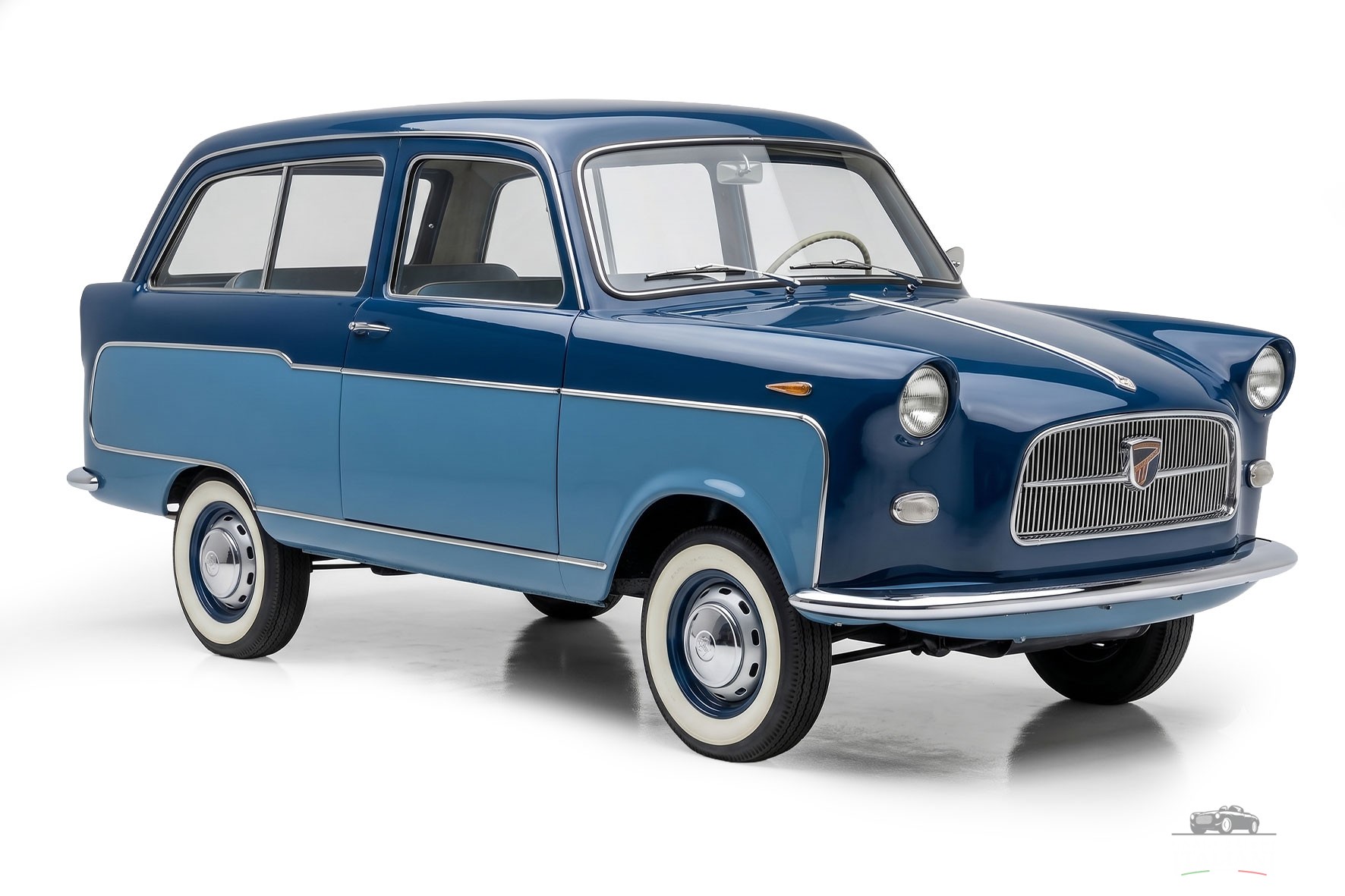
Corna exhibited the 1957 Iso Parad, also described in some historical material as the Parad-Iso, at the Turin Motor Show. The one-off was an attempt to create a compact two-door estate or giardinetta on Iso Isetta-derived mechanical foundations. Its more conventional ponton-style body was attributed to Giovanni Michelotti as designer, while Fratelli Corna executed the coachwork. The project remained a prototype rather than developing into a documented production series. Its appearance under the coachbuilder’s own name distinguishes it from Corna’s subcontracted work for larger firms.
Moretti and Intermeccanica
Among Corna’s independent commissions was the open Moretti 750 Sport body associated with 1960. The available record establishes the association but does not yet justify an exact production total, and this should not be conflated with other Moretti 750 variants built by different body shops.
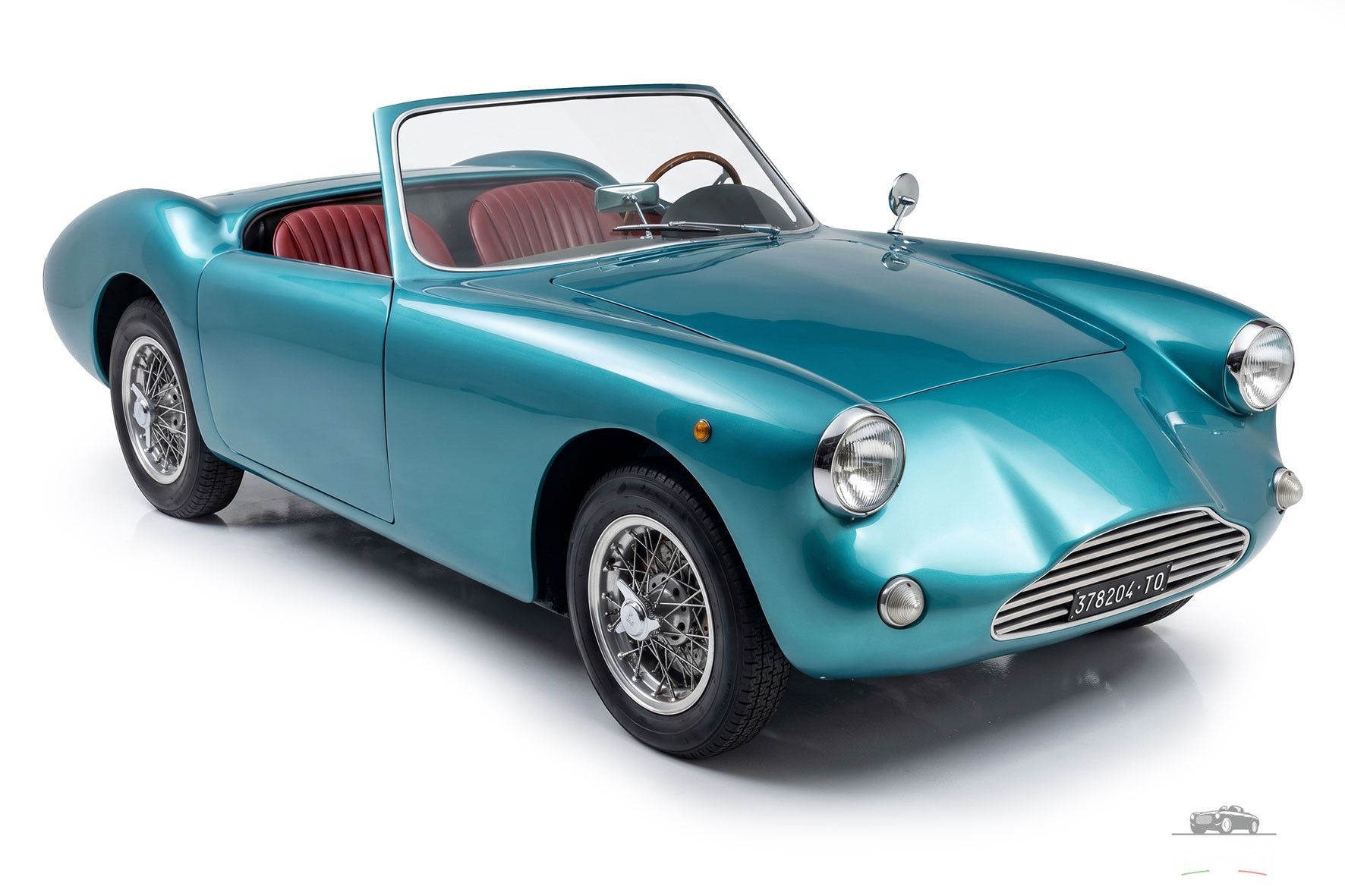
Corna also provided aluminium coupé bodywork for the Intermeccanica IMP 700 GT programme. Developed by Frank Reisner’s Intermeccanica concern using Steyr-Puch mechanical components, the IMP emerged around 1960 and continued into the early 1960s. The hand-built coachwork reflected Corna’s role as a specialised supplier. Reports of a small total production require model-specific verification and should not be treated as an independently confirmed count of Corna-built chassis.
In 1962, Corna constructed the aluminium body for the original Apollo GT prototype developed by Intermeccanica for the American Apollo project. The prototype followed styling work attributed to Franco Scaglione and differed materially from the later series vehicles. Corna’s prototype contribution must not be extended automatically to production Apollo coupés and convertibles, whose steel bodies were contracted to other workshops. The original Apollo prototype is therefore a separate coachbuilding commission from the production programme.
Bandini and individual bodies in the 1960s
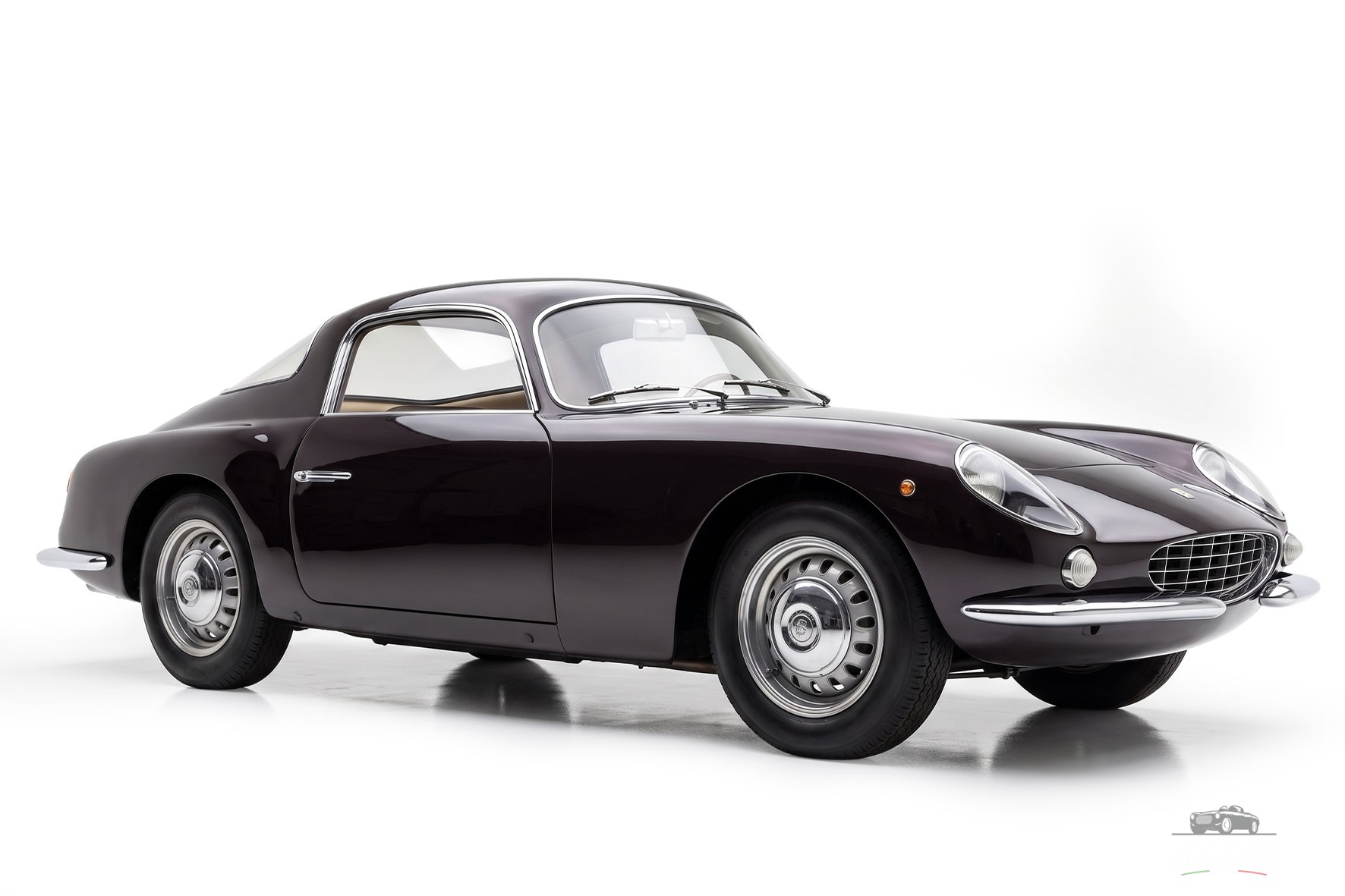
Another documented project is the Bandini 1000 GT, a lightweight coupé associated with 1963 in the Bandini historical chronology. The 1963 identification must be distinguished from earlier Bandini models; a date attached to another car or chassis does not establish the production year of this coupé. The chassis and model identity should nevertheless be distinguished from other Bandini sports racers and from any unverified production estimate.
A further example is the Alfa Romeo Giulietta Spiaggina. Its basis was a Giulietta saloon produced in 1961, while the special open-bodied conversion is documented as a commission undertaken by the Corna brothers in 1963. The transformation included lowered door openings and distinctive wooden details, notably a removable hardtop and bumper elements. The car’s initial manufacture and the later conversion are separate historical events; neither should be used as the other’s build date. Its later preservation and restoration are also distinct from the workshop’s original work.
Later history and attribution
Fratelli Corna is securely associated with coachbuilding projects through at least 1963, but the exact date at which the original Turin operation ended has not been established. Some retrospective accounts describe a later relocation of activity to Sardinia. Evidence of a shared surname, a repair company or an address in the Cagliari area is not, by itself, sufficient to establish uninterrupted legal or commercial continuity with the historical Turin coachbuilder.
The surviving record demonstrates a company active across three related fields: specialised aluminium subcontracting, experimental prototypes and individual body conversions. Its contributions to Abarth, Iso, Moretti, Intermeccanica, Bandini and Alfa Romeo should be evaluated by project and, where documentary evidence permits, by specific chassis. This avoids assigning Corna’s work indiscriminately to every vehicle of a related model or to the complete output of a manufacturer.
KEY MOMENTS
Timeline
-
Foundation of Carrozzeria Fratelli Corna, circa 1945
Turin, Italy
-
Corna moves into the Via Col di Lana workshop in Turin
Turin, Italy
-
Corna begins building aluminium bodies for the Intermeccanica IMP 700 GT
Turin, Italy
-
Corna builds Abarth’s special Le Mans competition coupés
Turin, Italy
-
Corna builds the aluminium prototype body for the Apollo GT
Turin, Italy
-
Corna bodies the Bandini 1000 GT
Turin, Italy
-
Corna transforms an Alfa Romeo Giulietta into a one-off Spiaggina
Turin, Italy
PEOPLE & DESIGN
Designers
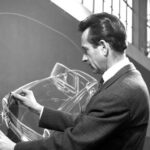
Giovanni Michelotti
Giovanni Michelotti was a prolific Italian automotive designer whose independent Turin studio produced coachwork and production-car designs for Vignale, Triumph, BMW and numerous other manufacturers.
Explore record ↗Vehicles at a glance
- Related vehicles
- 5
- Prototypes
- 1
- One-offs
- 1
- Limited series
- 2
- Fuoriserie
- 1
CONTINUE EXPLORING

THE CONVERSATION
Comments 0