
Bob Peak
AT A GLANCE
- Born
- 1927-05-30
- Birthplace
- Denver
- Died
- 1992-08-01
- Nationality
- American
- Occupation
- Illustrator and occasional automotive designer
- Active from
- 1950s
- Studio
- Independent illustration studio / Chinetti projects
- Based in
- USA / Italy
THE STORY
Overview
Bob Peak (30 May 1927 – 1 August 1992), born Robert M. Peak in Denver, Colorado, was an American commercial illustrator and designer. He is chiefly associated with film advertising, editorial illustration and graphic art, but he also made a documented contribution to Italian coachbuilding through special Ferrari projects developed with Luigi Chinetti Jr. Peak’s automotive work was a limited part of a career predominantly devoted to illustration; it should be distinguished from the work of the professional coachbuilders who converted his drawings into vehicle bodies.
Education and illustration career
Peak grew up in Wichita, Kansas. After initially studying at the University of Wichita and serving in the United States Navy, he attended Art Center College of Design, completing his studies in 1951. His professional practice developed in commercial advertising and editorial commissions. His ability to combine painting, drawing, strong composition and saturated colour made his images adaptable to magazine covers, large-format advertisements and cinematic publicity.
He produced illustrations for publications including Time, TV Guide and Sports Illustrated, while automotive advertising also formed part of his commercial practice. Among the marques featured in his work was Mercury, for which he illustrated Comet advertisements in the early 1960s. Peak’s association with automobiles thus preceded his involvement in designing vehicle bodies: in advertising, his task was to represent and communicate an existing product; in the later Ferrari projects, he participated in conceiving its form.
Peak’s film-poster career grew from the early 1960s, with work associated with West Side Story and subsequent commissions for My Fair Lady, Camelot, Superman and other major productions. His studio continued to produce posters and editorial art through the 1970s and 1980s. He also contributed illustrations to the visual identity of the 1984 Los Angeles Olympic Games, including commemorative postage stamps. These commissions were his principal professional activity, rather than employment as a full-time automobile stylist.
Luigi Chinetti and the Ferrari design proposals
Peak was interested in European sporting cars and became acquainted with Ferrari importer Luigi Chinetti and Chinetti’s son Luigi Jr., commonly known as Coco. The relationship developed into a collaboration on individual vehicle concepts for the American market. Peak’s contribution lay principally in styling proposals and drawings, while the Chinetti organisation supplied the commercial initiative and connections with Italian manufacturers and specialist coachbuilders.
One early project concerned a Ferrari sports-racing chassis converted into a road-oriented coupé. Design-history accounts associate Peak’s sketches and Chinetti’s commission with coachbuilder Giovanni Michelotti, who developed the body in Italy. This project is related to the history of the Ferrari 275 P2 Michelotti Coupé. Because the surviving accounts use differing model designations and do not consistently separate the original racing chassis, the redesign and subsequent restoration, Peak’s precise chassis-level attribution remains subject to further archival reconciliation. Michelotti’s documented execution and styling responsibility must not be replaced by an exclusive attribution to Peak.
Ferrari 330 GT 2+2 Shooting Brake
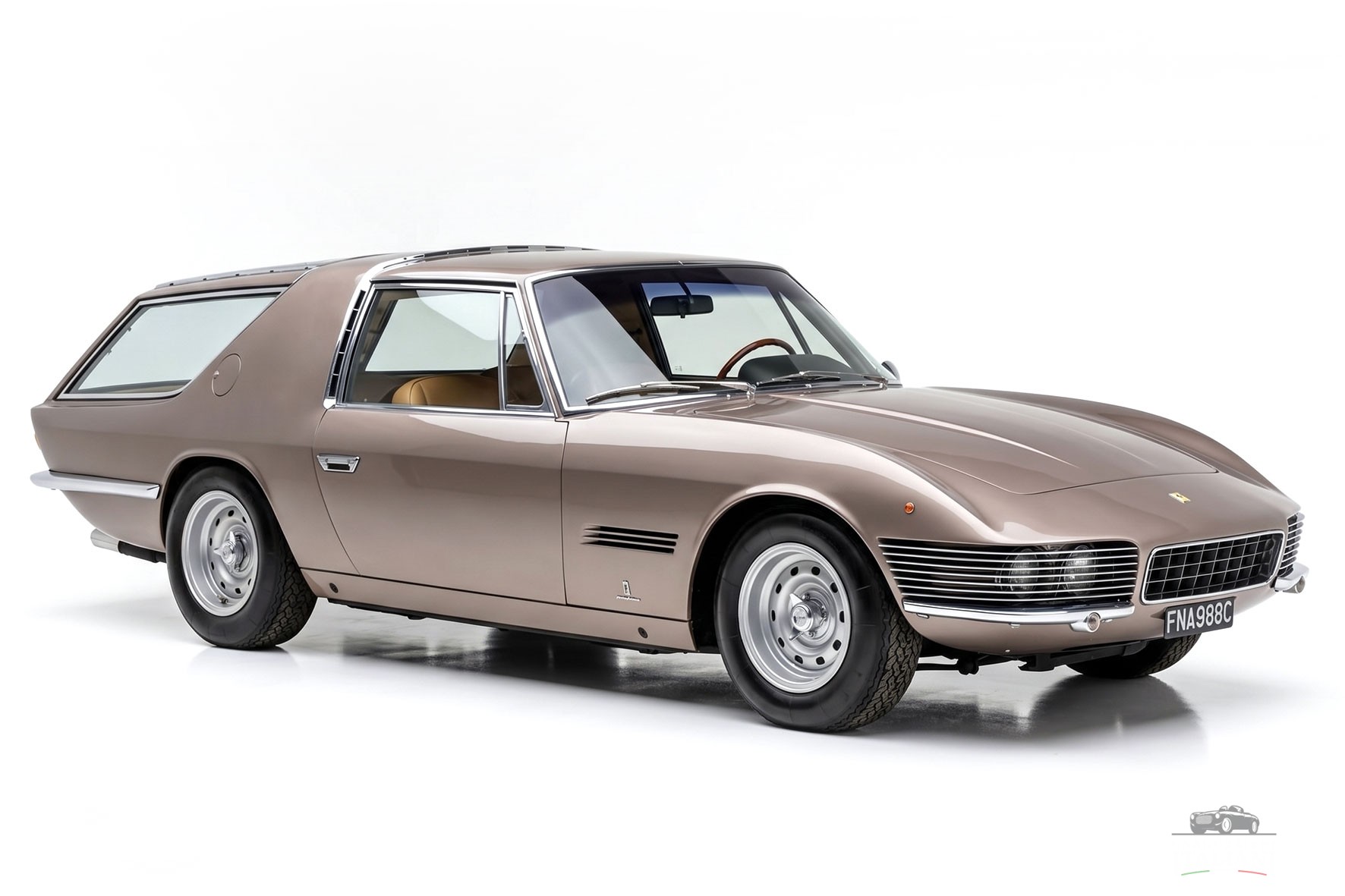
Peak’s best-documented automotive design involvement is the Ferrari 330 GT Shooting Brake, chassis 07963. Completed by Ferrari in 1965 as a conventional 330 GT 2+2 Series II coupé with Pininfarina coachwork, the car later returned to the Chinetti organisation in the United States. In 1967 Luigi Chinetti Jr. initiated a conversion to a bespoke grand touring shooting brake and collaborated with Peak on the new external design.
The revised body gave the four-seat car an extended roof, a more substantial rear luggage compartment and a distinctive rear profile. Peak’s surviving proposals explored extensive glazing and unusual access arrangements, including glass side panels, although not every detail of the preliminary drawings reached the finished vehicle. The design was executed by Carrozzeria Alfredo Vignale in Turin, which replaced most of the original bodywork while retaining selected elements from the production coupé. The result was a single re-bodied chassis, not a series-production Ferrari variant.
Vignale exhibited the completed shooting brake at the 1968 Turin Motor Show. The work is frequently described as among the last Ferrari commissions completed by Vignale. Its subsequent provenance includes several changes of ownership and restoration campaigns, but those facts belong to the record for chassis 07963 rather than to Peak’s personal biography. In design attribution, Peak and Luigi Chinetti Jr. are recorded for their collaborative concept work; Vignale remains the coachbuilder responsible for manufacturing the new body, and Pininfarina remains the maker of the original 1965 coupé coachwork.
Other design activity and professional scope
Design-history reporting also identifies additional concept proposals by Peak, including studies associated with Ford and experimental vehicles. Such references show the range of his interests but do not establish production design responsibility or a completed chassis for every drawing. The Ferrari collaborations remain the clearest examples in which his graphic work can be connected with a specific coachbuilt vehicle.
Peak did not abandon illustration for automotive design. He continued his work on film publicity, commercial art and large-scale visual compositions and became a prominent figure in American illustration. His later recognition included honours from illustration and entertainment-industry organisations. Peak died in 1992, leaving a body of graphic work that extended well beyond his brief involvement with automobile styling.
Automotive design attribution
For the Ferrari 330 GT Shooting Brake, the documented responsibilities are collaborative design by Bob Peak and Luigi Chinetti Jr., coachwork execution by Vignale, and an original Pininfarina-bodied Ferrari chassis. The earlier Michelotti-associated sports-car project is acknowledged as a historical collaboration, but its exact role mapping requires stronger chassis-specific evidence. These distinctions prevent a designer’s illustration, a customer’s design direction and a coachbuilder’s executed body from being treated as interchangeable authorship.
THE NETWORK
Shared vehicle credits
KEY MOMENTS
Timeline
-
Birth of Bob Peak
Denver, United States
-
Career ends
-
Death of Bob Peak
United States
CONTINUE EXPLORING
THE CONVERSATION
Comments 0