
Edgardo Michelotti
AT A GLANCE
- Born
- 1952
- Nationality
- Italian
- Occupation
- Automotive and industrial designer, archive custodian
- Active from
- 1973
- Studio
- Studio Giovanni Michelotti / Archivio Storico Michelotti
- Based in
- Turin, Italy
THE STORY
Overview
Edgardo Michelotti (born 1952) is an Italian automotive and industrial designer who worked at Studio Michelotti in Turin and subsequently became the custodian of the Archivio Storico Michelotti. He is the son of automotive designer Giovanni Michelotti (1921–1980). His professional activity comprises drawing and prototype development during his father’s lifetime, the management and continuation of the design business after 1980, later industrial-design work, and the preservation and study of the family’s historical design archive. His contributions to individual vehicles must be distinguished from Giovanni Michelotti’s original design authorship and from the work of other studio designers.
Education and entry into the studio
Michelotti was born in 1952. He trained as a surveyor and pursued architectural studies in Turin. In his own published account, he dates the beginning of his work at his father’s coachbuilding and design company to 1973. He entered the business as an apprentice while the studio was operating a substantial prototype-development facility at Orbassano, near Turin. The premises combined styling, engineering, model making and body construction, enabling drawings to be developed into full-size designs and functioning vehicles within the same organisation.
Edgardo has described his apprenticeship as a demanding technical education rather than an inherited managerial appointment. Giovanni required him to repeat drawings, assess line quality and learn the practical relationship between a design sketch and the construction of a body. In later interviews he recalled being treated as an ordinary employee. He also photographed work in progress, an activity that subsequently became important to the documentary record of the studio. The period from 1973 to January 1980 was therefore formative in both design practice and the preservation of historical material.
The Lancia Beta Mizar
The Lancia Beta Mizar, presented in 1974, is an unusually well-documented example of Edgardo’s early participation. In a first-person account published in August 2024, he described Giovanni initiating the four-door gull-wing concept, producing the original sketches and directing successive refinements. Edgardo prepared repeated tracings and drawings, including material used for the full-scale body construction plan, and took part in the development of that plan. The distinction is important: Giovanni was responsible for the principal design concept, while Edgardo contributed to its drawing and realisation.
The functioning prototype was based on the Lancia Beta 1800 and constructed at the Michelotti workshops. It accommodated four occupants, with four independently opening gull-wing doors, a separate rear opening, and an emphasis on visibility, comfort and aerodynamic form. Edgardo’s account describes both the production of the bodywork and the subsequent road tests. These recollections document the work of the studio and his participation without establishing him as the sole designer of the finished car. The study remained a one-off rather than entering series production.
Continuation of Studio Michelotti after 1980
Following Giovanni Michelotti’s illness and death in January 1980, Edgardo assumed responsibility for the continuation of the family business. He has dated this period of automotive-design work to 1991. The studio remained active in the preparation of prototypes, experimental vehicles and presentations for international motor shows. Its projects cannot all be credited to one individual: Edgardo’s leadership and involvement should be separated from the specific styling contributions of colleagues and external engineering specialists.
The Michelotti CVT 58 of 1982 is a documented post-Giovanni project. The Archivio Storico Michelotti identifies the Alfa Romeo Alfasud-based prototype as a creation by Edgardo, while accounts of the project also record collaboration with designer Tateo Uchida. The concept was exhibited at the Geneva Motor Show in 1982. Its significance lies in the development of an alternative family-car body and in the studio’s continuing exploration of aerodynamics and packaging.
The Michelotti Pura, presented in 1988, was another experimental project undertaken while Edgardo directed the studio. The historical record distinguishes the studio’s project initiative and leadership from the primary styling work associated with Tateo Uchida. The Pura’s roadster architecture and unconventional canopy exemplify the company’s continued research in sports-car form and materials, but its body styling should not be reassigned exclusively to Edgardo on the basis of his managerial position.
The Michelotti Villedeuxmille was presented in Turin in 1990 as a non-functional, full-scale urban-vehicle study. Contemporary reporting associates the proposal with Edgardo Michelotti, and the model is generally described as the final motor-show concept of the original Michelotti design business. The exhibition model must not be treated as a completed running vehicle or as evidence of a production programme. Edgardo has stated that he left automotive design in 1991, rather than ending all professional design activity at that date.
Industrial design and the historical archive
After 1991, Michelotti moved away from the automotive sector and worked in industrial design for approximately fifteen years. Photography and digital archiving formed part of his later activity. He has dated archival digitisation work to 2003 and more systematic cataloguing to 2015. These dates refer to stages in the treatment of the collection, not to the establishment of Giovanni’s original studio.
As custodian of the Archivio Storico Michelotti in Turin, Edgardo has assembled, identified and preserved original design drawings, photographic negatives and prints, full-scale body plans, scale models, correspondence and related records. In his 2024 published account he described approximately 6,000 graphic units, 20,000 photographs and a substantial collection of full-size design plans. These figures are his description of the archive and should not be confused with the number of individual automobiles designed by his father. The collection is especially relevant to the reconstruction of the relationships between Giovanni Michelotti, coachbuilders such as Vignale, and the manufacturers that commissioned their work.
Historical research, exhibitions and attribution
Michelotti has contributed first-hand recollections, provenance information and original material to research and public exhibitions. In 2021 he participated in the centenary programme for Giovanni Michelotti, including the exhibition Michelotti World: 1921–2021 at the Museo Nazionale dell’Automobile in Turin. The exhibition drew on original designs from the family archive and other collections. His work as an archivist makes it possible to compare surviving drawings, period photographs and models with specific completed vehicles, rather than relying solely on retrospective styling attributions.
The archive’s importance also requires a careful distinction of roles. Documents created by Giovanni and preserved by Edgardo are not designs authored by Edgardo. Similarly, a project carried out by Studio Michelotti after 1980 does not automatically establish Edgardo as its sole exterior stylist. Where contemporary records permit, his credits are described separately as concept development, technical drawing, project supervision, design contribution or historical testimony. Edgardo Michelotti’s own design career and the heritage of Giovanni Michelotti are therefore related but distinct subjects in automotive design history.
THE NETWORK
Shared vehicle credits

KEY MOMENTS
Timeline
-
Born
-
Career begins
-
Career ends
CONTINUE EXPLORING
Related vehicles



CONTINUE READING
Related articles
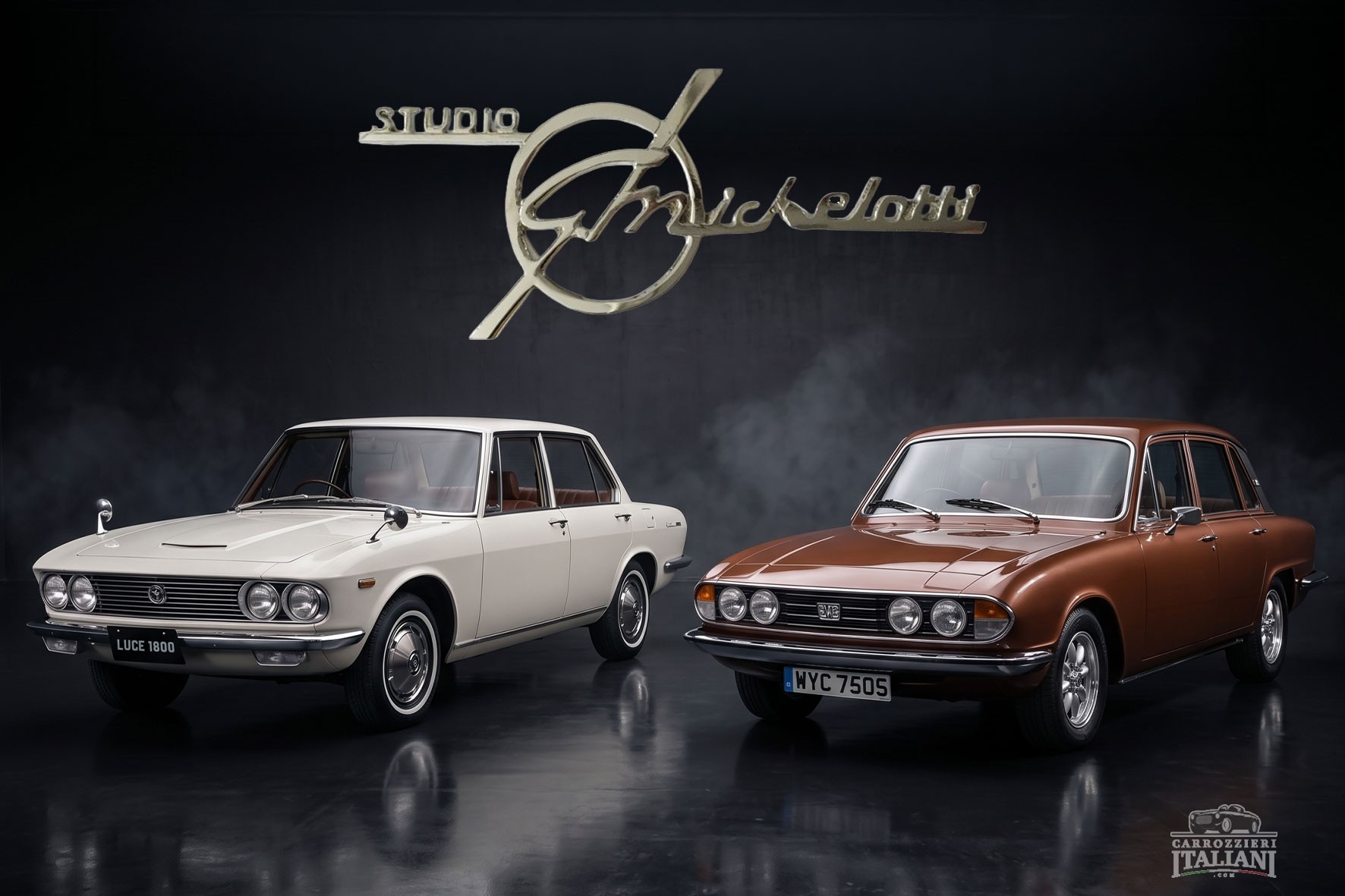
Mazda Luce: Edgardo Michelotti Challenges the Official Bertone Story
After our article on the Mazda Luce, Edgardo Michelotti revealed an unpublished claim: the Bertone design may have originated from a Michelotti Triumph project.
Read story
THE CONVERSATION
Comments 0