
Stola: The Family Behind a Century of Cars and Concepts
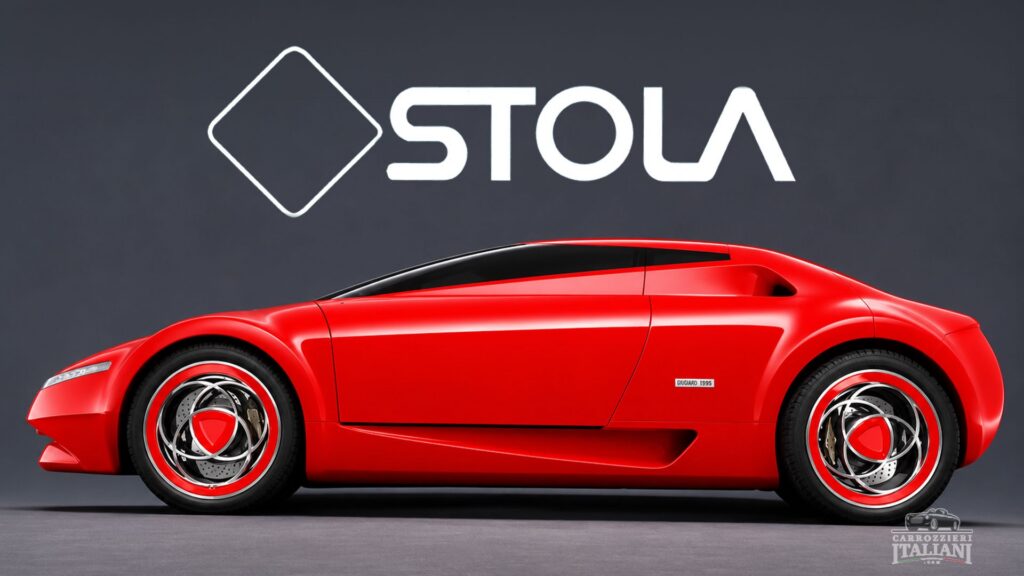
From the wooden patterns of the Lancia Lambda to the extraordinary concept cars of the 1990s, the story of Stola is also the story of a Turin family whose craftsmanship helped turn some of the automotive world’s most ambitious ideas into reality.
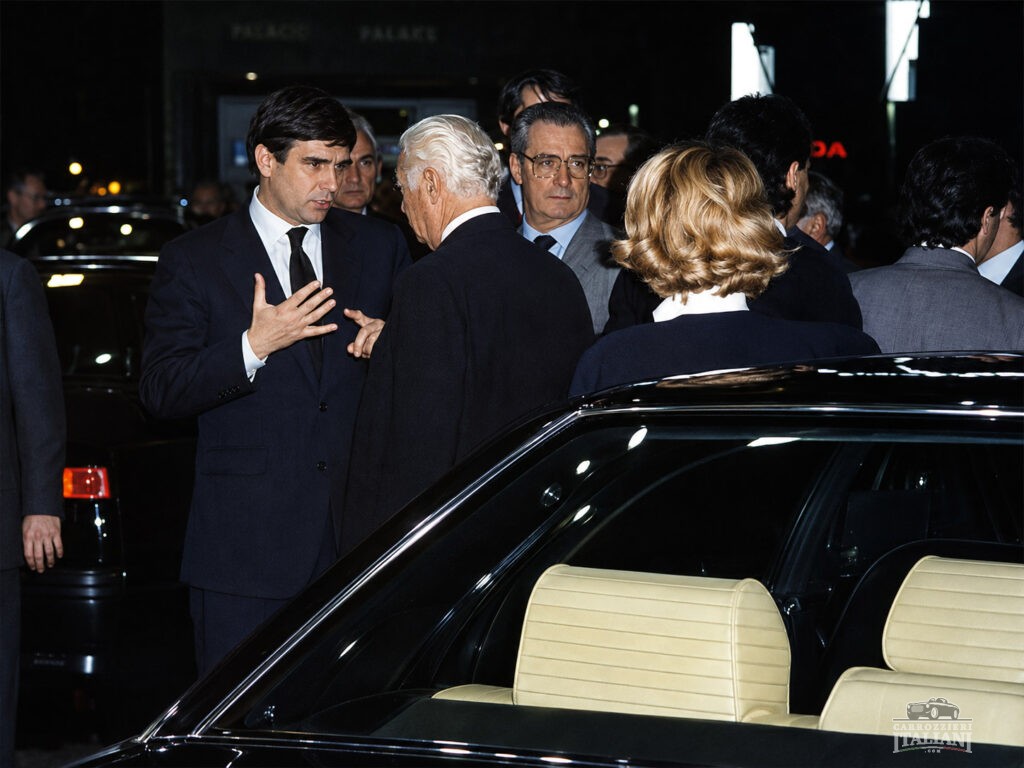
There is a photograph from the 1991 Geneva Motor Show in which Paolo Cantarella is explaining the retractable glass roof of the Alfa Romeo Proteo to Gianni Agnelli and Cesare Romiti. The little red sports car had attracted considerable attention, and with good reason: beneath its elegant bodywork lay the mechanical complexity of a fully functioning prototype, while its transparent roof could disappear behind the seats, transforming a coupé into an open car. Walter de Silva’s Alfa Romeo design department had conceived an automobile intended to demonstrate the future of the marque, but creating something that could actually perform this transformation had required another kind of expertise. Much of that work had taken place in Turin, inside the workshops of Stola, a company whose name seldom appeared in the headlines surrounding the cars it helped to create.
By then, the Stola family had been working in the automotive industry for more than seventy years. Its craftsmen had made wooden models for Vincenzo Lancia, helped translate Pininfarina‘s designs into production tooling, produced components for the BMW M1 and developed prototypes for some of Europe’s largest manufacturers. They belonged to that less celebrated part of Italian automotive history where the difference between a beautiful drawing and a real automobile was measured in millimetres, working hours and the ability of a skilled modeller to understand a surface long before a computer could describe it.
To understand how Stola became one of the important names in this particular world, however, it is necessary to return to a rather different Turin, when the automobile industry was still young and a block of carefully worked wood could be as valuable to a manufacturer as the most sophisticated mechanical drawing.
A Young Man, a Wooden Model and Vincenzo Lancia
The story begins with Alfredo Stola, born in Turin on 31 August 1894, into a family whose business had little to do with automobiles. His father Francesco and mother Vincenza Brunazzo were associated with a wine and spirits business dealing in products from Asti and Monferrato, a respectable commercial activity in a city whose industrial identity was only beginning to take shape. Young Alfredo followed a different inclination, studying technical subjects before leaving Italy in 1912 for Santos, Brazil, where he found employment as an apprentice pattern maker in a foundry involved in the manufacture of large marine engines.
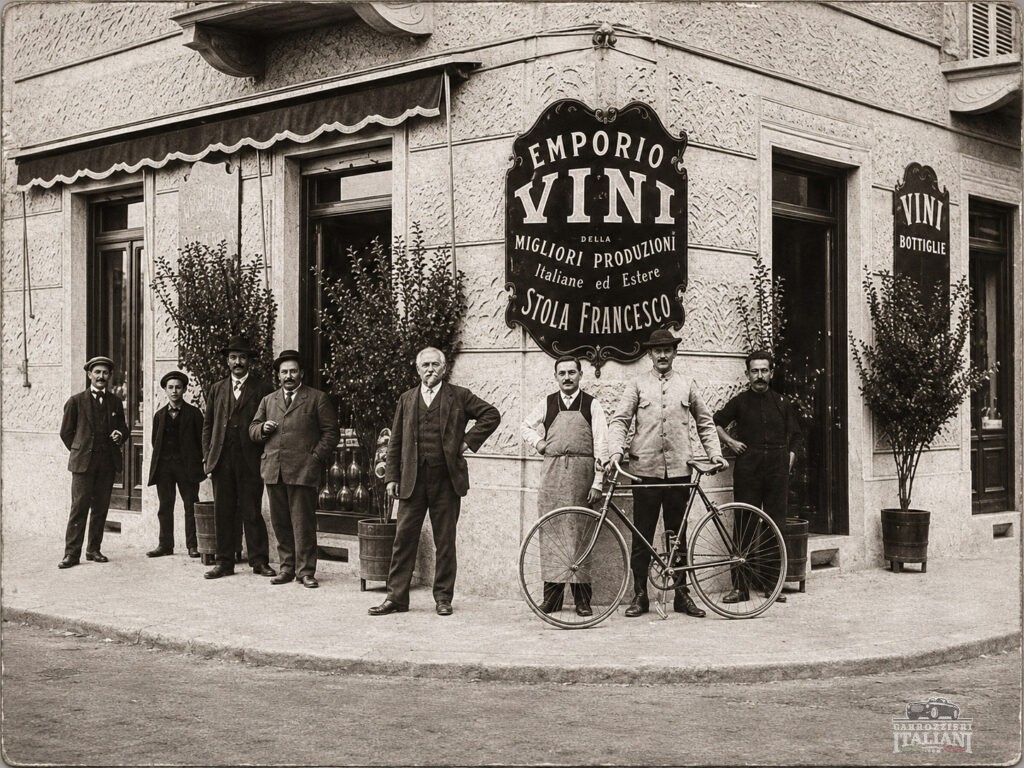
It was an education of considerable practical value. Before a metal component could be cast, somebody had to produce the pattern from which its mould would be made, allowing for the peculiarities of the material, the behaviour of molten metal and the precision required of the finished object. Pattern making demanded the ability to read technical drawings, interpret three-dimensional shapes and work wood with a degree of accuracy that left little room for improvisation. These were precisely the skills that would become essential to the development of the automobile.
The First World War interrupted his apprenticeship to industry. Returning to Italy in 1915, Alfredo served in the infantry near the Isonzo front, and it was only after the conflict that he could begin to establish a future of his own. In January 1919, he opened a modest modelling workshop at Corso Racconigi 138, in Turin’s Borgo San Paolo district, not far from the works of Lancia. The original company name was as descriptive as it was unromantic: Alfredo Stola Modelli Dimostrativi in Legno per Fonderia e Carrozzeria. There was no promise of glamour in those words, merely a declaration of what the workshop could do.
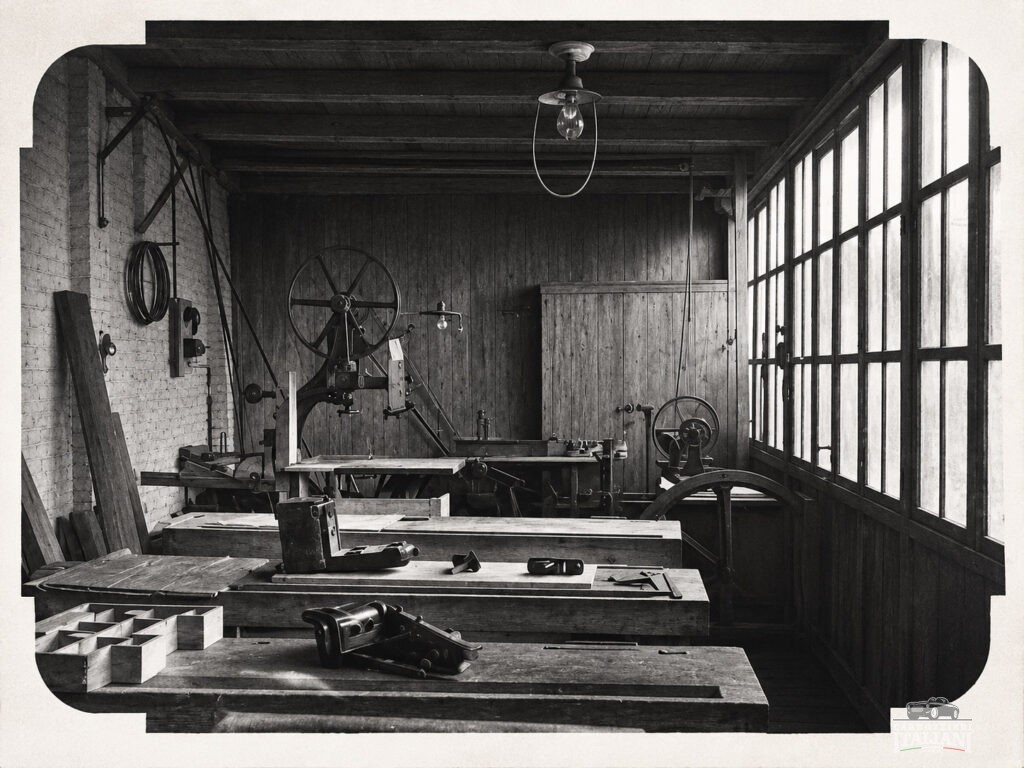
The premises occupied less than 300 square metres, and the initial workforce consisted of Alfredo, four collaborators and a young assistant. Yet the location could hardly have been better chosen. Vincenzo Lancia was building automobiles of exceptional mechanical imagination, and the development of those machines required precisely the kind of modelling expertise that Stola was able to provide. A working relationship began which would place the small workshop remarkably close to one of the most innovative engineering organisations in Europe.
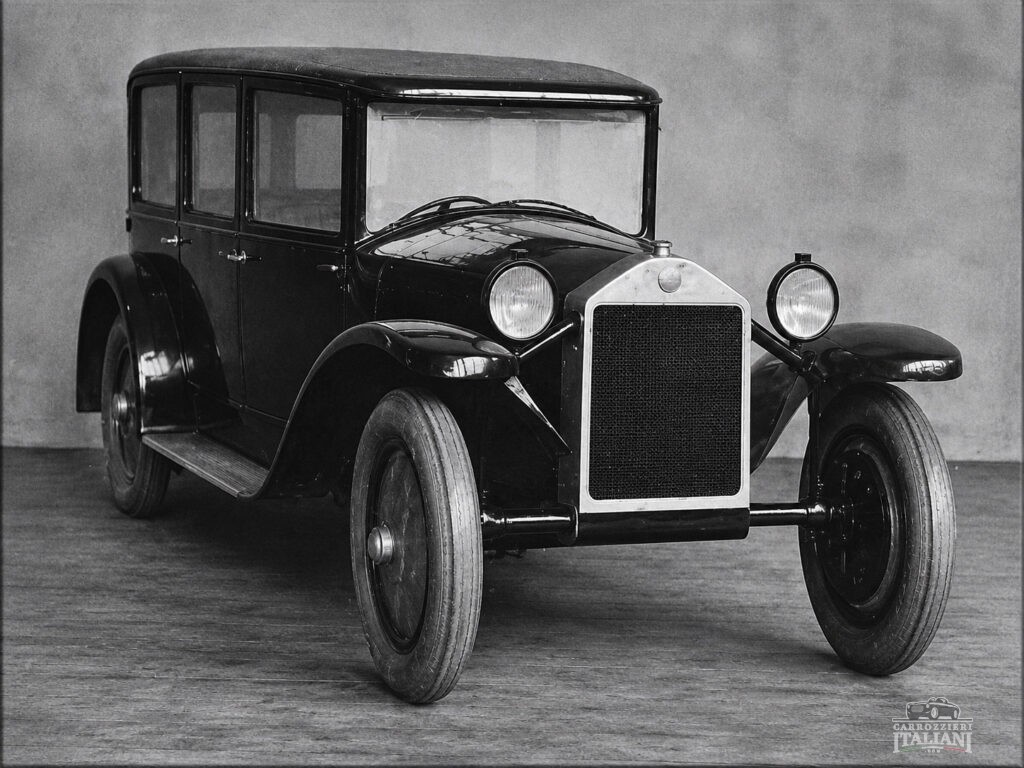
The Lancia Lambda provides perhaps the finest illustration of those early years. Introduced in 1922, it represented a decisive departure from traditional automobile construction, with its load-bearing body structure and independent front suspension. The surviving Stola family photographs show wooden models associated with the Lambda’s chassis, body and engine development, including a model of the Torpedo body dated 1924. These objects were neither ornamental sculptures nor finished designs intended for exhibition; they belonged to the complicated process through which engineering calculations and styling proposals were translated into components that could be manufactured and assembled.
The distinction is important, because it explains the particular place occupied by Stola among the great names of Turin. Pininfarina, Bertone and Ghia became famous for the appearance of their automobiles, but the work undertaken by a specialist modeller often remained invisible to the eventual customer. A perfectly executed master model might be admired by engineers, technicians and production managers without ever being seen by the public. Its success was measured by what could be made from it, rather than by the recognition it received.
As Lancia expanded, so did the work entrusted to Alfredo Stola. The family’s records document projects associated with the Dilambda, Augusta and Artena, while the development of the Aprilia in the mid-1930s brought the workshop into contact with one of the most sophisticated production cars of its period. By then, the original premises had become inadequate, and in 1934 Stola moved to a purpose-built workshop at Via Issiglio 38. Approximately 800 square metres were now available for the modelling department, equipped with substantial reference tables and milling machinery, and the workforce had grown to around twenty.
There was something particularly appropriate about this close relationship with Lancia. The manufacturer was renowned for an engineering philosophy that demanded originality without sacrificing mechanical precision, and its increasingly complex automobiles could only be brought into production through painstaking development. The Aprilia, with its aerodynamic body and advanced construction, offered a fine example of how an apparently simple shape could conceal an enormous amount of technical work. In this environment, the craftsman’s ability to interpret a curve, recognise a dimensional problem or correct a surface was not a secondary consideration; it was part of the engineering process itself.
The Workshop Becomes a Family Business
The Second World War disrupted the normal rhythm of the Turin automobile industry, and Stola, like many other specialist suppliers, found itself involved in military-related work. When civilian production resumed, however, the workshop was well placed to benefit from the extraordinary transformation that awaited Italian manufacturing. Automobiles were no longer destined to remain relatively rare mechanical possessions, while the industry’s rapidly expanding production ambitions created an equally substantial demand for models, checking fixtures and manufacturing tools.
By the early 1950s the company employed more than twenty-five people, and Alfredo’s three sons, Giuseppe, Francesco and Roberto, were progressively becoming involved in its activities. They had grown up around an enterprise in which technical problems were discussed at the drawing board and solutions were often found at the workbench, but they belonged to a generation that would have to contend with increasingly sophisticated products and rapidly changing industrial requirements.
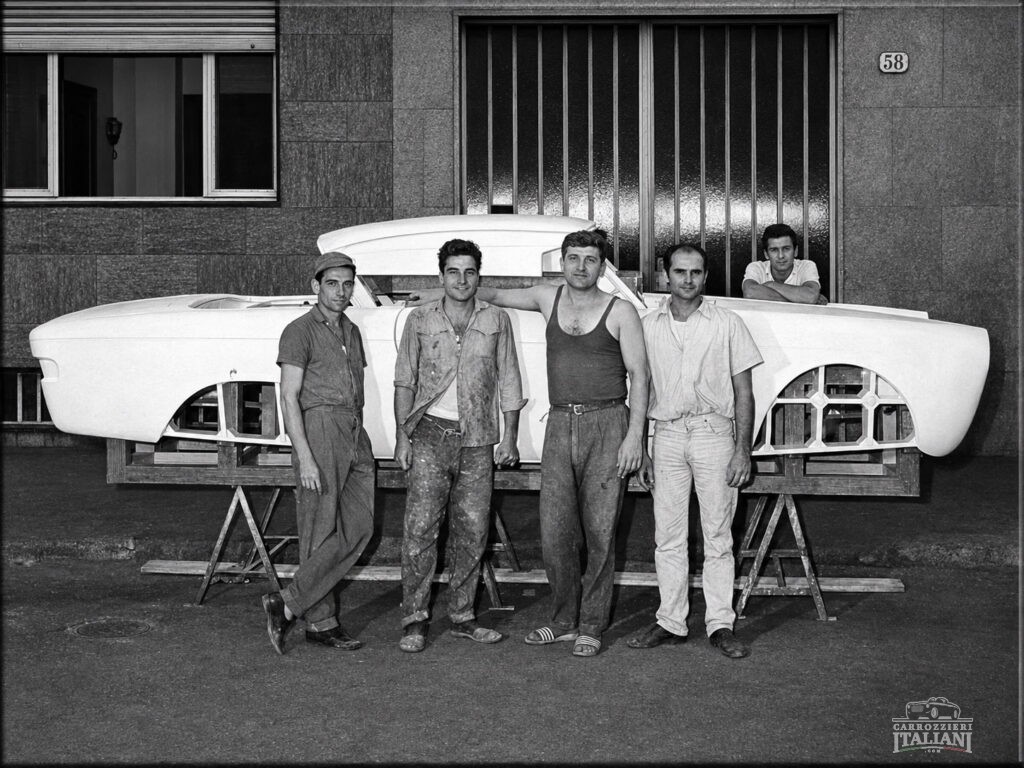
The surviving photographs from this period offer a fascinating glimpse of the workshop’s activity. Among the projects documented are master models for the Alfa Romeo 2000 Berlina, the Fiat 1200–1500 Cabriolet associated with Pininfarina, the Peugeot 404 Cabriolet and the Fiat 2300 Coupé developed for OSI. There were also industrial vehicles, engine patterns and international commissions, including work connected with the Brazilian FNM 2000 JK. The variety of these assignments demonstrates how Stola’s expertise extended well beyond any particular marque or class of automobile.
An elegant Italian cabriolet might require a model from which its body panels could be developed, while a commercial vehicle demanded an entirely different set of surfaces, structural considerations and production tolerances. In both cases the underlying craft remained the same, even as the scale and complexity of the work increased. It was a world in which a finished automobile could owe something to the hands of men whose names would never appear on its badge.
Alfredo Stola continued to supervise the business into his final years, overseeing the enlargement of the Via Issiglio premises and the construction of a residential building intended to accommodate members of the family and selected employees. His conception of the company extended beyond the workshop itself: work, family and neighbourhood remained closely connected, reflecting a form of industrial life that was still characteristic of Turin before the arrival of much larger and more impersonal manufacturing organisations.
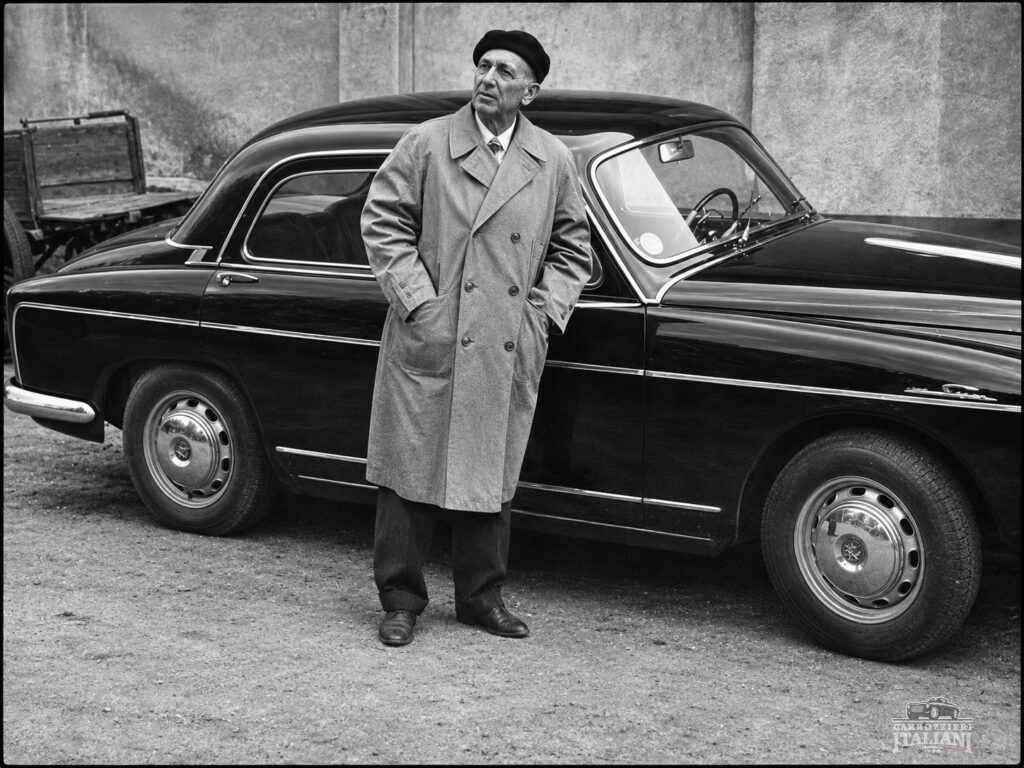
When Alfredo died on 27 March 1960, the workshop had become an established automotive supplier with a reputation built over four decades. His sons continued the business under the name Alfredo Stola & Figli, although their individual interests were beginning to lead them in different directions. Giuseppe increasingly concentrated on foundry activities and eventually left the modelleria in 1964 to pursue the separate S.E.V. business, while Francesco and Roberto remained central to the development of the automotive enterprise.
In October 1965, the company opened a new facility at Via La Thuile 69–71, in Turin’s Borgata Lesna district. It was a significant expansion, accompanied by another residential development intended to provide accommodation for employees. The new premises offered the space required for larger projects, more advanced equipment and an increasing number of customers, but the principle established in the original workshop remained recognisable: technical capability depended as much upon the experience of the men working with the material as it did upon the machines surrounding them.
Behind the Cars Everybody Remembers
During the 1970s, Stola became involved in an extraordinary range of automobile programmes, many of them familiar today to enthusiasts who may never have encountered the company’s name. Master models were produced for the Fiat 132 and 131, the Lancia Beta family, the Alfa Romeo Alfetta and subsequent Alfa Romeo models, while the workshop’s relationship with Pininfarina brought assignments connected with the Fiat 130 Coupé and Ferrari 365 GTC/4.
These were not necessarily occasions on which Stola determined the styling of a vehicle. More often, the task was to provide the accurate physical models and checking equipment that allowed a design conceived elsewhere to become an industrial product. The distinction could be subtle to an outsider, yet it was fundamental to the organisation of automobile development. A stylist might establish the shape of a roofline or the character of a front wing, but that same surface still had to be reproduced faithfully in steel, aluminium or another material, with all its neighbouring panels, openings and fittings brought into agreement.
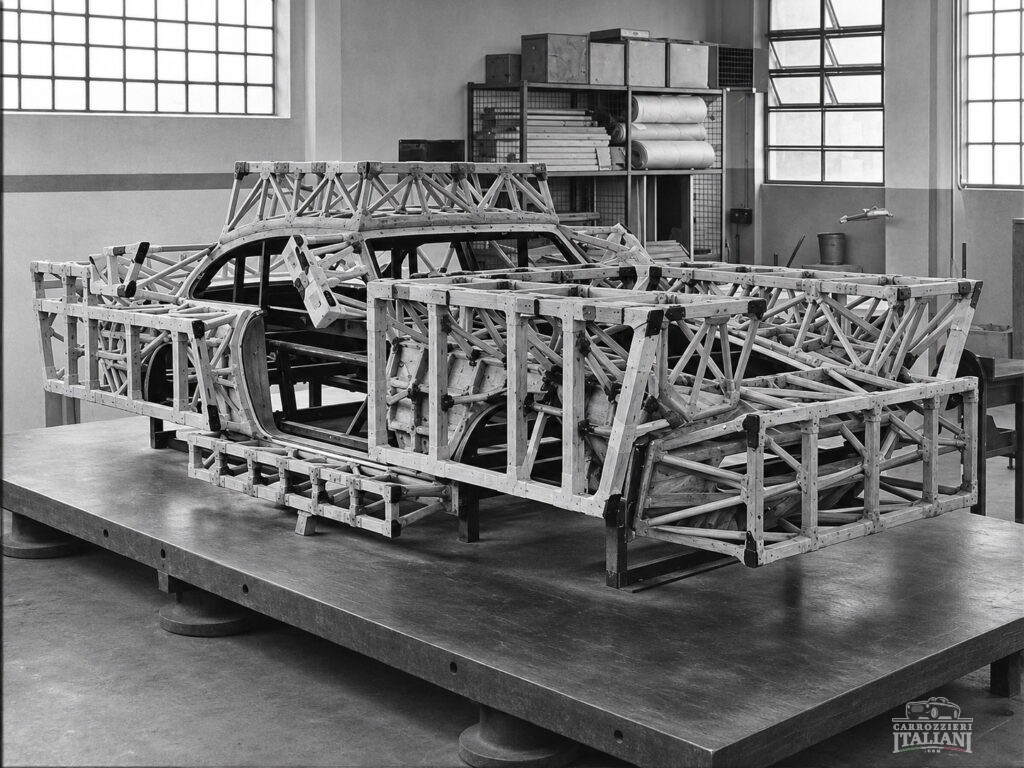
The development of the Alfa Romeo Alfetta GT offers a revealing example. The archive records master models and control equipment for the matching of its side panels, roof, doors and glazing apertures, the sort of work that is seldom mentioned in accounts of a celebrated design. The handsome Giugiaro-styled coupé required more than an attractive profile; its individual components had to fit together correctly, and this demanded a succession of physical checks long before the vehicle could reach a production line.
The list of projects was becoming increasingly diverse. Stola supplied master models for the Lancia Gamma, contributed to the development of the Fiat Ritmo and worked on the early Lancia Delta, whose compact body would eventually become associated with one of the most successful competition histories of the modern era. There were even assignments outside the conventional automotive field, including tooling-related work associated with aircraft components.
One particularly unusual commission arrived through Italdesign in 1977, when Stola was involved in the production and assembly of glass-fibre body components for the BMW M1. Designed by Giorgetto Giugiaro, the mid-engined BMW represented an entirely different engineering challenge from the saloons and family cars that occupied so much of the workshop’s normal activity. According to the Stola family account, approximately ten unpainted body assemblies were completed under Italdesign’s direction, a small but interesting contribution to the complicated industrial history of one of BMW’s most memorable sports cars.
The same period also brought a personal tragedy that profoundly affected the family and the company. On the evening of 7 February 1978, Francesco Stola was abducted for ransom as he was leaving the premises at Via La Thuile, preparing to drive home in his Fiat 130 Coupé. He never returned. After years of uncertainty, a court ruling in 1982 established 18 March 1978 as the presumed date of his death.
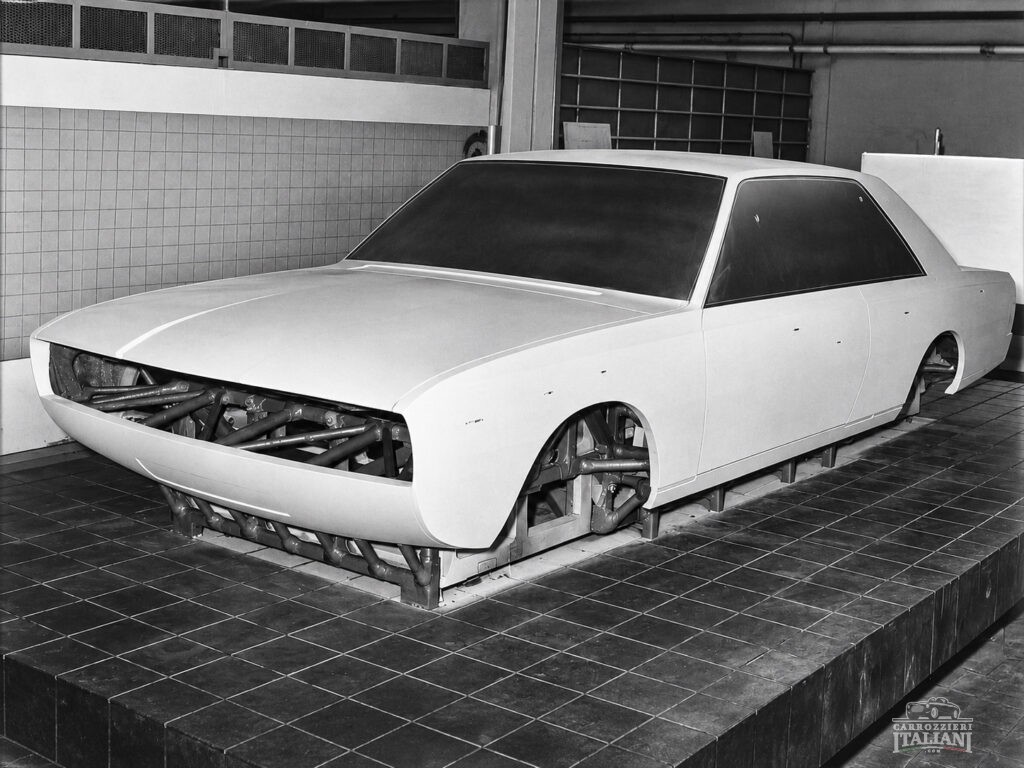
For the business, the disappearance of Francesco removed one of its central figures at a moment when the international automotive industry was beginning to demand an entirely new level of organisation and technological capability. Roberto Stola assumed responsibility for its management, and in the autumn of 1979 he was joined by his nephew Alfredo, Francesco’s son, who had completed his studies and was still only nineteen. The young man carried the same name as the company’s founder, but he was entering a very different industrial world.
Unexpectedly, the difficult year of 1978 also marked the beginning of a relationship that would transform the scale of the enterprise. Ford Europe approached Stola for work associated with the development of its Cargo commercial vehicle, opening the way to a collaboration that would eventually extend across numerous European and international programmes. It was an important step beyond the company’s traditional Italian customer base, and one which demanded a more systematic approach to technology, scheduling and engineering communication.
From the Modeller’s Hand to the Computer Screen
For a company whose origins lay in the interpretation of drawings and the patient shaping of wood, the arrival of computer-aided modelling might have appeared to threaten the very craft upon which its reputation had been established. At Stola, however, the new technologies were approached as an extension of that expertise rather than its replacement.
Massimo Stola, Giuseppe’s son, became particularly important in this transformation. Entering the company in 1980, he worked on the development of computer-based methods for representing complex surfaces, drawing upon the mathematical principles associated with Steven Anson Coons and Pierre Bézier. In 1981 the workshop acquired a Hewlett-Packard 1000 computer and invested in numerical-control milling machinery, while Roberto and Massimo developed a production process intended to connect digital surface information with the construction of physical models.
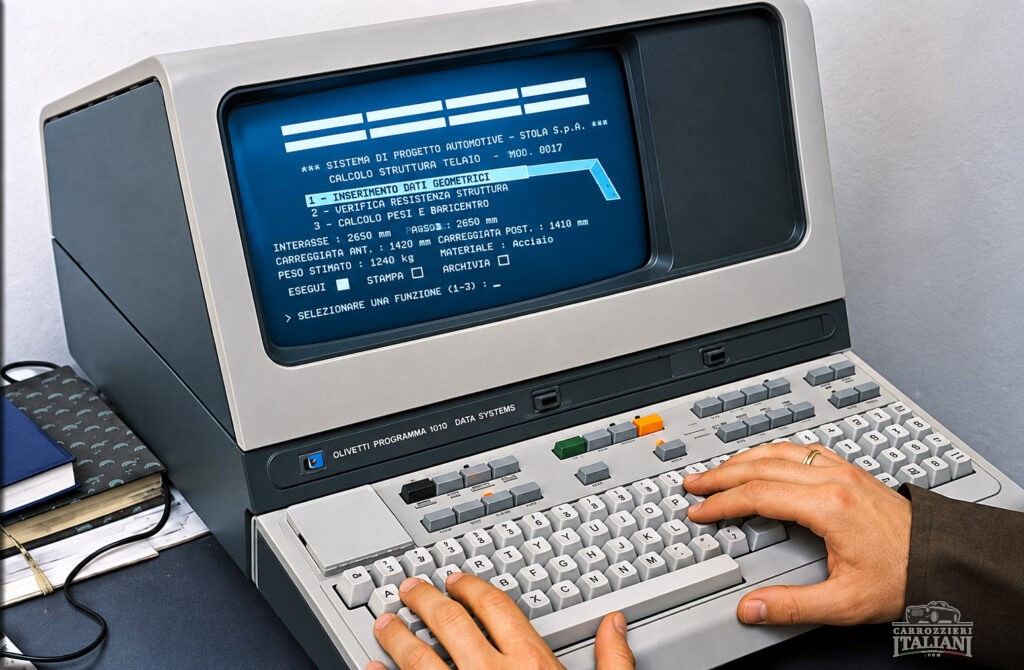
The significance of this change is difficult to overstate. Where a modeller had once relied upon drawings, templates and the accumulated understanding of form, a mathematical description of a surface could now guide the movement of a milling machine. Yet the machine still required somebody capable of recognising whether the resulting shape was satisfactory, whether neighbouring surfaces were properly related and whether the finished master could serve its intended purpose. The new technology did not eliminate judgement; it placed different demands upon it.
Stola understood that its workforce would have to evolve alongside the equipment. Training programmes were established for younger model makers, and existing personnel were introduced to methods that combined traditional workshop skills with computer-assisted processes. A modeller who had learned to work by hand might now find himself responsible for checking a numerically milled surface, while an engineer familiar with mathematical modelling still needed to appreciate the physical behaviour of the material.
By the middle of the decade, the company had opened additional facilities devoted to surface mathematics and product engineering, gradually moving beyond conventional master-model construction. Its customers included Ford, Fiat, Alfa Romeo and Lancia, alongside increasingly prestigious assignments connected with specialist vehicles and concept development. The surviving project records include work associated with the Fiat Uno, the Lancia 037 and the Ferrari Testarossa, while Ford programmes ranged from passenger cars to successive generations of the Transit.
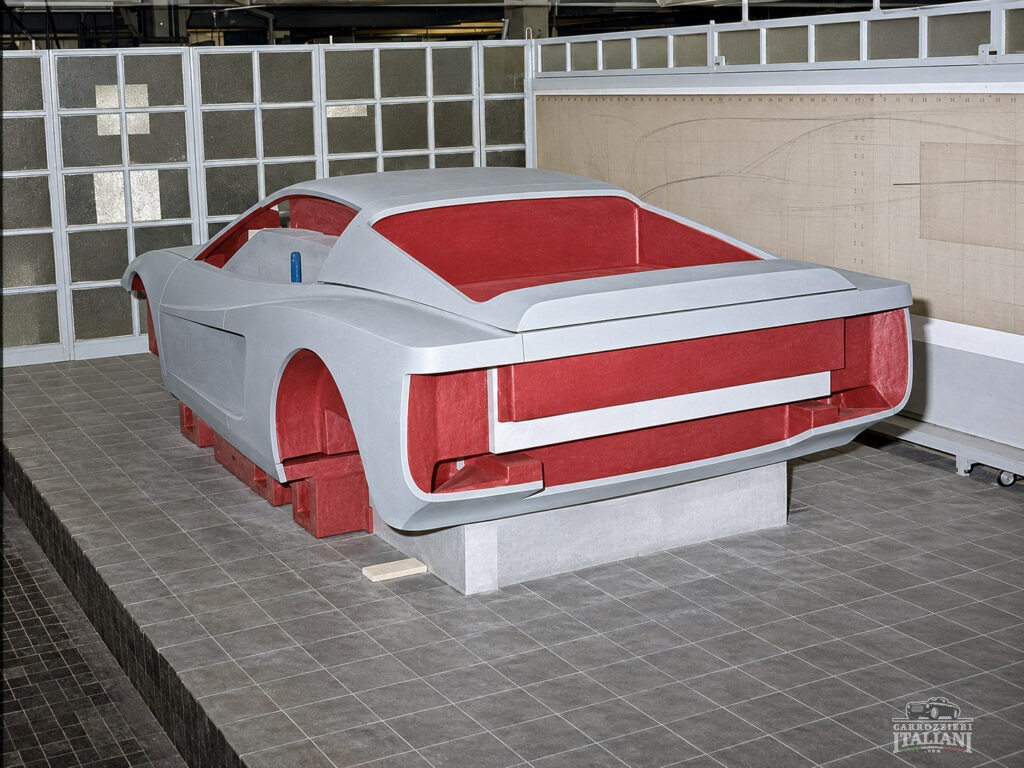
The company was no longer simply supplying carefully finished wooden patterns. It was becoming an organisation capable of supporting increasingly large sections of the automobile development process, from the interpretation of styling proposals to engineering, physical prototyping and industrial preparation. The transformation was also reflected in its identity: in January 1989, Roberto and Alfredo Stola adopted a modernised STOLA name and emblem, replacing the traditional Alfredo Stola & Figli presentation that had accompanied the business for decades.
It was an appropriate moment for a new identity, because the following years would bring projects that placed the Turin company at the centre of some of the most ambitious European concept-car programmes of the period.
The Extraordinary Years of the Proteo and Barchetta
At the beginning of 1990, Alfa Romeo was preparing a concept car intended to demonstrate both its sporting heritage and its technological ambitions. The project was the Proteo, developed by the Alfa Romeo Centro Stile under Walter de Silva, with styling by Alberto Bertelli. Rather than a static display model, the company wanted a fully functioning automobile capable of showing how an advanced sports coupé might combine four-wheel-drive performance, a sophisticated chassis and a retractable transparent roof.
Stola was entrusted with the development and construction work necessary to turn that proposal into a real prototype. The task involved far more than reproducing the exterior surfaces. The chassis, derived from the Alfa Romeo 164, had to be shortened and reinforced, while the body, interior and movable roof demanded careful integration. The retractable glass structure was particularly challenging, requiring a mechanism that could operate convincingly without compromising the appearance of the car.
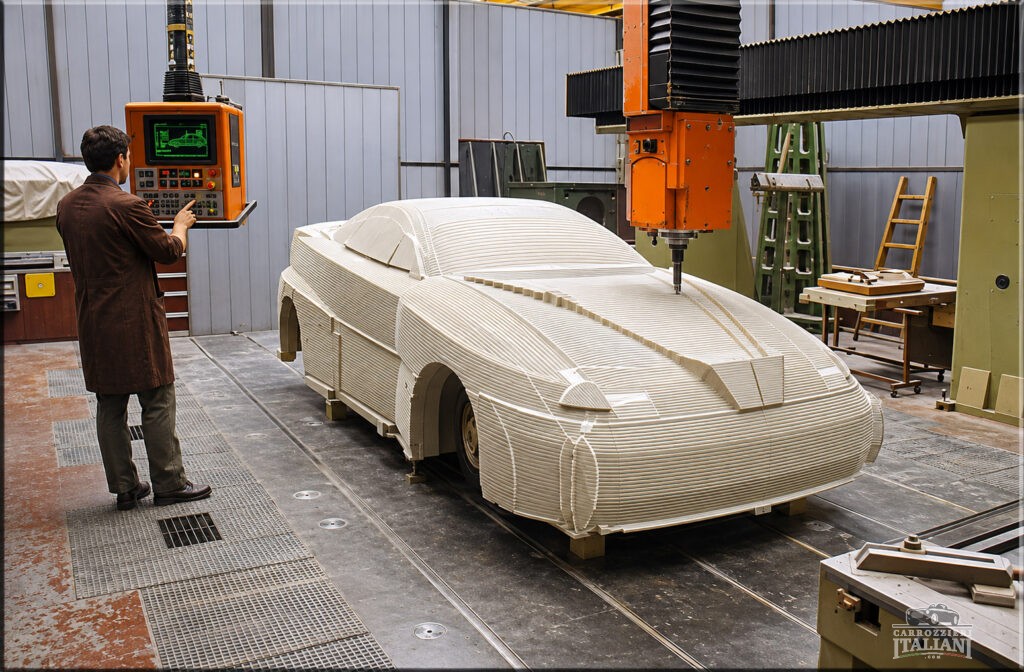
Throughout 1990, engineers, modellers and technicians worked to transform Bertelli’s design into a finished machine. The family archive documents the project in unusual detail, from the early surface development and wind-tunnel work to the preparation of the chassis and the final assembly stages. In February 1991, the Proteo was taken to Alfa Romeo’s Balocco proving ground for testing, before making its public debut at Geneva the following month.
The result was an automobile of considerable sophistication, and its reception provided Stola with something more important than a successful motor-show appearance. It demonstrated that the company could take responsibility for the construction of a technically ambitious show car whose mechanical functions were an essential part of its identity.
Even before the Proteo reached Geneva, another programme was taking shape in Turin. Fiat was considering the return of a compact open sports car to its range, a project that would eventually become the Fiat Barchetta. Under the direction of Fiat’s styling organisation, which included Chris Bangle, the proposal by Andreas Zapatinas was selected for development, and Stola received the commission to produce a particularly accurate presentation model with functioning doors.
The early photographs reveal a familiar scene in a new industrial setting: modellers working carefully around a full-size representation of a car that had not yet reached production, checking surfaces and proportions that would soon become familiar to thousands of owners. Through the spring of 1991, the Barchetta’s presentation model took shape, while the subsequent development programme demanded an increasing involvement in engineering and prototype construction.
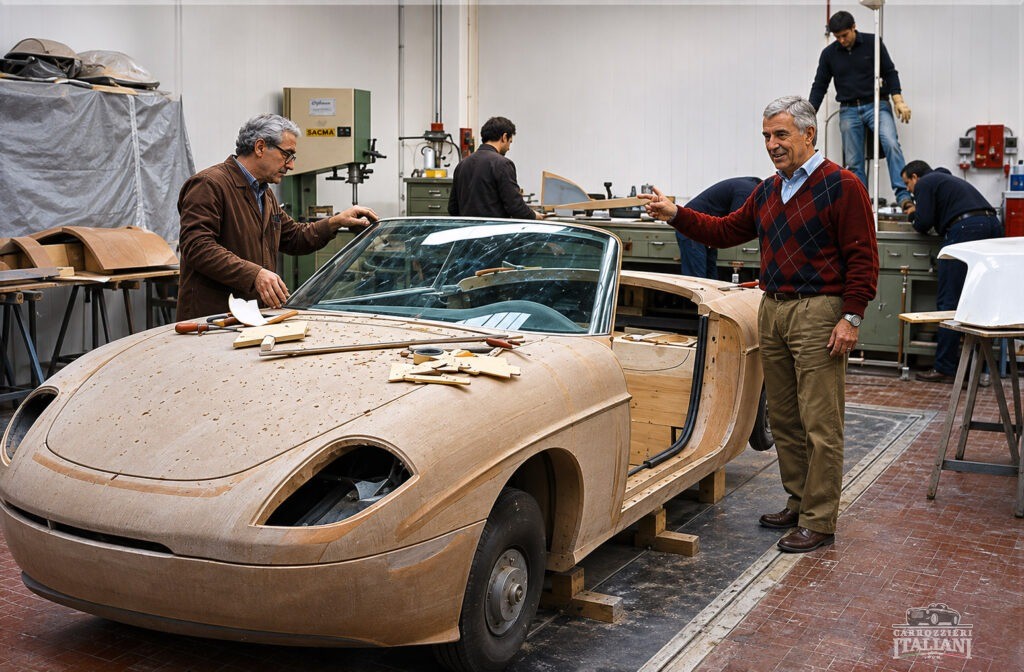
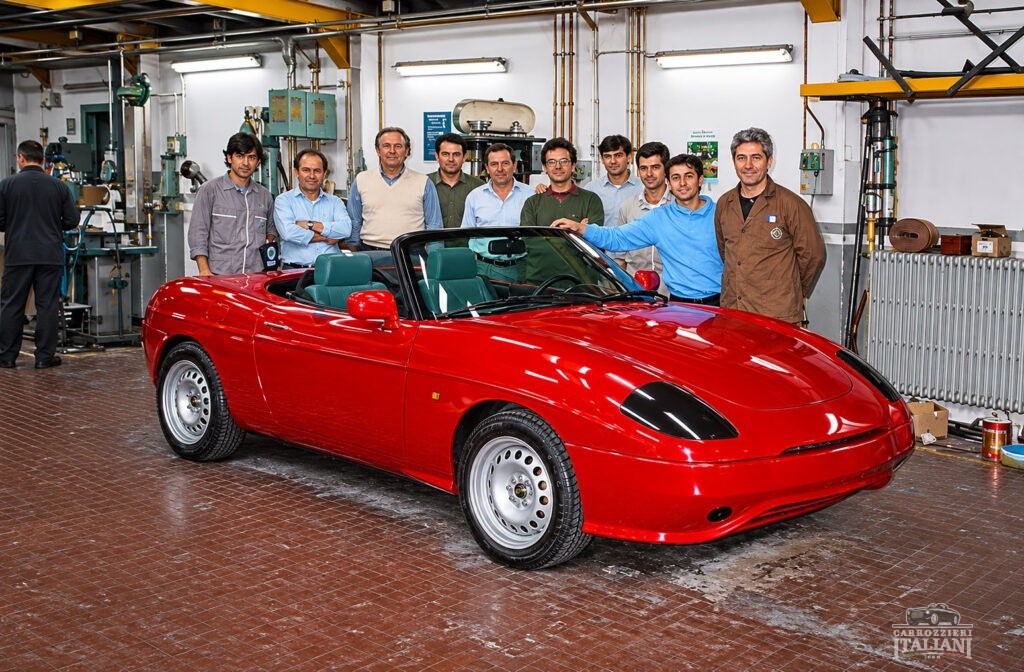
The Barchetta would become an important example of cooperation between several specialised Italian companies. Under Fiat’s direction, Stola handled modelling, engineering activities and the first two sheet-metal running prototypes, ITCA contributed to the test-prototype and production-development phases, and Maggiora was responsible for series assembly and associated production operations. The project demonstrated how the Italian network of specialist automotive suppliers could still work together to produce a relatively low-volume automobile that might otherwise have been difficult to justify within a manufacturer’s normal industrial structure.
When the Fiat Barchetta finally appeared at Geneva in 1995, its graceful proportions and accessible mechanical character made it one of the most appealing Italian roadsters of its generation. To the public it was a Fiat, styled by Zapatinas and sold through the company’s dealerships; behind its development lay the contribution of several specialist organisations, including the Turin workshop whose engineers and modellers had helped establish the shapes and manufacturing solutions from which the production car emerged.
The Proteo had meanwhile attracted attention from another important manufacturer. BMW, impressed by the quality achieved on the Alfa Romeo programme, commissioned Stola to construct the Z13, an unconventional three-seat concept developed by BMW Technik. The compact car placed its driver centrally, with two passenger seats arranged behind and to either side, and combined unusual packaging with an aluminium structure and a surprising amount of equipment.
Powered by a BMW motorcycle-derived four-cylinder engine, the Z13 was conceived as a functioning experimental automobile rather than a conventional small-car styling exercise. Stola completed the dark-blue show car in time for the 1993 Geneva Motor Show, subsequently building a second, red example for BMW’s internal use. It was a very different assignment from the Proteo, but it demanded the same combination of precision, ingenuity and an ability to make unconventional technical ideas work as a complete automobile.
By this time the old Turin premises were no longer suitable for the scale of the company’s activities. Roberto and Alfredo had decided to consolidate their operations in a new facility at Rivoli, in Via Ferrero 9, designed to accommodate larger modelling machines, the growing CAD/CAM departments and a workforce that had reached approximately 160 people. The move marked the arrival of Stola as a mature engineering and prototyping enterprise, but one which remained closely connected to the practical workshop culture from which it had developed.
When the World Came to Rivoli
During the 1990s, Stola’s international relationships reached a level that would have seemed almost unimaginable to the small group of craftsmen working in Corso Racconigi in 1919. Its reputation for producing sophisticated physical models and fully finished show cars brought commissions from manufacturers whose own styling departments were working at the limits of contemporary technology.
Mercedes-Benz became one of its most significant customers. The relationship included work on the Family China Car concept, the extraordinary F200 Imagination and the development models associated with the revival of Maybach. These projects placed Stola in close cooperation with Mercedes-Benz’s advanced-design and research organisations, which remained responsible for their styling and technical concepts, while the Italian specialists contributed the physical models, prototype construction and finishing work required to present them convincingly.
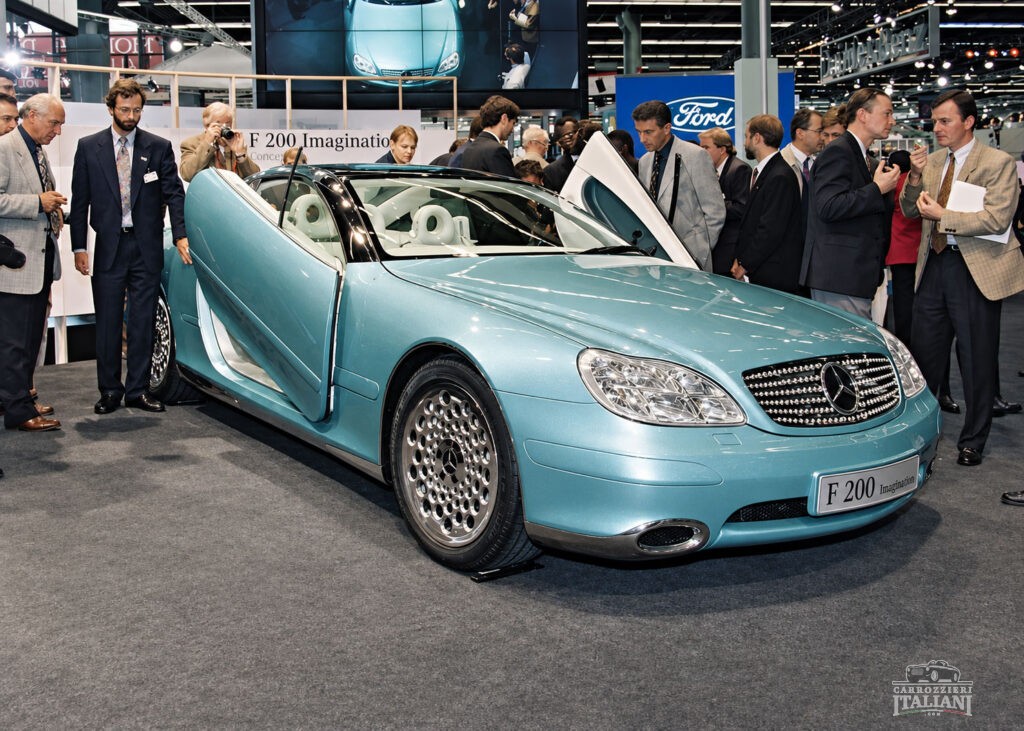
The F200 Imagination, unveiled at the 1996 Paris Motor Show, was an especially demanding undertaking. Its unconventional control system, futuristic cabin and elaborate bodywork belonged to a programme intended to explore technologies that might eventually appear in future Mercedes-Benz automobiles. The concept’s distinctive design was developed within the German manufacturer’s organisation, but the construction of the show car drew upon Stola’s expertise and a network of specialised suppliers, including traditional hand-forming skills for its aluminium body components.
The Maybach programme presented a different challenge. Rather than a radical sports prototype, Mercedes-Benz wanted to explore a new interpretation of extreme luxury, combining monumental proportions with the detail expected of a prestigious automobile. Stola’s contribution to the concept involved the construction of models and show-car elements that had to communicate the quality of an eventual production vehicle long before the final manufacturing process existed.
Yet the company was not content to remain permanently behind the names of its customers. In 1995, Roberto and Alfredo Stola decided to create a prototype carrying the company’s own identity, using the Fiat Barchetta as its mechanical basis. The styling was entrusted to Aldo Brovarone, whose decades at Pininfarina had produced some of the most elegant and influential automobiles of the post-war period.
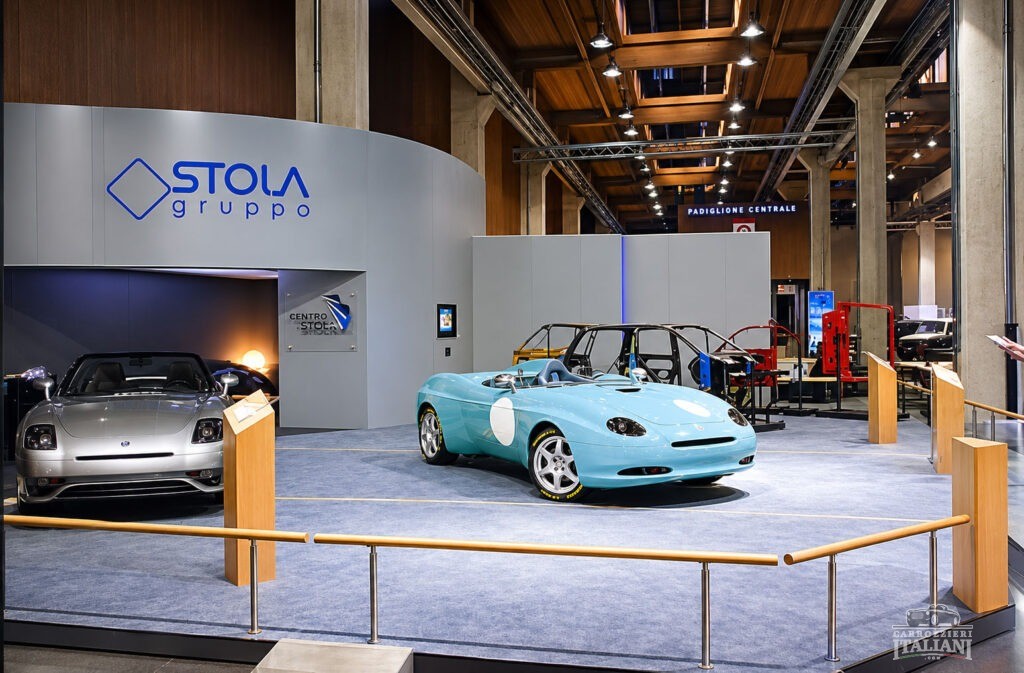
The resulting Stola Dedica was presented at the 1996 Turin Motor Show, its name expressing a tribute to Fiat and, more particularly, to the confidence the manufacturer had placed in the family’s company over so many years. Brovarone’s design transformed the familiar Barchetta into something rather more exclusive, its carefully composed surfaces evoking the tradition of Italian fuoriserie while retaining a thoroughly contemporary character.
There was a particular pleasure in the relationship between Brovarone and the Stola family. The designer had retired from regular professional activity, but his enthusiasm for drawing and the pleasure he found in developing new ideas remained undiminished. The Dedica gave him an opportunity to return to the creation of a complete automobile, and its appearance at Villa d’Este in May 1996 placed the car in a setting where the elegance of its lines could be appreciated alongside some of the finest coachbuilt machines of earlier generations.
Other projects followed. The Abarth Monotipo of 1998 again involved Brovarone, while the Lancia Stratos-inspired Stola S81 of 2000 brought the company into collaboration with Marcello Gandini. These automobiles represented something different from the industrial work that occupied much of Rivoli’s capacity. They gave Stola the opportunity to express its own interests in sporting design, limited-production possibilities and the craft of building individual automobiles.
At the same time, the company’s industrial reach was expanding far beyond Turin. In 1998 Stola do Brasil inaugurated a major facility in the Belo Horizonte area, developed in connection with Fiat’s Brazilian operations. It was an important indication of how far the enterprise had travelled from its origins as a small model-making workshop. The family name was now attached not only to the construction of exceptional prototypes, but also to an international organisation providing engineering and industrial services to major manufacturers.
The Last Years of the Family Company
By the early 2000s, Stola had become a substantial automotive supplier operating in a world very different from the one in which it had first established its reputation. International competition, increasingly sophisticated development programmes and the enormous investment required to serve major manufacturers were transforming the traditional structure of the Italian specialist industry. The ability to build a beautiful prototype was no longer sufficient in itself; companies were expected to manage complex engineering programmes, deliver components and services across national borders and adapt to constantly changing production methods.
The work undertaken at Rivoli continued to reflect the company’s considerable technical resources. Projects included advanced vehicles for several European and international manufacturers, and among the last particularly notable commissions of the family-managed period was a Ford cabriolet concept bearing a name closely associated with Turin’s coachbuilding heritage: Vignale.
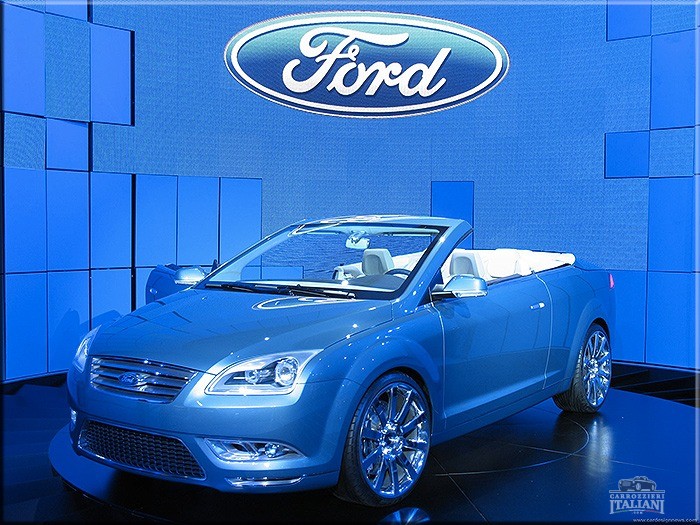
The assignment was received in February 2004, following discussions with Ford managers at the company’s Dunton technical centre in England. The prototype was intended for presentation at the Paris Motor Show that September, and its construction was entrusted to Stola at a moment when the family was preparing to end its direct involvement in the business.
On 26 July 2004, Alfredo Stola and the other family shareholders sold their interests, bringing to an end their operational control of the company founded eighty-five years earlier. The Ford Vignale concept was approaching its final finishing stages at the time of the change, and work continued under the new ownership until the automobile was ready for its public debut in Paris.
The departure was not simply a change of management for a large industrial organisation. It also marked the end of an unusually long family relationship with the practical work of automobile development, from the founder’s original wooden models to the sophisticated engineering programmes undertaken at Rivoli. Generations of employees had worked alongside members of the Stola family, often following the same technical traditions while adapting them to entirely new technologies.
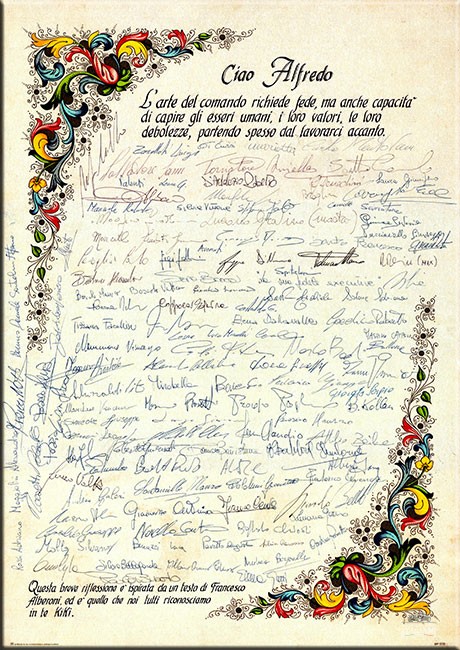
In September 2004, the workforce gathered at the Rivoli premises to bid farewell to Alfredo and Maria Paola Stola, presenting them with a commemorative document bearing the signatures of employees. It was a gesture that reflected a relationship extending beyond the ordinary boundaries of business, recalling the workshops, family buildings and personal involvement that had characterised the company’s history for much of the twentieth century.
The Stola name would continue in the automotive industry, but the family itself was preparing to pursue a different path.
Within months, Alfredo and Maria Paola Stola, with the contribution of Marco Goffi, established STUDIOTORINO, a new and legally separate company devoted to the creation of exclusive sports cars, special bodies and automotive design projects. Rather than rebuilding the enormous industrial structure that had developed around the old family business, the new enterprise would coordinate a network of specialist craftsmen, designers and suppliers, returning in many respects to the more personal approach of traditional coachbuilding.
Once again, Aldo Brovarone became an important part of the story. In the autumn of 2004, he began preparing sketches for a sports car that would eventually become the RUF RK Spyder, developed with the collaboration of Alois Ruf, whose company undertook the mechanical, performance and homologation aspects of the project. The new automobile was conceived as a limited-production, individually specified special, combining contemporary Porsche-derived engineering with a body whose purity of line reflected Brovarone’s unmistakable approach to design.
On 16 June 2005, two different prototypes, the RK Spyder and R Spyder, were presented at Turin’s automobile museum. Brovarone’s drawings had become fully realised automobiles, their carefully finished bodies assembled through the cooperation of designers, technicians and specialist craftsmen. The setting was far removed from Alfredo Stola’s modest workshop of 1919, yet the work itself retained something remarkably familiar: a drawing interpreted at full scale, a complicated surface brought into physical form, and an automobile standing on its own wheels where only an idea had existed before.

ABOUT THE AUTHOR
Andreas Scheidl
Italian classic car enthusiast with German roots. Renowned as a respected figure in the classic car community, he serves as a jury member at various international concours d'elegance, including the Classic Gala Schwetzingen and Mantova. As a content creator, Andreas passionately shares his profound knowledge and appreciation for vintage automobiles. His heart beats for cars designed by Giovanni Michelotti, showcasing his discerning taste and dedication to preserving the timeless elegance of automotive history.
More stories by Andreas Scheidl ↗CONTINUE READING
Posts You Might Like
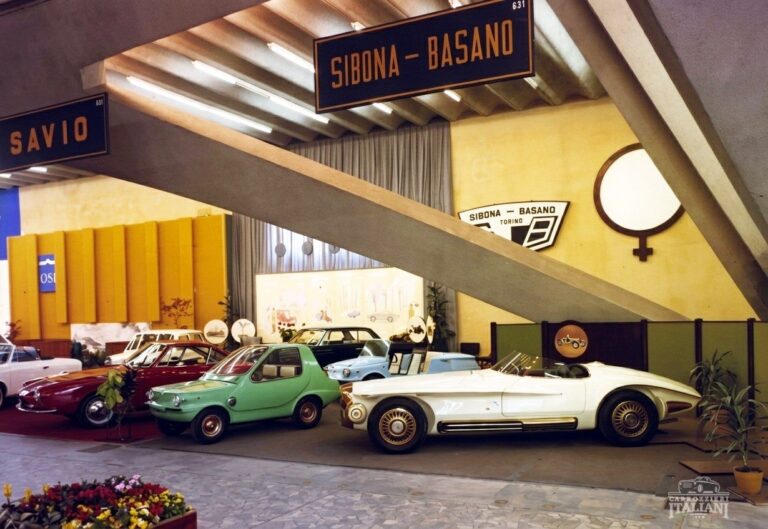
Sibona & Basano: The Turin Workshop Behind Abarth, Exner and Autonova
For a brief period in the 1960s, Sibona & Basano occupied a distinctive position in Turin's coachbuilding industry, constructing competition bodies, prototypes and experimental cars for Abarth, American designers and some of…
Read story
The Story of Carrozzeria Vignale
The story of Carrozzeria Vignale represents one of the many somewhat forgotten success stories born against the backdrop of an Italy that was torn apart by the Second World War and which,…
Read story
Carrozzeria Savio: The History
From early Fiat specials to the Jungla, Delta S4 and Italdesign Aztec, the story of Carrozzeria Savio is far richer than many remember.
Read story
The History of Carrozzeria Boano
The untold story of Mario Boano and Carrozzeria Boano, from Ferrari 250 GTs to the Spiaggina, reshaping Italian automotive history.
Read story
THE CONVERSATION
Comments 0
Share a memory, a period photograph or a documented detail about this story.