
Casaro
Carrozzeria Mario Casaro was a Turin coachbuilder established in 1921, noted for Fiat and Lancia special bodies and later bus construction.
Explore record ↗
1925Coachwork by Casaro
THE VEHICLE AT A GLANCE
THE PEOPLE BEHIND THE CAR
Carrozzeria Mario Casaro was a Turin coachbuilder established in 1921, noted for Fiat and Lancia special bodies and later bus construction.
Explore record ↗01 / THE STORY
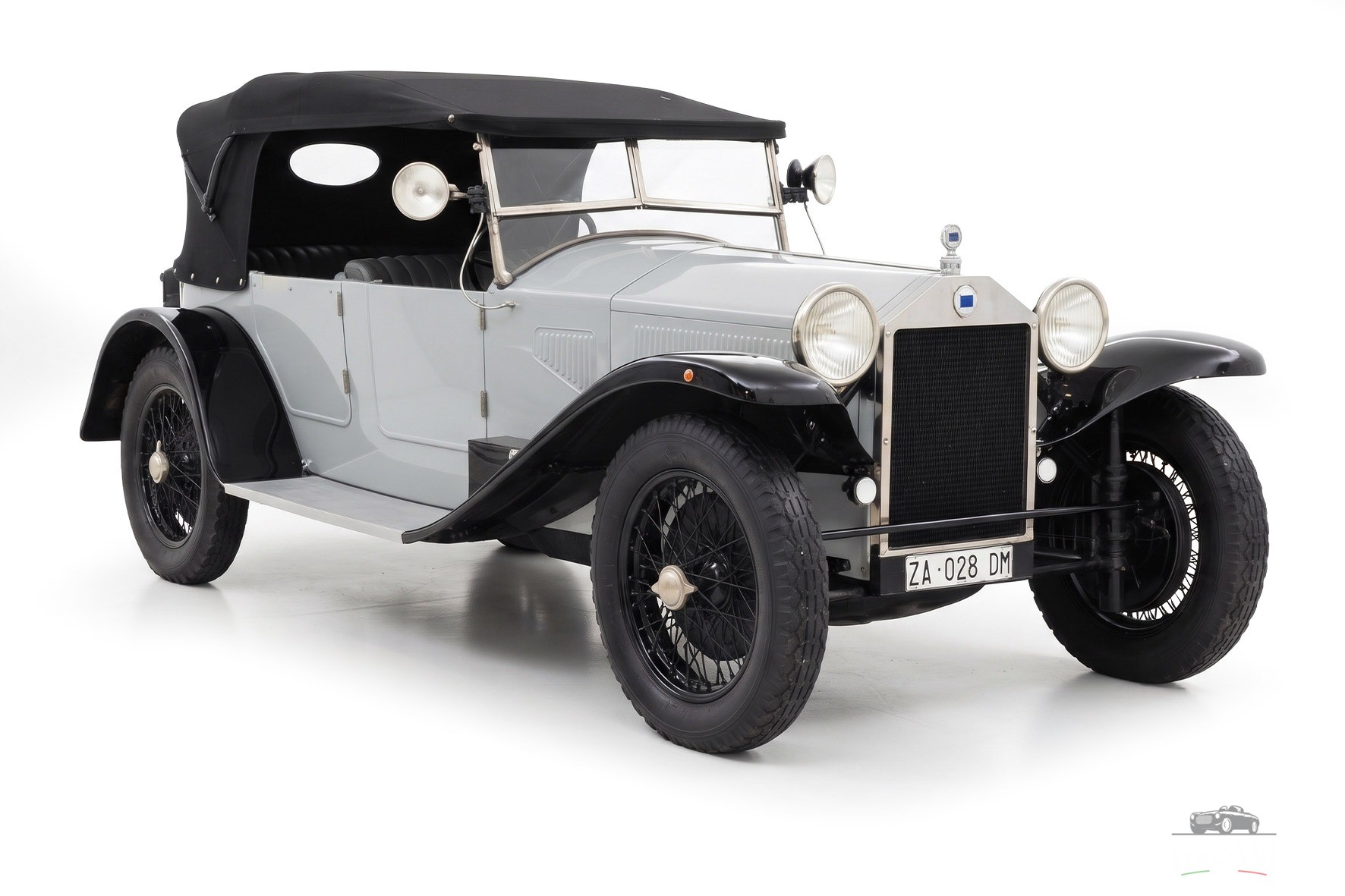
The Lancia Lambda Torpedo Casaro was a limited-production, coachbuilt variant of the Lancia Lambda chassis, bodied by Carrozzeria Mario Casaro of Turin. Constructed during the middle years of Lambda production, the Casaro-bodied Torpedo models represent a rare example of independent coachbuilding applied to a structurally integrated monocoque platform. The Lancia Lambda, introduced in 1922 and produced until 1931 in nine series, featured a pioneering unitary body structure without a separate chassis. The Lambda was also the first production car to employ independent front suspension, utilizing a sliding-pillar system with coil springs. Rear suspension consisted of a live axle mounted on semi-elliptical leaf springs. Braking was by mechanical drums on all four wheels. The Casaro-bodied Torpedo variants were constructed on various Lambda series, most commonly from the fifth to eighth iterations. These chassis carried either the 2,120?cc V4 engine in early examples or, in later cases, the enlarged 2,569?cc version introduced with the seventh series. The engines were single overhead camshaft designs, with cast aluminum blocks and monobloc construction. Output ranged from 49 to 69 horsepower depending on displacement and tuning. Transmission was by three-speed manual gearbox, later updated to four-speed in subsequent series. Casaro’s interpretation of the Torpedo body was marked by long, flowing fenders, a tapered tail, and a low, open configuration often omitting rear doors and incorporating a folding windscreen. Bodywork was constructed in aluminum or steel panels mounted over a wooden frame. The result was a light and streamlined touring vehicle, suitable for fast road use or occasional competitive entry. Some examples featured a two-seat spider layout with a rumble seat, while others retained the four-seat configuration. Production of the Casaro-bodied Lambda Torpedoes is not precisely recorded, though contemporary sources and surviving examples suggest fewer than ten units were completed. Known chassis include numbers 13603, 15725, and 18611. Surviving vehicles have appeared in international concours and historic events, and are regarded as significant examples of pre-war Italian coachbuilding integrated with structural innovation. The Lancia Lambda Torpedo Casaro remains a rare illustration of early monocoque engineering paired with bespoke design in the transitional period between artisanal and industrial automotive production.
02 / TECHNICAL IDENTITY
03 / DESIGN, BODY & SUPPLIERS
Coachbuilder / Design studio
Carrozzeria Mario Casaro was a Turin coachbuilder established in 1921, noted for Fiat and Lancia special bodies and later bus construction.
Explore record ↗04 / CHRONOLOGY
07 / GALLERY
THE CONVERSATION
Comments 0