
Pininfarina
Founded by Battista Pinin Farina in Turin in 1930, Pininfarina became one of the most influential Italian styling and coachbuilding houses, particularly through its work for Ferrari and other international manufacturers.
Explore record ↗
1959
THE VEHICLE AT A GLANCE
THE PEOPLE BEHIND THE CAR
Founded by Battista Pinin Farina in Turin in 1930, Pininfarina became one of the most influential Italian styling and coachbuilding houses, particularly through its work for Ferrari and other international manufacturers.
Explore record ↗01 / THE STORY
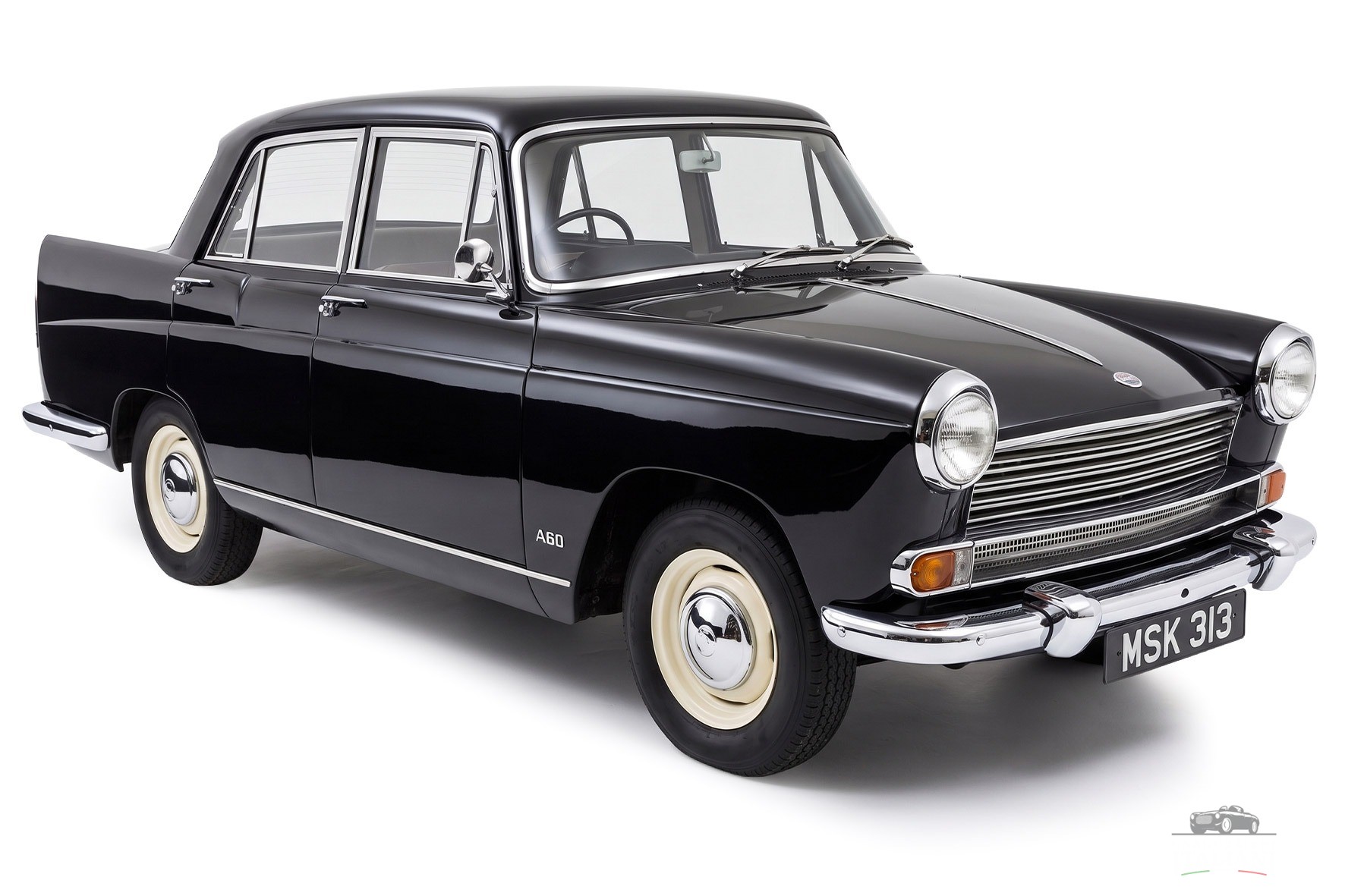
The Morris Oxford Farina is a notable series of motor car models produced by Morris, a British car manufacturer, from 1959 to 1971. The Farina name reflects the influence of the Italian design studio Pininfarina, renowned for its elegant automotive designs, which was employed to style this series. The Oxford series is named after the city of Oxford, which played a significant role in the company’s history and growth, having transformed into a bustling industrial hub due to the manufacturing of these vehicles. Designed as a four-cylinder family car, the Morris Oxford of the 1960s was positioned as a mid-sized vehicle in the UK, where it primarily found its market. It was a practical, reliable option that competed with similar models, including the Austin Cambridge (A55/A60), Singer Gazelle, and Vauxhall Victor. Like many of its contemporaries, the Morris Oxford combined functional design with affordability, making it a popular choice for families. The Oxford series V, produced between 1959 and 1961, marked a significant shift as it was incorporated into the broader BMC Farina range. Announced on March 25, 1959, this range included several other models, such as the Wolseley 15/60, Riley 4/68, Austin A55 Cambridge Mark II, and MG Magnette Mark III. Although the Austin and Morris versions were nearly identical, they were produced in separate factories and featured distinct styling cues, such as variations in chrome trim, interior finishes, and rear light designs. Inside the Morris Oxford Farina, the car was equipped with a spacious front bench seat and a functional dashboard that included a speedometer, oil pressure gauge, coolant temperature gauge, fuel gauge, and an optional clock. Drivers could choose between a floor or column gear change, and the floor-mounted handbrake was conveniently positioned beside the seat. The car retained the reliable 1.5 L B-Series engine, and its braking system consisted of drum brakes measuring 9 inches in diameter, fitted at both the front and rear. The steering utilized a cam and peg mechanism, while the suspension featured independent front coil springs and a live axle with semi-elliptic leaf springs at the rear. The Morris Oxford Farina represented a blend of British engineering and Italian design, creating a vehicle that was both stylish and practical, embodying the essence of mid-20th-century family motoring in the UK.
02 / TECHNICAL IDENTITY
03 / DESIGN, BODY & SUPPLIERS
Coachbuilder / Design studio
Founded by Battista Pinin Farina in Turin in 1930, Pininfarina became one of the most influential Italian styling and coachbuilding houses, particularly through its work for Ferrari and other international manufacturers.
Explore record ↗Become a Pro member to see the full details in this section.
Membership is not available yet.
View membership options07 / GALLERY
THE CONVERSATION
Comments 0