Coggiola
Founded in Turin in 1966 by Sergio Coggiola after his work at Ghia, Carrozzeria Coggiola built specialist automotive bodies and design prototypes, including projects for Saab.
Explore record ↗
1988Coachwork by Coggiola
THE VEHICLE AT A GLANCE
THE PEOPLE BEHIND THE CAR
Founded in Turin in 1966 by Sergio Coggiola after his work at Ghia, Carrozzeria Coggiola built specialist automotive bodies and design prototypes, including projects for Saab.
Explore record ↗01 / THE STORY
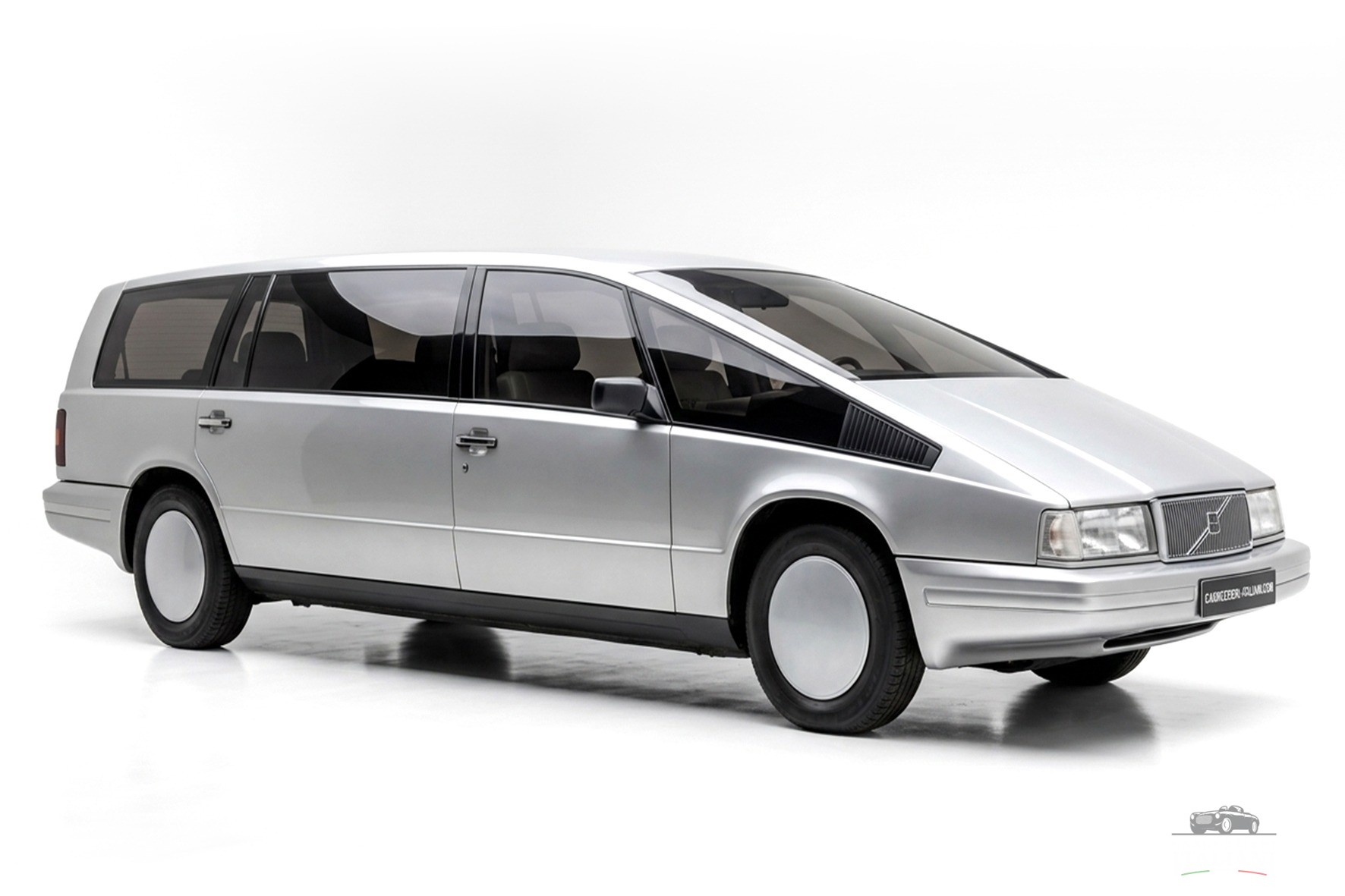
Volvo MPV Coggiola (1988) was a seven-seat multi-purpose vehicle concept developed by the Italian coachbuilder Carrozzeria Coggiola and presented under the Volvo name. Its tall, enclosed passenger body combined the proportions of a conventional estate car with the greater interior height associated with a purpose-designed people carrier. The vehicle remained a design and prototype project rather than a model adopted for series production.
Carrozzeria Coggiola was founded by Sergio Coggiola in the Turin area in 1966 and worked on experimental bodies for several European manufacturers. The 1988 Volvo MPV belongs to this activity, in which coachbuilders examined passenger accommodation and body packaging beyond conventional saloons and estates. The historical record identifies the project with Coggiola, but does not establish the name of a separate individual stylist, a chassis number, or the precise contractual arrangements with Volvo.
The study appeared during a period of renewed interest in European multi-purpose vehicles. Earlier Italian projects had explored comparable ideas using markedly different mechanical arrangements, while by 1988 specialist design houses were considering the monovolume as a possible family-car format. Coggiola’s proposal is discussed in the historical survey Italian Vision of the MPV, alongside other Italian experiments of the period.
The body was notably tall and angular, with a sharply inclined windscreen, a broad glazed passenger area and a long roof intended to preserve headroom across the cabin. Rectangular front lighting and restrained surfaces connected its appearance with contemporary Volvo design. At the rear, the high roof and upright bodywork emphasised usable interior volume rather than a conventional three-box profile. The surviving descriptions support this general character but do not provide measured dimensions or a documented aerodynamic coefficient.
The vehicle was described as a seven-seater, placing its principal emphasis on passenger capacity and flexible family use. The elevated roof and extensive windows suggest a design organised around visibility and interior space. Claims concerning individual seat mechanisms, floor construction, luggage capacity and safety equipment require more detailed documentation before they can be treated as confirmed specifications of this prototype.
The 1988 MPV is separate from the earlier Volvo experimental New York taxi, a Coggiola-associated project shown in the Museum of Modern Art’s 1976 taxi exhibition. It must also be distinguished from unrelated proposals for Volvo saloons and from subsequent Renault and Mercedes-Benz people-carrier concepts constructed by Coggiola. An overview of the firm’s wider work is available in the history of Carrozzeria Coggiola.
No chassis or engine serial number, independently established production quantity, sale record or confirmed current location is available for the 1988 Volvo MPV in the evidence reviewed. The legacy database describes it as a one-off, but the precise number of completed examples remains subject to verification; specifications of standard Volvo vehicles should not be assigned to the study without an exact technical match.
02 / TECHNICAL IDENTITY
03 / DESIGN, BODY & SUPPLIERS
Coachbuilder / Design studio
Founded in Turin in 1966 by Sergio Coggiola after his work at Ghia, Carrozzeria Coggiola built specialist automotive bodies and design prototypes, including projects for Saab.
Explore record ↗07 / GALLERY
THE CONVERSATION
Comments 0