Skip to content
THE ITALIAN COACHBUILDER SITE

Lancia Stratos HF

1971Coachwork by Bertone

THE VEHICLE AT A GLANCE

Model dossier

Manufacturer
Lancia
Base model
Stratos HF
Coachbuilt version
semi-definitive Bertone prototype
Coachbuilder
Bertone
Production period
1971
Body style
Coupé
Chassis
1240

AWARDS AT A GLANCE

1 1
View full events & awards ↗

THE PEOPLE BEHIND THE CAR

Coachbuilding, design & conversions

Bertone

Founded in Turin in 1912, Carrozzeria Bertone grew from a small coachbuilding workshop into a leading design and manufacturing house. Its landmark creations include the Lamborghini Miura and Countach, the Alfa Romeo Giulietta Sprint and the Fiat X1/9.

Explore record ↗

Marcello Gandini

Marcello Gandini joined Bertone in 1965 and became its chief designer, succeeding Giorgetto Giugiaro. His designs include the Lamborghini Miura, Countach and Marzal, as well as the Lancia Stratos and Alfa Romeo Montreal, combining sharp forms with inventive proportions.

Explore record ↗

01 / THE STORY

History & context

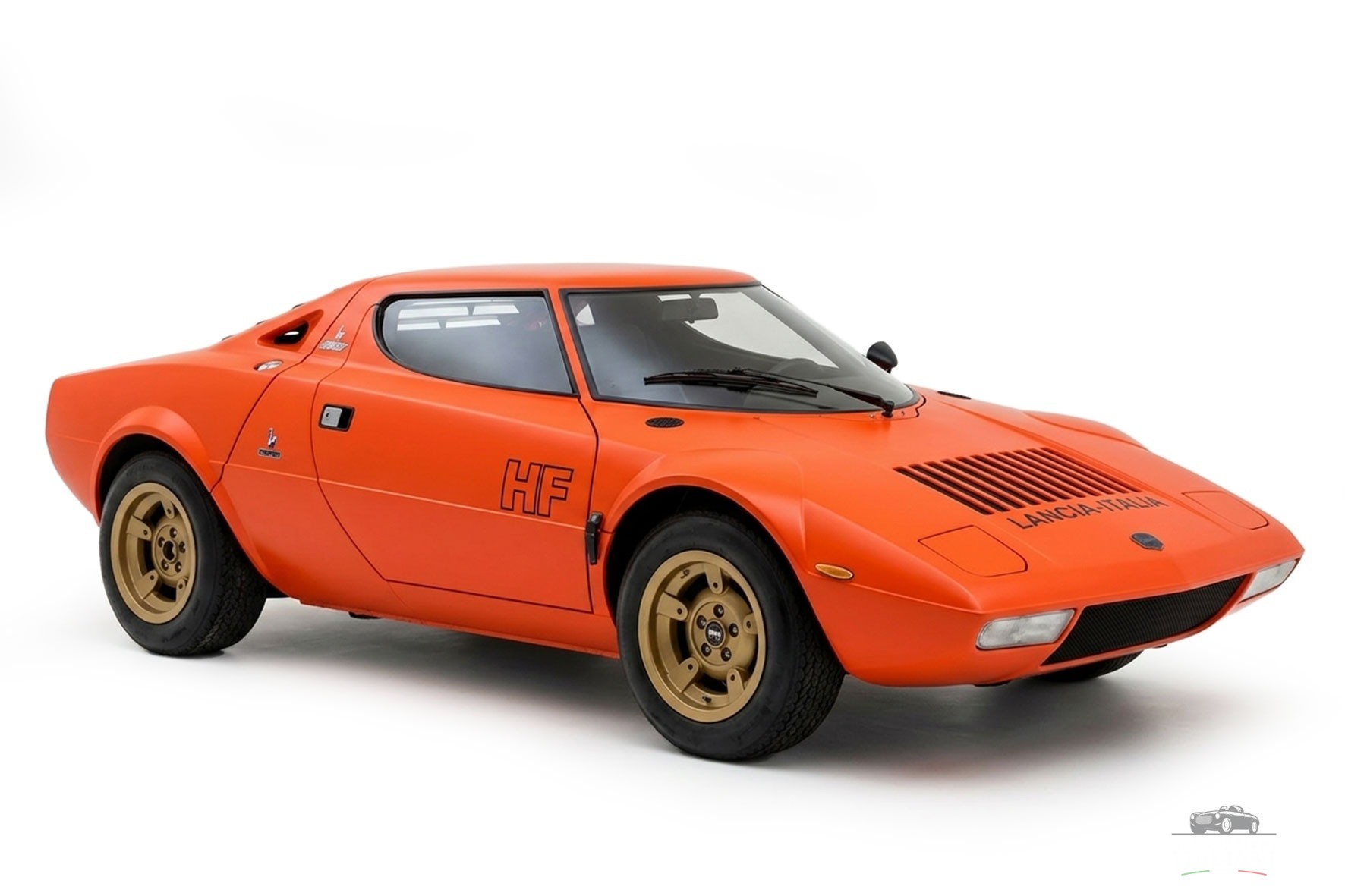
The Lancia Stratos HF prototype shown on Bertone’s stand at the 1971 Turin Motor Show marked the transformation of a radical styling experiment into a purposeful rally-car programme. A year earlier, Marcello Gandini’s Strato’s Zero had astonished visitors with its extremely low wedge-shaped body and Fulvia-derived mechanical layout. The new Stratos HF retained the experimental spirit but adopted an entirely different, more practical form, developed through cooperation between Bertone and Lancia’s competition department. Specialist documentation identifies the fluorescent-red 1971 show prototype as chassis 1240; it should not be confused with the earlier Zero, chassis C/1160, or with the subsequent series-built Stratos.

Gandini’s two-seat berlinetta was shaped around rally use rather than conventional grand-touring expectations. Its broad, curved windscreen wrapped around the sides of the cockpit, while the short overhangs and opening front and rear body sections gave the car a compact, purposeful silhouette. A contemporary report in La Stampa described unusual practical details, including a sliding passenger seat, helmet storage within the doors, adjustable suspension and detachable wheel-arch extensions intended to accommodate different tyres. These were working design ideas for a competition machine, not merely decorative show-car features.

The engine fitted to the 1971 display car has sometimes been misreported. Gianni Tonti, Lancia’s later competition technical director and a participant in the programme, recalled that the Turin prototype carried a mid-mounted Ferrari Dino engine, even though the accompanying press material left open the possibility of a different engine for the definitive car. His chronology also records that negotiations over the supply of production Dino units continued into 1972. Specialist specifications for the 1971 prototype describe a transverse 2,418 cc Ferrari V6, a five-speed gearbox and rear-wheel drive, with a 2,160 mm wheelbase. Figures for output and body construction require care because development configurations and the later production model are frequently conflated.

The prototype established the visual and engineering direction of the production Lancia Stratos, but it remained a distinct physical car. The road-going and competition versions that followed were further developed for homologation and rally service, eventually delivering Lancia’s celebrated world championship successes. The 1971 prototype is therefore best understood as the pivotal intermediate stage between Bertone’s 1970 design provocation and the competition car that entered production, rather than as a standard Stratos Stradale or a car with an independently documented competition record.

02 / TECHNICAL IDENTITY

Specifications & construction

Concept Car
Show Car
Wedge
Car Collection

Production & construction

Production
1
Production type
Prototype
Production from
1971

Engine & performance

Engine configuration
V6
Displacement
2,418 cc
Power (hp)
190 hp
Transmission
5-speed manual (specialist reported)
Drive
Rear-wheel drive

Design & manufacture

Design features
Wedge

Dimensions & configuration

Wheelbase
2160 mm
Length
3670 mm
Width
1700 mm
Height
1080 mm
Doors
2
Seats
2

Detailed technical specifications

Pro membership

Become a Pro member to see the full details in this section.

Membership is not available yet.

View membership options

Individual vehicle details

Pro membership

Become a Pro member to see the full details in this section.

Membership is not available yet.

View membership options

03 / DESIGN, BODY & SUPPLIERS

Design, body & suppliers

Coachbuilder / Design studio

Bertone

Founded in Turin in 1912, Carrozzeria Bertone grew from a small coachbuilding workshop into a leading design and manufacturing house. Its landmark creations include the Lamborghini Miura and Countach, the Alfa Romeo Giulietta Sprint and the Fiat X1/9.

Explore record ↗

Designer

Marcello Gandini

Marcello Gandini joined Bertone in 1965 and became its chief designer, succeeding Giorgetto Giugiaro. His designs include the Lamborghini Miura, Countach and Marzal, as well as the Lancia Stratos and Alfa Romeo Montreal, combining sharp forms with inventive proportions.

Explore record ↗

Body form & construction

Body style
Coupé

04 / CHRONOLOGY

Chronology

1 Class wins 1 Special prizes
53° Salone Internazionale dell'Automobile – Torino 1240
Date
3 Nov 1971
Chassis
1240
Venue
Torino Esposizioni / Palazzo delle Esposizioni
Concorso d’Eleganza Villa d’Este 1240
Date
2008
Chassis
1240
Pebble Beach 1240 · Class Winner · Special Prize
Date
2026
Chassis
1240
Award
Class Winner
Award
Special Prize

05 / PEOPLE, COLLECTIONS & MUSEUMS

People, collections & museums

07 / CHASSIS REGISTER

Chassis register

Ownership & provenance

Ownership & history
Car Collection
Chassis 1240

Identity & build

Model year
1971

THE CONVERSATION

Comments 0

Add to Garage