

Castagna
The Castagna coachbuilding tradition dates to nineteenth-century Milan, when Carlo Castagna took over an established carriage business. Carrozzeria Castagna later became renowned for luxury bespoke automotive bodies.
Explore record ↗
2006Coachwork by Castagna
THE VEHICLE AT A GLANCE
THE PEOPLE BEHIND THE CAR
The Castagna coachbuilding tradition dates to nineteenth-century Milan, when Carlo Castagna took over an established carriage business. Carrozzeria Castagna later became renowned for luxury bespoke automotive bodies.
Explore record ↗Gioacchino Acampora was an Italian architect and automotive designer based in Milan.
Explore record ↗01 / THE STORY
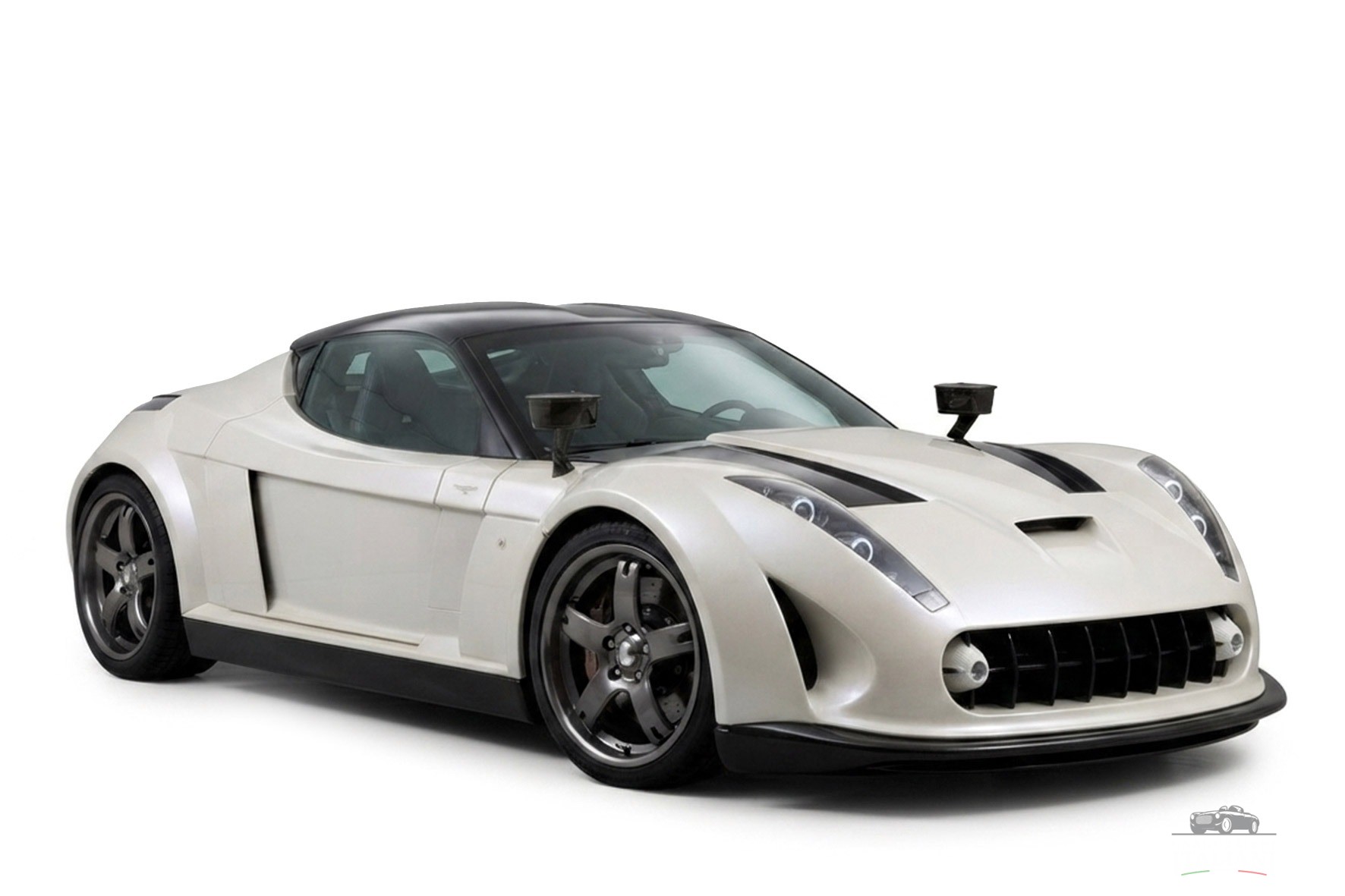
The Imperial Landaulet was a large concept presented by the Milanese coachbuilder Castagna for the 2006 Geneva Motor Show. It referred to the formal landaulet coachwork that Castagna had supplied for Isotta Fraschini chassis during the interwar period, especially the Tipo 8A. Rather than continuing the production of those historic cars, the 2006 project reconsidered their proportions and ceremonial body style using contemporary automotive design. Period reports generally identified the new vehicle as the Castagna Imperial Landaulet Concept.
The project also appears in the professional portfolio of Gioacchino Acampora, who worked as a designer with the revived Castagna company. His inclusion of the 2006 Imperial Landaulet among his principal projects supports an attribution of design involvement, without identifying the author of every individual styling element.
The historical Isotta Fraschini association was central to its presentation, but it did not establish that the modern project was built by Isotta Fraschini. Contemporary reporting also described trademark difficulties over the intended use of the marque’s badge. The modern concept and the surviving pre-war Castagna landaulets consequently have to be treated as separate vehicles and engineering projects.
Castagna displayed the Imperial Landaulet at Geneva in March 2006. A contemporary show report described the exhibit as a full-scale mock-up rather than a completed, operational road car. Further development was discussed at the time, including a possible running prototype for a later event, but such an announcement does not establish that the completed vehicle was built or entered.
Castagna described its angular profile as a form between a coupé and a multi-purpose vehicle. The design was nearly six metres long, with a substantial bonnet, pronounced wheel arches, a tall passenger compartment and an extended rear section. References to interwar coachwork appeared in the vertical front treatment, side openings and formal rear seating area. Castagna’s press material gave a height of 163 centimetres. Other published technical summaries supplied different dimensions, so the precise overall measurements of the displayed object require careful distinction from subsequent catalogue figures.
The proposed passenger compartment combined a closed forward roof with a retractable glazed section above the rear seats, following the landaulet principle. Broad opposing doors were designed to open from the centre without a conventional central pillar. The design included an automatically extending running board intended to make access easier. These elements were described in the original presentation material; their mechanical operation on the Geneva display object has not been independently established.
Storage arrangements were similarly ambitious. The rear luggage compartment was conceived with a hydraulically articulated opening, while an additional temperature-controlled compartment was placed between the engine bay and passenger cabin. The proposed exterior lighting scheme included height-adjustable dual-xenon headlamps, LED parking lights, direction indicators and front and rear fog lamps. Air openings were also specified at the front and rear. Carbon fibre was explicitly mentioned for the bumper-mounted air scoops. Period commentary also referred more broadly to composite bodywork, although a definitive construction specification has not been located.
Castagna’s 2006 description proposed a four-wheel-drive layout, adjustable ground clearance and output around 800 horsepower. Reports published before the Geneva presentation anticipated a V12, while a later specialist retrospective described a Porsche-derived 4.5-litre V8 with two superchargers. These are conflicting accounts of the intended powertrain, not independent confirmation of the engine installed in the show car. The displayed concept was described as unfinished, and no individual chassis or drivetrain serial has been established.
The proposal incorporated large wheels, reported at 24 inches in contemporary coverage, to suit the scale of the body. Precise displacement, wheelbase, transmission specification, braking system and mass have not been established for a completed example. Reported technical details therefore belong to the 2006 design and publicity context rather than to any of the original Isotta Fraschini automobiles it commemorated.
The Imperial Landaulet was exhibited at the 2006 Geneva Motor Show and was subsequently photographed at Auto Mobil International in Leipzig in April of the same year. The Leipzig display appeared in a contrasting pale cream and bronze-brown finish, documented photographically rather than by a factory paint specification. Neither presentation establishes an individual vehicle identification number, a documented owner or a subsequent production series. Those details remain necessary to distinguish any completed example from the original design study.
02 / TECHNICAL IDENTITY
03 / DESIGN, BODY & SUPPLIERS
Coachbuilder / Design studio
The Castagna coachbuilding tradition dates to nineteenth-century Milan, when Carlo Castagna took over an established carriage business. Carrozzeria Castagna later became renowned for luxury bespoke automotive bodies.
Explore record ↗Attributed designer
Gioacchino Acampora was an Italian architect and automotive designer based in Milan.
Explore record ↗04 / CHRONOLOGY
07 / GALLERY
CONTINUE EXPLORING
THE CONVERSATION
Comments 0