
Castagna
The Castagna coachbuilding tradition dates to nineteenth-century Milan, when Carlo Castagna took over an established carriage business. Carrozzeria Castagna later became renowned for luxury bespoke automotive bodies.
Explore record ↗
2014Coachwork by Castagna
THE VEHICLE AT A GLANCE
THE PEOPLE BEHIND THE CAR
The Castagna coachbuilding tradition dates to nineteenth-century Milan, when Carlo Castagna took over an established carriage business. Carrozzeria Castagna later became renowned for luxury bespoke automotive bodies.
Explore record ↗Gioacchino Acampora was an Italian architect and automotive designer based in Milan.
Explore record ↗01 / THE STORY
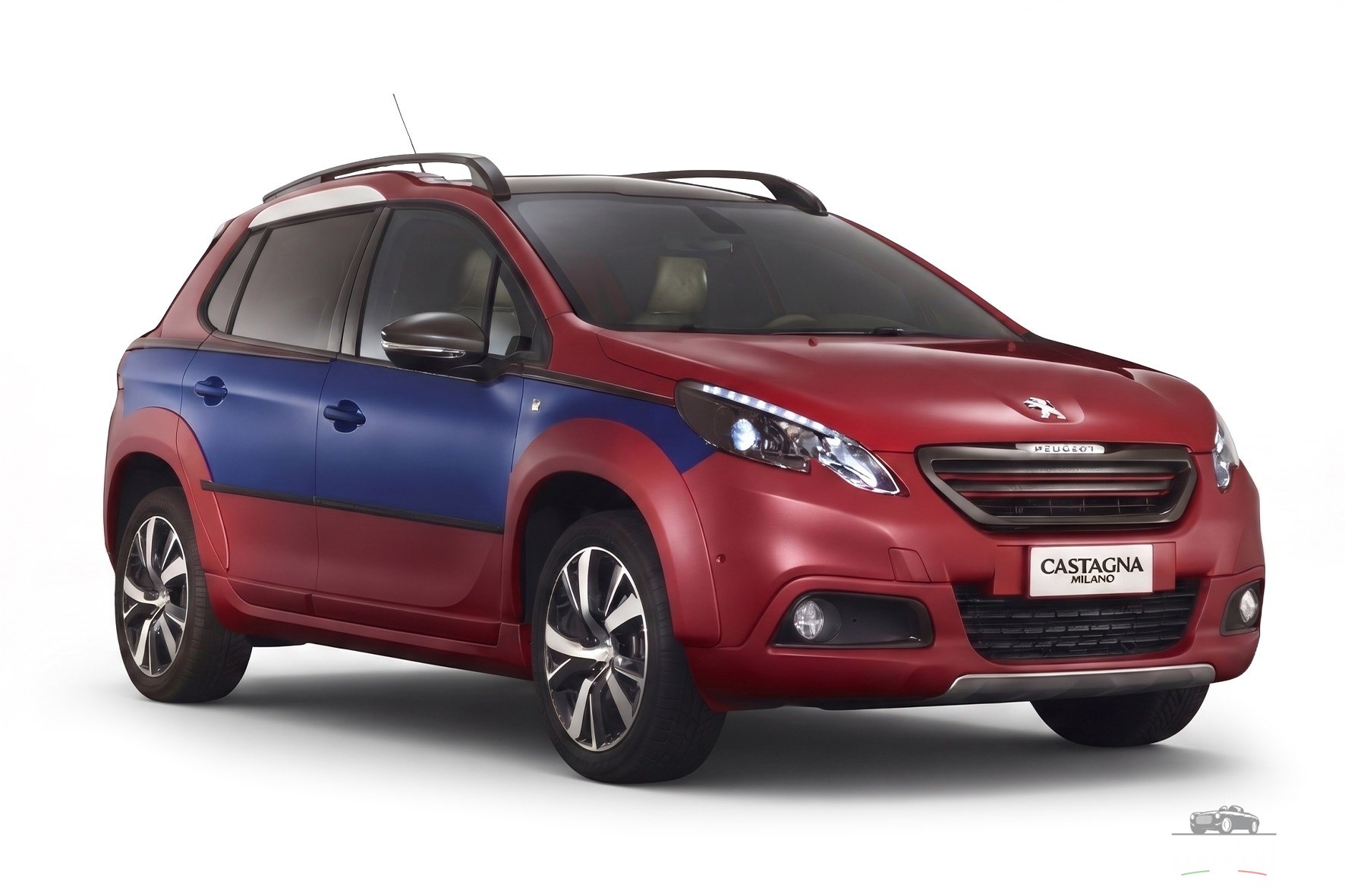
The Peugeot 2008 Castagna is a bespoke interpretation of the French subcompact crossover, realized in 2014 by Carrozzeria Castagna of Milan. Based on the production version of the Peugeot 2008 equipped with a 1.6-litre HDi diesel engine producing 115 horsepower, this unique vehicle exemplifies the application of Italian coachbuilding tradition to a contemporary industrial platform. The collaboration between Peugeot Italia and Castagna resulted in a singular model that sought not to alter performance characteristics, but rather to elevate the aesthetic and material identity of the original vehicle. The exterior treatment of the 2008 Castagna is defined by a deliberate chromatic separation. The upper body is finished in a high-gloss red, while the lower section is rendered in a matte indigo hue. This contrast delineates the vehicle’s volumes, accentuating the separation of form and the interplay between texture and reflection. Chrome details and blacked-out trim elements contribute to a more refined visual hierarchy. The result is a vehicle that retains the underlying proportions of the production model but presents a markedly different impression in presence and character. Interior modifications continue the emphasis on material craftsmanship. The cabin features Alcantara upholstery with visible contrast stitching corresponding to the exterior palette. Natural wood inserts are applied to the dashboard, complemented by full-grain leather trim across select surfaces. One notable feature is the panoramic roof, finished with a stylized starry-sky motif, intended to introduce a sense of distinction and atmospheric depth to the passenger compartment. These interventions reflect a concern for detail and sensory quality beyond utilitarian purpose. Mechanically, the Castagna variant maintains the original drivetrain configuration, with front-wheel drive and no modifications to the powertrain or suspension. This restraint emphasizes the coachbuilder’s focus on reinterpreting existing frameworks through design rather than engineering alteration. The vehicle remains entirely roadworthy and functionally equivalent to its base model. The Peugeot 2008 Castagna is consistent with Carrozzeria Castagna’s broader historical approach, wherein industrial vehicles are transformed into unique expressions through handcraft and design recontextualization. Though it exists as a single example, it functions as a demonstration of how contemporary mass-produced platforms can still serve as canvases for the traditions of bespoke automotive artistry.
02 / TECHNICAL IDENTITY
03 / DESIGN, BODY & SUPPLIERS
Coachbuilder / Design studio
The Castagna coachbuilding tradition dates to nineteenth-century Milan, when Carlo Castagna took over an established carriage business. Carrozzeria Castagna later became renowned for luxury bespoke automotive bodies.
Explore record ↗Attributed designer
Gioacchino Acampora was an Italian architect and automotive designer based in Milan.
Explore record ↗07 / GALLERY
THE CONVERSATION
Comments 0