Coggiola
Founded in Turin in 1966 by Sergio Coggiola after his work at Ghia, Carrozzeria Coggiola built specialist automotive bodies and design prototypes, including projects for Saab.
Explore record ↗
1976Coachwork by Coggiola
THE VEHICLE AT A GLANCE
THE PEOPLE BEHIND THE CAR
Founded in Turin in 1966 by Sergio Coggiola after his work at Ghia, Carrozzeria Coggiola built specialist automotive bodies and design prototypes, including projects for Saab.
Explore record ↗01 / THE STORY
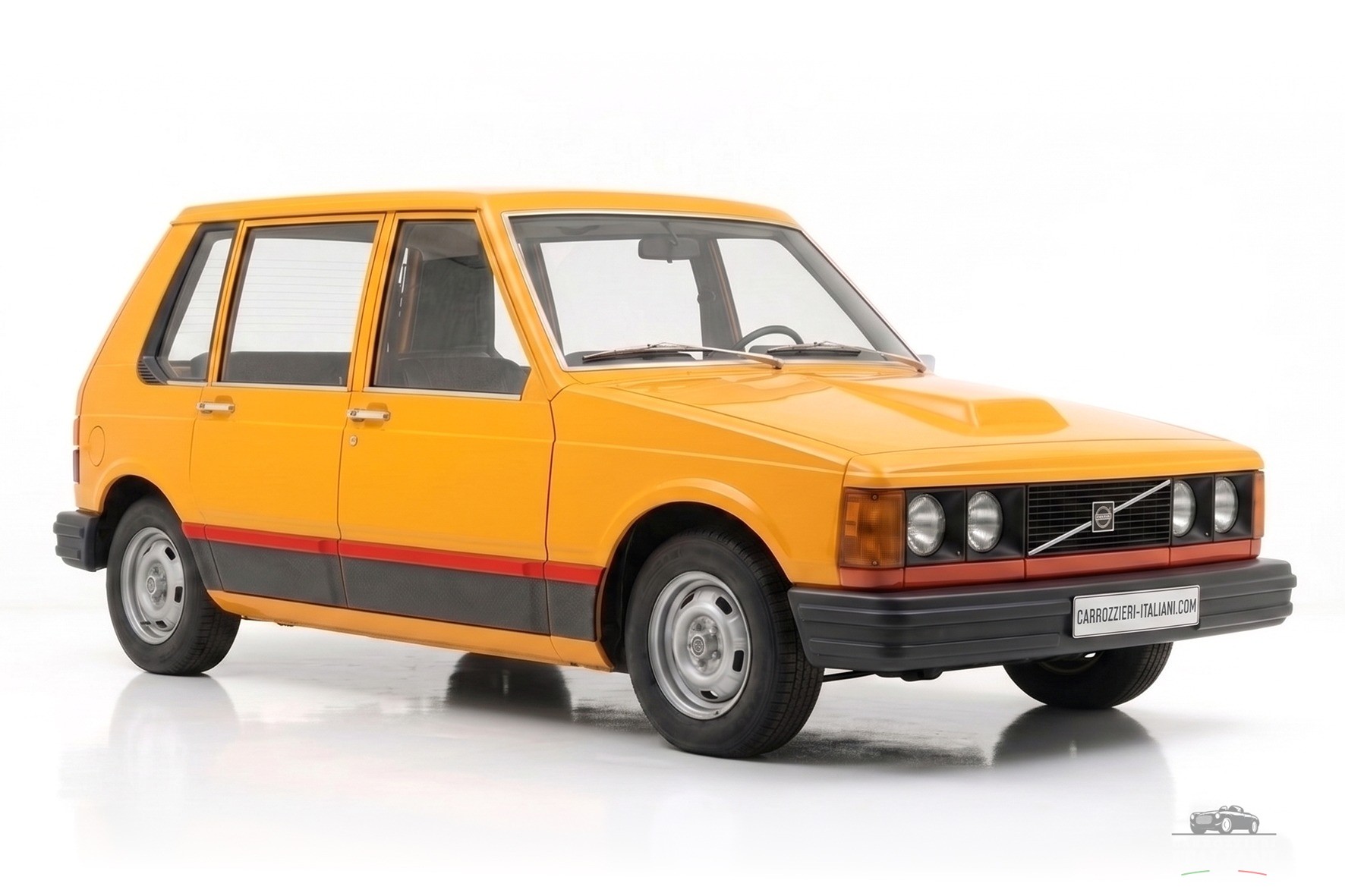
Volvo NY Taxi (1976), also known as the Volvo Experimental Taxi, was a purpose-built urban taxi prototype developed by Volvo for The Taxi Project: Realistic Solutions for Today at the Museum of Modern Art in New York. Its coachwork was associated with Carrozzeria Coggiola, while Volvo directed the engineering programme. The prototype combined a compact high-roof body, a front-wheel-drive diesel powertrain, wheelchair access and passenger-safety provisions intended for intensive city service.
The Museum of Modern Art organised the Taxi Project in collaboration with New York’s Taxi and Limousine Commission and transport specialists. The exhibition ran from 16 June to 7 September 1976 and presented practical proposals for replacing conventional full-size sedan taxis. Emilio Ambasz directed the project. Volvo’s programme was supervised by Rolf Mellde, its director of advanced engineering; the museum’s contemporary catalogue also named Jan Wilsgaard as Volvo’s chief designer and Raymond Eknor among the project engineers. Those credits concern Volvo’s wider team and do not establish a sole individual designer for the Coggiola body.
Volvo’s contribution was exhibited alongside proposals from Volkswagen, American Machine and Foundry and Steam Power Systems. An Alfa Romeo New York Taxi by Italdesign was shown separately as an additional design. The 1976 exhibition date is certain; Volvo subsequently listed its Experimental Taxi under 1977 in a retrospective concept-car chronology. That later catalogue date should not replace the documented exhibition year.
The yellow prototype used a nearly rectangular passenger compartment, short front and rear overhangs, large glazing and a high roof. A low entrance on the kerbside led through an electrically operated sliding door, controlled by the driver. The entrance was approximately 300 mm above ground level and had no conventional sill. The two-person rear seat could accommodate a third passenger when its central armrest was folded; a section of seating could also be raised to create space for a wheelchair occupant. Volvo envisaged carrying three to four passengers in addition to the driver.
The driver’s compartment was separated from the passenger area and included an adjustable seat, dedicated taxi controls, a writing surface with lamp, a safe and a small refrigerator. The interior also provided air conditioning, electrically operated rear side windows and an electronic taximeter with a passenger display. The prototype was designed as a complete working taxi rather than a simple styling mock-up.
The contemporary MoMA catalogue specifies a 2,400 cc in-line six-cylinder diesel engine, rated at 70 SAE horsepower at 4,500 rpm, coupled to a three-speed automatic transmission driving the front wheels. Its technical table gives a maximum speed of 136 km/h and a nominal wheelbase of 3,000 mm. The stated overall dimensions are approximately 4.38 m long, 1.92 m wide and 1.72 m high. Other passages in the same catalogue use slightly different rounded external dimensions and distinguish kerb weight from other weight figures; these should not be treated as separate vehicle variants.
The unitised body employed a reinforced occupant cell, tubular side protection and energy-absorbing front and rear sections. Impact-absorbing bumpers and protective side mouldings addressed the minor collisions common in taxi operation. Passenger restraints took the form of a padded adjustable safety bar that could be lowered from the roof, rather than conventional rear-seat belts. The driver retained a three-point belt. Volvo also documented independent front suspension with wishbones, a De Dion rear axle and power-assisted rack-and-pinion steering.
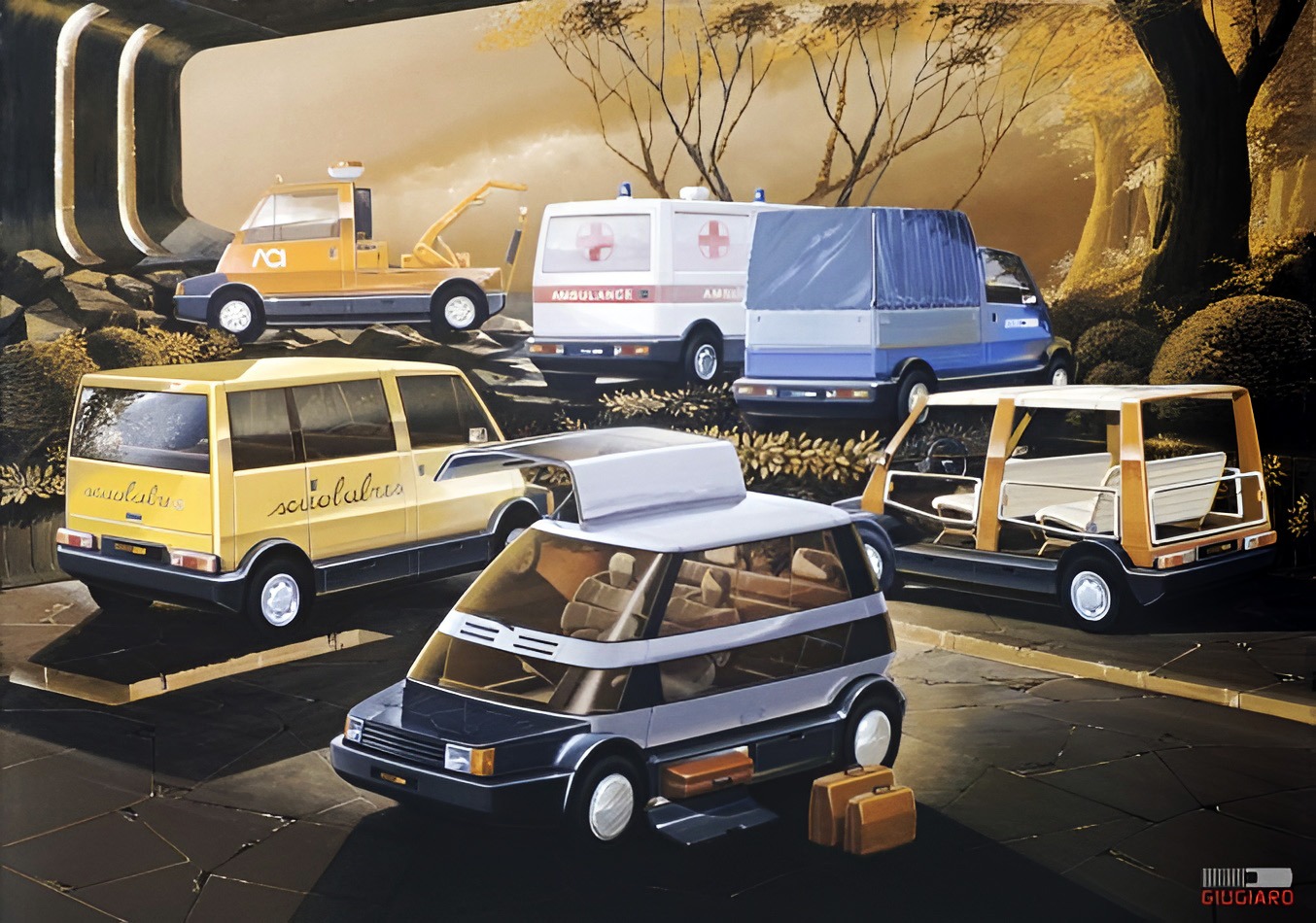
Volvo treated the car as a research prototype, not as a production-ready taxi. An extended-wheelbase interpretation was considered for minibus or ambulance use, but the drawings of those adaptations must not be counted as additional completed examples of the New York taxi. The surviving documentation does not establish a specific chassis or body serial for the prototype, nor a confirmed auction transaction. Its significance lies in the combined treatment of urban access, occupant protection and a purpose-built diesel drivetrain within the 1976 MoMA programme.
02 / TECHNICAL IDENTITY
03 / DESIGN, BODY & SUPPLIERS
Coachbuilder / Design studio
Founded in Turin in 1966 by Sergio Coggiola after his work at Ghia, Carrozzeria Coggiola built specialist automotive bodies and design prototypes, including projects for Saab.
Explore record ↗04 / CHRONOLOGY
07 / GALLERY
CONTINUE READING
If you’ve ever found yourself stuck in an endless sea of honking taxis in New York City, you might have wished someone—anyone—had figured out a way to make urban transportation smoother. Well,…
Read storyLong before MPVs filled suburban driveways, Italian designers were shaping the monovolume with prototypes that ranged from pragmatic to outright outrageous. Their work rewrote how space, style, and function could fit under…
Read story
THE CONVERSATION
Comments 0