
Coriasco
Turin coachbuilder active from the 1920s, producing Fiat-based delivery vehicles, estate conversions, advertising bodies and Coriasco Style cars.
Explore record ↗
1978Coachwork by Coriasco
THE VEHICLE AT A GLANCE
THE PEOPLE BEHIND THE CAR
Turin coachbuilder active from the 1920s, producing Fiat-based delivery vehicles, estate conversions, advertising bodies and Coriasco Style cars.
Explore record ↗01 / THE STORY
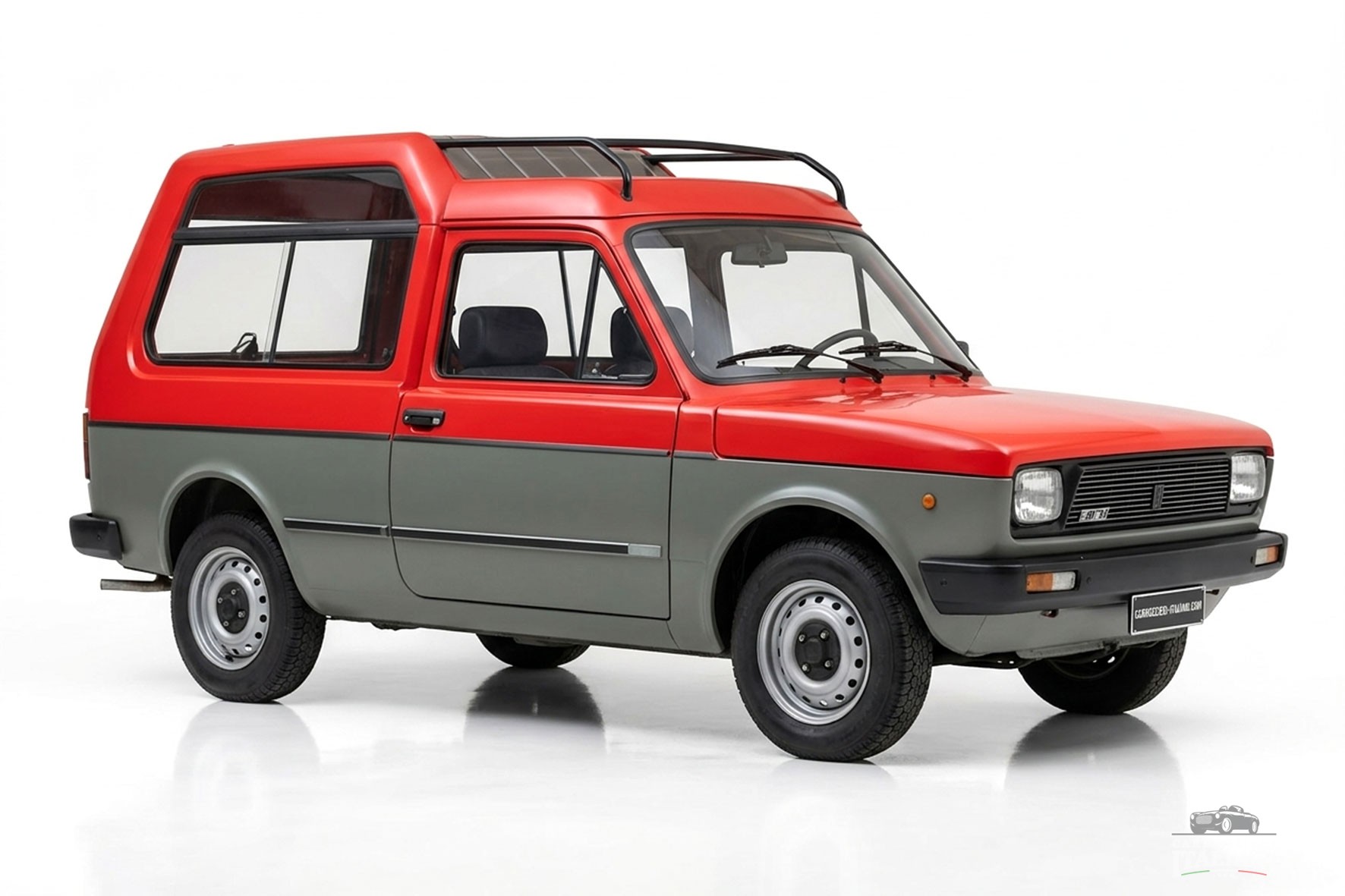
The Fiat 127 Farm was a limited-production utility version of the Fiat 127, built in the mid-1970s by Carrozzeria Coriasco of Turin. It was designed as a compact vehicle for mixed passenger and light commercial use, combining the small size and front-wheel-drive layout of the Fiat 127 with a taller and more practical rear body. The model was aimed at users who needed a vehicle for daily transport, work duties, rural use, leisure activities, or promotional purposes. The 127 Farm was based on the mechanical platform used by the Fiat 127 and related 127 Fiorino derivatives. It used a front-mounted, transversely installed 903 cc inline-four petrol engine, producing approximately 47 hp. Drive was sent to the front wheels through a four-speed manual gearbox. Most mechanical components, including the braking system, remained close to the standard Fiat 127 specification. The suspension was reinforced to improve load-carrying ability, and the vehicle was fitted with heavy-duty wheels on utility versions. Coriasco’s main changes were made to the bodywork. The standard rear section was replaced by a raised, box-shaped compartment with an extended roofline and stepped profile. This created more usable interior space while keeping the car’s compact external dimensions. Large rectangular side windows, often with sliding lower panes, provided light and ventilation. The rear opening used a practical two-piece tailgate, with the upper glass hinged upward and the lower panel folding downward to simplify loading. The Fiat 127 Farm could carry up to five passengers, or it could be arranged for a mix of seating and cargo. Its payload was officially rated at about 450 kg, although some later descriptions cite 520 kg. The rear compartment offered approximately 1.75 cubic meters of capacity, with an interior height of around 1.10 meters. These features made it useful for tradespeople, farmers, small businesses, and outdoor users who needed more flexibility than a normal small car could provide. Production was very limited, and no confirmed total figure is known. One documented example, chassis number 159542/2689, was registered to Giuseppe Premici on 29 October 1976. The 127 Farm was never part of Fiat’s standard catalogue range. It remains a rare coachbuilt adaptation that shows how Italian bodybuilders responded to demand for compact, practical, multi-purpose vehicles before the modern crossover and small utility segments were formally established.
02 / TECHNICAL IDENTITY
03 / DESIGN, BODY & SUPPLIERS
Coachbuilder / Design studio
Turin coachbuilder active from the 1920s, producing Fiat-based delivery vehicles, estate conversions, advertising bodies and Coriasco Style cars.
Explore record ↗04 / CHRONOLOGY
07 / GALLERY
THE CONVERSATION
Comments 0