
Diego Ottina
AT A GLANCE
- Born
- 1941-08-24
- Birthplace
- Turin
- Nationality
- Italian
- Occupation
- Automotive designer and design manager
- Active from
- 1960s
- Studio
- Michelotti / Pininfarina
- Based in
- Turin, Italy
THE STORY
Overview
Diego Ottina (born 24 August 1941 in Turin) is an Italian automotive designer who worked in Giovanni Michelotti’s studio before joining Pininfarina in 1970. He contributed to experimental vehicles and production-car programmes for Alfa Romeo, Autobianchi, Fiat, Peugeot, Ferrari, Honda and Lancia. His work included individual exterior styling, the development of concept vehicles and, later, the supervision of design and modelling activities. The documented responsibilities of his colleagues and studio directors are distinct from his own design contributions.
Early life and training in Turin
Ottina developed an interest in drawing automobiles while growing up in Turin. Following his diploma, he initially worked in a commercial position rather than in automotive design. A family connection subsequently led to an introduction to Giovanni Michelotti, the independent Turin-based designer whose activities encompassed body styling, technical drawings and prototype development. Ottina joined Michelotti’s operation in 1963, beginning with elementary workshop tasks and progressively acquiring a practical understanding of the design-to-construction process.
His work for Michelotti extended beyond sketches. It included recording dimensions, preparing drawings from scale models and existing vehicles, and measuring completed automobiles for technical and homologation documentation. He later recalled undertaking dimensional work on a model supplied by British Leyland. This environment familiarised him with the relationship between an initial proposal, a scale model, tooling and the finished body. He also worked alongside or came into contact with other designers associated with Michelotti, including Paolo Martin and Tateo Uchida. These professional connections do not by themselves establish authorship of Michelotti’s individual vehicles.
Pininfarina, from 1970
Ottina entered Pininfarina on 15 January 1970, after hearing of an opportunity through Paolo Martin. In its design organisation he worked with Aldo Brovarone and Martin, and subsequently within teams supervised by Franco Martinengo and Leonardo Fioravanti. Over the following decades, Pininfarina combined individual styling assignments with shared engineering, full-size modelling and management responsibilities. It is therefore important to distinguish the designer responsible for a specific proposal from a studio’s chief stylist, its head of research, the coachbuilder and the manufacturer.
The Alfa Romeo Alfetta Spider concept of 1972 was among Ottina’s first complete design projects at Pininfarina. It explored a compact wedge-shaped open body with integrated bumpers, a roll-over structure and references to the earlier Alfa Romeo Spider. The 1973 Autobianchi A112 Giovani was an experimental small-car proposal, contrasting a protective cabin treatment with an intentionally informal character. The Fiat 130 Maremma shooting brake of 1974, associated with a commission by Giovanni Agnelli, applied a long-roof configuration and incorporated its rear aerodynamic treatment into the overall body design.
Peugeot projects and modular body design
Ottina’s association with Peugeot included work on the 505 saloon programme and the later Peugeot 405. His individual contribution should be understood within the broader relationship between Peugeot’s own styling organisation and Pininfarina rather than as sole authorship of every production derivative. His most distinctive Peugeot concept assignment was the 1976 Peugeot Peugette, a lightweight roadster proposal based on Peugeot 104 mechanical components and developed for the twenty-fifth anniversary of the Peugeot–Pininfarina collaboration.
The Peugette investigated rational, economical body construction through symmetrical and interchangeable exterior panels. Its simple two-seat form could be developed into a more minimal single-seat barchetta arrangement. Stellantis’ historical account describes the use of Peugeot 104 ZS mechanical components and the concept’s appearance at the 1976 Geneva Motor Show. Project-specific evidence credits Ottina as the principal individual designer, while Aldo Brovarone is also identified in accounts of the team’s design leadership. The concept remained a design study rather than a production car, and its variants should not be mistaken for independent production series.
Ferrari Pinin and the Testarossa
The Ferrari Pinin of 1980 was an experimental four-door saloon created by Pininfarina for its fiftieth anniversary and presented at Turin. The project originated within Sergio Pininfarina’s organisation, and its design was developed by Ottina under the direction of Leonardo Fioravanti. The vehicle combined a comparatively low bonnet, a continuous-looking glazed passenger compartment, concealed wipers and an unusual lighting treatment. Ottina’s documented responsibility for the form must be distinguished from Fioravanti’s design direction and Sergio Pininfarina’s initiative. The Pinin was a single concept vehicle, not a production Ferrari saloon.
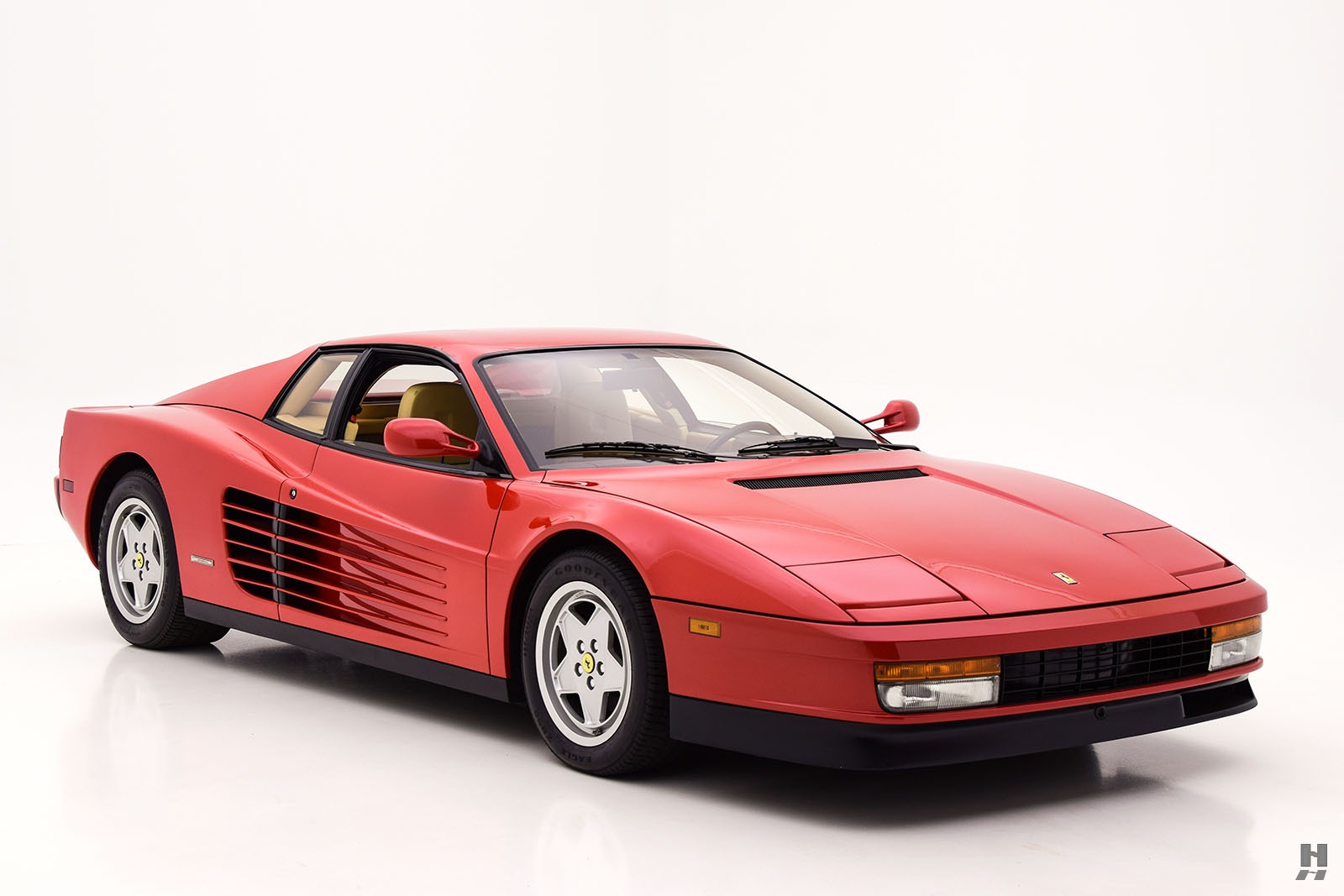
Ottina also made substantial contributions to the exterior development of the 1984 Ferrari Testarossa. A detailed interview published in September 2026 attributes to him the treatment of the long lateral strakes and the layered relationship between the principal body volumes. These elements responded to aerodynamic investigation and safety considerations as well as the styling brief. Fioravanti exercised design leadership and Ian Cameron is separately credited with interior work in specialist histories. A personal exterior contribution should not be expanded into sole responsibility for the complete vehicle, its passenger compartment or subsequent body variants.
Honda and Alfa Romeo experimental cars
The 1984 Honda HP-X, developed by Pininfarina for Honda, explored a low, aeronautically influenced sports-car architecture. Its cabin treatment and sharply defined wedge anticipated themes later associated with Honda’s production NSX, although the HP-X remained a separate concept with its own design and engineering history. Ottina described his work on the project as part of the late phase of his direct styling career.
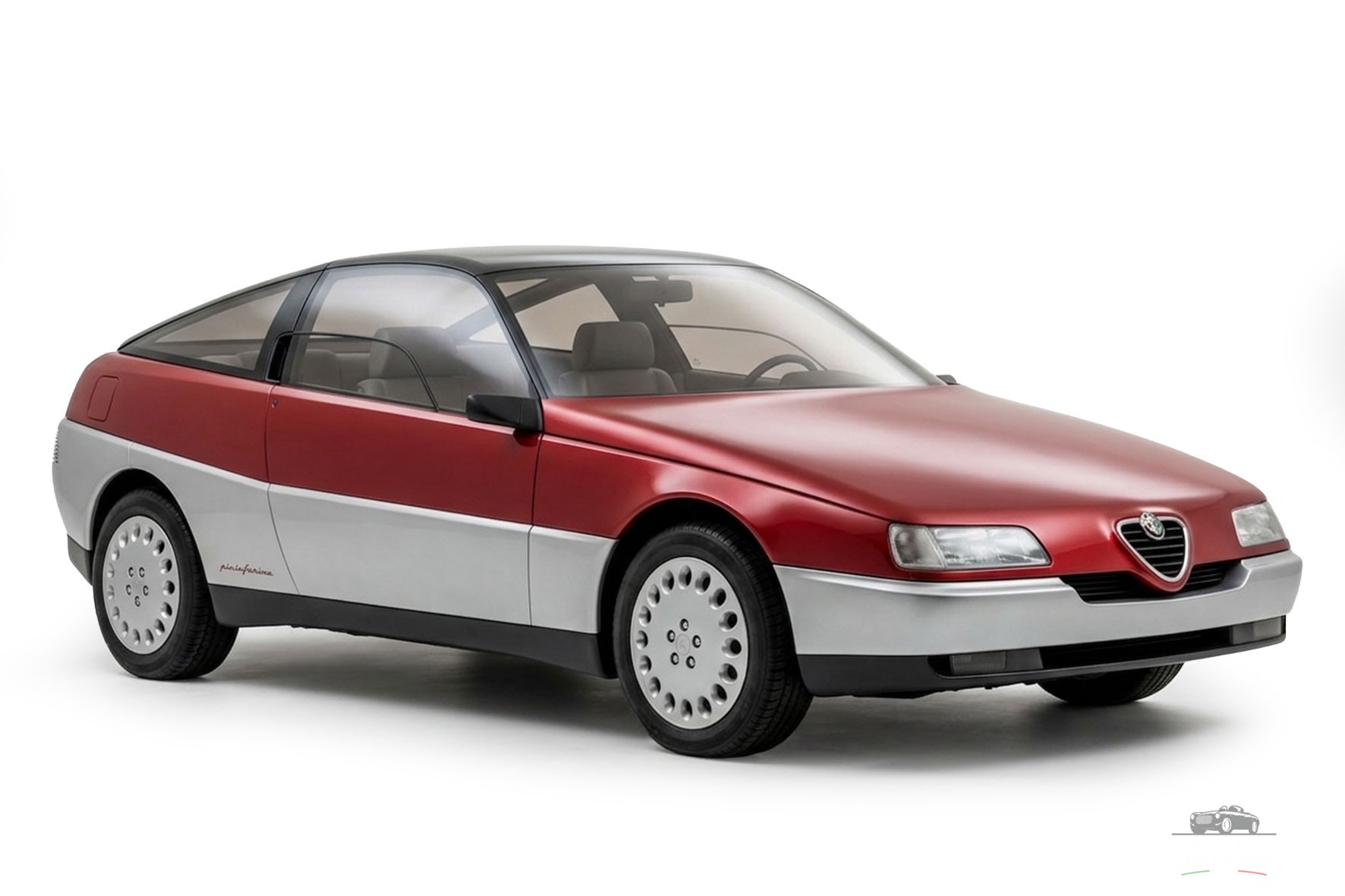
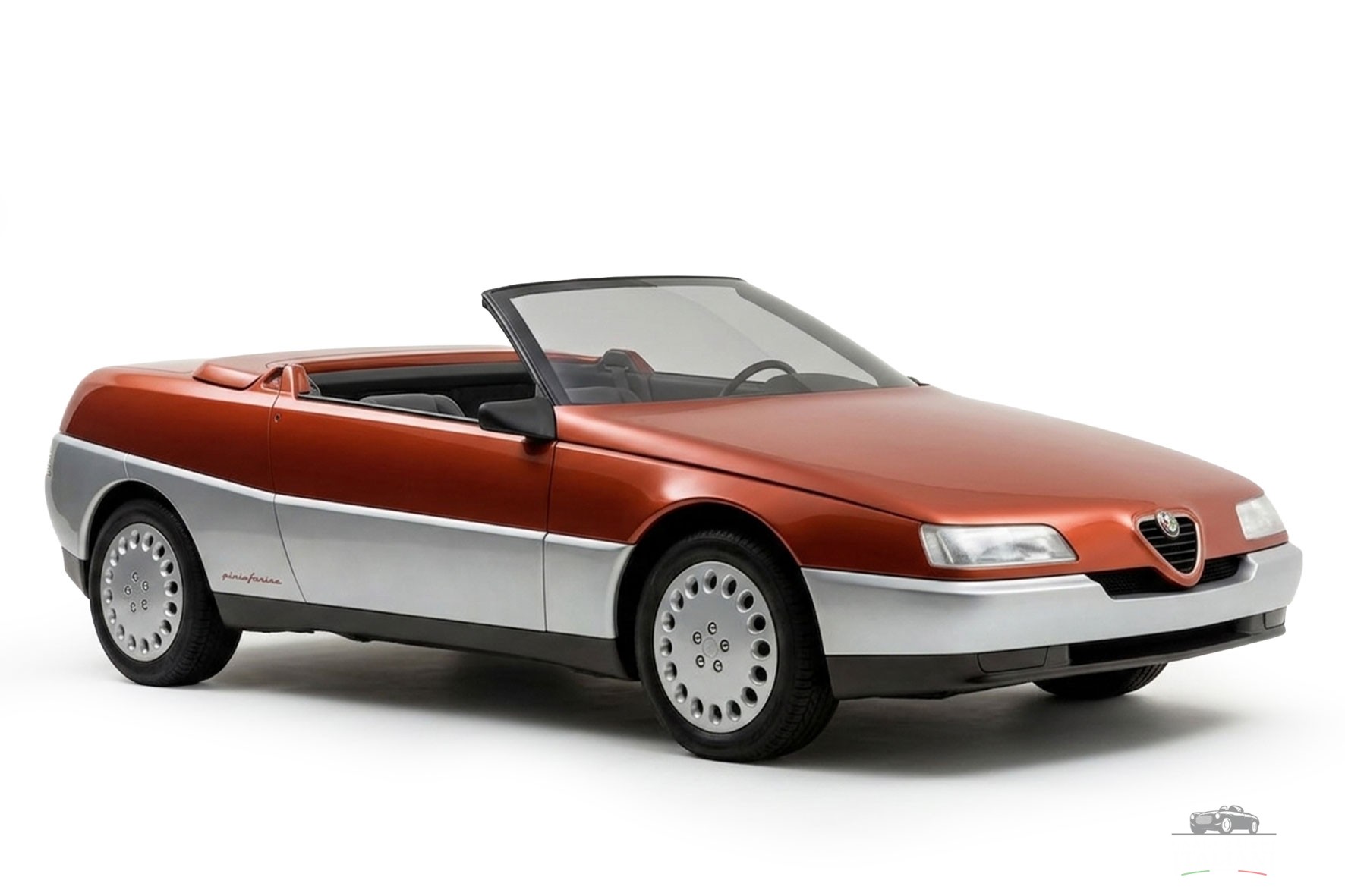
The related 1986 Alfa Romeo Vivace Coupé and Vivace Spider proposals examined the possibility of two different body configurations built from a common technical basis. Their low profile and contrasting graphic treatment of the side surfaces were developed as part of the Pininfarina study. These designs should be recorded as distinct coupé and spider variants, without treating a shared programme as proof that each physical prototype had identical construction details or chassis identities.
Lancia HIT and subsequent managerial work
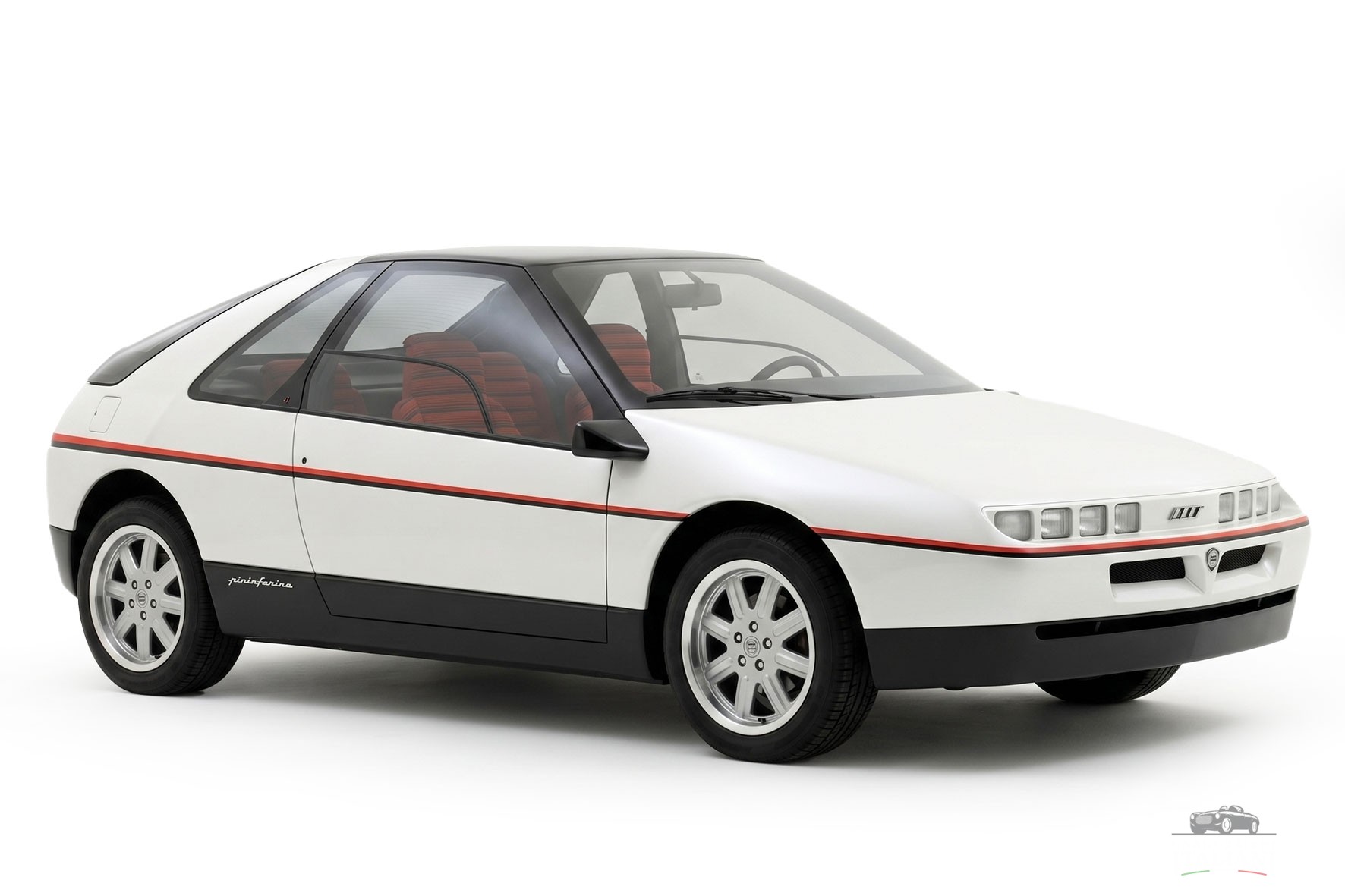
The 1988 Lancia HIT (High Italian Technology) was among Ottina’s final projects as a directly practising exterior stylist. Pininfarina used the concept to demonstrate both its design capabilities and its competence in developing a functional, technically complex prototype. The project was connected with Lancia Delta Integrale mechanical components, but its industrial authorship remained with the broader Pininfarina organisation rather than any single designer.
Ottina subsequently shifted his attention towards modelling consultation, project coordination and management within Pininfarina, working closely with Lorenzo Ramaciotti. His career therefore encompassed different functions at different periods: hands-on styling, production and concept development, and the oversight of design work carried out by teams. An account of his employment does not establish direct design authorship of every Pininfarina vehicle produced during the same years.
Design attribution and historical record
Ottina’s career is documented through published recollections, institutional accounts and project histories, including an extensive interview released in September 2026. The evidence supports specific links to the Alfetta Spider, A112 Giovani, Maremma, Peugette, Ferrari Pinin, Ferrari Testarossa, Honda HP-X, Alfa Romeo Vivace studies and Lancia HIT, with individual responsibilities differing by project. Where a particular vehicle also involved Brovarone, Martinengo, Fioravanti, Ramaciotti or other Pininfarina collaborators, studio leadership, individual exterior styling, interior work and construction remain separate forms of attribution. Vehicle-level chassis data, ownership and auction results belong to their corresponding automobile records rather than to the designer’s personal biography.
THE NETWORK
Shared vehicle credits
AWARDS & RECOGNITION
Palmarès
Vehicle awards
- Class wins
- 1
- Design awards
- 1
2 vehicle award records
Class Winner
Ferrari TestarossaCar Design Award Production
Ferrari Testarossa1985 Car Design Award Production
Production
CONTINUE EXPLORING



THE CONVERSATION
Comments 0