
Pininfarina
Founded by Battista Pinin Farina in Turin in 1930, Pininfarina became one of the most influential Italian styling and coachbuilding houses, particularly through its work for Ferrari and other international manufacturers.
Explore record ↗
1974Coachwork by Pininfarina
THE VEHICLE AT A GLANCE
THE PEOPLE BEHIND THE CAR
Founded by Battista Pinin Farina in Turin in 1930, Pininfarina became one of the most influential Italian styling and coachbuilding houses, particularly through its work for Ferrari and other international manufacturers.
Explore record ↗01 / THE STORY
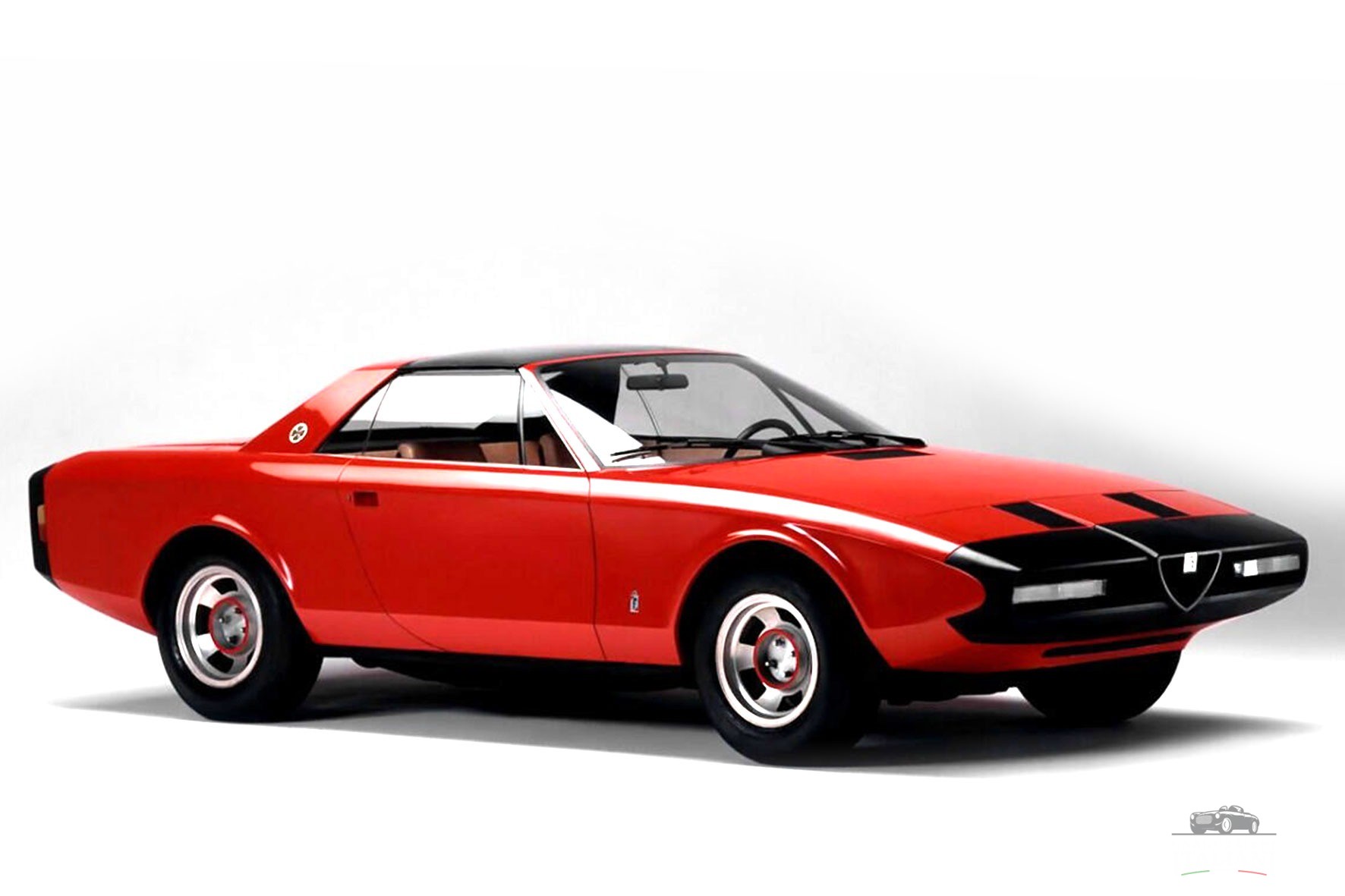
The Alfa Romeo Alfetta Spider by Pininfarina was unveiled at the 1972 Turin Motor Show as a concept derived from the Alfetta sedan. It was envisioned as a potential replacement for the Spider derived from the Giulia, showcasing a design that was both innovative and mindful of emerging automotive safety standards. Characterized by its angular lines, the Alfetta Spider was not a traditional open-top car but featured a removable hardtop with a fixed roll bar. This design solution, initially introduced by the Porsche 911 Targa and later adopted by Bertone for the Fiat X 1/9, was seen as essential for ensuring the survival of open-top cars. At the time, particularly in the North American market, there was increasing regulatory scrutiny towards open-top vehicles due to the perceived higher risks to passengers in the event of a rollover compared to closed-body cars. Rumors suggested that new crash test regulations were imminent, which would significantly impact completely open cars, making compliance prohibitively expensive for small series productions. This created a challenging environment for the continuation of traditional spiders, pushing designers and manufacturers to explore alternative solutions. The Pininfarina-designed Alfetta Spider featured newly designed plastic bumpers that incorporated the lighting elements, showcasing a blend of innovation and practicality. Despite being production-ready, Alfa Romeo decided to delay the project, primarily due to the continued strong demand for the Spider Giulia at the time. Today, this unique vehicle is part of the collection at the Alfa Romeo Museum in Arese, serving as a historical example of Pininfarina’s forward-thinking design and Alfa Romeo‘s cautious approach during a period of regulatory uncertainty. The concept remains a fascinating glimpse into the automotive design strategies of the early 1970s, reflecting both the challenges and innovations of the era.
02 / TECHNICAL IDENTITY
03 / DESIGN, BODY & SUPPLIERS
Coachbuilder / Design studio
Founded by Battista Pinin Farina in Turin in 1930, Pininfarina became one of the most influential Italian styling and coachbuilding houses, particularly through its work for Ferrari and other international manufacturers.
Explore record ↗04 / CHRONOLOGY
05 / PEOPLE, COLLECTIONS & MUSEUMS
07 / CHASSIS REGISTER
08 / GALLERY
09 / PERIOD ARCHIVE
Become a Pro member to see the full details in this section.
Membership is not available yet.
View membership options
THE CONVERSATION
Comments 0