
Pininfarina
Founded by Battista Pinin Farina in Turin in 1930, Pininfarina became one of the most influential Italian styling and coachbuilding houses, particularly through its work for Ferrari and other international manufacturers.
Explore record ↗
2004
THE VEHICLE AT A GLANCE
THE PEOPLE BEHIND THE CAR
Founded by Battista Pinin Farina in Turin in 1930, Pininfarina became one of the most influential Italian styling and coachbuilding houses, particularly through its work for Ferrari and other international manufacturers.
Explore record ↗01 / THE STORY
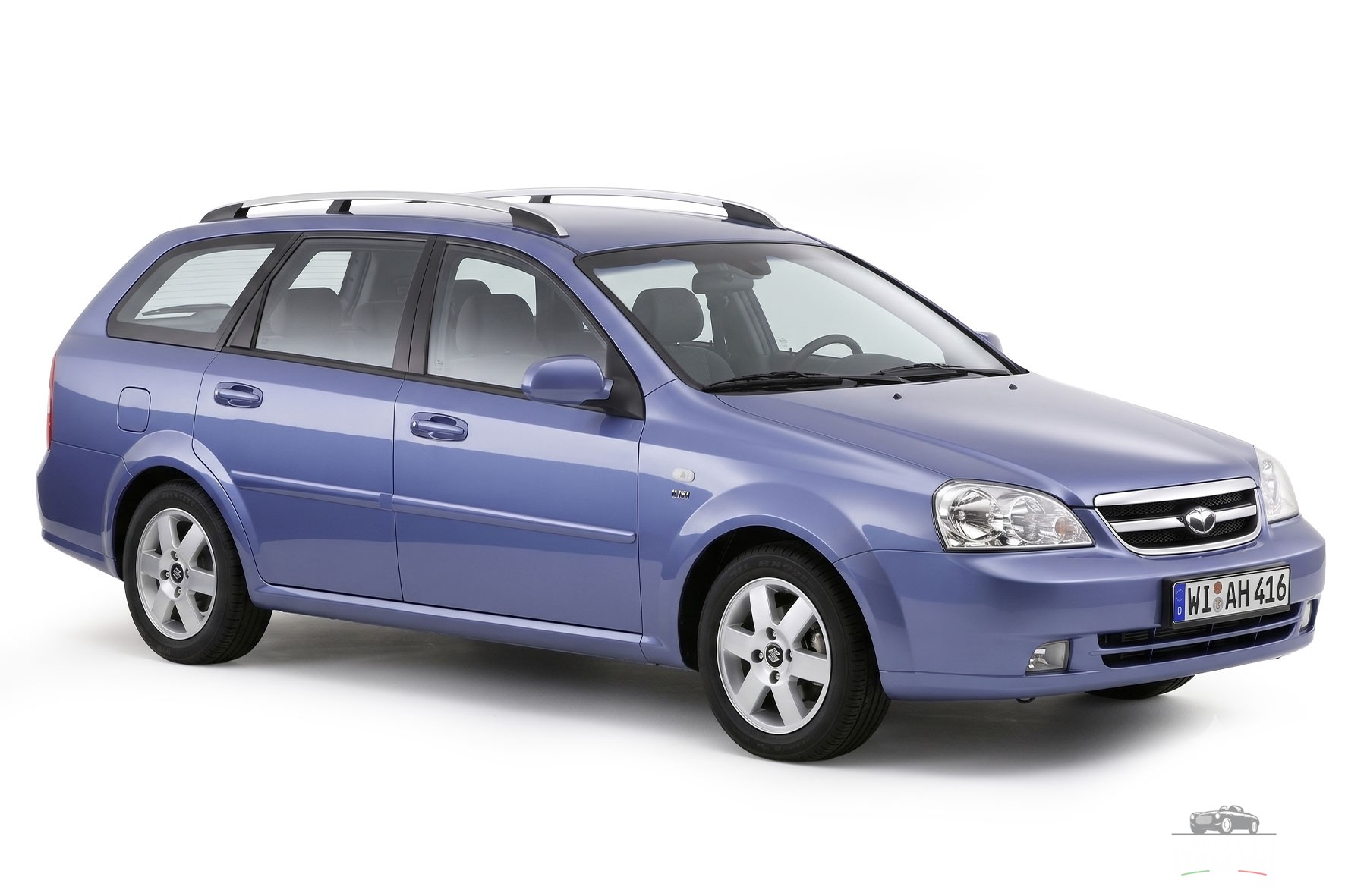
The 2004 Daewoo Nubira Wagon was developed by the GM Daewoo design centre in South Korea as a separate body style based on the Nubira saloon designed by Pininfarina. Positioned within the second generation of the Nubira series (internal code J200), this station wagon variant was conceived to offer increased cargo capacity and versatility compared to the sedan upon which it is based. Its introduction marked a phase in which Daewoo, undergoing corporate restructuring and eventual integration into General Motors, sought to strengthen its global market presence. The wagon has a functional, restrained design derived from the styling of the saloon. The extended roofline, upright rear pillars, and large tailgate contribute to a functional silhouette, while maintaining proportional balance. Smooth surfaces and restrained detailing reflect the intention to deliver an accessible vehicle with understated aesthetic coherence. Mechanically, the Nubira Wagon employed broadly conventional solutions for its time. Available petrol engines included four-cylinder units with displacements ranging from 1.6 to 1.8 liters, paired with either five-speed manual transmissions or four-speed automatics. The suspension layout—MacPherson struts at the front and a torsion beam at the rear—ensured predictable handling and a level of comfort suitable for everyday use, particularly in a family-oriented context. The interior was designed with simplicity and practicality in mind. It offered ample space within its class, emphasizing luggage capacity and flexible rear seating arrangements. The materials and finish quality met the expectations for a mid-size vehicle of its era, focusing on durability and ease of use rather than luxury. Production of the Daewoo Nubira Wagon continued until its gradual replacement by models sold under the Chevrolet brand, reflecting the broader shift in Daewoo’s identity following its acquisition. In various markets, the vehicle was marketed under alternative names such as Chevrolet Lacetti or Suzuki Forenza, depending on regional strategies. The wagon combined the saloon’s Pininfarina design foundations with the bodywork developed by GM Daewoo.
02 / TECHNICAL IDENTITY
03 / DESIGN, BODY & SUPPLIERS
Attributed coachbuilder / design studio
Founded by Battista Pinin Farina in Turin in 1930, Pininfarina became one of the most influential Italian styling and coachbuilding houses, particularly through its work for Ferrari and other international manufacturers.
Explore record ↗07 / GALLERY
THE CONVERSATION
Comments 0