

Marazzi
Founded by Carlo Marazzi and former Touring employees, Carrozzeria Marazzi assembled Lamborghini grand tourers and produced bodies for specialist Italian sports cars.
Explore record ↗
1986Coachwork by Marazzi
THE VEHICLE AT A GLANCE
THE PEOPLE BEHIND THE CAR
Founded by Carlo Marazzi and former Touring employees, Carrozzeria Marazzi assembled Lamborghini grand tourers and produced bodies for specialist Italian sports cars.
Explore record ↗01 / THE STORY
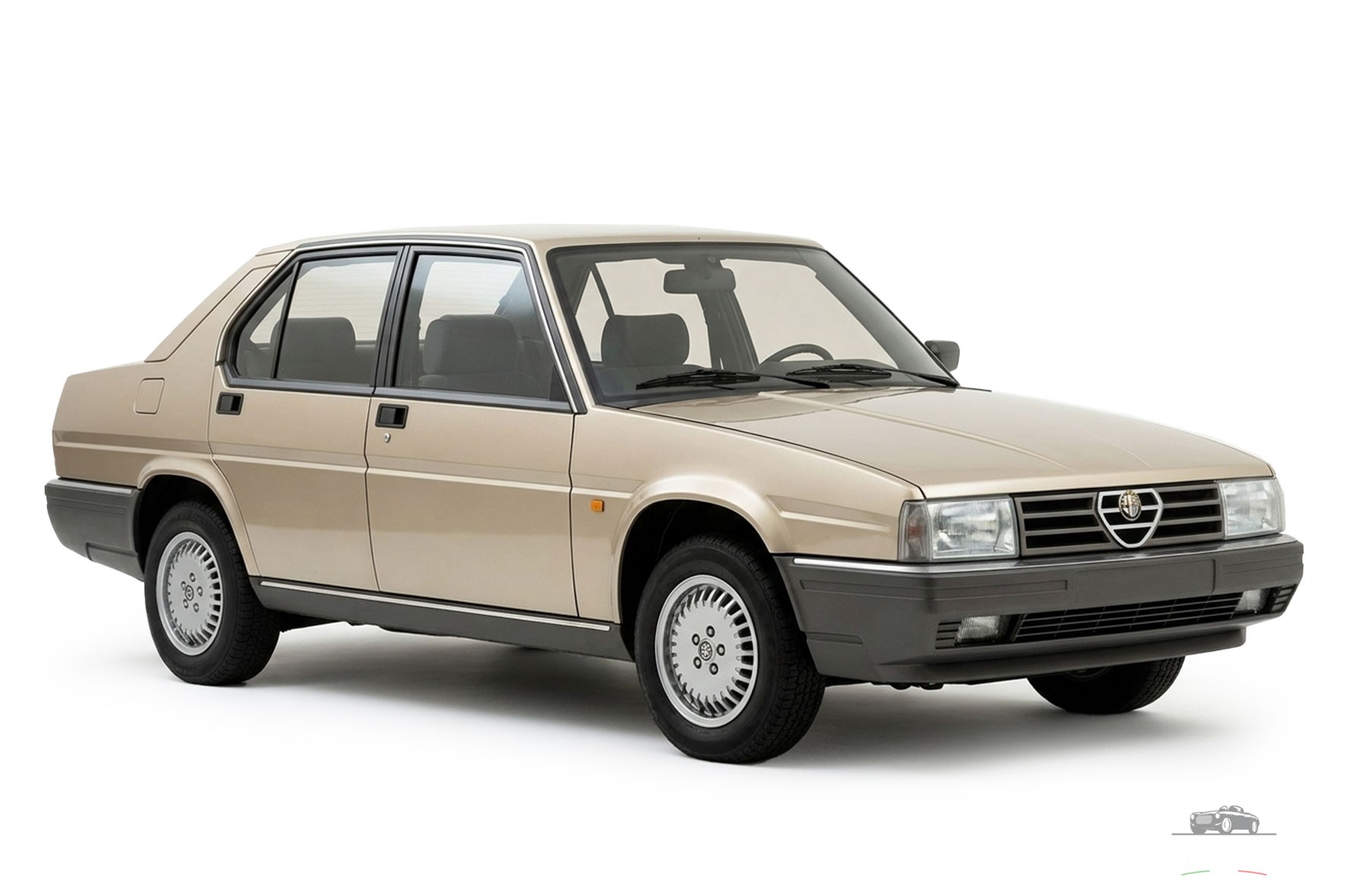
The Alfa Romeo 90 Station Wagon was an estate-car conversion of the Alfa Romeo 90 saloon, developed by Carrozzeria Marazzi for the Italian motoring magazine AutoCapital in the mid-1980s. Two prototypes were built, but the proposal did not enter series production. The project was independent of the regular Alfa Romeo 90 manufacturing programme at Arese, and this record covers the two-car coachbuilt family rather than a specific numbered chassis.
The project originated with AutoCapital editor Luca Grandori, who had already commissioned a station wagon based on the Alfa Romeo Alfetta from Zagato. That earlier Alfetta SW was a separate conversion and should not be counted among the subsequent Marazzi cars. Following the replacement of the Alfetta by the 90 saloon in 1984, Grandori commissioned Marazzi to develop a corresponding estate version on the newer model. The Museo Fratelli Cozzi dates the Marazzi commission to 1985 and the abandonment of the proposed continuation to 1986. The legacy Carrozzieri Italiani record uses 1986 as the model year; that date should not be interpreted as proof that both examples were built in that calendar year.
Marazzi technical director and designer Mario Enrico Mauri developed the estate body around the existing angular Alfa 90 front end and passenger compartment. The conversion extended the roof towards the rear, created a cargo compartment behind the rear seats and substituted an estate-car rear profile for the saloon boot. In a historical account published by the Museo Fratelli Cozzi, Mauri is described as having considered contemporary estate cars including the Volvo 245 and Audi 100 when shaping the conversion. One documented feature was a load-compartment cover that retracted sideways, rather than winding into a transverse housing behind the rear seat. The arrangement was intended to facilitate the loading of bulky objects without removing a roller assembly.
The underlying Alfa Romeo 90 employed a longitudinal front engine, rear-wheel drive and a rear-mounted transaxle, developed from the Alfetta architecture. The estate prototypes retained the identity of this donor-car programme, but no reliable, individual chassis or engine numbers have been established for either of the two Marazzi vehicles in the material reviewed. The Museo Fratelli Cozzi discusses the availability of the 2.5-litre V6 as part of the project context; this does not verify the engine installed in each prototype. Consequently, saloon-model performance, dimensions and engine ratings should not be assigned to the station wagons without more specific documents.
The figure of two examples is supported by Ruoteclassiche, which attributes the total to the production registers of Carrozzeria Marazzi. This represents a short prototype series, not a single one-off and not a regular Alfa Romeo production body style. The public presentation is documented in the specialist press around 1985–1986, but original registration records and body-number sequences have not yet been reconciled.
A surviving Alfa Romeo 90 Station Wagon photographed in the Museo Fratelli Cozzi historical article of 31 October 2024 was identified as belonging to the Alfa Blue Team collection. That observation establishes the survival of a vehicle in the series at the time, without revealing an independently verified chassis number or establishing the whereabouts of the other prototype. No auction transaction has been identified with a sufficiently precise match to these two coachbuilt examples. Ordinary Alfa Romeo 90 saloon transactions are therefore not evidence of a sale or value for the Marazzi estate cars.
02 / TECHNICAL IDENTITY
03 / DESIGN, BODY & SUPPLIERS
Coachbuilder / Design studio
Founded by Carlo Marazzi and former Touring employees, Carrozzeria Marazzi assembled Lamborghini grand tourers and produced bodies for specialist Italian sports cars.
Explore record ↗07 / GALLERY
CONTINUE EXPLORING



THE CONVERSATION
Comments 0