
Pininfarina
Founded by Battista Pinin Farina in Turin in 1930, Pininfarina became one of the most influential Italian styling and coachbuilding houses, particularly through its work for Ferrari and other international manufacturers.
Explore record ↗
1950Coachwork by Pininfarina
THE VEHICLE AT A GLANCE
THE PEOPLE BEHIND THE CAR
Founded by Battista Pinin Farina in Turin in 1930, Pininfarina became one of the most influential Italian styling and coachbuilding houses, particularly through its work for Ferrari and other international manufacturers.
Explore record ↗01 / THE STORY
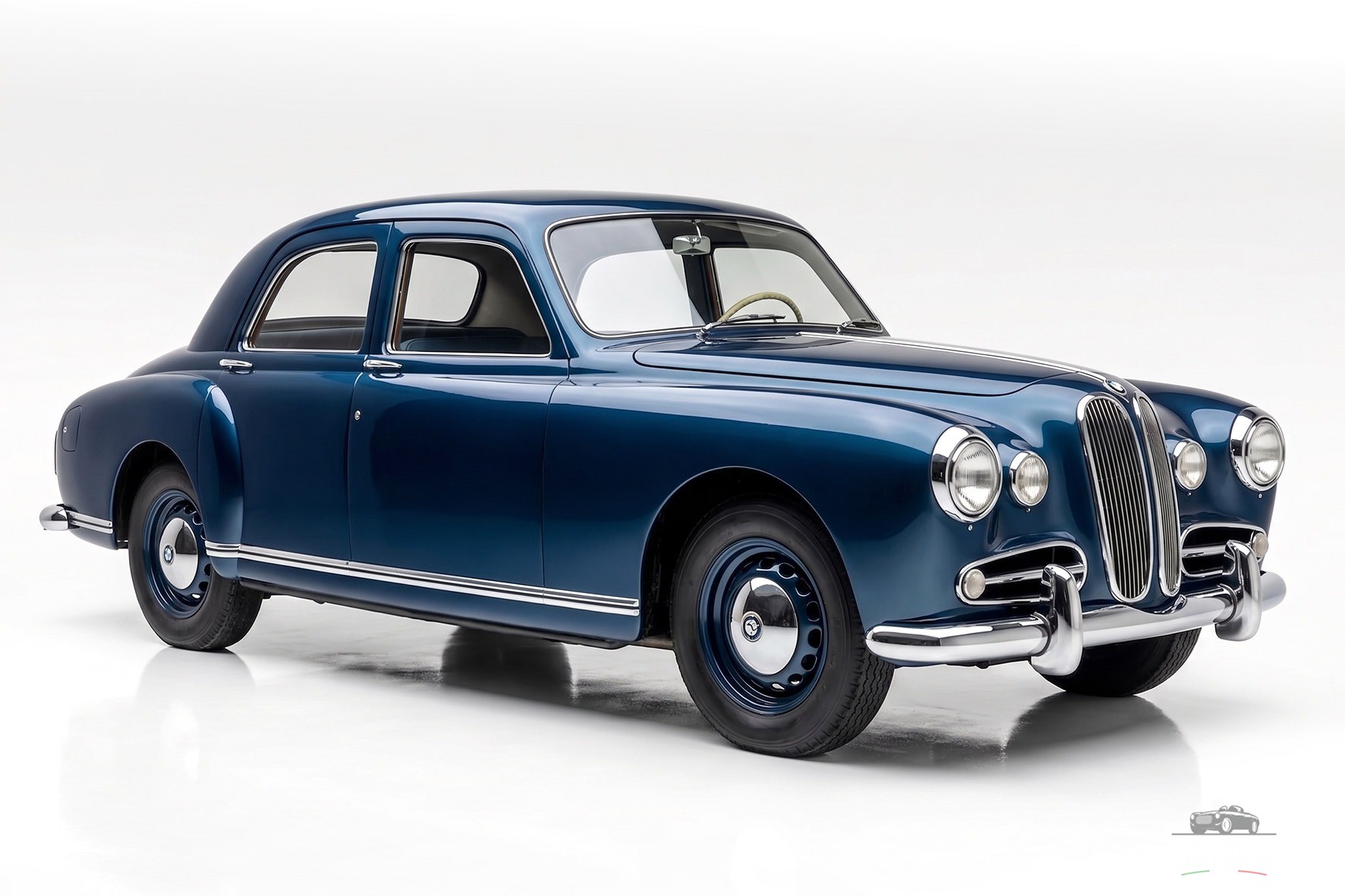
The BMW 501 Pininfarina design proposal represents a fascinating chapter in automotive design history. Introduced at the 1951 Frankfurt Auto Show, the BMW 501 was produced from 1952 to 1962. During the early stages of its development, BMW initially prepared an in-house design led by their designer Peter Schimanowski. However, there were reservations within BMW’s management regarding the design’s potential impact and market appeal. Seeking to explore alternative design directions, BMW enlisted the expertise of the renowned Italian design house Pininfarina. Known for their refined and innovative automotive aesthetics, Pininfarina was tasked with crafting a new design for the BMW 501. Their goal was to provide a fresh and striking alternative that could enhance the vehicle’s appeal and stand out in the competitive automotive landscape. Pininfarina’s design proposal for the BMW 501 was characterized by the elegant and sophisticated lines for which the company was famous. However, despite the creativity and craftsmanship inherent in Pininfarina’s work, the proposal was ultimately rejected by BMW’s management. The primary concern was the perceived similarity between Pininfarina’s design for the BMW 501 and their earlier design for the Alfa Romeo 6C. BMW’s management feared that the resemblance might lead to negative comparisons or diminish the distinctiveness of their own brand. As a result, BMW proceeded with their in-house design for the 501, which went on to become a significant model for the brand. Known for its luxury and engineering excellence, the BMW 501 established a strong post-war identity for BMW. Although Pininfarina’s design was not adopted, their involvement highlights the critical role of design expertise in shaping automotive history and the ongoing quest for innovation in vehicle design. 63 years later we will see the first offical Pininfarina BMW collaboration with the Gran Lusso Coupé.
02 / TECHNICAL IDENTITY
03 / DESIGN, BODY & SUPPLIERS
Coachbuilder / Design studio
Founded by Battista Pinin Farina in Turin in 1930, Pininfarina became one of the most influential Italian styling and coachbuilding houses, particularly through its work for Ferrari and other international manufacturers.
Explore record ↗07 / GALLERY
THE CONVERSATION
Comments 0