
Pininfarina
Founded by Battista Pinin Farina in Turin in 1930, Pininfarina became one of the most influential Italian styling and coachbuilding houses, particularly through its work for Ferrari and other international manufacturers.
Explore record ↗
2017Coachwork by Pininfarina
THE VEHICLE AT A GLANCE
THE PEOPLE BEHIND THE CAR
Founded by Battista Pinin Farina in Turin in 1930, Pininfarina became one of the most influential Italian styling and coachbuilding houses, particularly through its work for Ferrari and other international manufacturers.
Explore record ↗Fabio Filippini is an Italian automotive designer and former Pininfarina Design Director, associated with Renault, Cambiano, Sergio and H2 Speed.
Explore record ↗01 / THE STORY
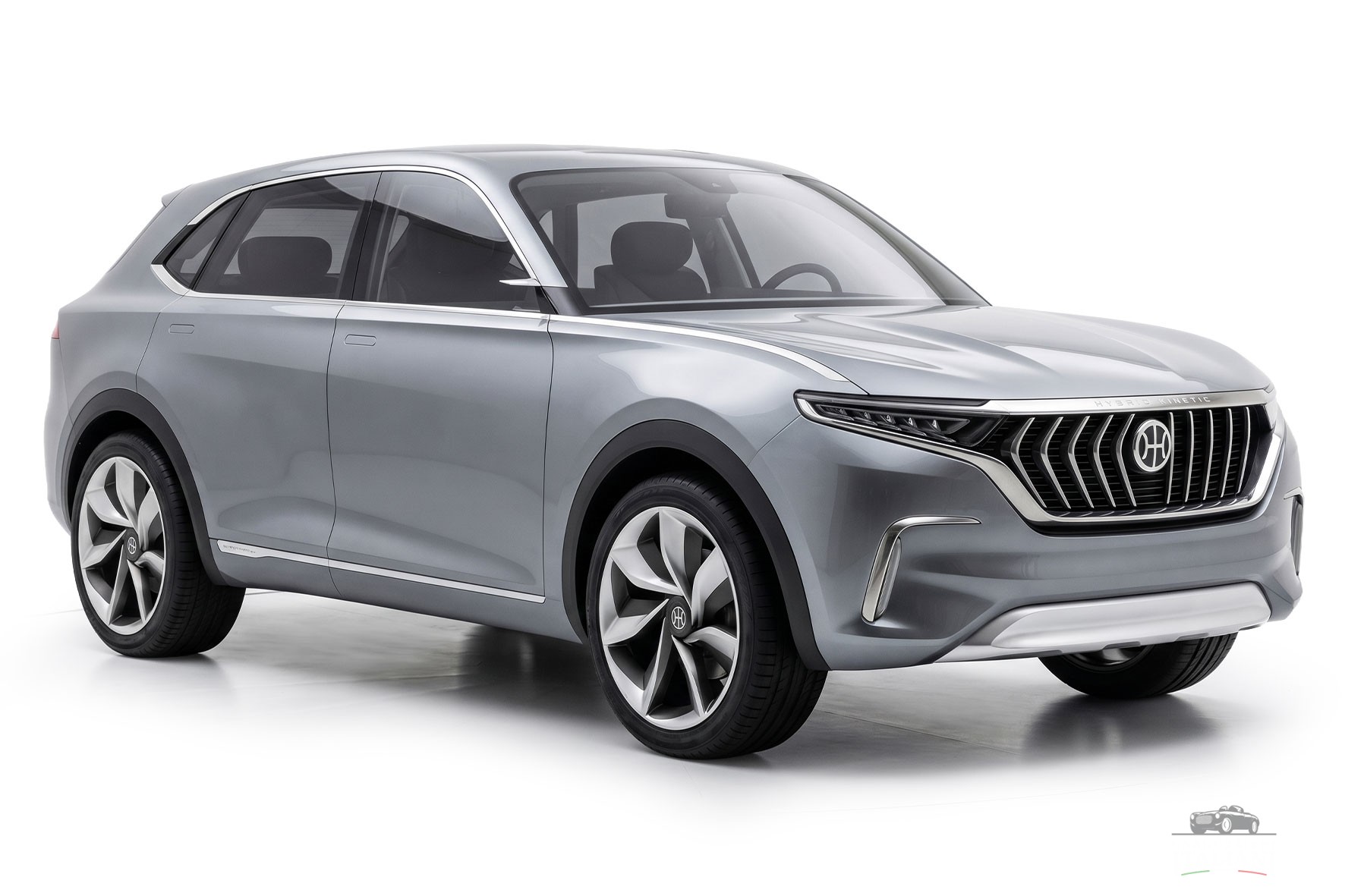
The HK K550 was a concept automobile developed jointly by Pininfarina and the Hybrid Kinetic Group, a technology firm based in Hong Kong. Revealed at the 2017 Shanghai Auto Show, the K550 was presented alongside two related prototypesthe larger K750 SUV and the H600 sedanas part of a proposed series of electrically powered vehicles designed to demonstrate the integration of sustainable propulsion systems with high-level automotive design. The K550 was conceived as a mid-size sport utility vehicle with a five-passenger configuration. Its exterior styling was executed by Pininfarina, adhering to the firm’s established principles of formal purity, aerodynamic clarity, and proportionate volume. The bodywork featured a prominent grille flanked by narrow LED headlamps, a tapered roofline, and smooth, uninterrupted surfaces that lent the vehicle a restrained but assertive presence. The visual language aligned with Pininfarina’s legacy of functional elegance, avoiding aggressive ornamentation while emphasizing surface continuity and stance. Mechanically, the K550 employed an electric powertrain supplemented by a microturbine generator intended to function as a range-extending unit. This configuration sought to address limitations commonly associated with battery-electric vehicles, including charging time and range anxiety. The theoretical range was claimed to exceed 1,000 kilometers. Technical specifications for motor output and battery capacity were not disclosed in production terms, as the vehicle remained a non-operational prototype. Internally, the K550 utilized a minimalist layout centered around digital instrumentation. A horizontal screen structure provided both driver information and infotainment functions, while seating and materials were designed to reflect both ergonomic precision and contemporary luxury. The cabin was intended to provide a technologically immersive yet visually subdued environment. The HK K550 was never placed into series production, and no operational fleet was developed. Its significance lies in its representation of early 21st-century conceptual explorations into electric mobility and the adaptation of advanced propulsion systems into vehicle architectures that retained conventional market appeal. The project marked a continuation of Pininfarina’s role as a design consultancy operating beyond national manufacturers, contributing to the visual and structural articulation of emerging automotive typologies.
02 / TECHNICAL IDENTITY
03 / DESIGN, BODY & SUPPLIERS
Coachbuilder / Design studio
Founded by Battista Pinin Farina in Turin in 1930, Pininfarina became one of the most influential Italian styling and coachbuilding houses, particularly through its work for Ferrari and other international manufacturers.
Explore record ↗Designer
Fabio Filippini is an Italian automotive designer and former Pininfarina Design Director, associated with Renault, Cambiano, Sergio and H2 Speed.
Explore record ↗04 / CHRONOLOGY
07 / GALLERY
THE CONVERSATION
Comments 0