
Pininfarina
Founded by Battista Pinin Farina in Turin in 1930, Pininfarina became one of the most influential Italian styling and coachbuilding houses, particularly through its work for Ferrari and other international manufacturers.
Explore record ↗
1957Coachwork by Pininfarina
THE VEHICLE AT A GLANCE
THE PEOPLE BEHIND THE CAR
Founded by Battista Pinin Farina in Turin in 1930, Pininfarina became one of the most influential Italian styling and coachbuilding houses, particularly through its work for Ferrari and other international manufacturers.
Explore record ↗01 / THE STORY
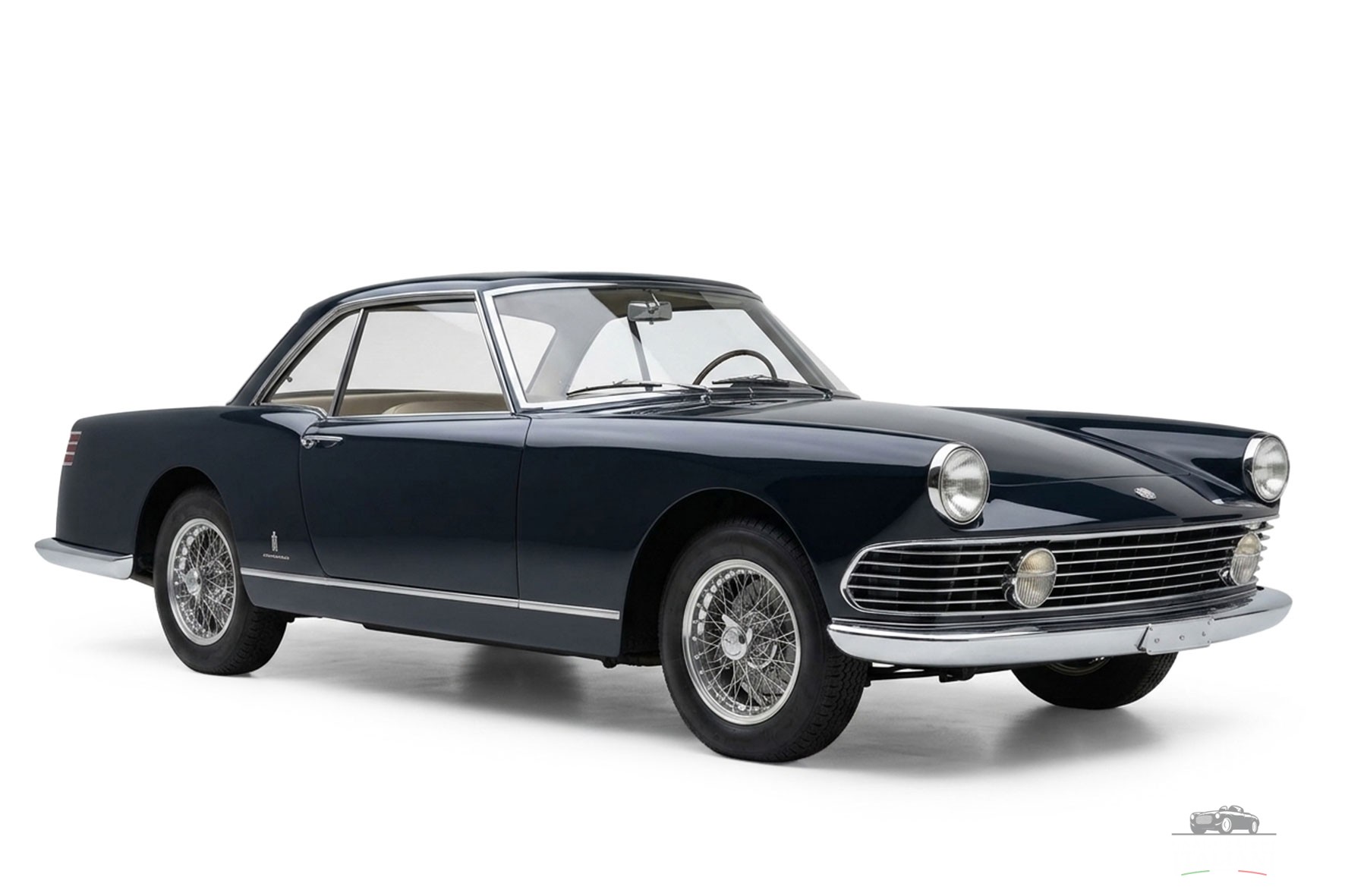
The Alfa Romeo 2000 Sestiere is a unique, one-off creation that embodies Pininfarina’s flair for design innovation. This American-style pillarless hardtop coupé is most notable for its unconventional door system: the doors slide backwards along the body towards the rear fender, providing easy access to the passenger compartment. This standout feature drew much attention, offering an avant-garde touch to the car’s overall design. The body design of the 2000 Sestiere closely resembles another Pininfarina creation, the Buick Lido Coupé. Both cars share similar proportions and stylistic cues, showcasing the Italian design house’s fascination with sleek, streamlined forms that blend elegance and boldness. The influence of the Buick Lido can be seen in the flowing lines and overall silhouette of the Sestiere, adding to its distinctive presence. At the front, the 2000 Sestiere boasts an unusual grille with seven full-width chrome horizontal strips framed by a bold structure that extends onto the fenders. While striking, this design deviated from Alfa Romeo’s typical aesthetic. The headlights, singular and faired, resembled those seen on models like the Ferrari 250 GT California LWB and certain 410 Superamericas, complemented by additional lights embedded into the grille. The rear of the car is equally eye-catching, featuring dual taillights arranged as a ribbon that wraps around the tip of the tailfins. All these elements highlighted the Sestiere’s role as a design experiment rather than a production-ready vehicle. Over time, the car’s appearance evolved, with changes in its color, headlight configuration, and the eventual removal of its signature sliding doors. The Alfa Romeo 2000 Sestiere debuted at three prominent auto shows, showcasing Pininfarina’s ongoing design revisions. At its first appearance in Turin in 1957, it featured plexiglass-covered headlights, additional grille lights, and a sliding driver’s door. Painted light grey, its interior was finished in light green leather. By Geneva in 1958, the sliding door was replaced with a conventional one, the headlights were pushed forward, and the car wore a darker color. Later that year in Turin, the car was presented in metallic blue with a smaller grille, while the additional lights made a return. Despite its ever-changing form, the Sestiere remains one of Pininfarina’s iconic “mobile laboratories,” a testament to experimental automotive design.
02 / TECHNICAL IDENTITY
03 / DESIGN, BODY & SUPPLIERS
Coachbuilder / Design studio
Founded by Battista Pinin Farina in Turin in 1930, Pininfarina became one of the most influential Italian styling and coachbuilding houses, particularly through its work for Ferrari and other international manufacturers.
Explore record ↗04 / CHRONOLOGY
07 / GALLERY
THE CONVERSATION
Comments 0