
Pininfarina
Founded by Battista Pinin Farina in Turin in 1930, Pininfarina became one of the most influential Italian styling and coachbuilding houses, particularly through its work for Ferrari and other international manufacturers.
Explore record ↗
1982Coachwork by Pininfarina
THE VEHICLE AT A GLANCE
THE PEOPLE BEHIND THE CAR
Founded by Battista Pinin Farina in Turin in 1930, Pininfarina became one of the most influential Italian styling and coachbuilding houses, particularly through its work for Ferrari and other international manufacturers.
Explore record ↗01 / THE STORY
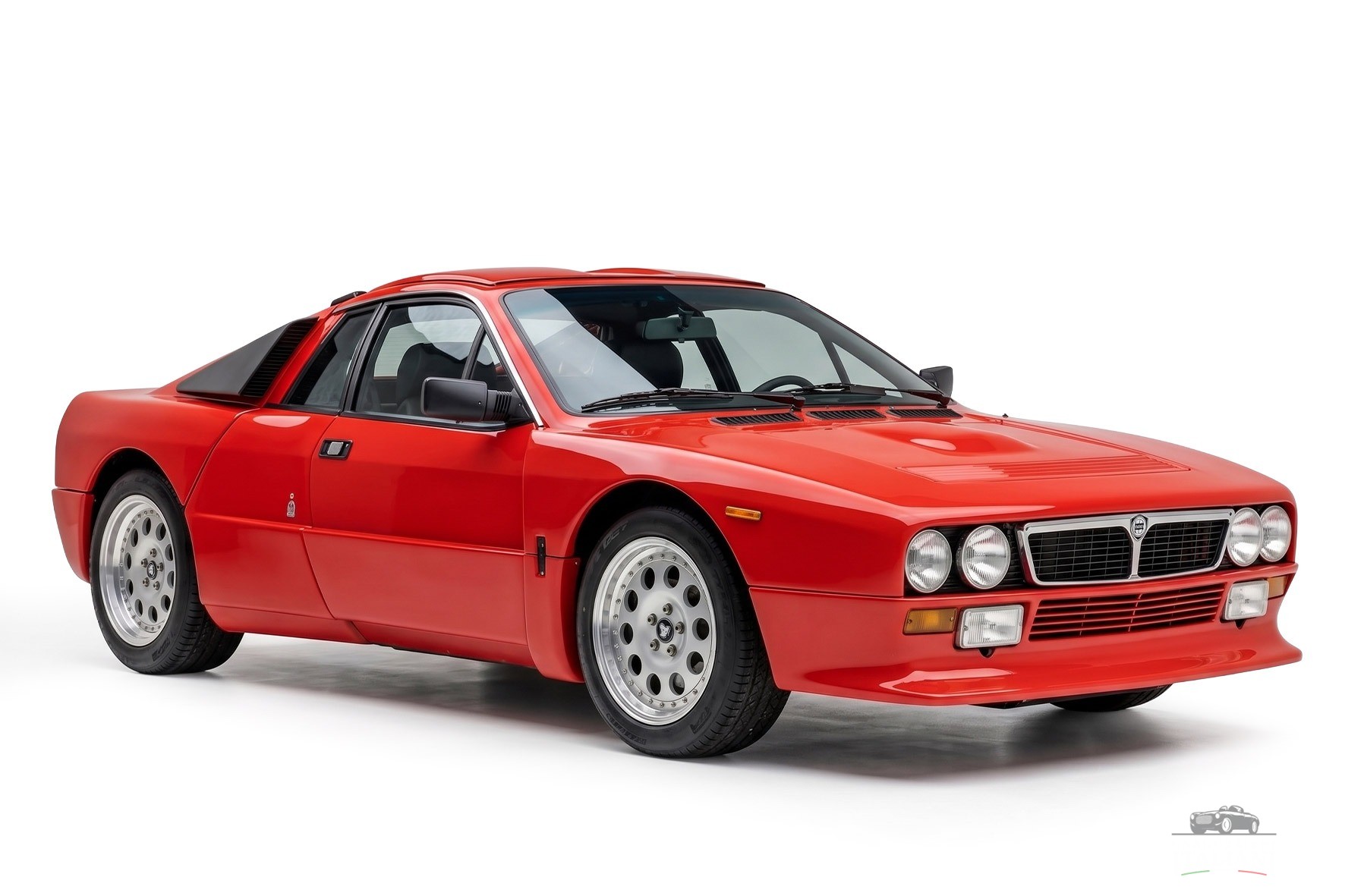
For the Lancia Rally 037 Stradale, the person in charge was Eng. Sergio Limone and it was Cesare Fiorio, the Fiat sporting director, who announced in 1981 the birth of a new model for rallying due to the changes in the regulations. The project was supported by a collaboration between Lancia, Pininfarina, Dallara and Abarth, taking up the evolution of the Fiat 030 built by Abarth in 1974 and was presented at the 59th Turin Motor Show in 1982. Basically it was a car designed in Abarth, based on the chassis of the Lancia Beta Montecarlo Turbo track produced by Dallara and bodied in Pininfarina. At the start of the project, it had not yet been decided which brand would be assigned to the car. The road version was not particularly successful and was not even sought, since only 200 specimens of the model were needed for homologation in group B. It was fitted with a four-cylinder in-line with a displacement of 1995 cm³, 16 valves and supercharged by a volumetric volumex supercharger that developed, as standard, 205 HP capable of pushing the 037 to over 220 km / h and reaching 100 km / h from standstill in less than 7 seconds. Compared to the “Montecarlo” it was also mounted longitudinally rather than transversely (variation made with different displacement and supercharging also on the contemporary Lancia LC1 endurance) The Lancia Rally 037, however, had the difficult task of replacing the glorious Fiat 131 Abarth Rally which had collected numerous successes. It was decided to discard the turbocharger system by virtue of a supercharger developed by Abarth and developed an extremely simple chassis equipped with wishbone suspension as for the track models instead of the MacPherson type as on the 131. To save time and on cost it was decided to use the existing chassis, the Lancia Beta Montecarlo, a sports version of the car that had had a great success, even in the USA where it was sold as the “Scorpion”. The frame was made at Dallara, starting from the base of the silhouette version that contested the world marque. The racing version of the Lancia Rally 037 captured numerous claims in the rallying field, including the 1983 world title. It was the last 2-wheel drive car to win the rally world championship and was also the only one to prevail over the more advanced all-wheel drive cars. It also constituted the testing ground for the Volumex + turbo engine of the future Lancia Delta S4 (Abarth SE038) with the prototype called “Mazinger”.
02 / TECHNICAL IDENTITY
03 / DESIGN, BODY & SUPPLIERS
Coachbuilder / Design studio
Founded by Battista Pinin Farina in Turin in 1930, Pininfarina became one of the most influential Italian styling and coachbuilding houses, particularly through its work for Ferrari and other international manufacturers.
Explore record ↗04 / CHRONOLOGY
05 / PEOPLE, COLLECTIONS & MUSEUMS
08 / GALLERY
THE CONVERSATION
Comments 0