
Pininfarina
Founded by Battista Pinin Farina in Turin in 1930, Pininfarina became one of the most influential Italian styling and coachbuilding houses, particularly through its work for Ferrari and other international manufacturers.
Explore record ↗
1990Coachwork by Pininfarina
THE VEHICLE AT A GLANCE
THE PEOPLE BEHIND THE CAR
Founded by Battista Pinin Farina in Turin in 1930, Pininfarina became one of the most influential Italian styling and coachbuilding houses, particularly through its work for Ferrari and other international manufacturers.
Explore record ↗01 / THE STORY
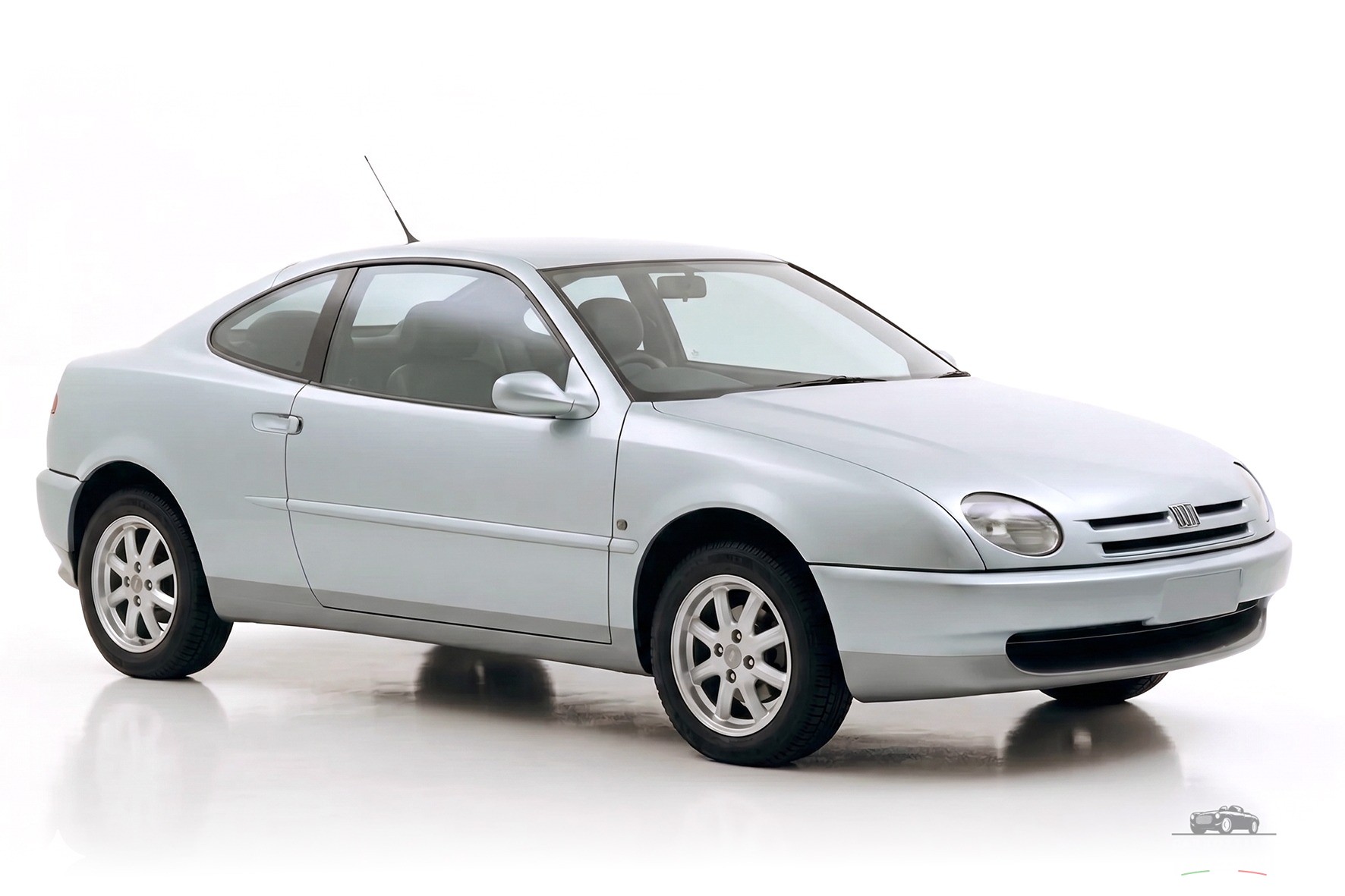
The Fiat Coupé Prototype Pininfarina represents the initial design proposal for the Fiat Coupé project 175, crafted by the renowned Italian design house Pininfarina. As the first reviewed concept in the development of what would become the iconic Fiat Coupé, this prototype showcased Pininfarina’s vision of a stylish and dynamic sports car, blending traditional Italian elegance with modern design cues. This first proposal took significant inspiration from the Peugeot 406 Coupé, another Pininfarina masterpiece known for its refined and flowing lines. The design featured a smooth, cohesive silhouette, characterized by a balanced combination of sporty aggression and classic coupe elegance. One of the most distinctive features of this initial prototype was the front end, which prominently showcased two round headlights, giving the car a characteristic face that echoed the classic European coupe styling of the 1990s. The overall shape of the Pininfarina prototype was streamlined and harmonious, with soft curves and a flowing roofline that seamlessly merged with the rear, reminiscent of the aesthetic seen on the Peugeot 406 Coupé. The prototype’s clean side profile, marked by a slightly curved beltline and subtle contours, contributed to its graceful and athletic appearance. However, as the project evolved, Fiat commissioned further design proposals, leading to a second and a third proposal inspired by Chris Bangle’s more radical and edgy design philosophy. These subsequent iterations featured sharper lines, a more aggressive stance, and a distinctive squared, narrow grille integrated with the headlights, reflecting a departure from Pininfarina’s initial rounded and flowing aesthetic. Ultimately, the production version of the Fiat Coupé, launched in 1993, embraced the bold and controversial design language conceived by Chris Bangle, which was known for its daring angularity and unique design elements like the iconic “slash” line along the sides. While Pininfarina’s first proposal remained a conceptual piece, it played a crucial role in shaping the early vision for the project, illustrating the diverse stylistic directions considered for Fiat’s modern sports coupe. The Fiat Coupé Prototype Pininfarina remains an intriguing and lesser-known chapter in the development of the Fiat Coupé, representing a more classic and elegant take on the project before the final production model took on a distinctly more avant-garde character. This initial proposal highlights Pininfarina’s approach to blending tradition with modernity, standing as a testament to the creative process behind one of Fiat’s most iconic sports cars of the 1990s.
02 / TECHNICAL IDENTITY
03 / DESIGN, BODY & SUPPLIERS
Coachbuilder / Design studio
Founded by Battista Pinin Farina in Turin in 1930, Pininfarina became one of the most influential Italian styling and coachbuilding houses, particularly through its work for Ferrari and other international manufacturers.
Explore record ↗07 / GALLERY
THE CONVERSATION
Comments 0