
Pininfarina
Founded by Battista Pinin Farina in Turin in 1930, Pininfarina became one of the most influential Italian styling and coachbuilding houses, particularly through its work for Ferrari and other international manufacturers.
Explore record ↗
1991Coachwork by Pininfarina
THE VEHICLE AT A GLANCE
THE PEOPLE BEHIND THE CAR
Founded by Battista Pinin Farina in Turin in 1930, Pininfarina became one of the most influential Italian styling and coachbuilding houses, particularly through its work for Ferrari and other international manufacturers.
Explore record ↗01 / THE STORY
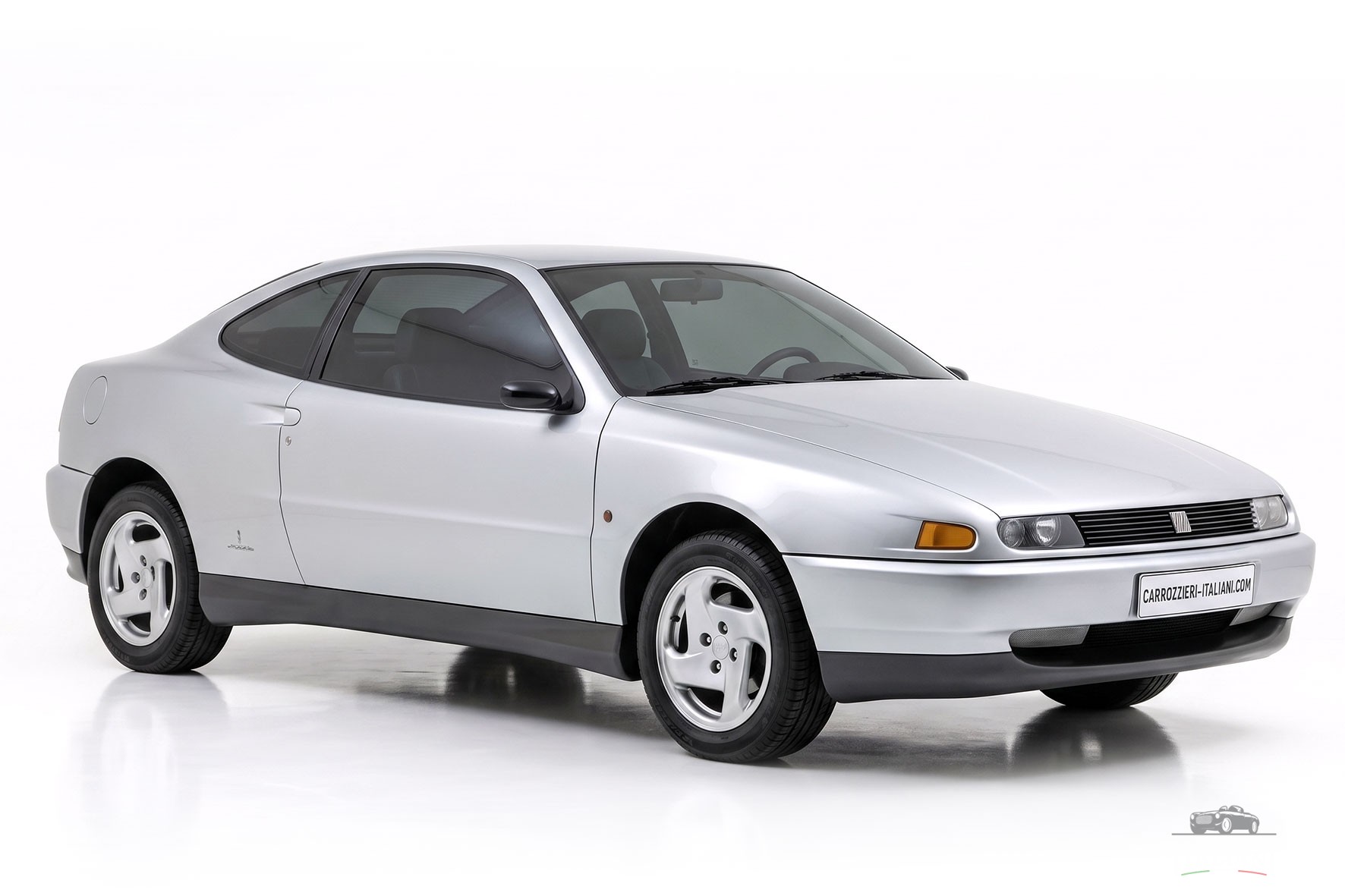
The Fiat Coupé Prototype Pininfarina represents an intriguing chapter in the evolution of Fiat’s design language, blending sharp, modern aesthetics with Pininfarina’s signature elegance. This prototype marked a departure from the more rounded and flowing lines traditionally associated with Fiat’s earlier concepts, adopting a more angular and assertive stance that reflected contemporary design trends. In this iteration, Pininfarina took inspiration from Chris Bangle’s bold and geometric design philosophy, which was gaining traction in the automotive industry during the 1990s. As a result, the Fiat Coupé Prototype featured sharper lines and more defined edges compared to the earlier, more rounded proposal previously presented by Pininfarina. This reimagined aesthetic aimed to convey a sense of dynamism and modernity while maintaining a sporty and sophisticated profile. One of the most notable aspects of the design was its side profile, which bore a strong resemblance to the Peugeot 406 Coupé. This similarity was evident in the elongated, flowing roofline that gracefully merged with the rear, giving the car a coupe-like silhouette while preserving an air of understated elegance. The clean, unbroken lines of the profile lent the car a streamlined and athletic appearance, balancing visual dynamism with a sense of proportion. At the front, the Fiat Coupé Prototype featured a distinctive squared, narrow grille, integrated seamlessly with the headlights. This cohesive design element gave the front fascia a more aggressive and purposeful look, moving away from the softer, rounded aesthetics typical of previous Fiat models. The headlights themselves were sleek and narrow, emphasizing the car’s contemporary and cutting-edge persona. The prototype’s overall design was a clear departure from Pininfarina’s first proposal, which had featured softer curves and a more classic coupe silhouette. By contrast, this revised version embodied a more modern and daring design philosophy, appealing to a younger and more style-conscious audience. The sharper lines and bold styling choices positioned the prototype as a forward-thinking concept, aimed at redefining Fiat’s image in the coupe segment. Pininfarina’s decision to embrace a sharper, more geometric approach with this prototype reflected the broader shift in automotive design during the late 1990s, where edgier and more aggressive aesthetics were becoming increasingly popular. Although this specific prototype did not progress to production, it left an indelible mark as a bold design exercise that pushed the boundaries of Fiat’s styling direction.
02 / TECHNICAL IDENTITY
03 / DESIGN, BODY & SUPPLIERS
Coachbuilder / Design studio
Founded by Battista Pinin Farina in Turin in 1930, Pininfarina became one of the most influential Italian styling and coachbuilding houses, particularly through its work for Ferrari and other international manufacturers.
Explore record ↗07 / GALLERY
THE CONVERSATION
Comments 0