
Pininfarina
Founded by Battista Pinin Farina in Turin in 1930, Pininfarina became one of the most influential Italian styling and coachbuilding houses, particularly through its work for Ferrari and other international manufacturers.
Explore record ↗
1953Coachwork by Pininfarina
THE VEHICLE AT A GLANCE
THE PEOPLE BEHIND THE CAR
Founded by Battista Pinin Farina in Turin in 1930, Pininfarina became one of the most influential Italian styling and coachbuilding houses, particularly through its work for Ferrari and other international manufacturers.
Explore record ↗01 / THE STORY
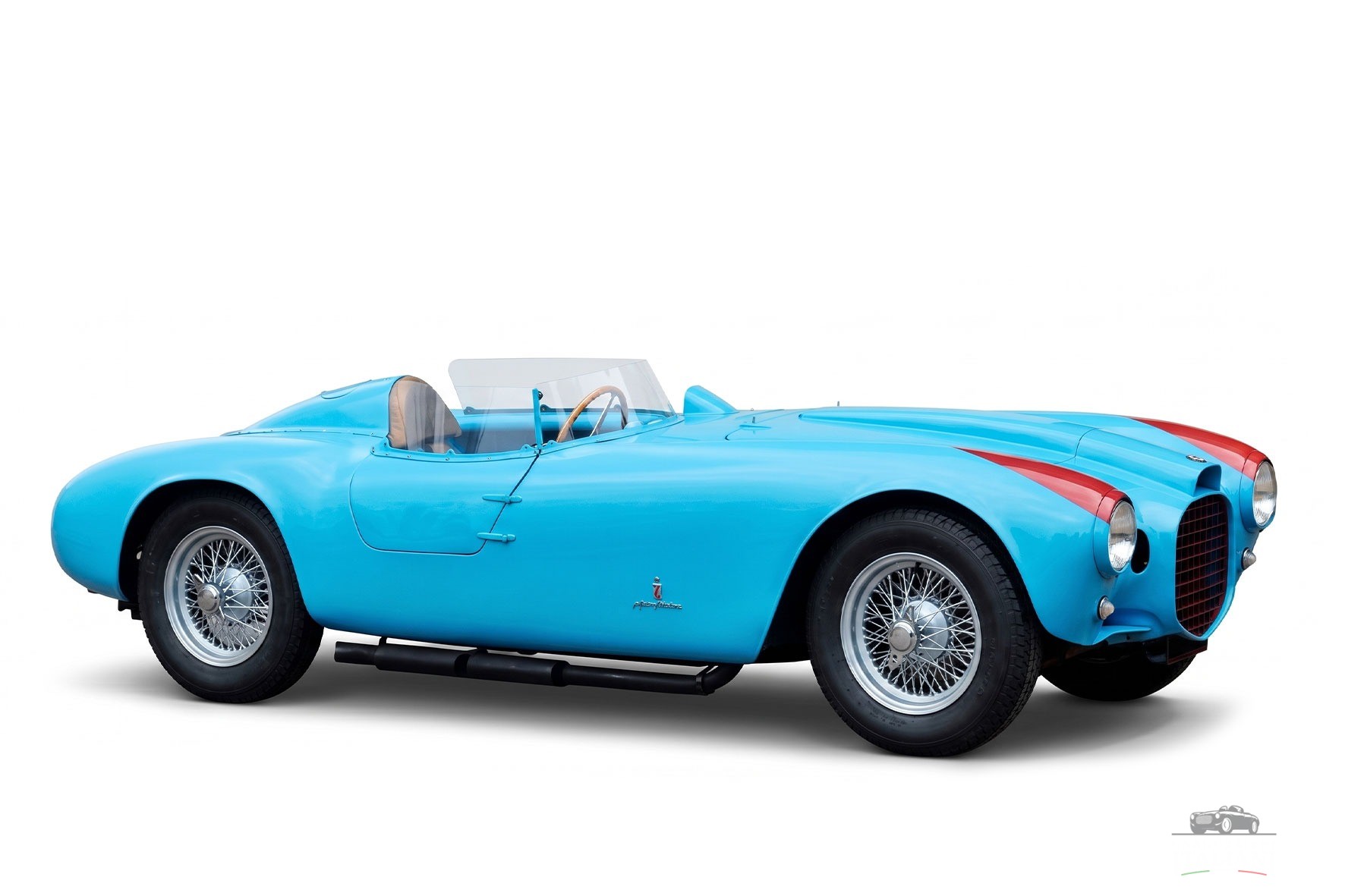
The Lancia D23 designed by Pininfarina made a remarkable debut at the Gran Premio di Monza for sports cars, securing a second-place finish with Felice Bonetto at the wheel. This auspicious start marked the beginning of a storied yet poignant chapter in Lancia’s racing history. The Lancia racing team ambitiously entered five cars in the grueling Carrera Panamericana race in Mexico: two D23s, including this one driven by Giovanni Bracco and another by Eugenio Castellotti, alongside three new D24s piloted by Juan Manuel Fangio, Felice Bonetto, and Piero Taruffi. The race, however, was marred by tragedy during the fourth leg when Bonetto suffered a fatal accident, casting a shadow over Lancia’s triumphant ‘1-2-3’ finish. Fangio claimed victory, Taruffi came second, and Castellotti secured third place with his D23. Unfortunately, Bracco was forced to retire due to a broken rear wheel. An exceptional feature of this car is its blue color, an unusual choice for an Italian racing car, which was applied for its 1953 debut at Monza. This particular D23 is the only remaining original model, adding to its historical significance. Gianni Lancia, the ambitious son of company founder Vincenzo Lancia, took over the management after his father’s death in 1937. Determined to establish Lancia’s prowess in racing, Gianni collaborated with designer Vittorio Jano, formerly of Alfa Romeo. Together, they embarked on an ambitious racing program. After World War II, Gianni developed a racer based on the new Aurelia GT, the D20 coupé. Although Lancia secured its first victory at the Targa Florio, the cars performed poorly at Le Mans. In response, Lancia modified the engine and chassis of two D20s, removing the roof to create an open racer: the D23. Later, two more D20s were upgraded to D23 specifications and equipped with a De Dion rear axle, significantly improving handling. Despite these advancements, Gianni Lancia’s costly racing program nearly drove the company to bankruptcy. Nevertheless, the legacy of the Lancia D23 endures, celebrated for its engineering brilliance, racing successes, and the poignant reminder of the sacrifices made in the pursuit of automotive excellence.
02 / TECHNICAL IDENTITY
03 / DESIGN, BODY & SUPPLIERS
Coachbuilder / Design studio
Founded by Battista Pinin Farina in Turin in 1930, Pininfarina became one of the most influential Italian styling and coachbuilding houses, particularly through its work for Ferrari and other international manufacturers.
Explore record ↗05 / PEOPLE, COLLECTIONS & MUSEUMS
07 / CHASSIS REGISTER
08 / GALLERY
THE CONVERSATION
Comments 0