
Zagato
Founded in Milan in 1919 by Ugo Zagato, the coachbuilding house developed lightweight aerodynamic bodies inspired by aircraft construction, creating distinctive racing and grand touring automobiles.
Explore record ↗
1950Coachwork by Zagato
THE VEHICLE AT A GLANCE
THE PEOPLE BEHIND THE CAR
Founded in Milan in 1919 by Ugo Zagato, the coachbuilding house developed lightweight aerodynamic bodies inspired by aircraft construction, creating distinctive racing and grand touring automobiles.
Explore record ↗01 / THE STORY
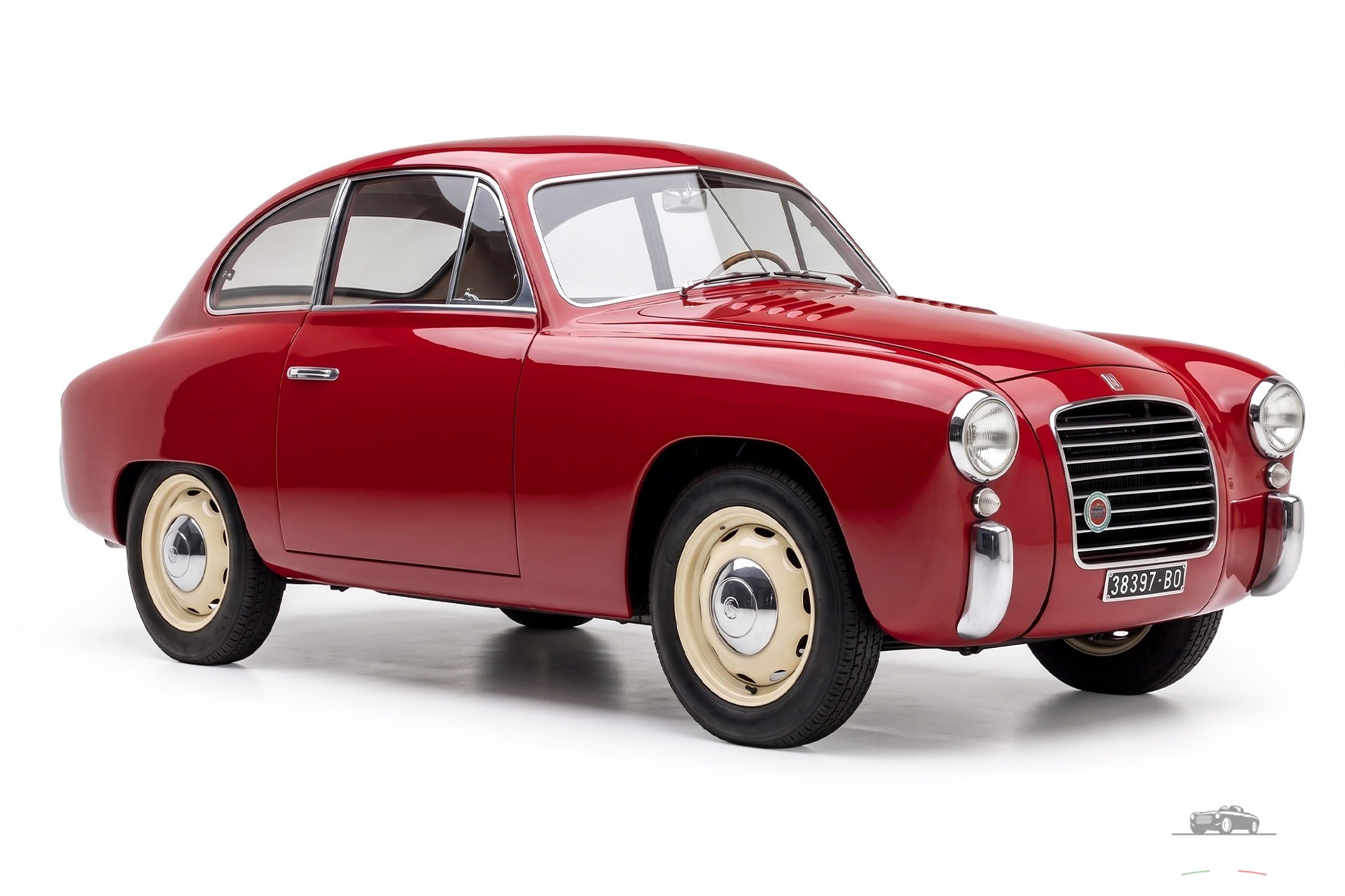
The Fiat 750 Zagato MM was a limited-production competition car derived from the Fiat 500C platform and developed in collaboration with Abarth and Zagato in the early 1950s. The model was conceived as a lightweight sports coupe, designed specifically for long-distance endurance events such as the Mille Miglia. The bodywork was executed by Carrozzeria Zagato and is characterized by its compact proportions, aerodynamic profile, and distinctive detailing including horizontal rear wheel arch cutouts, introduced in later examples to reduce drag and accommodate racing modifications. Zagato applied its signature lightweight construction methods, utilizing hand-formed aluminum panels over a tubular framework to reduce overall mass and improve handling performance. The styling incorporated a fastback roofline and restrained ornamentation in line with Zagato’s minimalist design ethos during the postwar period. The mechanical configuration included a 750 cc four-cylinder engine, supplied and tuned by Abarth, fitted with twin Solex carburetors, high-performance intake manifolds, and reworked cylinder heads. These enhancements significantly increased output over the standard Fiat specification, providing competitive performance in its class. The transmission and suspension systems were modified accordingly for motorsport use, making the Fiat 750 Zagato MM suitable for both circuit and road endurance events. Produced in extremely limited numbers, the 750 Zagato MM exemplified the collaborative engineering efforts among small Italian firms during the early 1950s, when coachbuilders and tuning houses worked with major manufacturers to develop specialized sports variants. Surviving examples are rare and historically significant, often with documented racing provenance and long-term custodianship by collectors.
02 / TECHNICAL IDENTITY
03 / DESIGN, BODY & SUPPLIERS
Coachbuilder / Design studio
Founded in Milan in 1919 by Ugo Zagato, the coachbuilding house developed lightweight aerodynamic bodies inspired by aircraft construction, creating distinctive racing and grand touring automobiles.
Explore record ↗07 / GALLERY
THE CONVERSATION
Comments 0