
Castagna
The Castagna coachbuilding tradition dates to nineteenth-century Milan, when Carlo Castagna took over an established carriage business. Carrozzeria Castagna later became renowned for luxury bespoke automotive bodies.
Explore record ↗
1950Coachwork by Castagna
THE VEHICLE AT A GLANCE
THE PEOPLE BEHIND THE CAR
The Castagna coachbuilding tradition dates to nineteenth-century Milan, when Carlo Castagna took over an established carriage business. Carrozzeria Castagna later became renowned for luxury bespoke automotive bodies.
Explore record ↗Giuseppe Seregni was an Italian automotive designer associated with Carrozzeria Touring and its coachbuilding design practice.
Explore record ↗01 / THE STORY
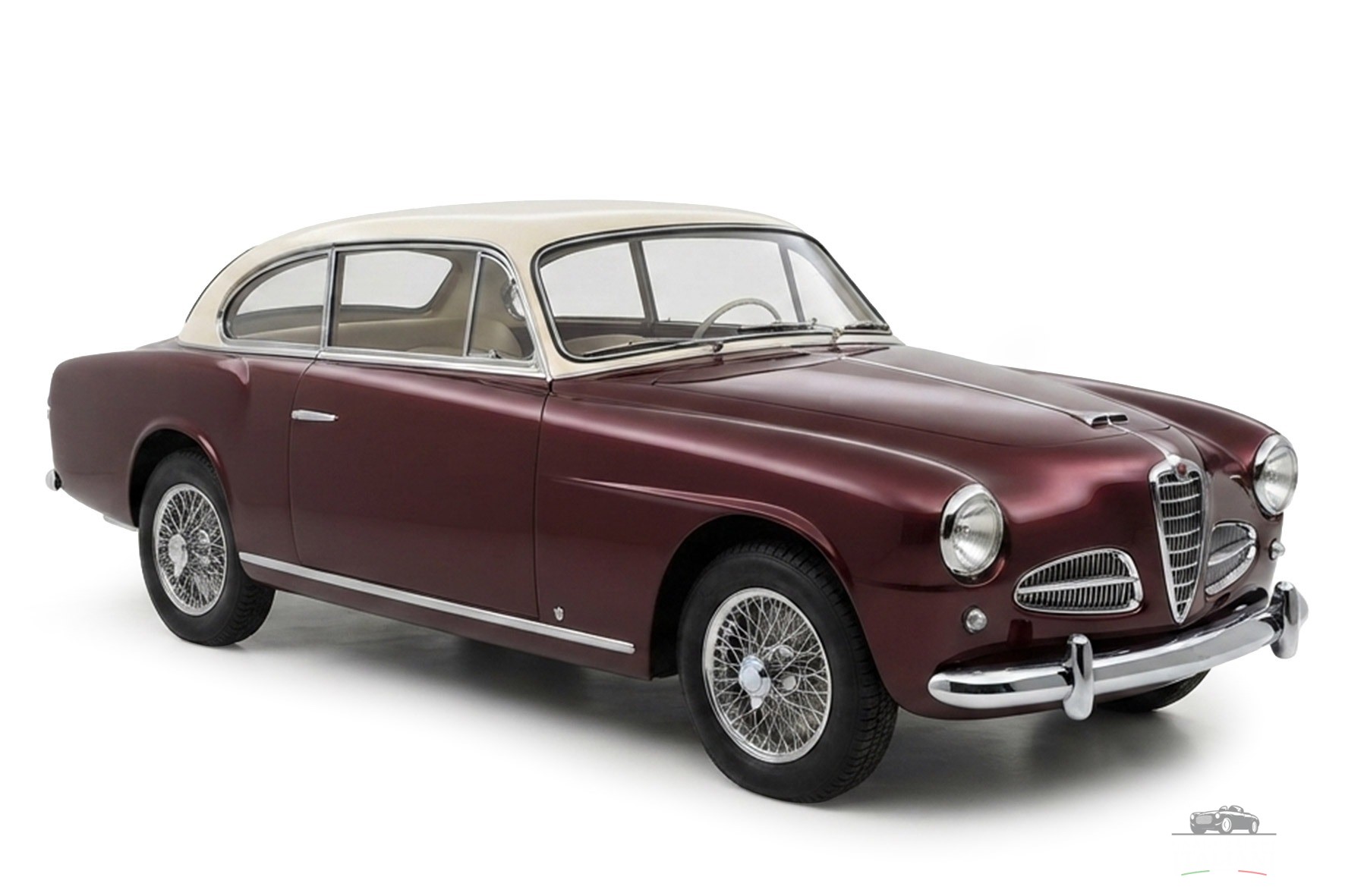
Alfa Romeo 1900 Castagna was built by Castagna in 1950 and designed by Giuseppe Seregni. It was based on Alfa Romeo’s 1900 series, whose chassis accommodated several body styles. The car used a streamlined coachbuilt body with carefully worked proportions and construction. Lightweight materials formed part of its bodywork. The Alfa Romeo 1900 Castagna combined the 1900 mechanical basis with Italian coachbuilt styling in the early postwar period.
Castagna developed the bodywork through a coachbuilding process centred on proportions and construction methods. Its flowing silhouette followed the mid-century Italian design language described for the car. The body’s lightweight construction formed part of its character, alongside the close attention paid to visual form and fabrication. The Castagna treatment stood on the robust 1900 chassis, which provided the foundation for the car’s configuration. This chassis was used for a range of bodies within the wider Alfa Romeo 1900 series. The exterior treatment brought a distinct coachbuilt form to that established mechanical platform.
The 1900 mechanical layout centred on an inline-four engine. Its robust chassis carried the Castagna bodywork, while the suspension was engineered for stability and comfort. The engine, chassis and suspension were specified to balance power and efficiency. The car was suited to urban use as well as longer journeys. These elements defined the mechanical configuration beneath the coachbuilt body and placed the Castagna design within the broader Alfa Romeo 1900 range.
Production data for the Alfa Romeo 1900 series indicates limited output. Examples of the Castagna-bodied car have appeared at automotive events, where the bodywork and craftsmanship have been presented to later audiences. Surviving examples are recorded in private collections and institutional archives. They provide material for research into postwar Italian coachbuilding, the work of Castagna, and Giuseppe Seregni’s design. The surviving cars retain the combination of an Alfa Romeo 1900 mechanical basis and Castagna-built bodywork.
The Alfa Romeo 1900 Castagna remains documented as a 1950 Castagna coachbuilt design by Giuseppe Seregni. Its recorded examples preserve the streamlined body, lightweight materials, inline-four mechanical layout and robust chassis configuration described for the car. Private collections and institutional archives continue to hold surviving examples.
02 / TECHNICAL IDENTITY
03 / DESIGN, BODY & SUPPLIERS
Coachbuilder / Design studio
The Castagna coachbuilding tradition dates to nineteenth-century Milan, when Carlo Castagna took over an established carriage business. Carrozzeria Castagna later became renowned for luxury bespoke automotive bodies.
Explore record ↗Attributed designer
Giuseppe Seregni was an Italian automotive designer associated with Carrozzeria Touring and its coachbuilding design practice.
Explore record ↗07 / GALLERY
THE CONVERSATION
Comments 0