
Pininfarina
Founded by Battista Pinin Farina in Turin in 1930, Pininfarina became one of the most influential Italian styling and coachbuilding houses, particularly through its work for Ferrari and other international manufacturers.
Explore record ↗
1952Coachwork by Pininfarina
THE VEHICLE AT A GLANCE
THE PEOPLE BEHIND THE CAR
Founded by Battista Pinin Farina in Turin in 1930, Pininfarina became one of the most influential Italian styling and coachbuilding houses, particularly through its work for Ferrari and other international manufacturers.
Explore record ↗01 / THE STORY
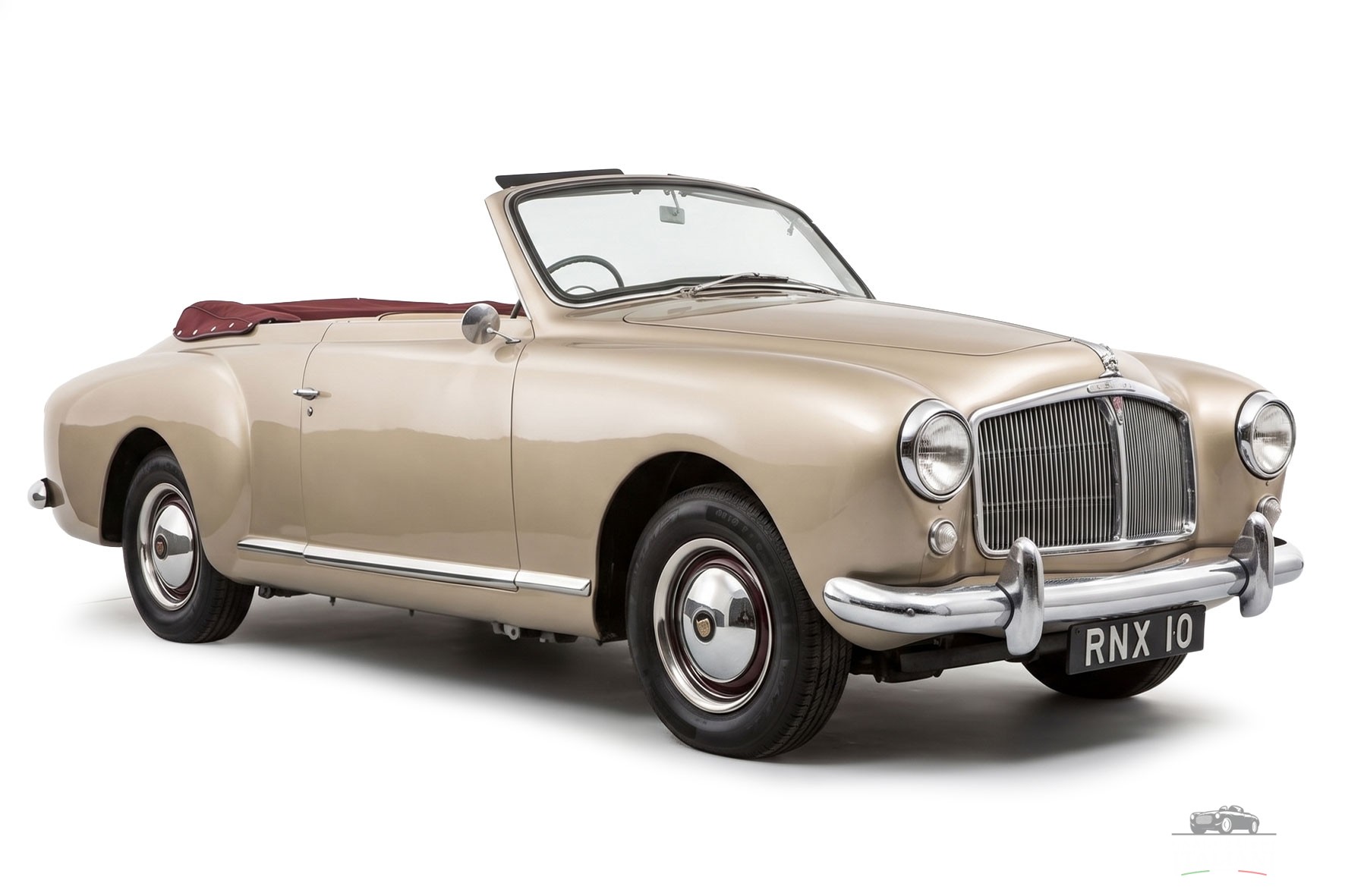
The Rover P4 Cabriolet by Pinin Farina was a one-off open version of Rover’s P4 saloon, built in Turin and presented at the Earls Court Motor Show in 1953. It was part of Rover’s early-1950s attempt to explore a more elegant and international image for the P4 range, at a time when the company was still known mainly for conservative luxury saloons and the rapidly successful Land-Rover. Rover approached Pinin Farina in late 1951. A right-hand-drive Rover 75 export chassis and related components were sent from Solihull to Turin in 1952. The car was completed just in time for Earls Court, where it attracted strong attention. The Duke of Edinburgh reportedly showed interest in acquiring or using the car. The cabriolet used the general P4 mechanical base but received a completely new body by Pinin Farina. Compared with the standard Rover saloon, it was longer, lower and more formal in proportion. The front featured a wider interpretation of Rover’s grille, while the sides were cleaner and more Italian in treatment. The car used frameless side glass and an all-steel body, unlike the production P4 saloon, which used aluminium door skins. The interior also differed from the standard Rover. Instead of the usual timber dashboard, Pinin Farina designed a painted dashboard, giving the cabin a more continental character. The car was finished in bronze with beige leather and a dark maroon hood when shown in 1953. Rover considered limited production, but the project was not continued. The cost of tooling and the purchase tax applied to expensive luxury cars made the idea commercially difficult. A second open car was later built in Britain by Mulliner, in aluminium, to evaluate whether the design could be produced more practically. The Pinin Farina cabriolet was retained by Rover for appraisal and later sold in 1955. It was subsequently updated with a Rover 90 engine and later modified to 110 specification with disc brakes. Today it survives as one of the most unusual postwar Rover prototypes and an important example of Pinin Farina’s work on British chassis.
02 / TECHNICAL IDENTITY
03 / DESIGN, BODY & SUPPLIERS
Coachbuilder / Design studio
Founded by Battista Pinin Farina in Turin in 1930, Pininfarina became one of the most influential Italian styling and coachbuilding houses, particularly through its work for Ferrari and other international manufacturers.
Explore record ↗04 / CHRONOLOGY
07 / GALLERY
THE CONVERSATION
Comments 0