
Pininfarina
Founded by Battista Pinin Farina in Turin in 1930, Pininfarina became one of the most influential Italian styling and coachbuilding houses, particularly through its work for Ferrari and other international manufacturers.
Explore record ↗
1962Coachwork by Pininfarina
THE VEHICLE AT A GLANCE
THE PEOPLE BEHIND THE CAR
Founded by Battista Pinin Farina in Turin in 1930, Pininfarina became one of the most influential Italian styling and coachbuilding houses, particularly through its work for Ferrari and other international manufacturers.
Explore record ↗01 / THE STORY
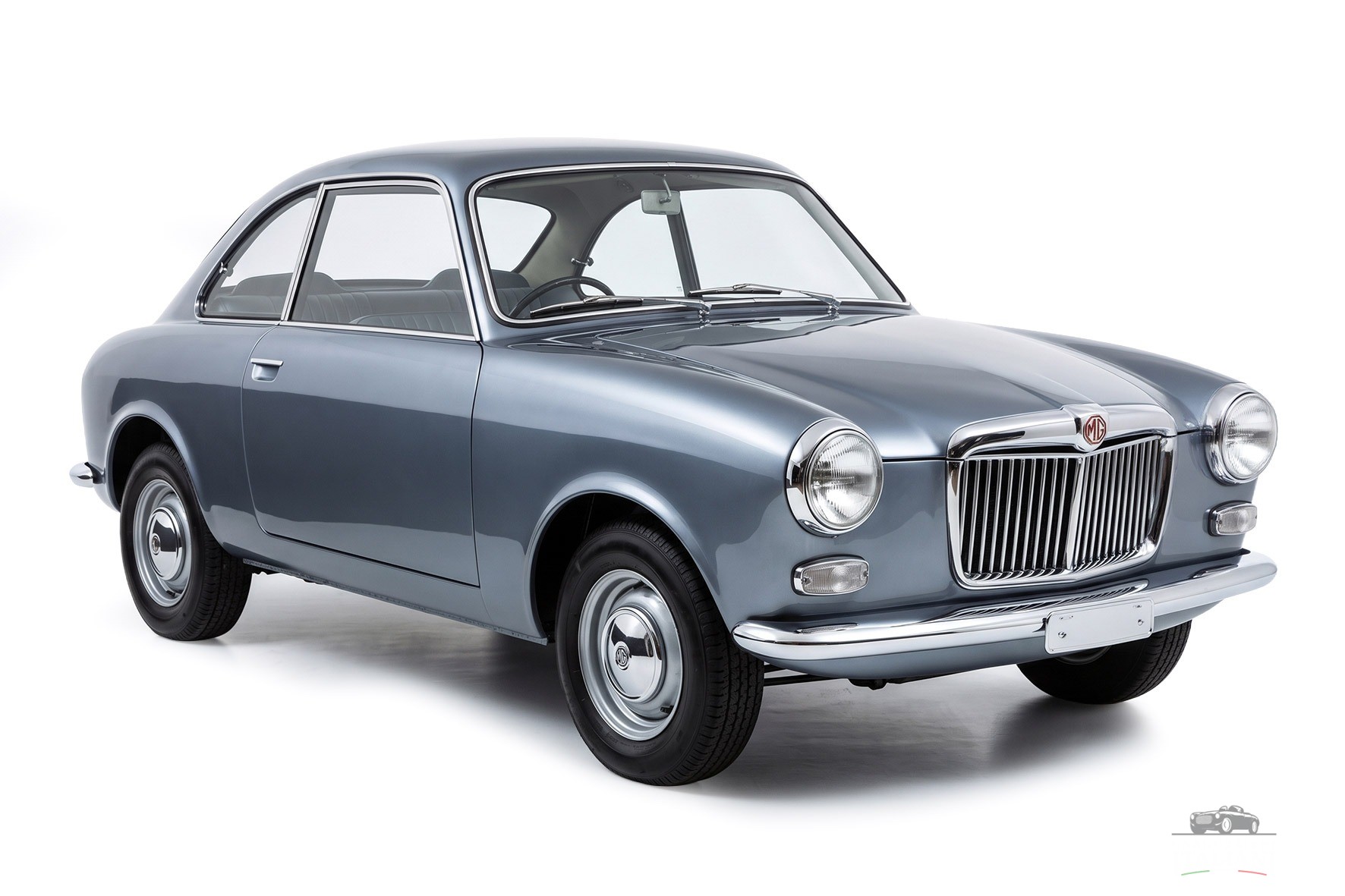
The MG ADO 35 is a prototype coupé developed during the early 1960s as part of an internal design study by the British Motor Corporation (BMC). The project was designated ADO 35 under BMC’s “Amalgamated Drawing Office” nomenclature. It was intended to explore the feasibility of a compact, front-wheel-drive sports coupé based on the engineering layout of the Mini. The vehicle was constructed in collaboration with the Italian design firm Pininfarina, which was engaged to provide body design and styling expertise. The platform for the ADO 35 was derived from the Mini’s transverse engine, front-wheel-drive architecture. While detailed mechanical specifications remain sparse, it is presumed that the prototype utilized the A-series inline-four engine, coupled to a four-speed manual transmission. The mechanical components were consistent with BMC’s standard engineering practices of the period, with modifications primarily concerning the vehicle’s dimensions and body structure. The body was fabricated from aluminum and featured a low, fastback profile with minimal ornamentation, in keeping with contemporary Italian design conventions. Notable design elements included a recessed grille, flush headlamps, and a continuous beltline terminating in a sharply inclined rear deck. Various Italian-sourced components, such as Ferrari door locks and window mechanisms, were incorporated into the build, underscoring the cross-national nature of the collaboration. Only one example of the ADO 35 was completed. The vehicle was not exhibited publicly and remained a confidential internal study. It did not progress to production, and the design did not directly inform any subsequent BMC or MG production models. The prototype was later stored and fell into disrepair before resurfacing in the late 20th century in unrestored condition. Restoration was attempted but remained incomplete due to the unavailability of specific components. The MG ADO 35 represents an intersection of British automotive engineering and Italian design during a period of exploration in small car development. Although it was never commercially realized, the vehicle remains a notable example of prototype work conducted under private industrial initiative, and a record of collaborative design practice between BMC and Pininfarina.
02 / TECHNICAL IDENTITY
03 / DESIGN, BODY & SUPPLIERS
Coachbuilder / Design studio
Founded by Battista Pinin Farina in Turin in 1930, Pininfarina became one of the most influential Italian styling and coachbuilding houses, particularly through its work for Ferrari and other international manufacturers.
Explore record ↗07 / GALLERY
THE CONVERSATION
Comments 0