
Ghia
Founded in Turin in 1916, Carrozzeria Ghia became a major Italian design and coachbuilding house, creating bespoke automobiles, prototypes and international collaborations across the twentieth century.
Explore record ↗
1973Coachwork by Ghia
THE VEHICLE AT A GLANCE
THE PEOPLE BEHIND THE CAR
Founded in Turin in 1916, Carrozzeria Ghia became a major Italian design and coachbuilding house, creating bespoke automobiles, prototypes and international collaborations across the twentieth century.
Explore record ↗Tom Tjaarda \(1934–2017\) was an American-born designer who built his career in Turin. At Pininfarina he designed the Ferrari 330 GT 2+2 and Fiat 124 Spider\; his later work at Ghia included the De Tomaso Pantera. He also created the Chevrolet Corvette Rondine concept.
Explore record ↗01 / THE STORY
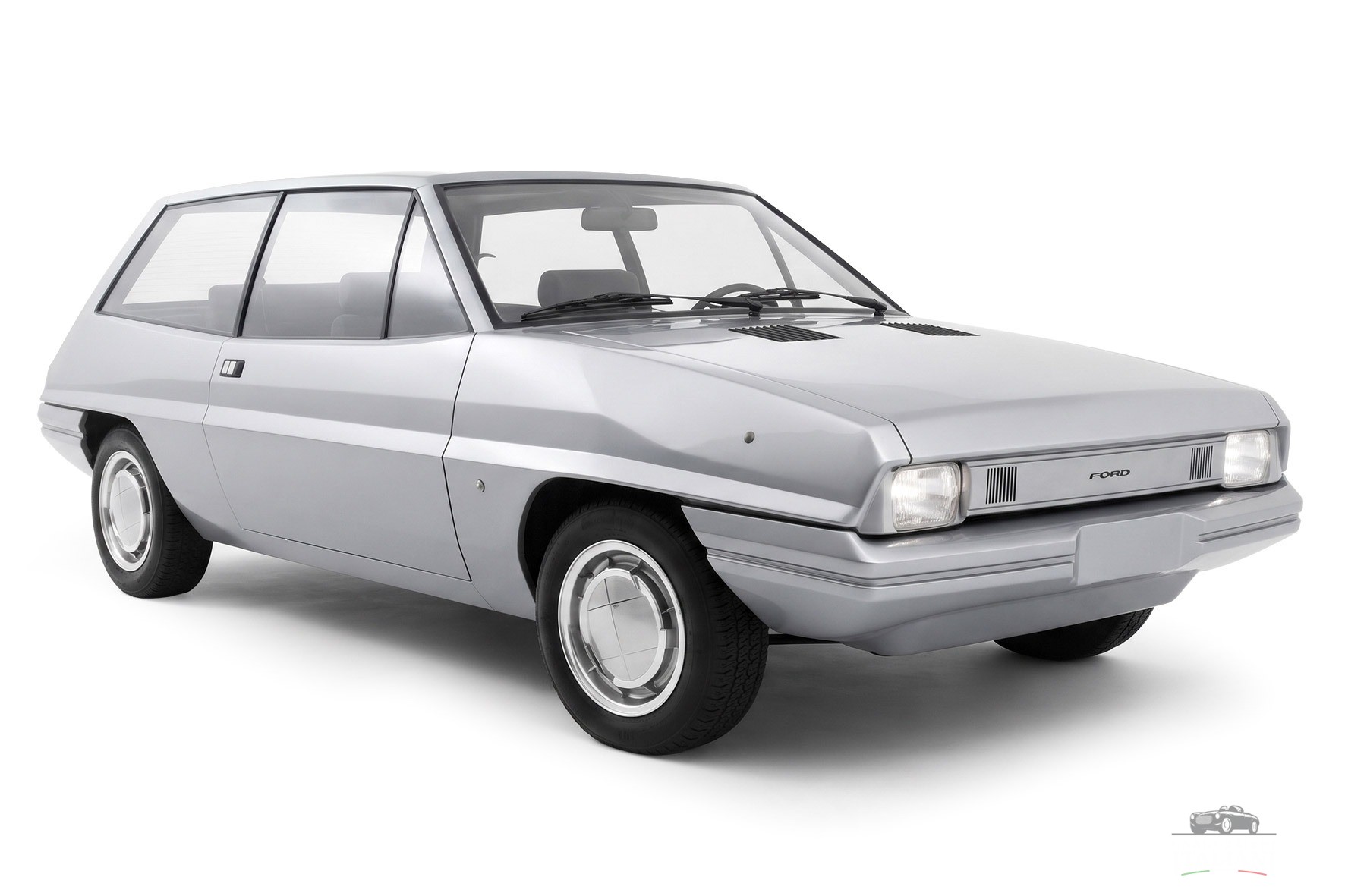
The Ford Wolf Wagon is an interesting and lesser-known chapter in the history of Ford’s compact car evolution. Designed by Tom Tjaarda for Ghia in 1972, it served as a pre-series prototype that laid the groundwork for the future Ford Fiesta MK1. This concept car was intended to explore new possibilities in compact car design, responding to the growing demand for smaller, more efficient vehicles suited for urban life. Built in two versions, a coupé and a wagon, the Ford Wolf showcased innovative styling and practical solutions that would influence the design of the Fiesta. The car featured a compact, functional body with a distinctive look that was both modern and sporty for its time. It also aimed to strike a balance between efficiency and style, which would become a hallmark of the Fiesta once it entered production. As a prototype, the Ford Wolf was not intended for mass production, but rather as a testing ground for ideas that would later appear in the Fiesta. Its design was a reflection of the automotive trends of the early 1970s, focusing on smaller, more economical cars that could navigate urban environments with ease. The wagon version of the Ford Wolf, in particular, highlighted a practical approach to family transport, offering more space and versatility compared to the traditional compact cars of the era. While the Ford Wolf never made it to production, its role in the development of the Ford Fiesta cannot be overstated. The Ford Wolf was a key stepping stone in the creation of a car that would become one of Ford’s most successful and enduring models, known for its affordability, reliability, and compact design. Through prototypes like the Ford Wolf, Ford was able to experiment and refine ideas that would shape the future of small cars, and the Fiesta stands as a testament to the success of these early concepts.
02 / TECHNICAL IDENTITY
03 / DESIGN, BODY & SUPPLIERS
Coachbuilder / Design studio
Founded in Turin in 1916, Carrozzeria Ghia became a major Italian design and coachbuilding house, creating bespoke automobiles, prototypes and international collaborations across the twentieth century.
Explore record ↗Attributed designer
Tom Tjaarda \(1934–2017\) was an American-born designer who built his career in Turin. At Pininfarina he designed the Ferrari 330 GT 2+2 and Fiat 124 Spider\; his later work at Ghia included the De Tomaso Pantera. He also created the Chevrolet Corvette Rondine concept.
Explore record ↗07 / GALLERY
THE CONVERSATION
Comments 0