
Zagato
Founded in Milan in 1919 by Ugo Zagato, the coachbuilding house developed lightweight aerodynamic bodies inspired by aircraft construction, creating distinctive racing and grand touring automobiles.
Explore record ↗
1962Coachwork by Zagato
THE VEHICLE AT A GLANCE
THE PEOPLE BEHIND THE CAR
Founded in Milan in 1919 by Ugo Zagato, the coachbuilding house developed lightweight aerodynamic bodies inspired by aircraft construction, creating distinctive racing and grand touring automobiles.
Explore record ↗Ercole Spada (1937–2025) was an Italian automotive designer associated with Zagato, BMW and I.DE.A Institute and co-founder of Spadaconcept.
Explore record ↗01 / THE STORY
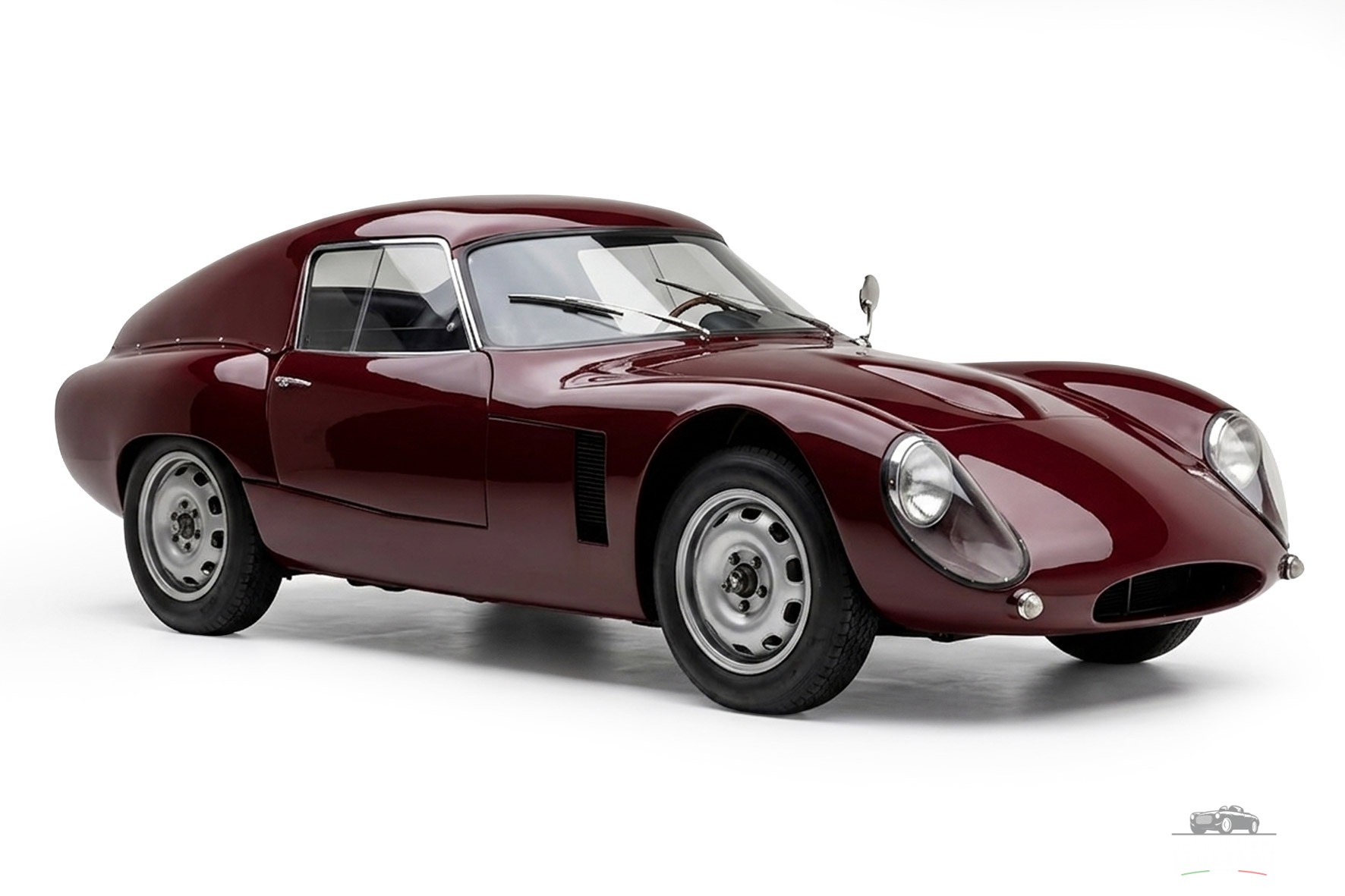
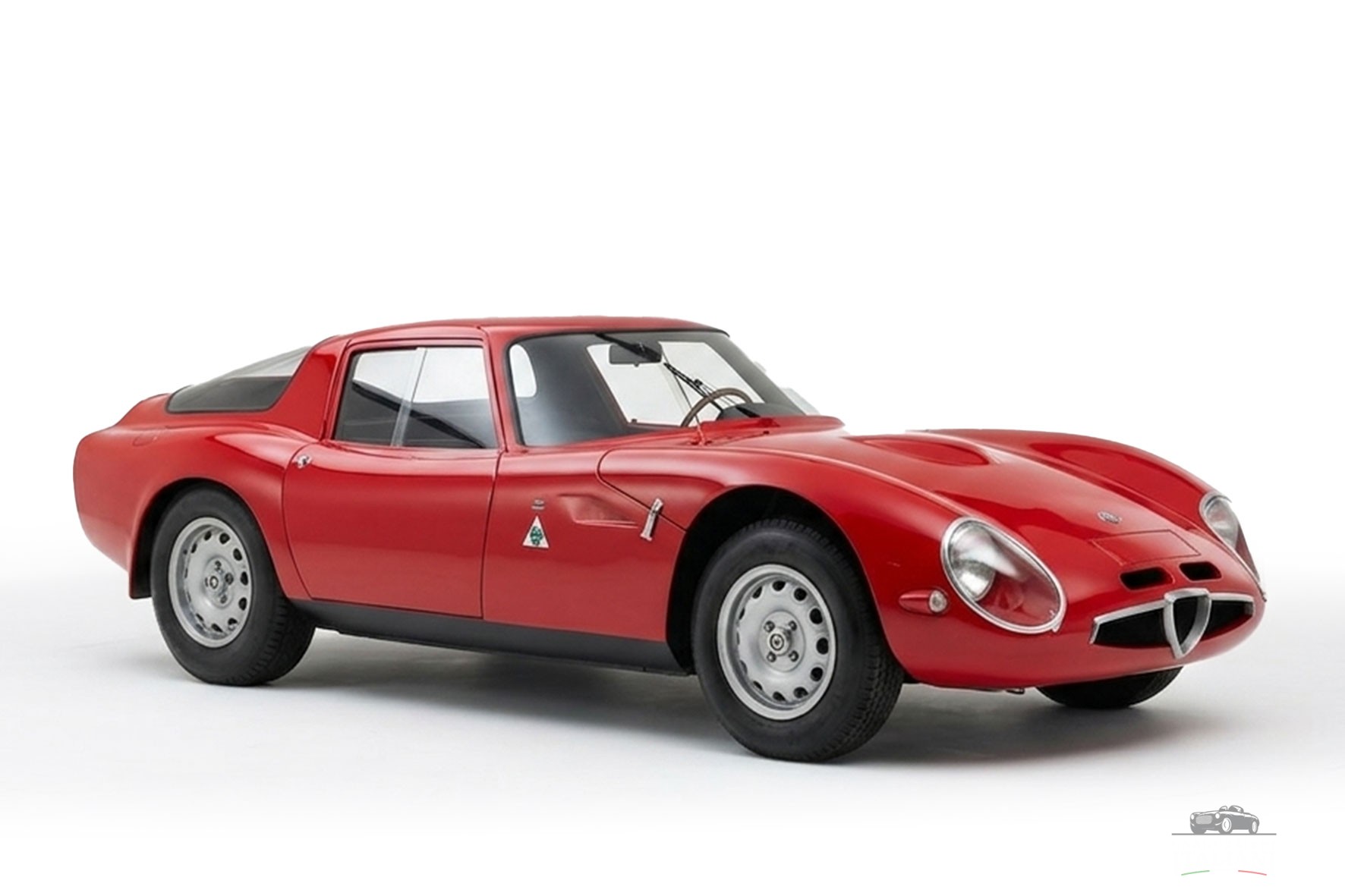
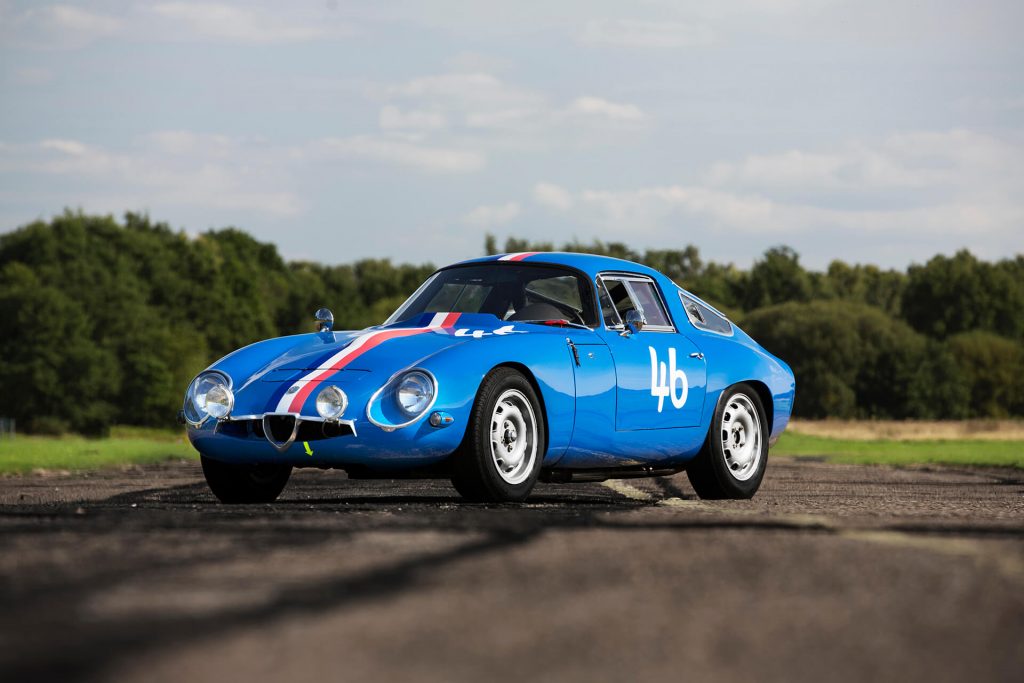
The Alfa Romeo Giulia TZ Prototipo was the development-stage form of the Tubolare Zagato competition car, publicly presented at the 1962 Turin Motor Show. The project combined an Alfa Romeo Giulia-derived powertrain with a purpose-built tubular frame and lightweight aluminium coachwork by Zagato. This entry describes the prototype programme rather than a verified individual chassis or the production Giulia TZ cars built from 1963.
The TZ emerged from Alfa Romeo’s efforts to develop a small-displacement competition GT distinct from the conventional Giulia saloon. Its tubular structure was made by SAI Ambrosini in the Perugia area, while the mechanical components came from Alfa Romeo. Zagato fabricated the aluminium bodywork; Delta of Udine was responsible for assembly and development work in the early production programme, with Carlo Chiti involved in technical supervision. Those duties should be distinguished from Zagato’s role as coachbuilder and from the individual styling work of Ercole Spada.
The structure was not a shortened standard saloon floorpan. A dedicated spaceframe enabled a compact, low-mounted body intended for GT competition. The general TZ programme used Giulia-derived four-cylinder twin-cam engines, rear-wheel drive and independent suspension. Published power, weight, displacement and speed figures vary with engine tune and development stage, so specifications for completed competition TZs cannot automatically be assigned to the Turin exhibition prototype.
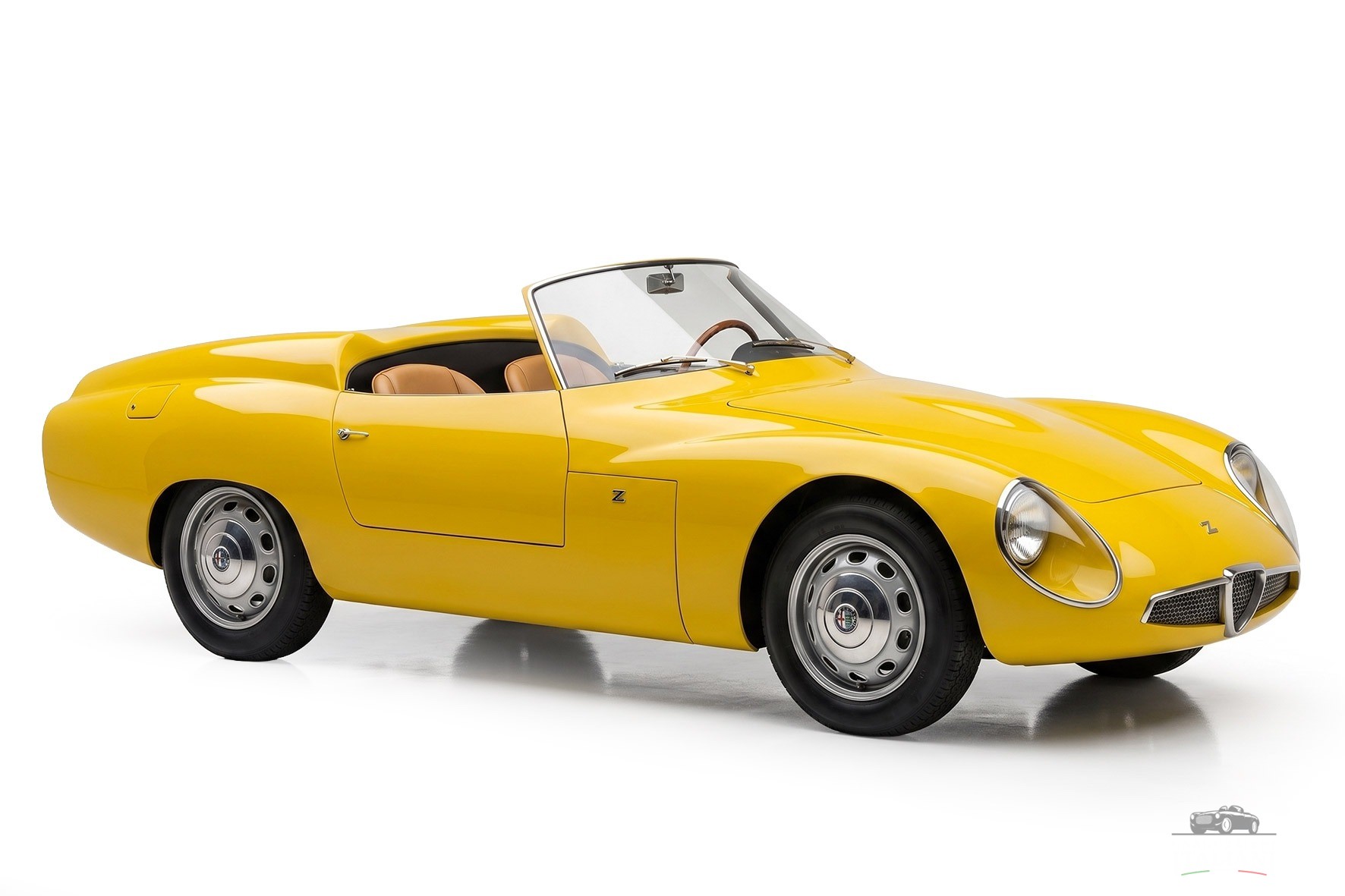
Early development included an open-bodied spider drawn by Spada. Period photographs and later specialist reconstructions describe the open car undergoing testing before a more effective closed body was adopted. The open-bodied experimental car is separately catalogued as the Giulia TZ Spider Prototype; the two entries must not be treated as proof of two additional production cars without confirmed chassis identities.
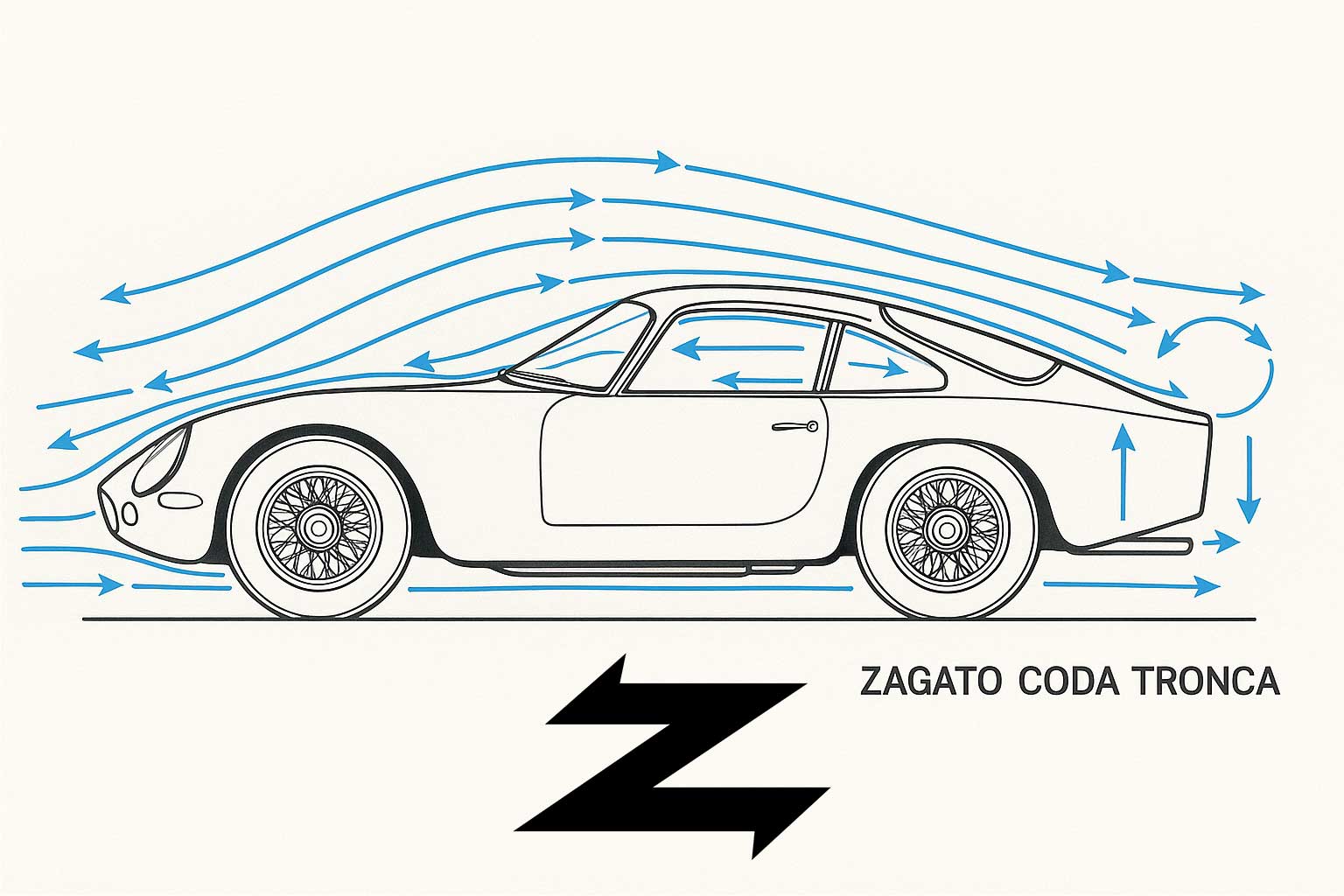
The coupé’s body incorporated a tapered roofline and a truncated rear, reflecting Zagato’s aerodynamic experimentation on the earlier Giulietta SZ Coda Tronca. Changes to nose treatment and headlamp arrangement can be seen in period illustrations of the development vehicles. A specialist Zagato register records a squared-headlamp configuration displayed at Turin in November 1962 and further variations seen during development. Without a verified chassis-to-photograph correspondence, those configurations remain successive design stages rather than individually numbered cars.
The shortened rear followed aerodynamic principles associated with Wunibald Kamm, reducing the need for an extended tapered tail. Spada and Zagato applied this treatment to the TZ’s competition brief, creating an aluminium-bodied coupé with a markedly different construction and profile from a standard Giulia. The design lineage is also discussed in the archive article on Zagato’s coda tronca.
Stellantis Heritage dates the TZ presentation to the Turin Motor Show of 1962. The subsequent Giulia TZ production programme is documented from 1963, with chassis construction, body manufacture and assembly distributed among specialist firms. Stellantis gives 117 cars for the first TZ series from 1963 to 1966. That number refers to the model programme and does not establish how many development prototypes were built or whether each experimental body survived as a separate car.
The first TZs were entered in competition during 1963, including the four-car result at Monza on 24 November. Those race results belong to identified competition entries, not automatically to the 1962 display car. Neither an individual chassis number, an original engine serial, nor a documented public sale has been conclusively matched to the specific Turin prototype in the material reviewed here. Detailed production and racing chronology belongs to the related Giulia TZ historical study, while exact-chassis histories must be maintained separately.
02 / TECHNICAL IDENTITY
03 / DESIGN, BODY & SUPPLIERS
Coachbuilder / Design studio
Founded in Milan in 1919 by Ugo Zagato, the coachbuilding house developed lightweight aerodynamic bodies inspired by aircraft construction, creating distinctive racing and grand touring automobiles.
Explore record ↗Designer
Ercole Spada (1937–2025) was an Italian automotive designer associated with Zagato, BMW and I.DE.A Institute and co-founder of Spadaconcept.
Explore record ↗Attributed prototype builder
07 / GALLERY
CONTINUE EXPLORING
CONTINUE READING
The Alfa Romeo TZ (Tubolare Zagato) is more than just a car: it is a landmark in the history of Italian automotive engineering and motorsport. This sleek, lightweight coupé marked Alfa Romeo’s…
Read storyA closer look at the Zagato Coda Tronca—a design born from function over flair, where aerodynamic necessity quietly redefined beauty in automotive form.
Read storyFew names in Italian coachbuilding describe a philosophy as clearly as Zagato. Founded in Milan in 1919 by Ugo Zagato—an engineer steeped in aeronautical construction rather than coachwork convention—the atelier did not…
Read story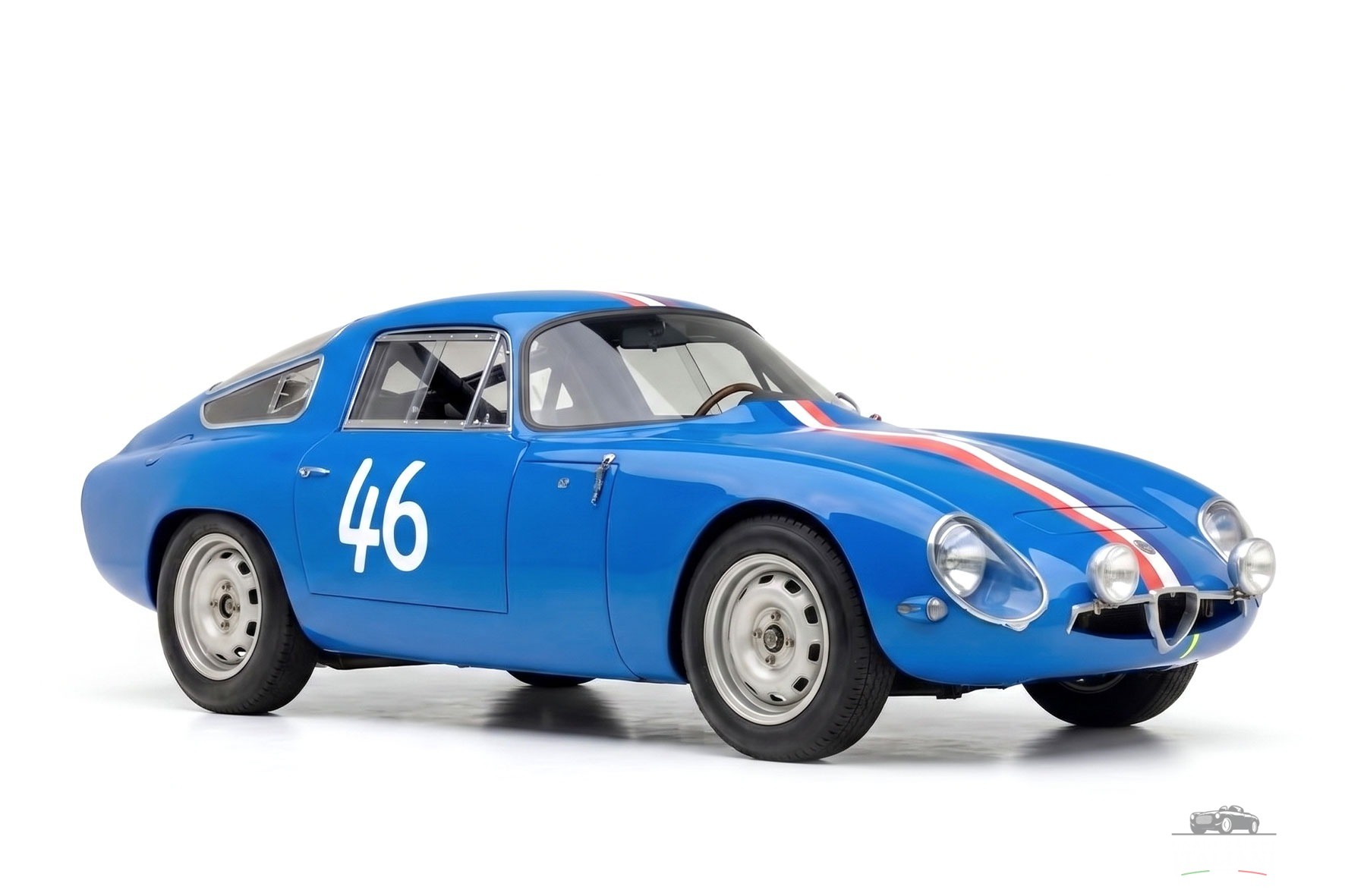
THE CONVERSATION
Comments 0