
Campana
AT A GLANCE
- Founded
- 1947
- Historical city
- Modena
- Country
- Italy
THE STORY
Overview
Campana (Carrozzeria Campana) is an Italian coachbuilding, vehicle-body repair and restoration company founded in Modena in 1947 by brothers Onorio and Erasmo Campana. The workshop developed from post-war conversions of existing vehicles into specialist automotive bodywork, competition-car construction and, later, historic-vehicle restoration and prototype development. The business remains active through Campana Onorio in Modena.
Foundation and post-war work
Onorio and Erasmo Campana established their own business after working at Bacchelli e Bertolini, another Modena-based bodywork enterprise. Their early activity was connected to the large number of vehicles recovered from military use after the Second World War. Cars and other vehicles obtained through the Italian ARAR disposal system were repaired, modified or converted for civilian purposes. Campana produced bodies for light commercial transport as well as ambulances, hearses and vehicles adapted for advertising and other specialist uses. These activities formed the company’s initial industrial base before its expansion into racing and bespoke passenger-car bodies.
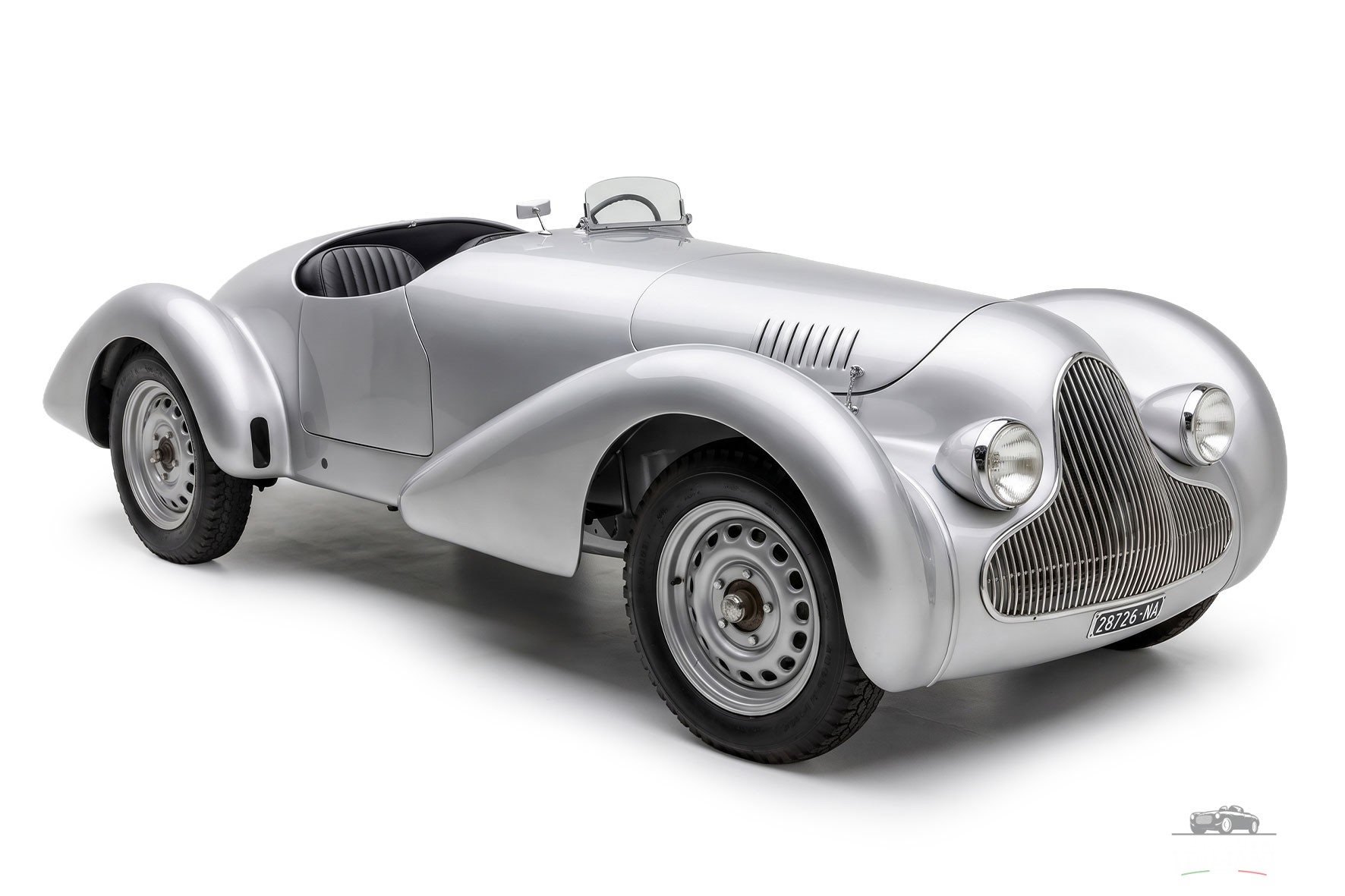
Among its early experimental vehicles, the company documents a small open-bodied special built in 1948 on a Fiat Topolino chassis with a two-cylinder BMW motorcycle engine. This project belongs to the firm’s documented early history and must be distinguished from other Fiat 750 specials catalogued under the Campana name. The company also entered into a relationship with Stanguellini, supplying coachwork for 750 and 1100 sports-car programmes. The Fiat 500 Topolino Barchetta and Stanguellini 750 Barchetta are represented in the vehicle archive; the latter designation encompasses examples whose individual chassis identities and body histories require separate documentary treatment.
Competition and specialist coachwork
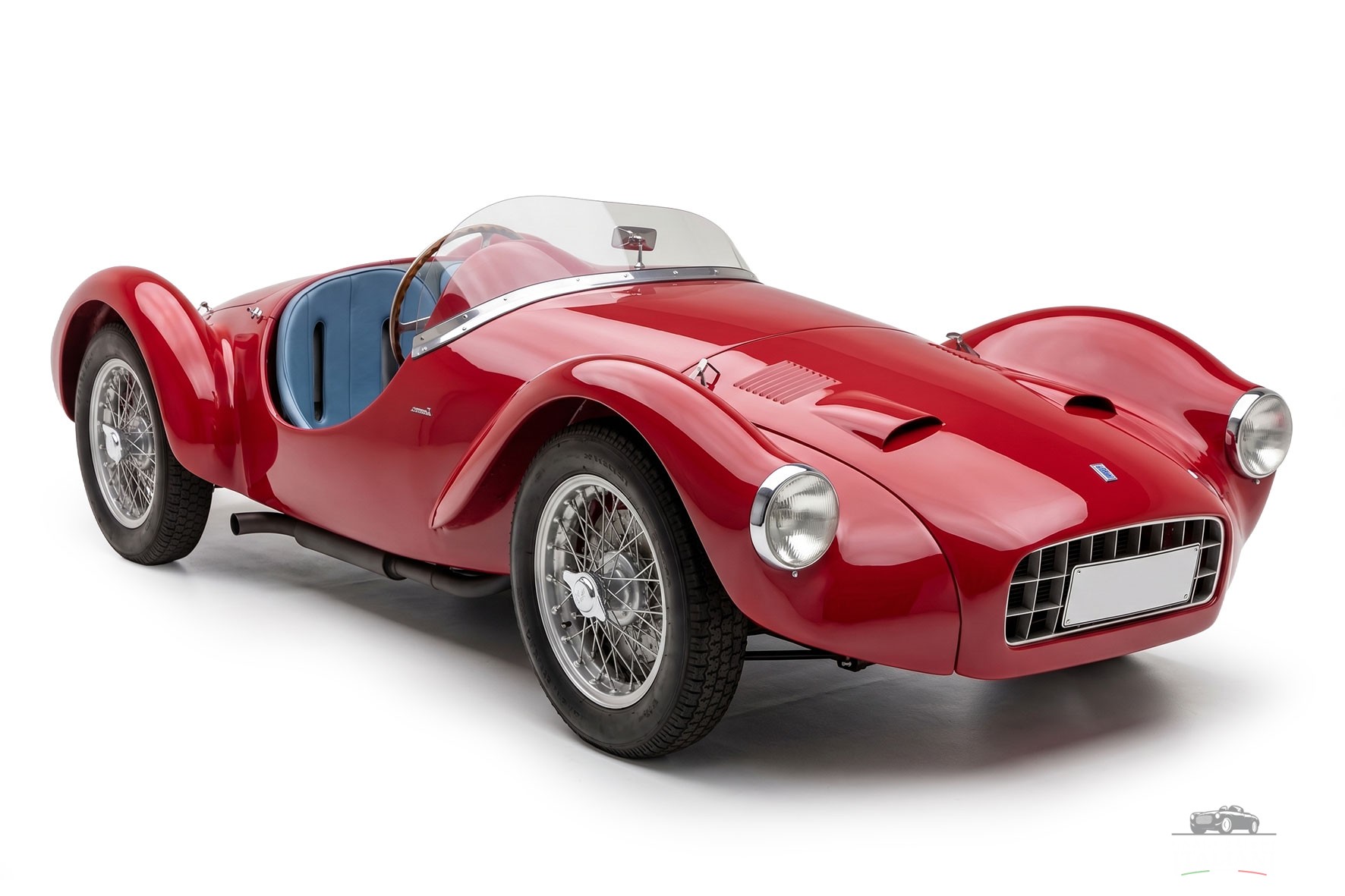
During the post-war expansion of motor racing in Modena, Campana worked on competition cars and specialised bodies associated with Ferrari, Alfa Romeo and Maserati, in addition to its continuing Stanguellini activities. Its assignments were not uniform: some involved the fabrication of a body, while others concerned alterations to an existing car, repair, restoration or later conversions. These roles should not be treated as interchangeable with the design authorship or construction of an entire vehicle.
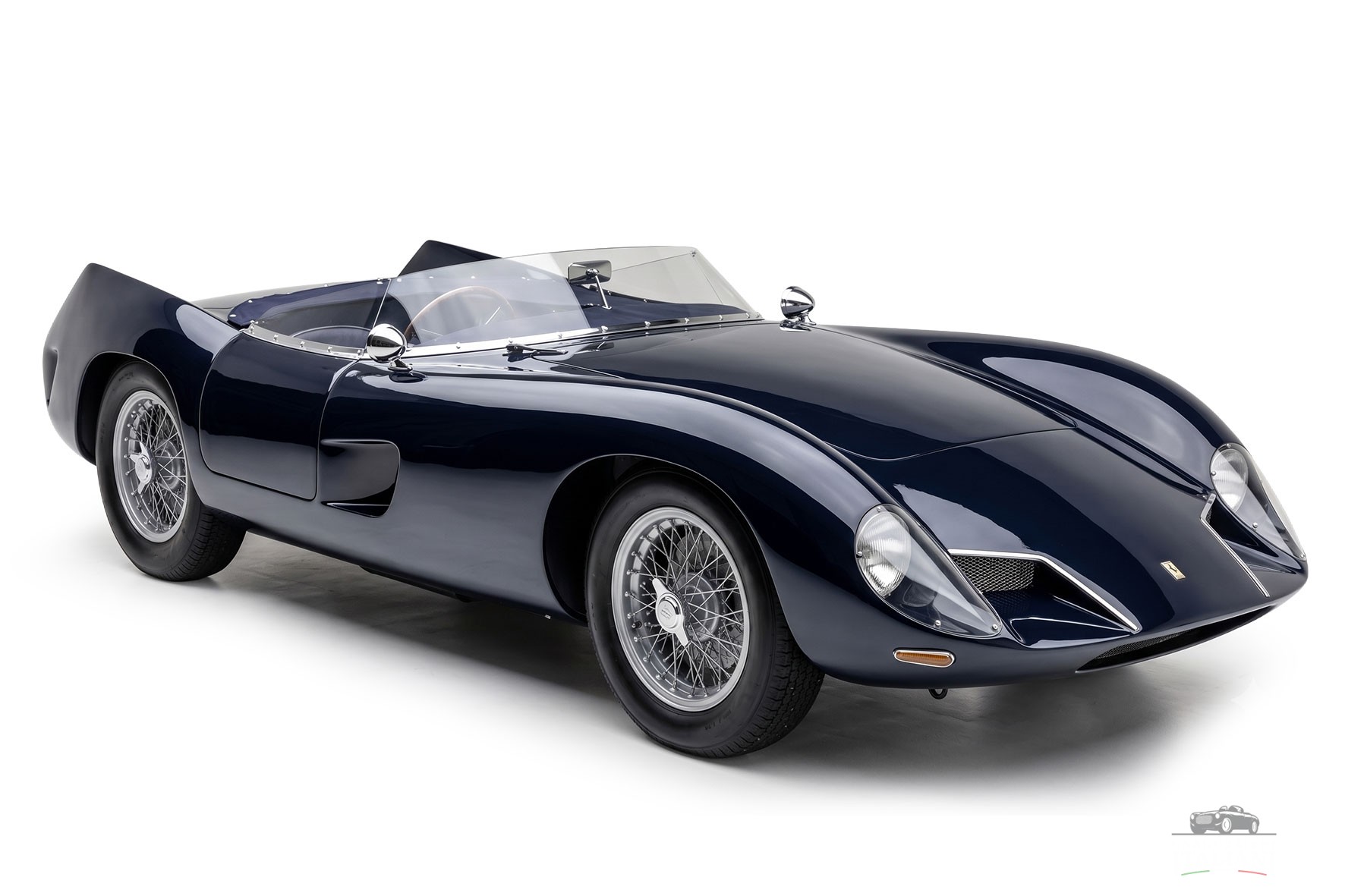
The Ferrari 166 MM Spider Campana, chassis 0072 E, illustrates the importance of chronology. The car had Vignale coachwork before its Campana body phase in the early 1950s and was subsequently rebodied by Vignale. The Campana attribution consequently applies to a particular period in the history of that physical car, not to every body it carried. Other archive entries include the Fiat 1100 TV Spider Campana, Nardi 750 Campana Danese and Talbot-Maserati Campana. Their production totals, individual identities and precise scope of Campana’s work are assessed at the level of the relevant vehicle or programme rather than inferred from the shared coachbuilder name.
Family succession in 1968
In 1968 the founding brothers separated their activities. Onorio Campana continued the workshop with his sons Luigi and Franco. As the business grew, larger premises, specialised tools and a more extensive workforce supported work on classic vehicles and automotive prototypes. The firm reports that its facilities changed location four times during successive phases of expansion and modernisation. This family transition is a change in the operation and leadership of the historical enterprise, not a documented closure of all Campana activity.
Maserati, De Tomaso and Lamborghini
Campana’s industrial relationship with Maserati developed over several decades and intensified around 1975, when Alejandro De Tomaso acquired the Modena manufacturer. The workshop also undertook assignments for De Tomaso’s own marque. Its documented work encompassed the Pantera GR3 and participation in the later development of the Pantera ’90 and Guarà programmes. These relationships involved bodywork, development and specialist preparation; they do not, by themselves, establish Campana as the original stylist of these models.
In 1981–1982 Campana also performed production paintwork for the Lamborghini Jalpa on behalf of Lamborghini. This was a defined industrial finishing assignment rather than authorship of the Jalpa’s design or manufacture of every component. The Maserati Ghibli provides a separate example of work on completed cars. Campana is associated with conversions of existing Ghibli coupés to open form, represented by the Maserati Ghibli Spyder Campana. Such conversions must be distinguished from factory-built Spyders and from the original Ghibli styling by Giorgetto Giugiaro at Ghia. The later Maserati Ghibli Campana archive entry concerns a separate modern bodywork project, not the 1960s conversion programme.
Restoration, parts and continuing activities
Campana Onorio has continued as a specialist body shop and mechanical workshop in Modena, including restoration work on historic road and racing cars. The company identifies Fiat, Alfa Romeo, Lancia and Maserati among the manufacturers for which its bodywork and workshop departments hold service authorisations. Its activities also include the reconstruction of discontinued parts using original Maserati moulds and drawings where available. The company describes a stock and catalogue of approximately 30,000 Maserati mechanical and bodywork part references, covering vehicles from 1958 onwards; this figure refers to parts cataloguing rather than production by Campana.
The present company operates from Via Tito Livio 60 in Modena and reports facilities extending over more than 10,000 square metres. Campana’s historical activity should be understood through distinct categories of original coachwork, replacement bodies, conversions, production finishing and restoration. The establishment date of 1947 does not support attributing the original manufacture of pre-1947 bodies to this firm without further evidence of a different, earlier workshop or a later rebody.
KEY MOMENTS
Timeline
-
Foundation of Campana
Modena, Italy
-
Onorio Campana continues the company with Luigi and Franco
Modena, Italy
-
Campana deepens its Maserati and De Tomaso collaboration
Modena, Italy
-
Campana begins Lamborghini Jalpa production paintwork
Modena, Italy
Vehicles at a glance
- Related vehicles
- 11
- Prototypes
- 1
- One-offs
- 2
- Limited series
- 1
- Fuoriserie
- 7
CONTINUE EXPLORING





THE CONVERSATION
Comments 0