
Campana
Founded in 1947 by Onorio and Erasmo Campana, the Campana workshop became associated with specialist bodywork and restoration in Modena’s automotive manufacturing community.
Explore record ↗
1953Coachwork by Campana
THE VEHICLE AT A GLANCE
THE PEOPLE BEHIND THE CAR
Founded in 1947 by Onorio and Erasmo Campana, the Campana workshop became associated with specialist bodywork and restoration in Modena’s automotive manufacturing community.
Explore record ↗01 / THE STORY
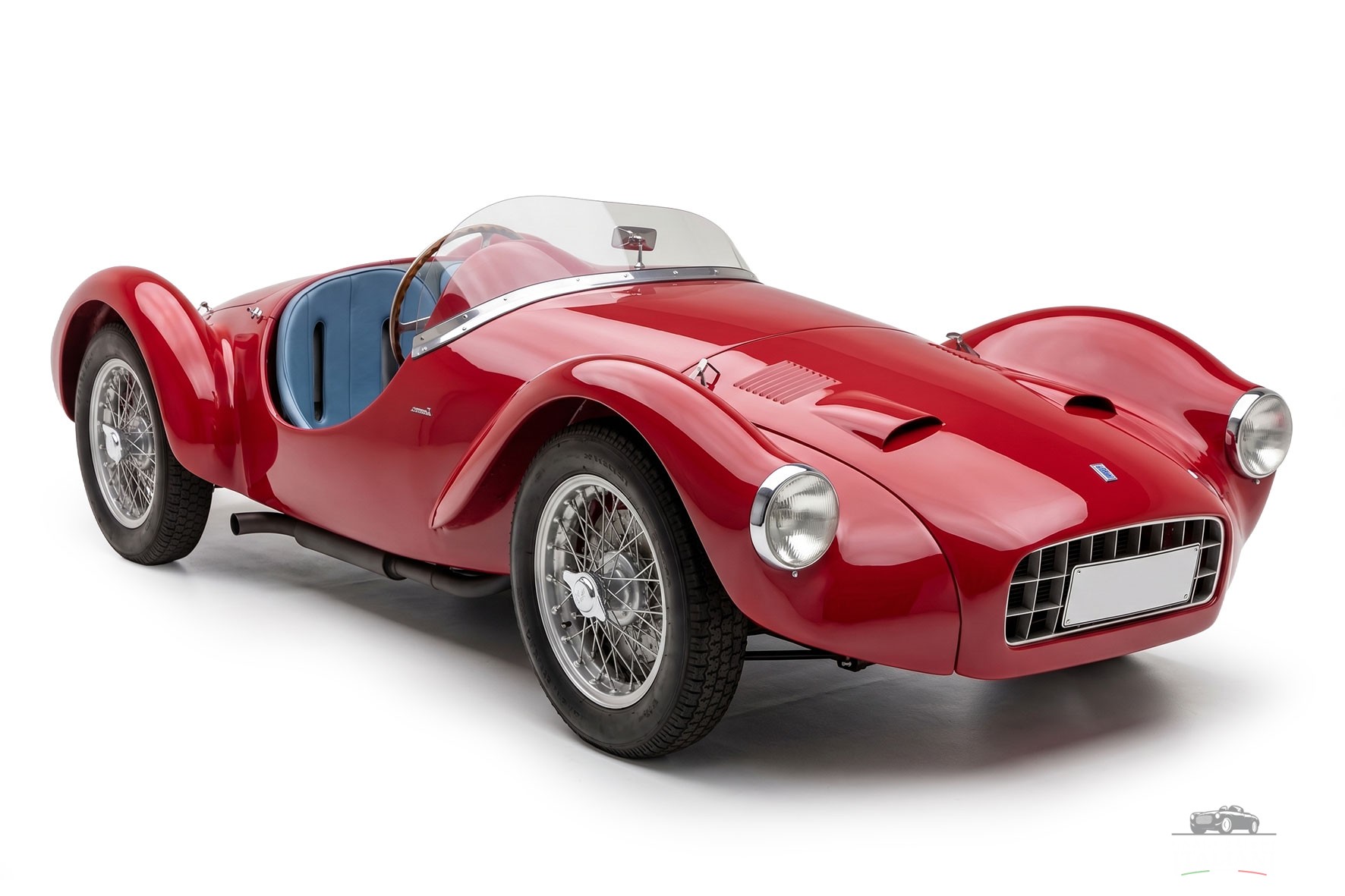
The Nardi 750 Campana Danese was a limited-production, postwar Italian barchetta constructed by the Turin-based firm Nardi-Danese, active in the late 1940s and early 1950s. Founded by Enrico Nardi and Renato Danese, the enterprise specialized in lightweight racing vehicles utilizing compact displacement engines and artisanal construction techniques. The Campana-bodied variant represents one of the more obscure executions of their small-series sports cars. Built on a bespoke tubular spaceframe chassis of Nardi’s design, the vehicle employed a short wheelbase and compact proportions intended for hill climbs and endurance competitions. Front suspension was independent, adapted from Fiat Topolino components, while the rear utilized a solid axle suspended on leaf springs. Braking was provided by hydraulically actuated drums on all four wheels. The engine was a 750 cc horizontally opposed twin-cylinder unit derived from BMW motorcycle origins. The powerplant was modified by Nardi with upgraded carburation, bespoke exhaust routing, and higher compression. Estimated output ranged between 40 and 50 horsepower at approximately 6,000 rpm. A four-speed manual transmission delivered power to the rear wheels. Performance was adequate for the sub-500 kg kerb weight, yielding top speeds around 150 km/h depending on gearing and configuration. Carrozzeria Campana of Modena constructed the aluminium bodywork. The design followed the contemporary barchetta idiom: low-slung profile, open cockpit with minimal windscreen, exposed wheel arches, and a tapering rear section. The overall aesthetic was informed by function, with emphasis on aerodynamic simplicity and weight savings. Production figures are uncertain, though surviving documentation and photographic evidence suggest no more than five examples were constructed in this specification. At least two are known to have competed in contemporary racing events. One chassis was entered in the 1951 Mille Miglia, driven by Sergio Sighinolfi, and was later active in regional Italian hill climb events. Another example reportedly competed in Sicily, including participation in the Targa Florio and the CataniaEtna hill climb.
02 / TECHNICAL IDENTITY
03 / DESIGN, BODY & SUPPLIERS
Coachbuilder / Design studio
Founded in 1947 by Onorio and Erasmo Campana, the Campana workshop became associated with specialist bodywork and restoration in Modena’s automotive manufacturing community.
Explore record ↗04 / CHRONOLOGY
07 / GALLERY
THE CONVERSATION
Comments 0